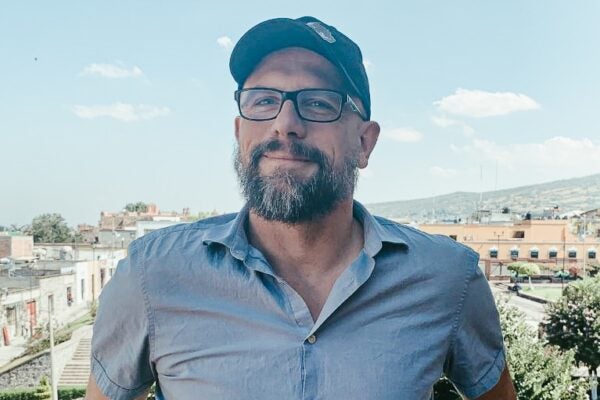
When the Winter Olympics begin with Friday night’s ceremony in Milan, many viewers will be turning their attention to northern Italy for the first time. But Longhorn alumna Becky McKnight, BBA 2002, MPAff 2008, a special agent with the State Department helping oversee security for Team USA, has been living there preparing for the Games for nearly two years.
McKnight is the deputy U.S. Olympic security coordinator for the Olympic and Paralympic Games and is part of the State Department’s Diplomatic Security Service (DSS).
Following seven months of Italian language training in Washington, D.C., McKnight, with her husband and two youngest children, moved to Italy in April 2024, where she along with another agent lay the security groundwork for the 2026 Milan Cortina Games.
Security for major overseas events such as the Olympics, the Pan Am Games and G7 meetings is handled by the multiagency International Security Events Group, with DSS in the lead. “Our goal here is to get to know the local officials, the police and the organizing committee,” McKnight says, “to set up a security platform for Team USA to compete.”
She’s also there for the U.S. citizens who are coming to spectate, “to make sure they have the information they need to have a safe and secure experience.”
She has also worked closely with U.S. businesses such as NBC, Coca-Cola, Uber and Airbnb to make sure that they have the security information they need to operate effectively.
The 2026 Games cover a large geographic area. While Milan has the opening and closing ceremonies as well as the ice-rink sports — hockey, figure skating, speed skating and curling, the mountain-based sports such as skiing and snowboarding spread out toward Cortina and are at least two hours away. Spanning the whole area can take six hours “on a good day,” she says.
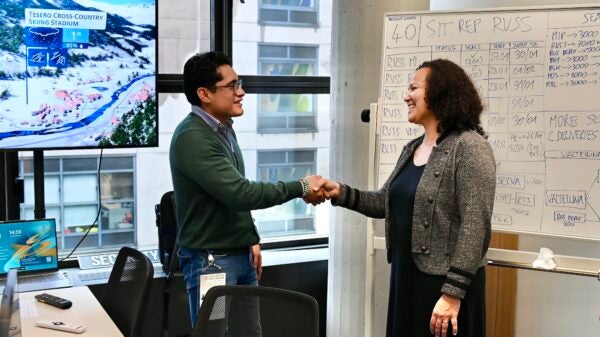
When we spoke in late January, McKnight was doing walkthroughs of 11 venues and getting to know all the security managers. She had just finished a walkthrough of the NBC Studio in front of the Duomo di Milano, the cathedral where the “Today” show and “NBC Nightly News” are being broadcast.
After visits, she wrote reports that were shared among their security assets that have now arrived, including other agents from DSS, FBI, Secret Service, Homeland Security Investigations and the Transportation Security Administration.
Tabletop exercises were frequent during the runup. “We’re constantly thinking about the what-ifs,” she says. “How do we stay communicating clearly? We do a lot of crisis-management scenarios and exercises, talking through them with the police, and understanding what their response will be.” They conducted one crisis-management exercise in Rome since that is where the embassies are.
One concern is a cyberattack. “That would be pretty bad because Visa is the main sponsor, and you have to use Visa at all the main venues to pay. So, it would be problematic if people couldn’t purchase tickets or access their digital tickets due to a cyberattack,” McKnight says.
Transportation is a big challenge of these Games because one can take a train only halfway to the mountains, then must drive. “So, a really bad day would be some kind of an accident, whether it involves athletes or not, because some of these roads — you could barely get a bus down them.”
Another topic of concern is protests. “All over Europe, you see a lot of protests. We get a mixed bag of protests here [in Italy]. Some are pro-U.S.; some are not pro-U.S.” Talking through how police are going to respond is important.
“A lot of my job is teaching people how to be safe and secure and make smart decisions.”
As for her own winter sports experience, “I like to ice skate,” she says. “I wouldn’t say I’m a skilled skater.” And she’s no Mikaela Shiffrin, but she has skied a few times. “I can stay up,” she says. She even tried curling once, which didn’t go well, she remembers with a laugh.
“So I Could Figure Myself Out”
A San Antonio native, McKnight came to The University of Texas at Austin in 1998 as an undecided major in the College of Natural Sciences. “Honestly, going to UT was a bit of a shock because I went to private school all of my life, with much smaller classes.” Coming to a big university felt freeing. “I just wanted to be in the mix. I didn’t want anybody constantly watching what I was doing, so I could figure myself out.”
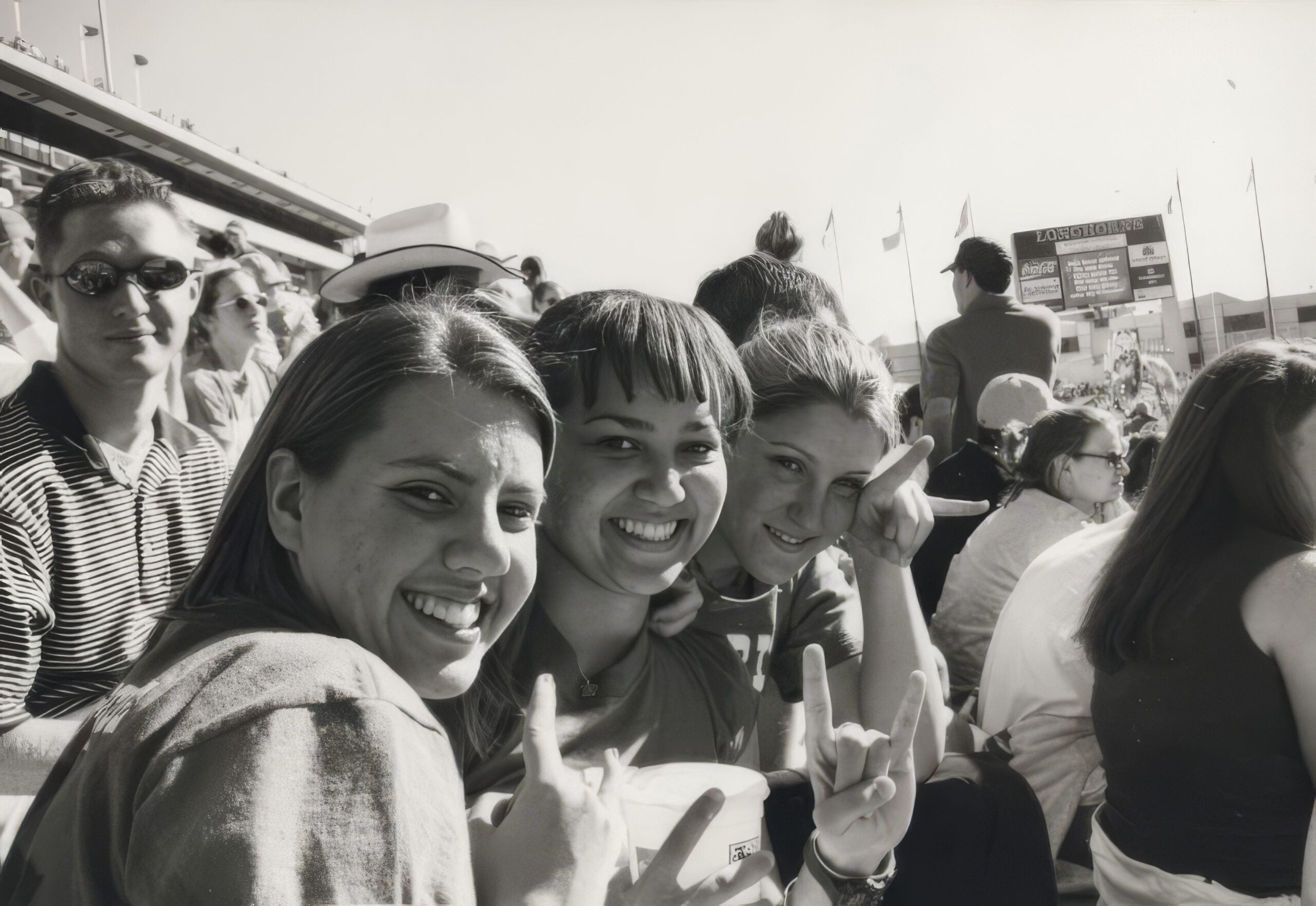
After one semester undecided and another as an engineering major, she started her sophomore year in the business school, where she graduated with a marketing degree and a minor in Spanish. McKnight lived for two years in Jester Center (shoutout 13th floor), where she also worked at the Career Center. She enjoyed the Hispanic Business Students Association, going to football games and playing intramural soccer.
“I remember just walking a lot around campus and just feeling like anything was possible because there were so many options my freshman year,” she says. “At UT, I learned how to be independent, to hustle, to figure out what I wanted to do. I loved being at UT. It was great, and all my best friends are still from my UT days.”
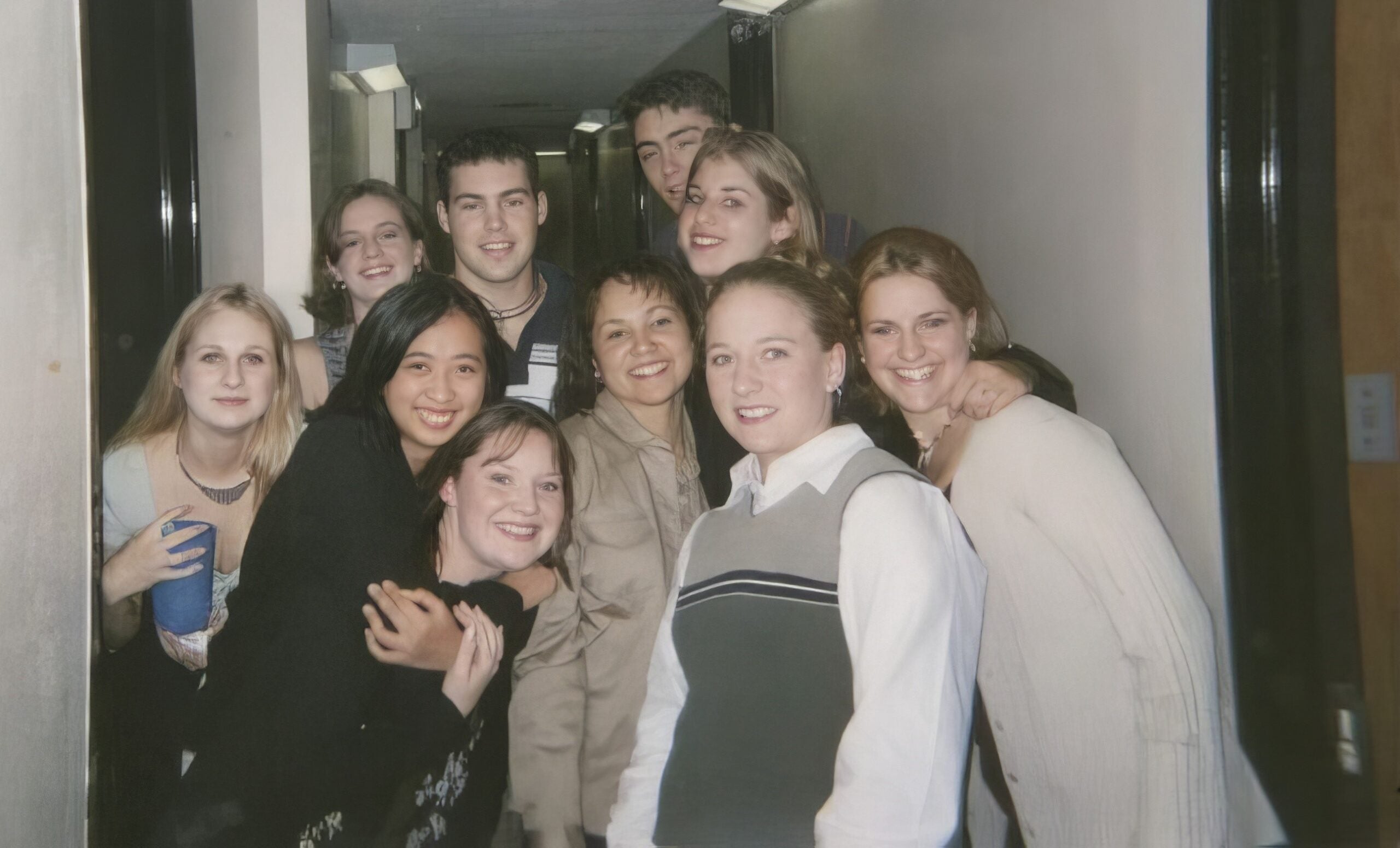
Long before her Foreign Service globetrotting, her freshman year at UT might have been her first real encounter with unfamiliar cultures. “A lot of my initial friends were former homecoming queens from these small towns. I remember every weekend I’d go with them back to these tiny towns, and it was a ‘Friday Night Lights’ experience. That is real! Those are probably my warmest memories of my freshman year — going to see other people’s high school experiences. I really enjoyed seeing how other people were raised in different parts of Texas.”
She volunteered in the community often during both of her stays at UT, mentoring middle schoolers and high schoolers in East Austin. “They taught me a lot about perseverance,” she says. “At UT, there was always this sense of giving back, and I still greatly appreciate that.”
Her decision to go into public sector work was assisted by the crash of energy giant Enron. “Their sign was in the business school, and a couple of weeks later, it wasn’t,” she remembers. The great recession soon followed, casting doubt on a business career. An internship further convinced her she would rather work in the public sector.
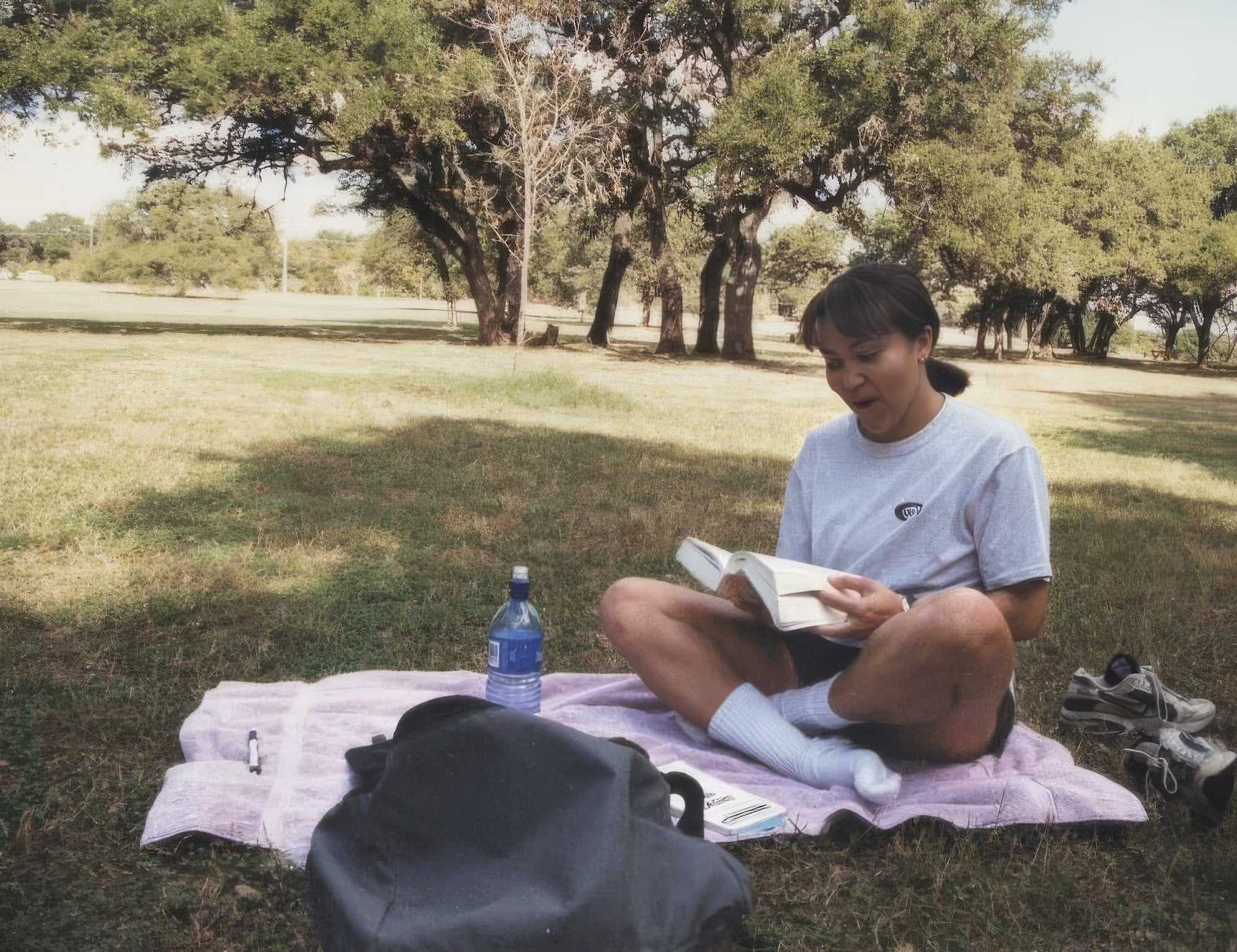
“I joined the Peace Corps because I really wanted to travel. I thought, having a minor in Spanish, they would send me to a Spanish-speaking country. But I said I was OK to go anywhere, especially if it’s hot.” The agency obliged, assigning her to Mauritania in the Sahara Desert.
After her two-year tour of duty, she recalls, “I knew I wanted to go back and work for the government, so I applied to the LBJ School and received a fellowship.” She earned a Master of Public Affairs at UT in 2008.
Her first State Department post was in the Democratic Republic of Congo. When she arrived, she began playing soccer to stay in shape and meet people. It worked, as that is how she met her future husband. McKnight is now a mother of three, a girl and a boy at home — 8 and 10 — and a young man now in college in the U.S.
The kids have learned Italian and eat Italian food every day, “so I try to do tacos on Tuesdays. I remind them they’re really from Texas,” adding that she returned to San Antonio to have both younger children. She intends to take the kids to a USA women’s hockey match during the Games.
Her advice to Longhorn students includes looking into the Diplomatic Security Service, “especially if they’re interested in a job that’ll take them around the world. “It’s been awesome,” she says. “The State Department is wonderful.”
Explore Latest Articles
Mar 31, 2026
UT Geodynamicist Thorsten Becker Elected to German Academy of Sciences