When surgeons train for some of the most delicate operations in medicine, they rely on observation and spoken feedback to learn how much pressure is too light to be effective or too heavy for working with fragile tissue. With guidance from a leading pediatric heart surgeon at Dell Medical School, an undergraduate student at The University of Texas at Austin is working to change that by developing a tool that brings measurable, real-time data on pressure and precision into surgical training.
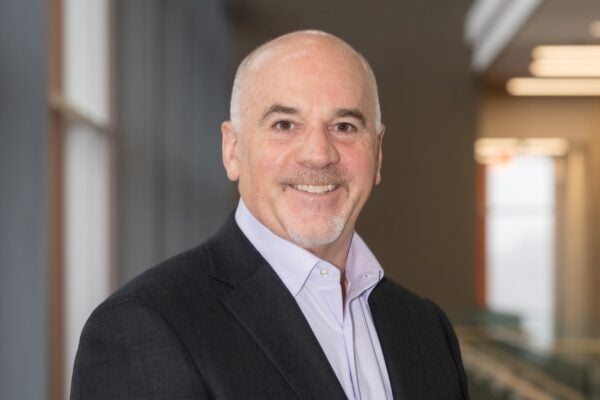
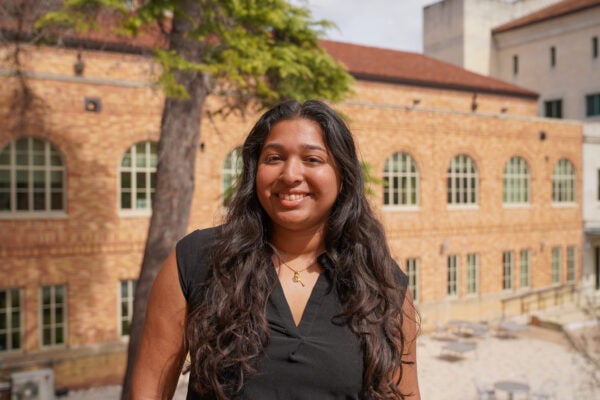
Janavi Seshadri, a biomedical engineering senior, is leading the development of a novel surgical training tool designed to give future surgeons real-time feedback on how precisely and delicately they handle tissue during complex procedures. The project is supported by clinical mentor Charles Fraser III, M.D., a cardiothoracic surgeon in the Texas Center for Pediatric and Congenital Heart Disease — a clinical partnership between Dell Children’s Medical Center and UT Health Austin — and faculty member at Dell Medical School.
“There’s currently no way to objectively measure how accurately or gently a trainee is handling tissue during open surgery,” Fraser said. “Feedback is based almost entirely on observation.”
Turning surgical precision into measurable data
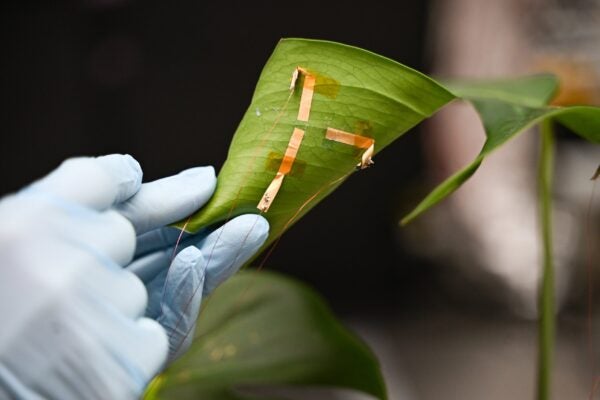
The resulting device, about the size of an earbud, clips onto standard surgical instruments. Embedded sensors capture pressure and movement data as a trainee works on a simulated heart model, generating measurable performance data on force and technique. Unlike robotic or laparoscopic simulators, which already incorporate digital feedback, the tool is designed specifically for open surgery, where surgeons rely on tactile judgment and experience.
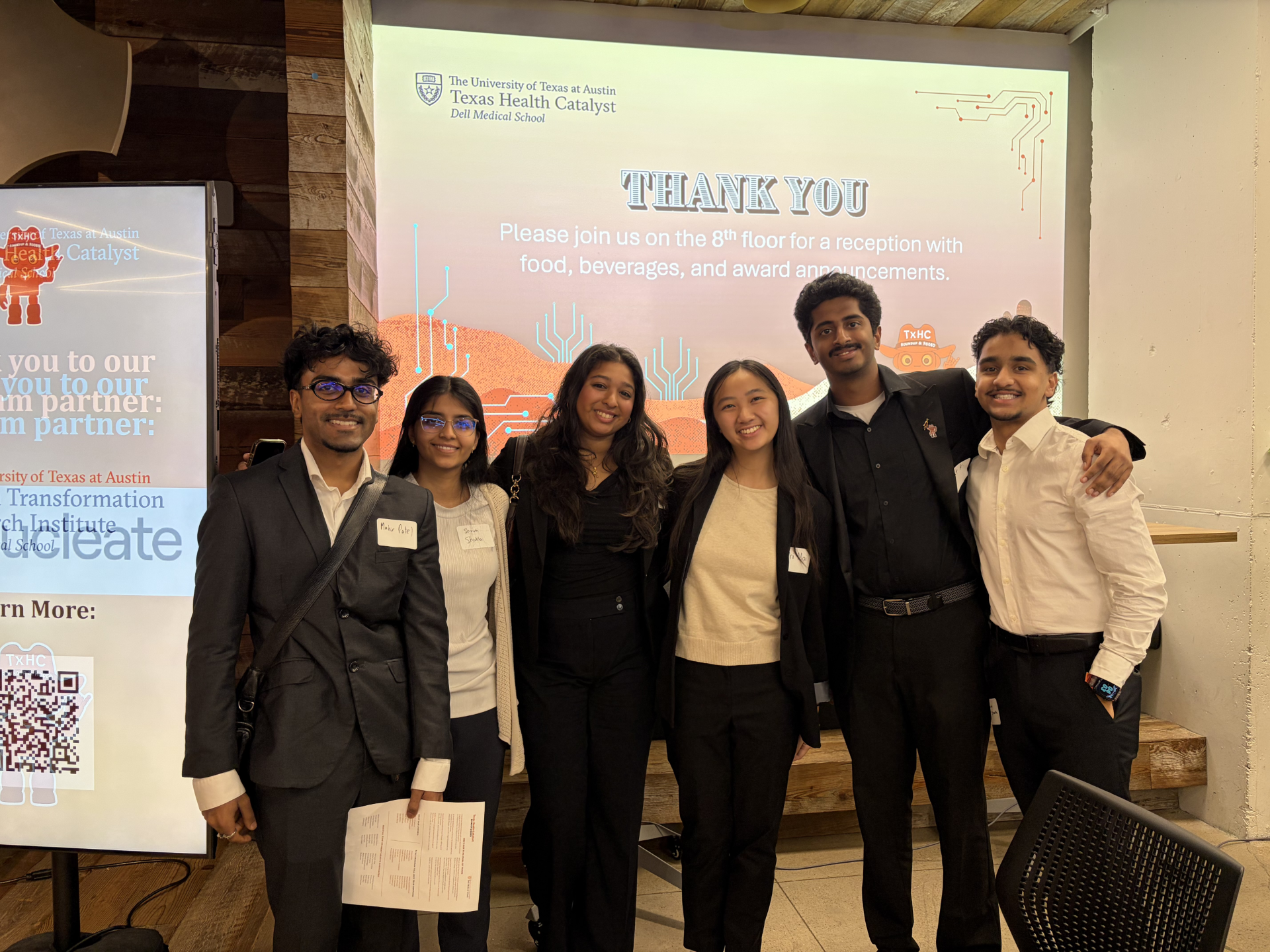
The project recently gained broader visibility as a finalist at the Texas Health Catalyst Roundup & Rodeo, a competitive showcase for emerging health innovations across The University of Texas at Austin. Through the program, Seshadri and her team received pilot funding and mentorship to help advance the technology toward clinical testing, marking a key milestone as the student-led effort moves beyond the classroom.
“One of the strengths of UT is our ability to take bold student ideas and surround them with the expertise needed to move them toward real-world impact,” said Stephen C. Ekker, Ph.D., associate dean of innovation and entrepreneurship at Dell Medical School. “Projects like this bring together engineering, clinical insight and entrepreneurship in a way that reflects our focus on innovation that doesn’t stop in the lab, but moves toward improving care.”
A student-driven idea, years in the making
Seshadri began exploring the concept as a freshman, motivated by a recurring theme she heard through coursework, research and conversations with physicians: Surgical training often lacks measurable performance data to evaluate technical skill.
“There was a clear gap,” Seshadri said. “For something as precise as surgery, especially in pediatrics, training still depends heavily on subjective judgment.”
Seshadri recruited a multidisciplinary undergraduate team spanning biomedical, mechanical, electrical and computer engineering. She led weekly and biweekly meetings, coordinated roles and budgets, and guided the group through iterative design and prototyping, largely without formal funding.
The team ultimately narrowed its focus to pediatric congenital heart surgery, identifying it as a high-impact area where tissue fragility and surgical precision are paramount.
Clinical mentorship to translate engineering into practice
With the core concept and prototype established, Seshadri sought clinical mentorship to better understand how the technology could integrate into real-world surgical training, connecting with Fraser through student outreach and shadowing opportunities.
“My role has really been to help explain how we do surgery,” Fraser said. “They’re the ones doing the engineering and device development. I’m here to help connect it to the clinical environment.”
From prototype to pilot testing
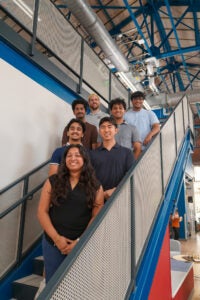
Supported by Texas Health Catalyst funding, the team is now preparing to establish benchmarks for precision and technique using data collected from pressure measurements performed by trained surgeons.
Because the device can be adapted to a wide range of surgical instruments, long-term potential includes multiple surgical specialties such as vascular, transplant and oncologic surgery.
“If we can improve how surgeons are trained early on, that precision carries forward,” Fraser said. “That has real implications for patient safety.”
Redefining student-led health innovation
For Seshadri, who graduates this spring, the project reflects what’s possible when students are empowered to lead complex, real-world innovation, with access to mentorship and institutional support.
“Improving training improves patient care, which ultimately improves patients’ lives,” she said. “It’s really a cascade of impact.”