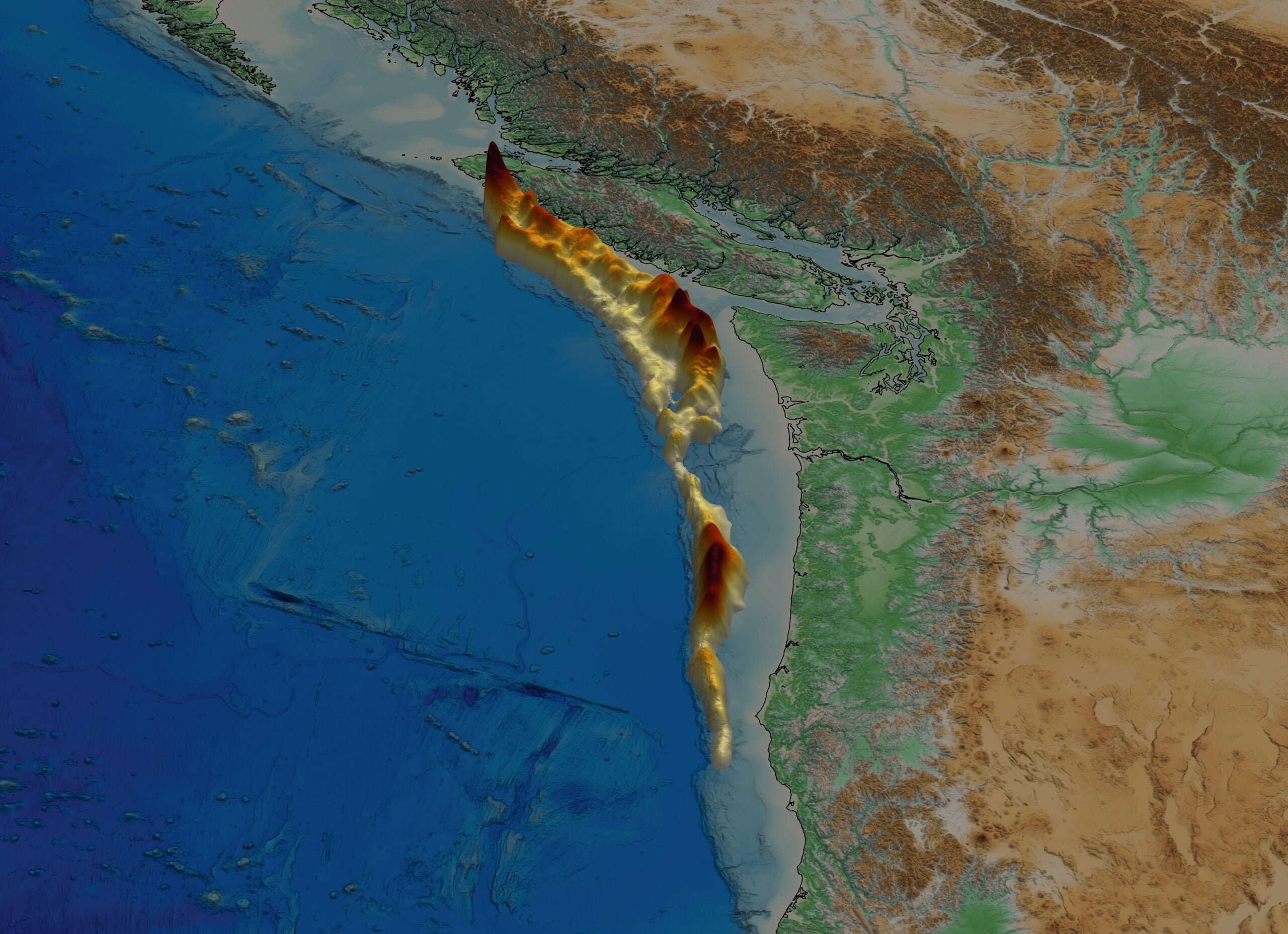
A University of Texas-led team recently demonstrated the life-saving potential of digital twins by developing a tsunami forecasting system that could redefine coastal safety. Working on the high-risk Cascadia subduction zone off the Pacific coast of North America — a region with nearly a 40% probability of a major earthquake in the coming decades — researchers achieved a breakthrough that earned the prestigious 2025 Association for Computing Machinery (ACM) Gordon Bell Prize, often referred to as the Nobel Prize of supercomputing.
This groundbreaking research is possible because for the past decade, The University of Texas at Austin has been building a premier digital twin research ecosystem, uniting mathematical and computational theory with state-of-the-art methods, high-performance computing and experimental facilities to demonstrate real-world implementation. UT’s research enterprise embodies the national shift and federal efforts toward AI for Science, where AI-powered digital twins transform traditional simulations into agile predictive decision engines, providing the accurate foresight needed to solve urgent technological, scientific and medical challenges.
With its end-to-end multidisciplinary assets, the University is also a frequent lead collaborator on multiscale, field-specific digital twin applications with national labs, peer institutions, industry and government.
“The University offers full-stack capabilities that have accelerated discovery and transformed critical infrastructure and intelligent systems across the globe,” said Fernanda Leite, interim vice president for research. “Our goal is to continue to ensure that insights enabled by digital twins move beyond research labs and into the real world, where they can help communities prepare for disasters, improve infrastructure resilience, advance personalized medicine and address the urgent challenges we face.”
Building a “Mirror World” for Prediction
At its core, a digital twin is a dynamic, virtual replica of a physical object, process or system that is continually updated with real-time sensor data and kept in sync with its physical twin. Unlike a static simulation, a digital twin “lives” and evolves alongside its real, physical counterpart. This allows engineers, researchers and operators to predict future behaviors, optimize performance and prevent failures with unprecedented accuracy.
To answer the “what if” questions, the twin must be physics‑based. By encoding the system’s governing laws – such as how heat conducts, fluids flow, or materials deform – a physics-grounded twin can reliably predict behavior under new designs or scenarios.
The potential benefits of digital twins are endless – from being able to test a new heart valve on a patient prior to surgery to optimizing traffic patterns in an urban environment.
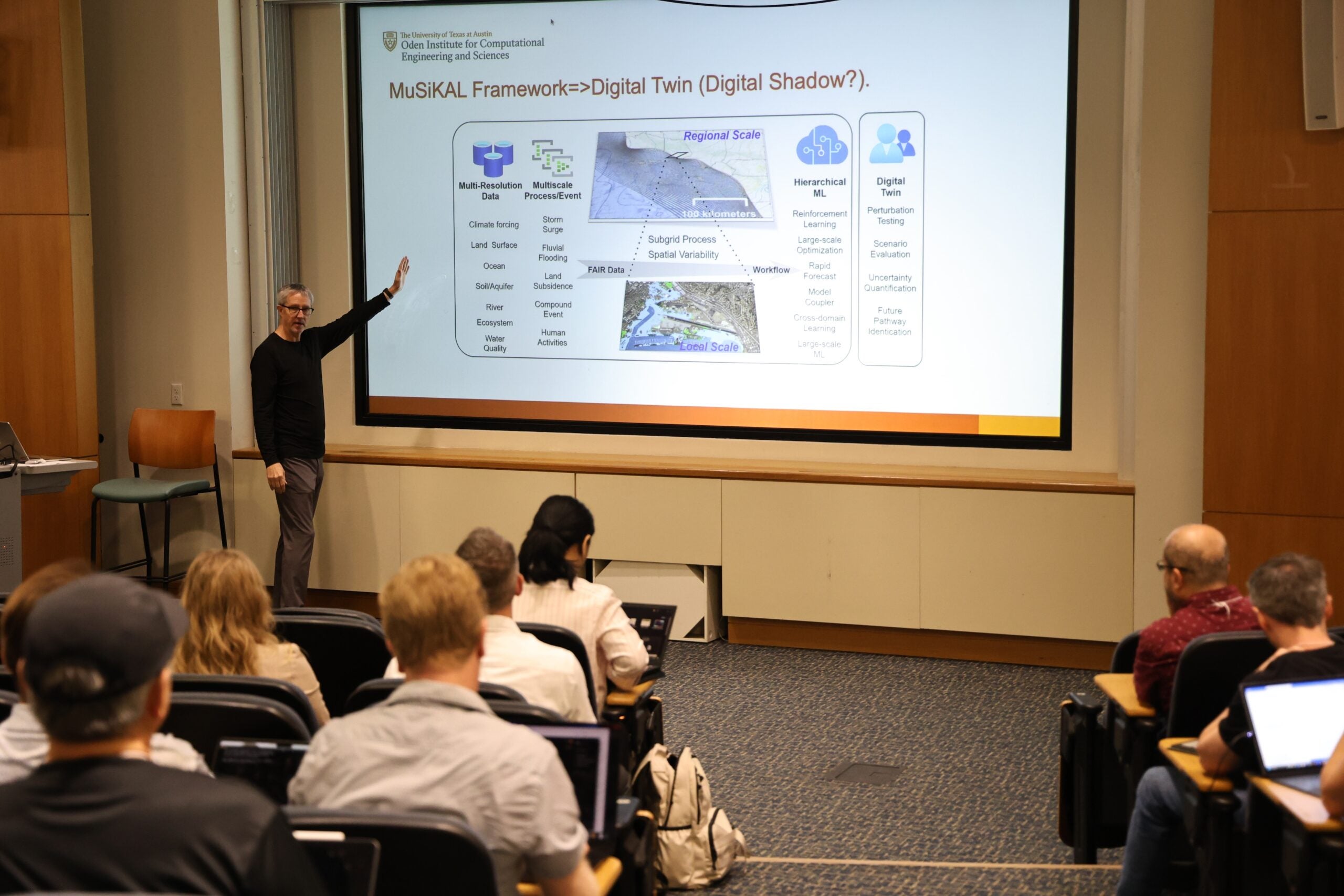
At the Oden Institute’s Center for Computational Oncology, for example, researchers are creating biophysical models of tumors to customize treatments for cancer patients, led by center director Thomas Yankeelov. Another team at Oden, led by Clint Dawson, are creating digital twins to predict hurricane storm surges to help state and local government leaders know whether to evacuate neighborhoods and where to stage resources.
In addition to the Oden Institute, researchers across campus, including the Cockrell School of Engineering, College of Natural Sciences, Jackson School of Geosciences, and Texas Advanced Computing Center (TACC) are poised to conceive and evolve next-generation AI technology to inform future energy and security decisions.
They’ve already established UT as a national leader in digital twin research, advancing foundational theory, leading major federal initiatives and deploying this technology across aerospace and defense systems, natural hazards, energy systems, cities, microelectronics, healthcare and communications.
It Starts with Foundational Mathematics: The Oden Advantage
Under the leadership of Karen Willcox, the Oden Institute is establishing mathematical foundations for predictive digital twins. Researchers at the institute integrate scientific machine learning and reduced-order modeling so digital twins can update in real time with rigorous uncertainty quantification — ensuring they are trustworthy for high-consequence decision-making.
These digital twin foundations are being advanced through large-scale research efforts that bring together interdisciplinary teams. For example, the Oden Institute is home to the Department of Energy Multifaceted Mathematics Integrated Capability Center (MMICC) on Multifaceted Mathematics for Predictive Digital Twins (M2dt). Led by director Omar Ghattas, the M2dt center includes collaborators from Sandia National Laboratories, Brookhaven National Laboratory, Argonne National Laboratory and the Massachusetts Institute of Technology. Established in 2022, the center is integrating physics-based computational science and data science to develop new mathematical and statistical frameworks, machine learning methods and computational algorithms that enable more accurate modeling, forecasting and real-time guidance for complex energy systems.
“We are already starting to see the positive impact of digital twins in critical energy, medicine and national security applications, but we are only at the beginning of what is possible,” said Willcox, who chaired the National Academy of Sciences, Engineering and Medicine report that established a national research roadmap to advance digital twins as reliable tools for engineering, medicine and integrated system decision-making.
“It is such an exciting time for UT to be in the midst of digital twin research developments and to be engaged in so many excellent partnerships across different domains,” Willcox said.
The Oden Institute is also home to a Department of Defense Multidisciplinary University Research Initiative (MURI) on mathematical and computational foundations for digital twins, with a particular emphasis on aerospace and defense applications.
And Oden Institute researchers have recently begun work with the Texas Institute for Electronics (TIE) to build a digital twin for a portion of the semiconductor manufacturing process as part of TIE’s effort to develop the next-generation of high-performing semiconductor microsystems for the Department of Defense.
“We’re excited to partner with TIE and pleased to broaden our collaboration to encompass digital twins and the Oden Institute to accelerate learning cycles across semiconductor manufacturing,” said Mark Papermaster, CTO and Executive Vice President, AMD. “Combined with the advanced packaging capabilities TIE is building, this work can drive faster co-optimization and help bring next-generation compute platforms from concept to reality more quickly.”
Infrastructure: The Computational Engine
While the private sector continues to drive significant innovation in artificial intelligence, the University has established a definitive lead in public, open-source computing power. Through TACC, the University provides the leading-edge hardware to execute complex digital twin simulations.
These simulations have run on Frontera, Vista and Stampede, several of TACC’s supercomputers that have made TACC the leading academic high-performance computing center in the nation. Using this infrastructure, UT researchers have already made great strides in deploying digital twins across a spectrum of complex engineered and natural systems.
But far greater power is on the way. TACC has been selected as home to the National Science Foundation Leadership-Class Computing Facility, which features Horizon, 10X more powerful for scientific simulations and a staggering 100X more powerful for AI performance than TACC’s current largest supercomputer, Frontera. Developed in partnership with Dell Technologies and NVIDIA, Horizon features 4000 of NVIDIA’s most powerful Blackwell GPUs and 1,000,000 CPU cores. When it comes on line this spring, it will usher in a new era of digital twins research at UT, enabling more accurate predictions, better characterized uncertainties, and more optimized decisions for ever more complex systems.
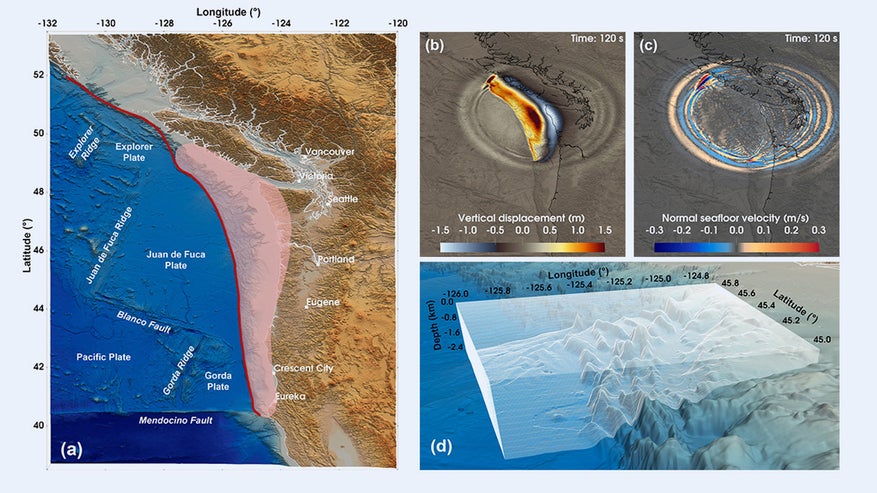
Decisions in the Blink of an Eye: A Lifesaving Digital Twin
The tsunami forecasting system that won the Gordon Bell Prize was developed by Ghattas and members of the research team from the Oden Institute, Scripps Institution of Oceanography at the University of California San Diego and Lawrence Livermore National Laboratory. They combined seafloor pressure data with predictive physics models and utilized a global network of elite supercomputers, including Lawrence Livermore’s El Capitan, the National Energy Research Scientific Computing Center’s Perlmutter, and TACC’s Frontera.
The team’s novel algorithms achieved a 10-billion-fold speedup over existing methods, a breakthrough that collapses a task previously requiring 50 years of supercomputing time into a fraction of a second — delivering life-saving forecasts in the moments they matter most.
“AI for Science differs from commercial AI because it does more than just find patterns, it reflects the laws of nature,” said Ghattas. “By learning from data through the lens of physics models, we can exploit the structure of wave propagation models to overcome the sparsity of data while still issuing accurate forecasts with rigorously quantified uncertainties.”
Beyond earthquake risk reduction, this digital twin framework provides a scalable blueprint for model-predictive warnings across a spectrum of hazards, from wildfires and severe weather to threat detection and contaminant spread.
Powering the Future: Nuclear & Grid Digital Twins
Supported by the State of Texas, mechanical engineering associate professors Kevin Clarno and Derek Haas are utilizing an $18 million research grant to analyze operational data from nuclear reactors across the country. By collecting this data, the team is building computer models to predict future operating conditions and creating a digital twin to accelerate the safety and licensing of advanced nuclear technology.
The research addresses one of the nuclear industry’s most persistent challenges: slow innovation. Because even minor design changes require years of physical experimentation and regulatory review, most nuclear reactors today are only incremental evolutions of designs developed decades ago. Digital twins provide a way to accelerate innovation by generating rigorous, physicsbased computational evidence that can demonstrate safety and performance before changes are implemented in the real world.
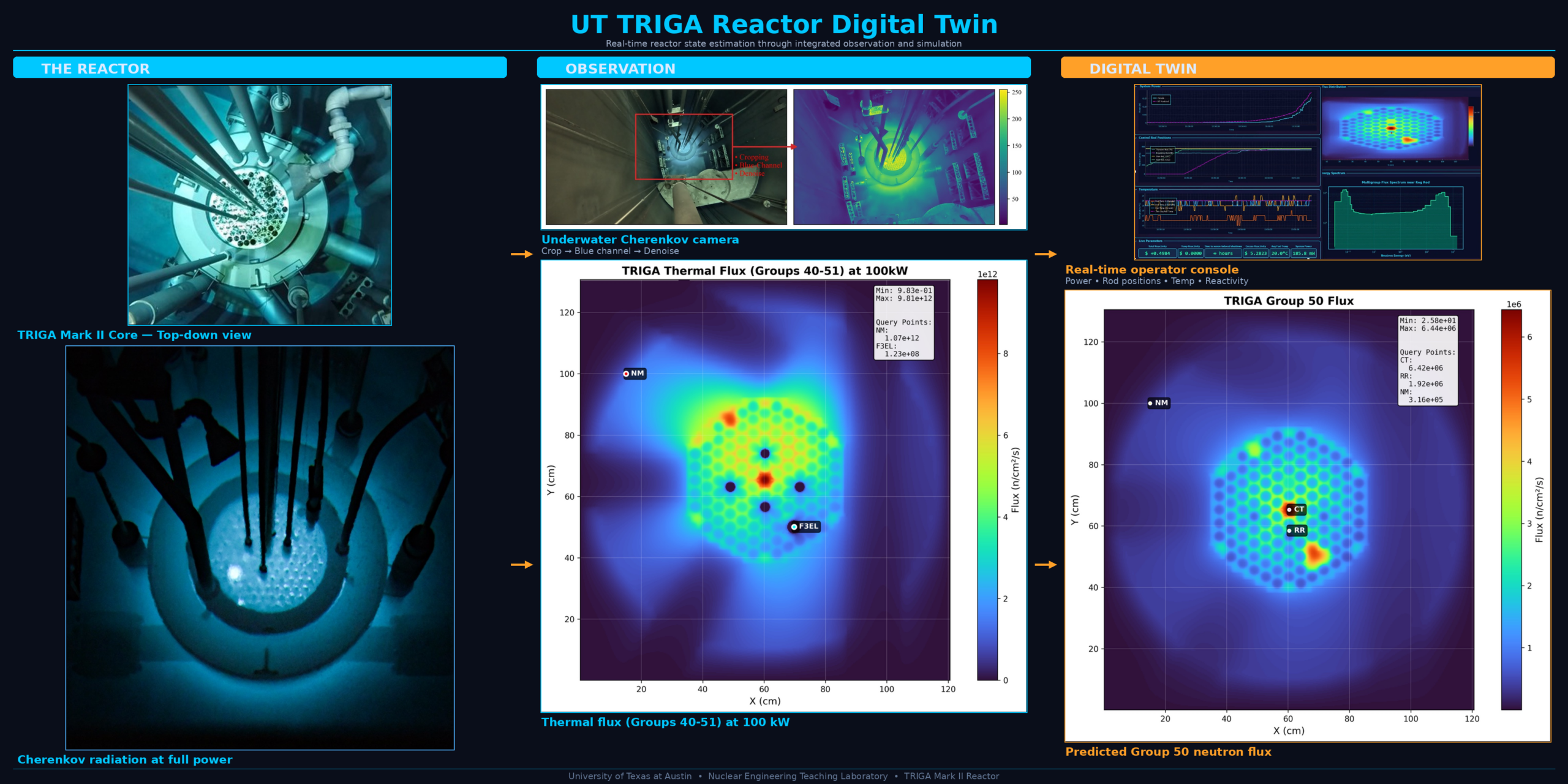
The work at UT centers on the 1-megawatt research reactor located at the J.J. Pickle Research Campus, beginning with continuous, high-frequency operational data streamed from the reactor and sent to TACC computing systems. Physics-based models reconstruct what happened in the past and predict how the reactor will behave next, giving operators advance insight into system performance and helping them plan daily operations more efficiently. Meanwhile, real-time models are running alongside the operating reactor utilizing data from new instrumentation to help to improve operations and experiments.
Clarno emphasizes that the project’s success can be attributed to UT’s interdisciplinary research culture. Nuclear engineers, reactor operators, instrumentation experts, data scientists and high-performance computing specialists work together in a continuous feedback loop, Clarno said. That same systems-level approach shapes student training, embedding graduate and undergraduate researchers in the full research continuum.
Looking Ahead
From tsunami early warning that collapses 50 years of computation into seconds, to nuclear reactor digital twins accelerating decades of innovation, to semiconductor process optimization for national defense — UT’s digital twin leadership spans the most critical challenges facing society.
“With Horizon coming online in 2026, continued investments in mathematical and algorithmic foundations through the Oden Institute, crosscutting scientific collaborations across multiple schools and colleges, and deep partnerships with national laboratories and industry, UT is uniquely positioned to expand digital twin applications across defense, energy, healthcare, natural hazards, and beyond — shaping how future generations anticipate, respond to, and overcome critical challenges,” Willcox said.