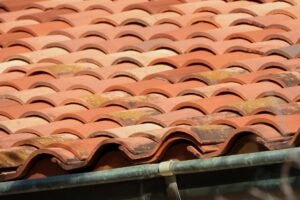
They are part and parcel of any description of the style of our campus: Spanish tile roofs. “Red tile roofs are a positive identifier of the UT building character,” the Campus Master Plan book stated in 1999. “It is one of three major building elements (the other two being limestone and golden bricks) that is crucial to the historic environment.” It was simply a happy accident that the school colors of The University of Texas at Austin wound up being the dominant colors of its core campus, orange and white.
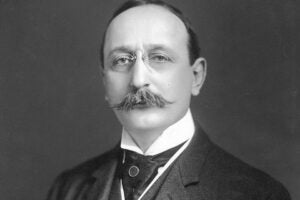
The first building to get a tiled roof was the Library, now known as Battle Hall, which was built in 1909 and designed by Cass Gilbert. Gilbert drew up numerous master plans for the campus from 1909 to 1920, and though only two of his structures were built, they established the Spanish Mediterranean character of the campus that Paul Cret carried forward with some 20 additional buildings. Gilbert felt Mediterranean style would be a good match for Austin and its climate, as Austin is at the same latitude as Cairo.

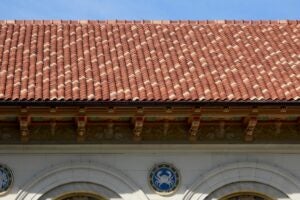
Not only was the building material well suited to the climate, but it also appealed to those who placed a high value on the state’s rich history, namely Robert Leon White, UT’s supervising architect, and William J. Battle, the professor of Greek who chaired the Faculty Building Committee for decades. The building frenzy that began in 1925 was a Spanish tile showcase that included the Biology Laboratory (1925), Garrison Hall (1926), Littlefield Hall (1927), the Engineering Building (1928), Gregory Gymnasium (1930), Welch Hall (1931) and Waggener Hall (1931), all designed by Herbert Miller Greene. Even the Hal C. Weaver Power Plant (1927) got Spanish tile.
Indeed, it was White, an avid student of Spanish colonial architecture, who suggested Cret become the University consulting architect in 1930.
Cret insisted that public buildings be modern, but he wanted the academic and student services buildings to be traditional “so that they could portray the Spanish spirit that he and William J. Battle felt was appropriate to Texas,” states the 1999 Campus Master Plan. Cret once wrote, “The origin of the State of Texas and the proximity of Mexico were an inducement to get some inspiration from the Spanish architecture, although a faithful archaeological reproduction was neither advisable nor possible. An academic building of the 20th Century ought not attempt to pass for a Spanish palace or a Medieval town hall.”


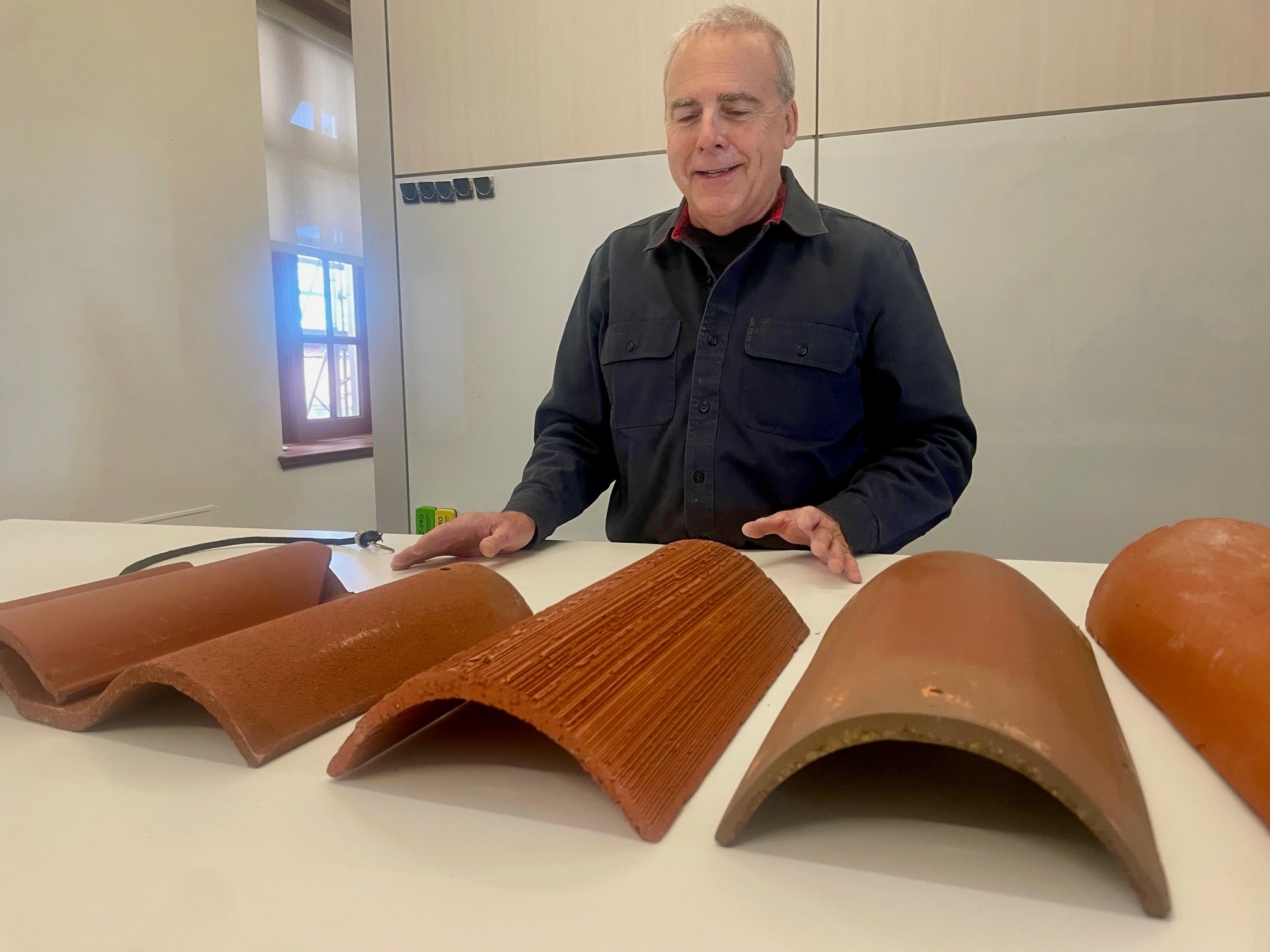
Doug Treuter is one of the foremost experts on UT’s roofs. “Roofing is really kind of boring,” he confides, “but this is interesting. I always thought this was the interesting part of the roofing industry.”
Treuter graduated from UT’s business school with a degree in marketing in 1983 and for the past 35 years has supplied Spanish roof tile for 23 UT buildings as a sales representative for central and south Texas for Dallas-based The Roof Tile and Slate Co.
Those include new buildings such as San Jacinto Dormitory, the Seay Building and the Blanton Museum of Art as well as a full roof replacement for the Etter-Harbin Alumni Center. Half of his UT jobs have been restorations such as on the Main Building’s President’s Office, the Texas Union, Gregory Gym and Sutton Hall, the other Cass Gilbert creation. The roofs have been as big as Anna Hiss Gymnasium’s and as small as the guard stand’s at 24th Street and Whitis Avenue.
For a century, the leading name in Spanish roof tile has been Ludowici, and most UT tiles have come from their factories, first in Chicago, then, after fire destroyed that facility, in New Lexington, Ohio, says Treuter.
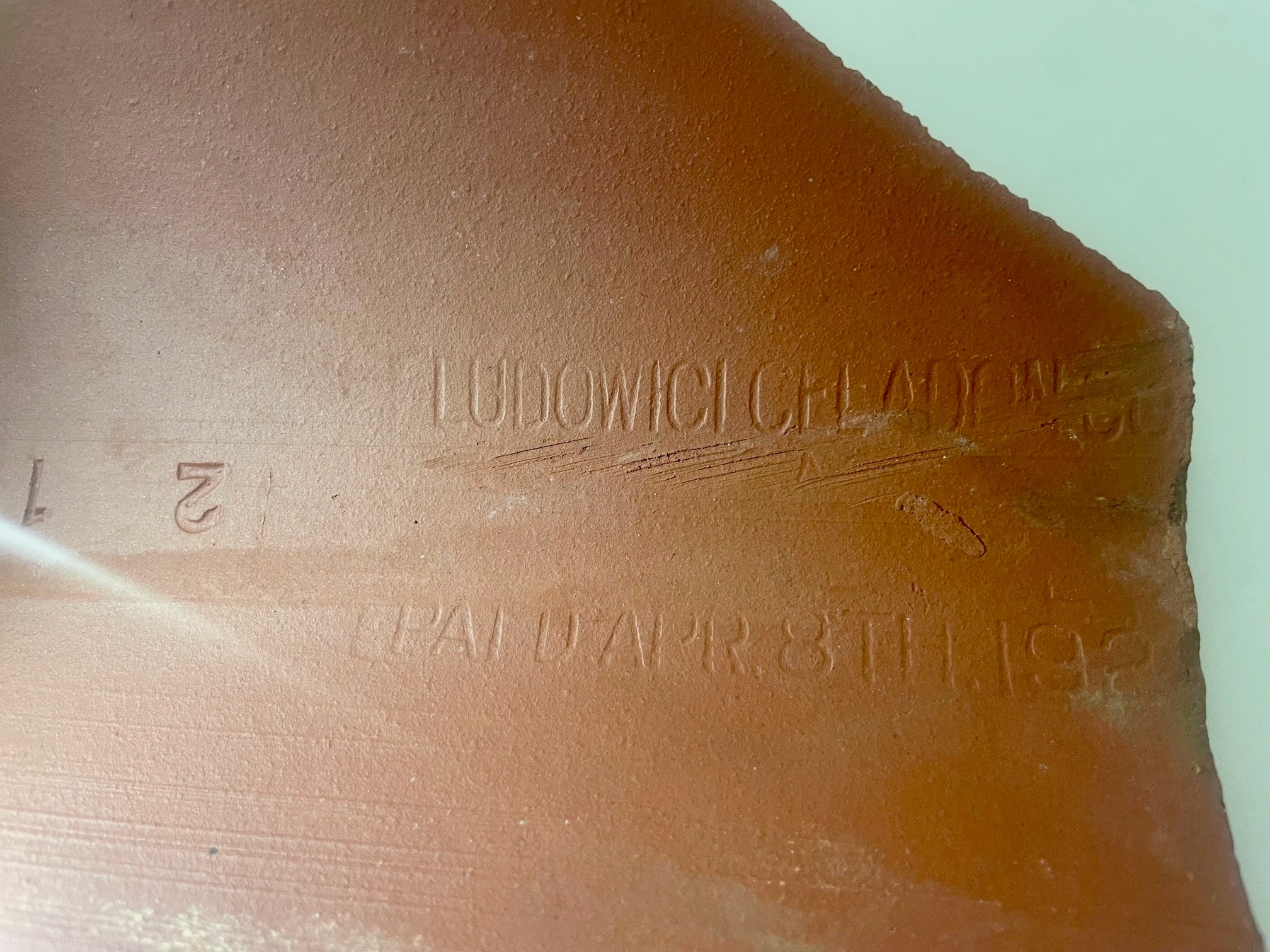
The tiled roofs on the Forty Acres that are not Ludowici are those of the Main Building, Painter Hall and Hogg Memorial Auditorium, which were made in Texas by the now-closed Mineral Wells Tile Company. UT keeps a stockpile of the Mineral Wells tile at the J.J. Pickle Research Campus. The tiles covering the Biomedical Engineering Building and William C. Powers Jr. Student Activities Center came from Gladding, McBean in California.
The only tile actually from Spain is what is on the Etter-Harbin Alumni Center, which, to add to the confusion, is known as French style. That tile, called Tejas Borja, was made in the town of Lliria.
Like most everything, what may seem in your memory or your mind’s eye to be a fairly straight-forward thing — a red-tile roof — contains a great deal of variety once you dig into the details: varieties in shape, color and texture.
To start with, there are two basic shapes of tiles: Spanish and Mission. Spanish tiles have an S-shaped profile, in which one part of the S forms the ridge and the other forms the pan between that ridge and the next. Mission tiles are simpler and are shaped like a half barrel, with half of them being placed like a rainbow and the other half being placed like a smile.
Then, within the Mission tile category, you’ve got Cubana, Greek, Italia, Palm Beach and others. The tile on the Main Building, which covers some 30,000 square feet including the President’s Office, is Cubana.
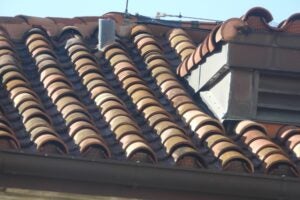

Not only do the shapes vary, but the size can too. After the clay is quarried, it sits outside to weather, then is extruded through a dye. When it is fired in a kiln at 2,000 degrees, it can shrink by as much as 15%, says Treuter.
Once you start looking closely, you’ll see at least a dozen hues of “red tile,” which actually ranges from orange to brown. Sometimes color is added to produce different shades. And some tiles are not orange at all. For example, a glance up at Battle Hall reveals that cream-colored tiles have been sprinkled artfully into the blend.
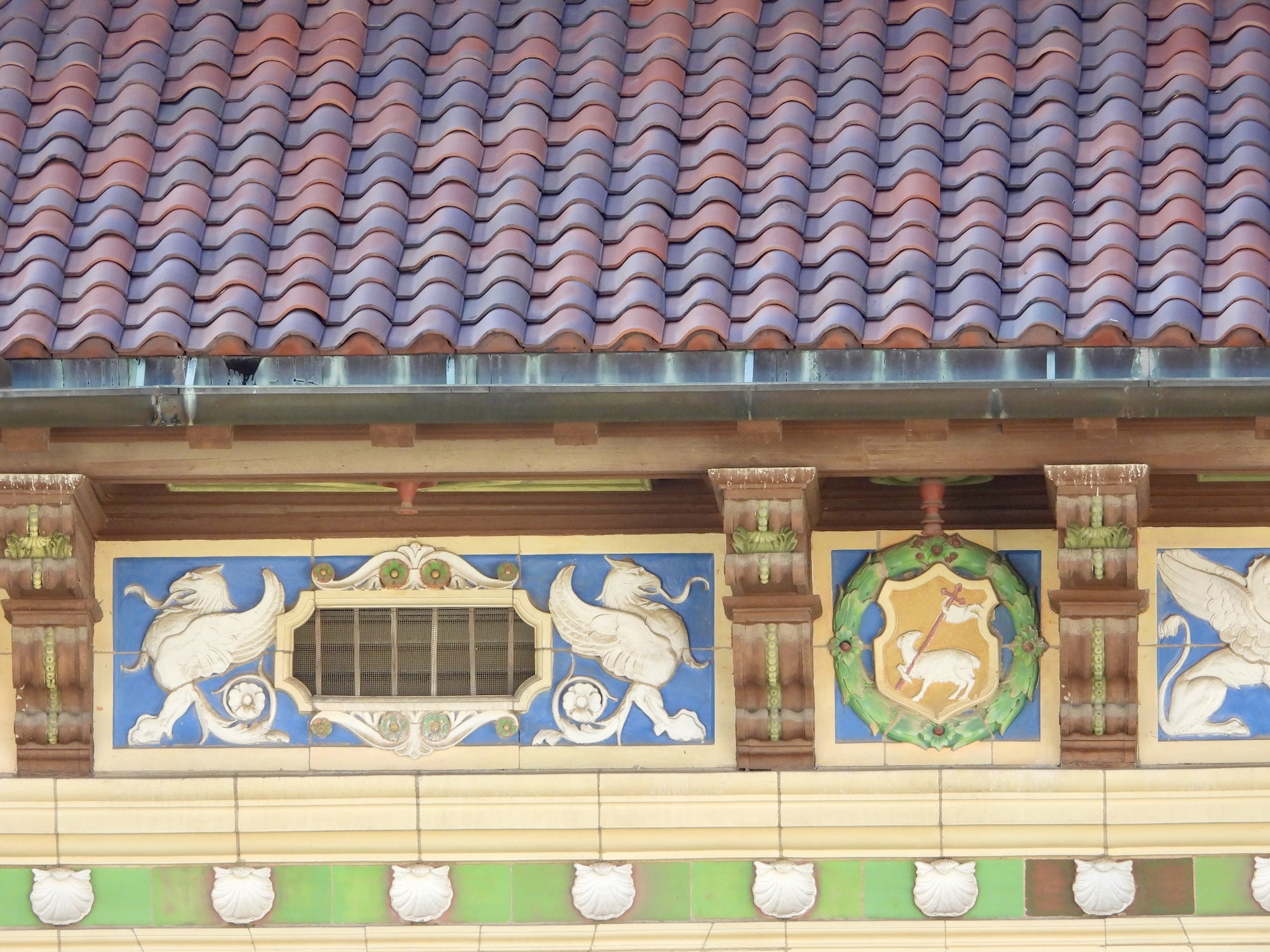
A look at Sutton Hall’s roof reveals a much darker blend of tiles. Treuter says this dark finish was achieved by starving the kiln of oxygen whereby the heat starts pulling oxygen out of the clay. He says that in this “fire flash” process, which was discontinued 20 years ago, colors could vary so much that the manufacturer had customers sign an agreement that they’d accept the tile regardless of the color. “The kiln is 2,000 degrees,” says Treuter. “There’s no way to control that. Everything was ‘color will vary.’”
Texture varies from glasslike glazes to tiles that have been roughly scored, such as on the Texas Union and Goldsmith Hall, which render a matte finish. The space between the tiles on Gearing Hall is sealed with a white mortar, giving the effect of white icing on a gingerbread house.
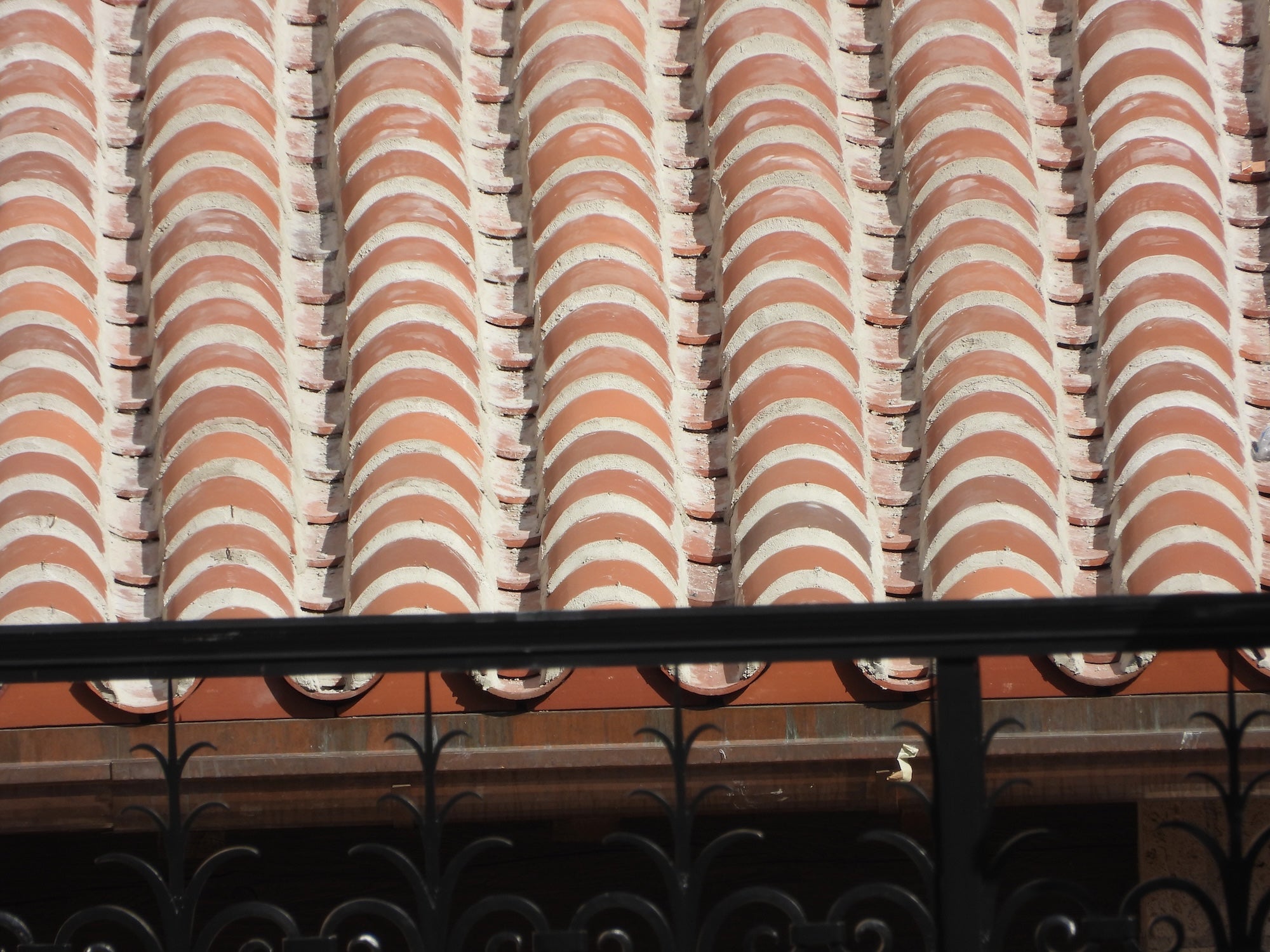
The tiles are the strongest link in the roofing system and can last 100 years, though most get replaced at about 75 years. The underlayment and the copper flashings are the weakest link in the system and are usually what triggers a reroofing.
A company that sells salvaged roof tiles (as opposed to the manufacturer) in Texas can give the new buyer a 50-year warranty, “but not if it comes from up North,” Treuter says. “If you were up North and doing these roofs, you would not be reinstalling them.” This is due to the freeze-thaw cycle. “Down here, we’re almost to the negligible frost line,” he says.
As for salvaged tile, one good clay tile 30 years old looks as good as the next, which is why the tiles now on the Laredo Post Office once covered the Taco Bell on Guadalupe Street, Treuter says. Neither snow nor rain nor heat — Live Más!
Though Treuter has walked on many roofs, he has helped install only one in his decades in the business and has the utmost respect for the roofers who put these puzzles together — using wood stringers, the on-edge two-by-fours the tiles are nailed into to join ridges, hips and gables. “These guys are artists. It’s pretty amazing to watch them make these things,” he says.
“The beauty of what I do is that people love these kinds of roofs,” Treuter says. Gilbert, Greene, White and Cret surely did, and their choice has proved a wise one and has helped make the Forty Acres truly distinct.