During his senior year, Andrew Doty, B.S. ’25, did not expect his capstone aircraft design project to grow into a professional effort tackling wildfires. The project, part of UT’s participation in the multiyear XPRIZE Wildfire contest, focused on early detection and suppression, where minutes can mean the difference between containment and catastrophe. The UT-led FLARE-X team brings together students, researchers and faculty from UT, the University of Southampton, the University of Edinburgh and the Texas A&M Forest Service.
Traditional wildfire response often relies on large aircraft, but Andrew and his teammates were tasked with a different approach
“Why not use a bunch of tiny planes instead of one big one?” Andrew says. “Before fires get too big, our smaller, autonomous aircraft go in and put them out.”
He notes that people usually think of wildfires as an unstoppable force, “this raging fire going down, sweeping through and ruining people’s livelihoods,” but that doesn’t have to be the case. “Every fire starts somewhere,” he says. “There are hundreds of wildfires happening at any one time. You’re talking about billions of dollars in damage, lots of lives lost. The technology we’re working on is about addressing that problem.”
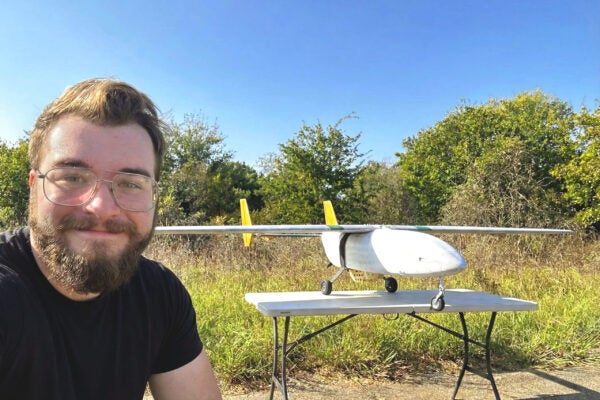
Bringing that idea to life required an intense pace and a level of commitment far beyond a typical class project. Balancing coursework and a remote internship at Lockheed Martin was demanding, but Andrew says the experience reflected real industry conditions. By the end of the course, the team had built an autonomous fleet of small aircraft — uncrewed drones — that could fly and drop fire suppression material with pinpoint accuracy.
Andrew received the T. W. Whaley Jr. Friends of Alec Endowed Scholarship, which helped cover tuition and gave him the flexibility to focus on coursework and hands-on research.
After graduation, Andrew continued working on the project full time for AIVE, a startup that grew out of the FLARE-X effort and supports the development of wildfire detection and suppression technology. As aircraft lead, he helped guide a redesign that made the planes more efficient.
“Seeing that first takeoff after so many late nights working on it was awesome,” Andrew says. “Watching it fly and seeing everything work and come together the way you imagined was really exciting.”
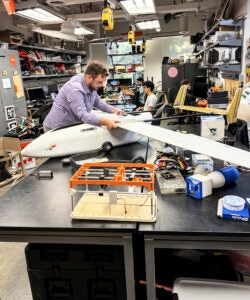
The project gave Andrew hands-on experience with every stage of building an aircraft, from early ideas to testing and design reviews. It also helped him grow as a leader, as he took on responsibility and helped guide other students on the team. Along the way, he learned from experienced mentors, including aerospace engineering professor Luis Sentis and professor of practice Greg Zwernemann, who has more than four decades of experience in aircraft systems development.
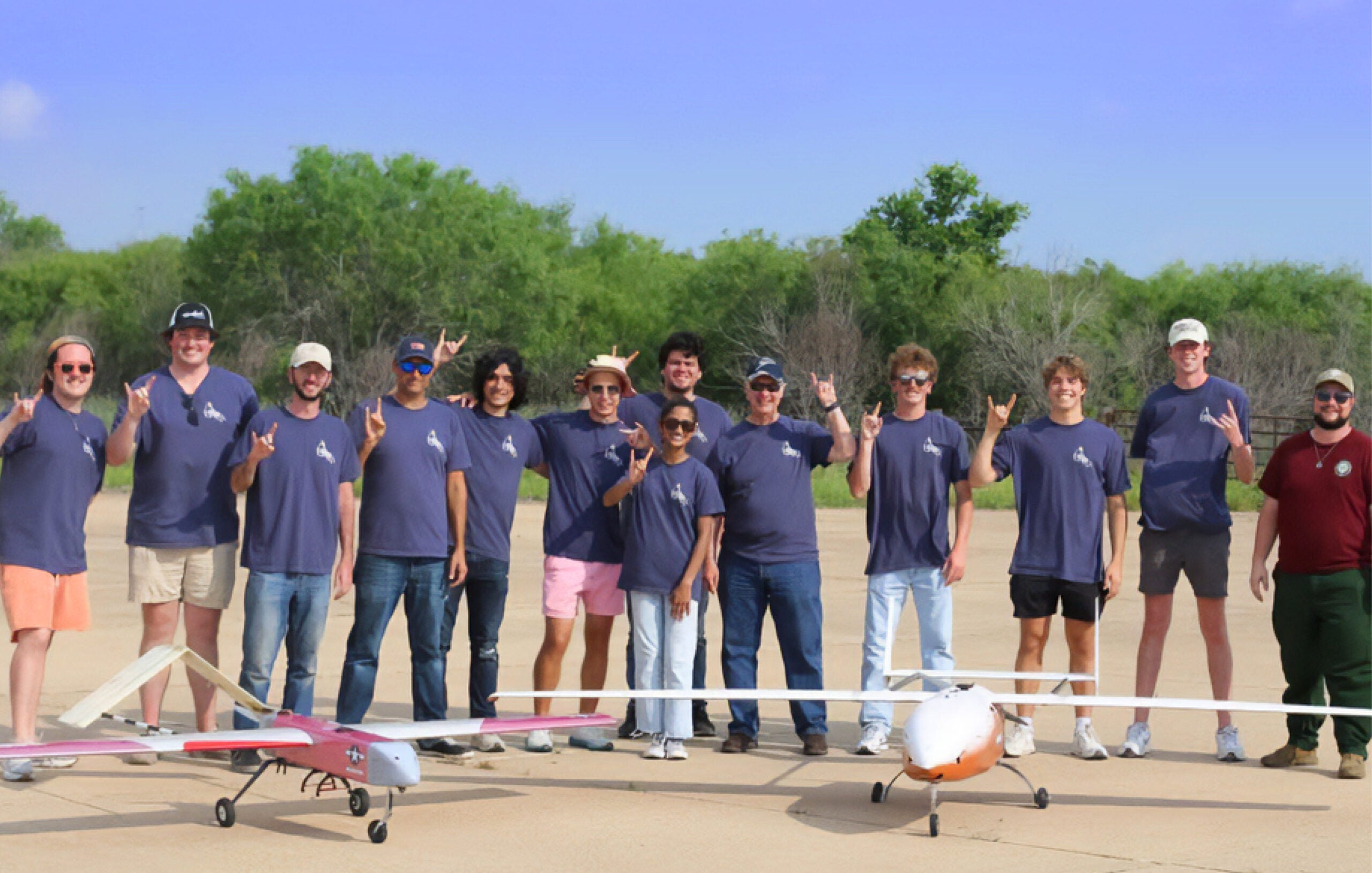
That work was made possible through philanthropic support connected to AIVE, the joint venture created by Sentis, engineering professor Adela Ben-Yakar and the Leo Lion Co., an investment group, to support the FLARE-X project at UT.
“The students are already performing in incredible ways, but with this funding, they can take their education to the next level, connecting what they learn to competitions and eventually to industry,” Sentis says. “This experience will help prepare them.”
For Andrew, that support made the difference between a classroom project and a career-defining opportunity.
“That kind of experience wouldn’t have been possible without philanthropy,” Andrew says. “Without their donations, I wouldn’t be here. I wouldn’t have a job, and I wouldn’t be able to work on this cool project.”
If you would like to support future leaders like Andrew, please consider making a gift as we enter the final months of the What Starts Here campaign.