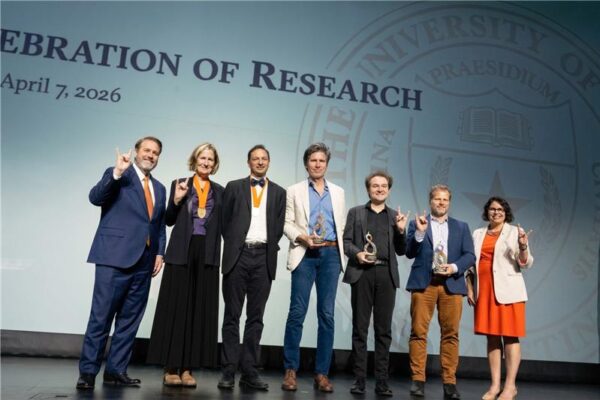
Five University of Texas at Austin researchers — whose work includes revolutionizing cancer treatment and reimagining how the world experiences Jane Austen — were honored at the annual Celebration of Research.
The event, hosted by President Jim Davis, recognized recipients of two prestigious awards: the President’s Research Impact Award, honoring researchers whose work has fundamentally changed lives and perspectives, and the University Research Excellence Awards, celebrating career-long accomplishments, creative research endeavors, and groundbreaking research papers.
Janine Barchas, Chancellor’s Council Centennial Professor in the Book Arts and an English professor in the College of Liberal Arts; and Thomas Yankeelov, director of the Oden Institute’s Center for Computational Oncology and W.A. “Tex” Moncrief, Jr. Chair in Computational Engineering and Sciences, received the 2026 President’s Research Impact Award.
Recipients of the 2026 University Research Excellence Awards are:
- Career Award – Brian Korgel, director of the Energy Institute and Rashid Engineering Regents Chair in the McKetta Department of Chemical Engineering
- Creative Endeavor Award – Oscar Cásares, Susan Taylor McDaniel Regents Professor of Creative Writing in the College of Liberal Arts
- Research Paper Award – Edoardo Baldini, assistant professor of physics, College of Natural Sciences
Bringing Jane Austen to a New Generation
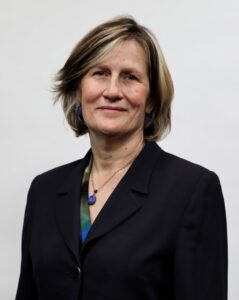
The revered English novelist Jane Austen was born 250 years ago, yet she continues to captivate modern audiences thanks to Barchas’ work. In addition to writing traditional academic books, Barchas has pursued nontraditional and innovative projects that have engaged broad public audiences.
Her creative endeavors include:
- “The Novel Life of Jane Austen”: A graphic novel that relies on extensive scholarship and a format not previously used for a biography of Austen.
- “What Jane Saw”: A digital, historical reconstruction of blockbuster art exhibits that Austen attended in 1796 and 1813 gives audiences the opportunity to experience the exhibit as the author did.
- Major exhibitions: Barchas has curated numerous exhibitions, including those at the Grolier Club in New York City and Jane Austen’s House in Chawton, England. The “Will & Jane” exhibit at the Folger Shakespeare Library in Washington, D.C., for example, explored the parallel afterlives of Austen and William Shakespeare.
“Janine has had a great impact on the world of Austen studies,” said Lizzie Dunford, director of Jane Austen’s House Museum. “Janine embraces all sorts of different ways of looking at Austen’s life and work. It is impossible not to be inspired by her work.”
Transforming Cancer Treatment Through Digital Innovation
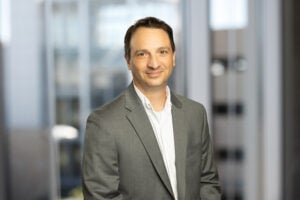
Yankeelov, who is also a professor of biomedical engineering in the Cockrell School of Engineering, is a global leader in the development of personalized data-driven digital twins, or virtual replicas, created from noninvasive medical imaging that can predict how breast cancer tumors will respond to various treatments. This allows clinicians to virtually test different therapies and select the most effective approach for each patient, potentially avoiding ineffective treatments and unnecessary side effects.
Yankeelov, who established the Center for Computational Oncology at the Oden Institute, is internationally recognized for his seminal contributions to the quantitative imaging and mathematical modeling of cancer and translating these techniques into clinical applications. He’s currently working with MD Anderson Cancer Center to test his predictive models in clinical trials and determine how they can be incorporated into patient care. The goal is for this approach to be established by the time the UT medical center opens in partnership with MD Anderson in 2030.
“His work in developing robust models of cancer micro-physiology and biology is at the leading edge of enabling predictions for individual patients to allow for individualized cancer treatments” said Caroline Chung, vice president and chief data and analytics officer at MD Anderson. “He is an outstanding scientist, a gifted educator and a passionate leader dedicated to advancing the field of computational oncology to improve the lives of patients.”
Recognizing Research Excellence
The University Research Excellence Awards recognize faculty members who represent any discipline and are selected annually through a competitive peer review process.
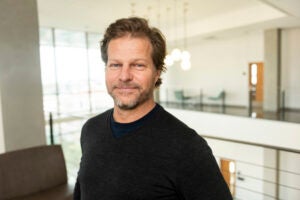
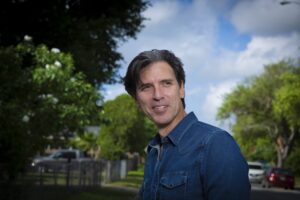
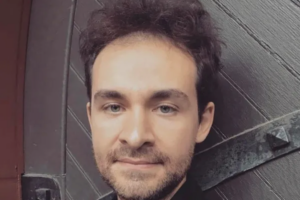
Brian Korgel’s pioneering research on quantum dots, nanowires, photovoltaics and battery materials has shaped the landscape of next-generation energy technologies. His ability to bridge fundamental materials science with applied engineering solutions has led to innovations that address critical global challenges in renewable energy, sustainability and nanotechnology commercialization. And as director of the Energy Institute, he leads interdisciplinary research addressing critical challenges in energy production and storage.
Oscar Cásares’ multimedia performance work, “Postcards From the Border,” reflects his ongoing research of the U.S.-Mexico border as well as his childhood growing up in the Rio Grande Valley. The production grew out of an essay Cásares wrote for Texas Monthly, which took the form of postcard vignettes addressed to his young daughter. On stage, Cásares reads the postcards, accompanied by live music, photographs and documentary footage.
Edoardo Baldini’s research uncovered a giant effect in two-dimensional materials where magnetic and electrical properties are deeply intertwined and can be controlled with light pulses. This discovery, published in Nature, represents the strongest magnetoelectric coupling ever measured at terahertz frequencies — speeds a trillion times per second. The breakthrough could enable a new generation of ultrafast electronic devices, advanced sensors, and multistate memory systems that simultaneously manipulate electric and magnetic properties.
The Office of the Vice President for Research, Scholarship and Creative Endeavors oversees the nomination and selection process for both awards. To view videos of the recipients, visit the TEXAS Research YouTube channel.