Preparing for the State’s Future Energy Needs
At UT Energy Week 2026, researchers and energy leaders from across campus and industry led five days of panels and presentations on the future of energy in Texas.
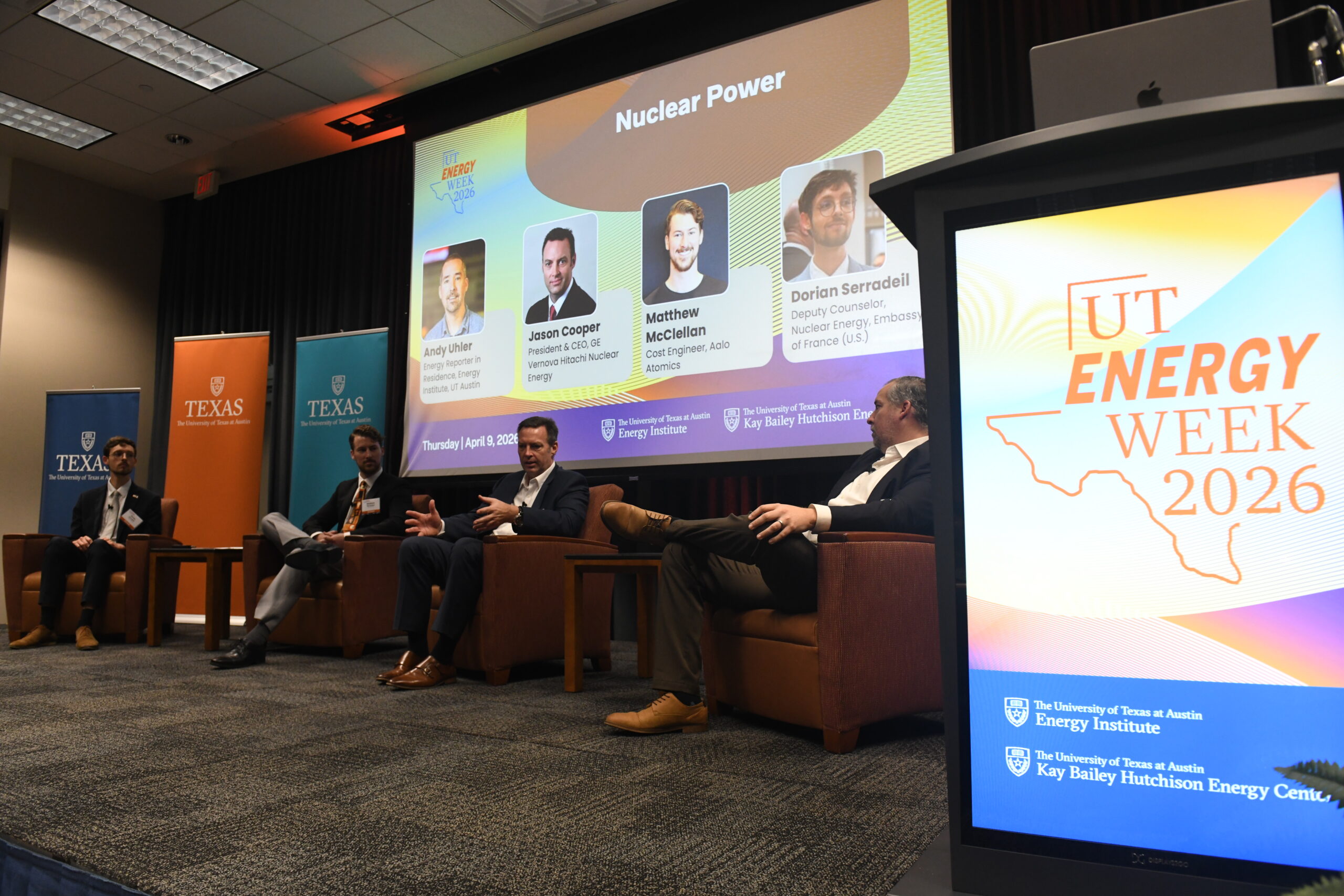
Expertise and innovation lit up UT Energy Week. Co-hosted by The University of Texas at Austin’s Energy Institute and the Kay Bailey Hutchison Energy Center, the annual five-day event brought together energy leaders, researchers, policymakers and students for panel discussions, keynotes, networking and hands-on competitions. The 2026 lineup focused on the challenges and opportunities shaping the energy landscape — from nuclear power and geothermal resources to artificial intelligence infrastructure and critical minerals.
Across every theme, faculty members and students from UT showcased the depth of their expertise and the impact of their research alongside industry and government experts on the future of energy in Texas.
Derek Haas on the future of nuclear education at UT:
Monday’s nuclear symposium opened with Derek Haas, associate professor in the Walker Department of Mechanical Engineering, looking at the future of education as Texas and the nation face rising energy demand driven by industrial and technological growth.
At UT, nuclear research spans energy, security, medicine, materials degradation, robotics, safety and isotope discovery. Students at the undergraduate and graduate levels are working with national laboratories and industry leaders to design molten salt reactors, develop digital twin models that bridge computer simulations with real-world reactors, and study nuclear security. Haas also highlighted the rapid growth of nuclear education at UT, noting that in just a few years the program has expanded from struggling to get the minimum 10 students in each class to waitlisted courses of 48 students across every program and partnerships spanning science, engineering and the humanities.
Ning Lin on aligning power, water, land and community to de-risk data center growth:
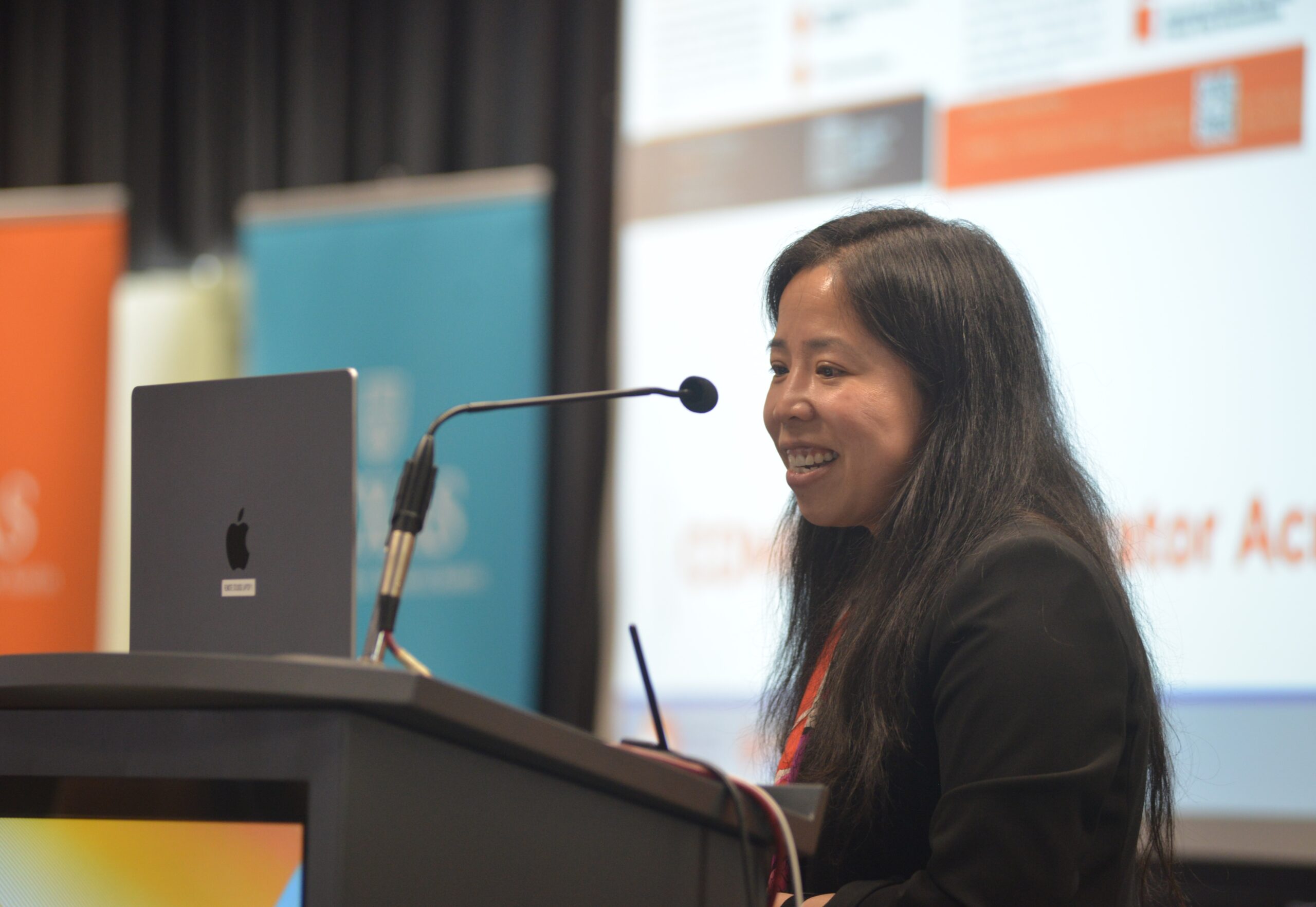
Throughout Energy Week, UT experts tackled the rapid expansion of digital infrastructure, focusing on AI and data centers. Ning Lin, chief economist at UT’s Bureau of Economic Geology, gave a presentation on the COMPASS Consortium’s research on addressing the growing convergence of large-load sectors within shared energy, water, infrastructure, and community systems. This includes data centers, oil and gas, advanced manufacturing, refining, and mining, and provides a framework to optimize strategies for power allocation and building sustainable infrastructure.
COMPASS stands for collaborative optimization and management of power allocation-surface and subsurface strategies, and aims to bring together industry, communities and policymakers to shape the future of large-load growth. Research by Lin and her team has resulted in the publication of papers that provide a system-of-systems framework that touches on site suitability, permitting and timeline prediction, water resource integration and cooling technology, on-site generation and grid resilience modeling, and community solutions and policy.
“Texas is facing a generational opportunity,” Lin said. She and her team hope the tools and information they can provide will help the state maximize its potential.
Ken Wisian on using geothermal energy resources to sustainably power AI & data centers:
Ken Wisian is a researcher in the Bureau of Economic Geology, Environmental Division, whose research focuses on geothermal systems for electricity generation. In his presentation at Energy Week, he discussed recent breakthroughs in geothermal energy and its potential to act as an option for on-site generation at data centers.
“This is the biggest boom in geothermal energy I’ve seen since doing my Ph.D. in the ’90s,” Wisian said. And with the increasing power demand for large-scale digital infrastructure, he thinks geothermal energy may be a solution.
According to Wisian, geothermal holds great promise, as currently 25% of land on Earth is viable for geothermal energy production. Additionally, geothermal systems can harvest energy from a large subsurface area while having minimal impact to the land’s surface, and it can provide operators the flexibility to drill on-site at data centers. Wisian’s work continues to further geothermal research and development of sites as a sustainable option for large power demand not reliant on the grid.
President Jim Davis and Alumnus Rudy Garza on the Future of Energy in Texas:
During the panel “Energy Leaders in Dialogue,” President Jim Davis interviewed alumnus and his classmate at UT, Rudy Garza, who is now the CEO at CPS Energy in San Antonio. The pair talked about the challenges facing Texas during the next few years as organic population growth and infrastructure expansion increase energy generation needs, and the creative solutions that could solve them.
With decades of experience as an energy leader, Garza shared insight into how Texas can invest and prepare for the future. By leveraging strengths across energy sectors, the state can meet its upcoming needs. “A diversified system is the best way to provide reliability,” he said.
Davis and Garza also discussed the future of energy education at UT and how the University is working to prepare students for careers in energy, including a focus on data-driven decision-making and encouraging students to be lifelong learners.
Andy Uhler and Brandon Mulder on community support across Texas:
For the past year and a half, Andy Uhler, the Energy Institute’s energy reporter in residence, has traveled across Texas interviewing people for “Phases & Stages: The Texas Energy Story.” The podcast explores stories in towns where various kinds of energy production happens, discussing the growing opportunities and challenges that locals face.
At Energy Week, Uhler brought along energy journalism fellow Brandon Mulder to record the finale of season one, where they discussed community findings on data centers and new forms of energy generation in rural areas. Uhler’s reporting is helping inform the public and expert researchers about how Texans are adapting to changing energy landscapes.