For 20 Years a UT Initiative Has Put First-Year Students at the Forefront of Discovery
Launched in 2006, the Freshman Research Initiative has become a national model for teaching hands-on STEM to undergraduates.
Image credit
In 2005, faculty and leaders at The University of Texas at Austin were seeking ways to give undergraduates the chance to do meaningful research early on. Too many promising students were having to wait until they were juniors or seniors to start, giving them only limited time to dig deeply into meaningful work. It was a problem everywhere: the National Science Foundation (NSF) even wanted to know how best to enhance the undergraduate research experience.
To put UT in a strong position for related funding, the dean of the College of Natural Sciences at the time, Mary Ann Rankin, set aside space and funding to start a pilot program. It had 43 students in chemistry, biochemistry and molecular biology research streams in Spring 2006. Soon after, the University received grants from the NSF and the Howard Hughes Medical Institute that allowed the program to rapidly expand under the guidance of its first director, Sarah Simmons.
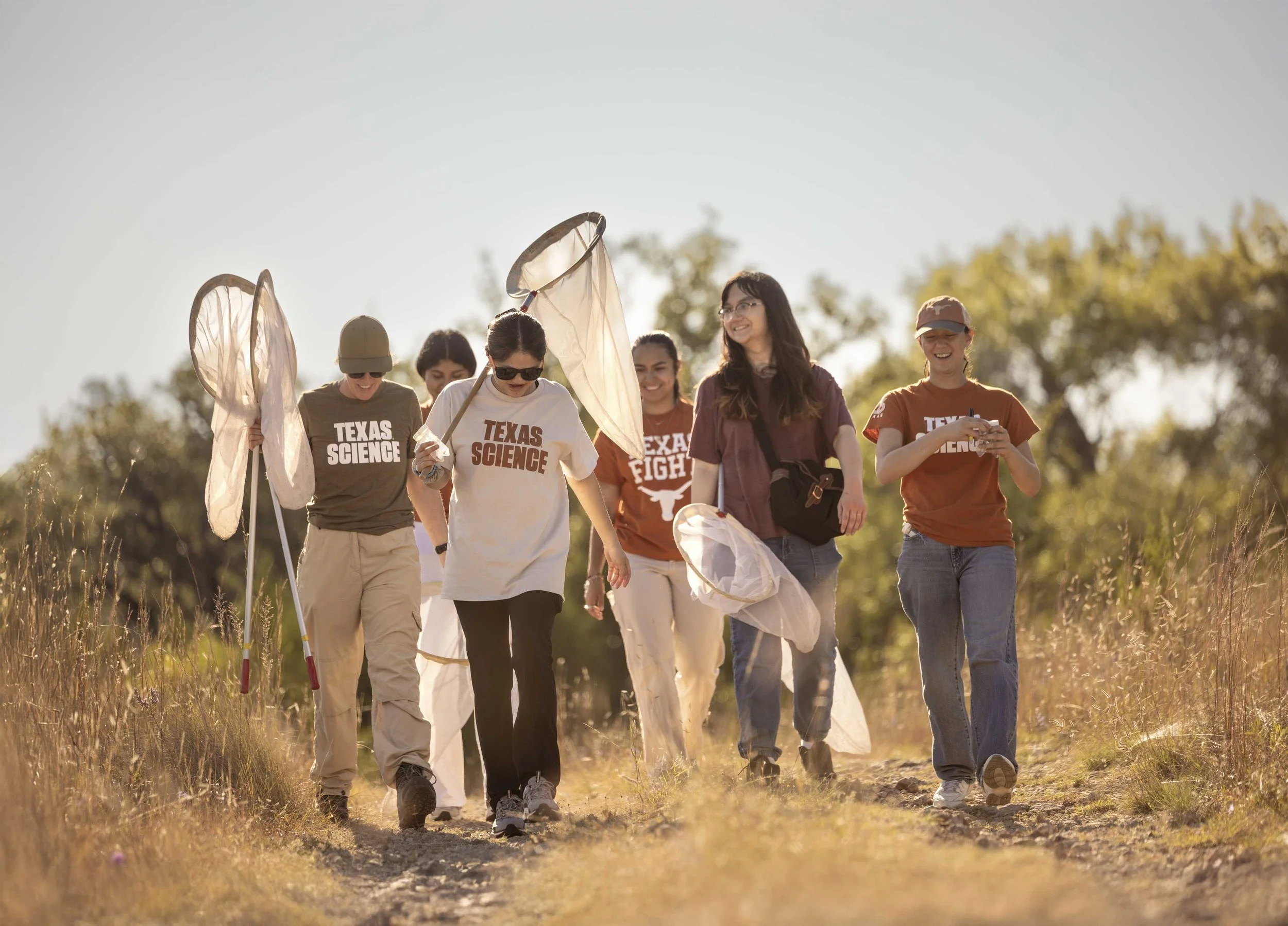
Today, UT’s Freshman Research Initiative (FRI) is the country’s largest program hosting first-year students in labs alongside scientists to work on real-world problems. About 1,100 new students join each year, and another 700 continue as peer mentors. With 36 different areas of focus — spanning robotics, superconducting materials, biomanufacturing and more — it’s also the most wide-ranging in scientific disciplines.
For example, in the Autonomous Robots research stream, student Kamilah Clark and her classmates built an AI chatbot able to translate live video of someone communicating via sign language, along with their facial expressions, into text. She said the experience helped her get the most out of a summer Amazon internship working on a data science project, right after her first year as an undergrad.
“FRI gave me experience with artificial intelligence, project-based learning and collaboration. That’s what helped me succeed at Amazon,” the computer science major said.
To date, more than 16,000 UT students have participated in the program. More than 350 have co-authored scientific publications, and hundreds have presented their work at national conferences. Research about FRI has found that the program boosts students’ chances of staying in a STEM major and graduating within four years, all while doing work connected to real-world questions with potential benefits for society.
To learn more about student research and the impact of FRI, read the full story in The Texas Scientist.