3 UT Professors Will Join American Academy of Arts and Sciences
College of Liberal Arts and College of Natural Sciences faculty members to be inducted in one of the oldest learned societies for independent policy research

Three faculty members from The University of Texas at Austin will be inducted into the American Academy of Arts and Sciences, an independent research center convening leaders from across disciplines, professions and perspectives to address significant challenges facing the world.
Philosophy professor Julia Driver, mathematics professor Nataša Pavlović and psychology professor William B. Swann were named among this year’s prestigious cohort of 252 leaders in academia, the arts, industry, journalism, philanthropy, policy, research and science.
“The excellence of our faculty is at the heart of UT Austin’s mission and its standing among the world’s leading universities,” said William Inboden, executive vice president and provost. “These distinguished scholars exemplify the depth, rigor and reach of our academic community — from the arts and humanities to the sciences. Their election to the academy reflects not only their individual achievements, but the vital role that research and scholarship play in advancing knowledge, strengthening our society and serving the public good.”
Julia Driver
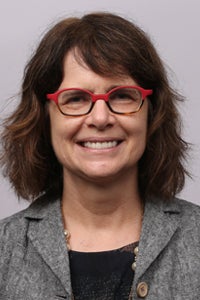
Driver is a professor of philosophy and works in normative ethics, moral psychology and metaethics. Driver has received an NEH Fellowship, a Laurence S. Rockefeller Fellowship at Princeton University, the H.L.A. Hart Fellowship at Oxford University, and the Harsanyi Fellowship at Australian National University. Additionally, Driver held a Professorial Fellowship at St. Andrews through the Centre for Ethics, Philosophy, and Public Affairs, and previously served as president of the Central Division of the American Philosophical Association. She received her Ph.D. in philosophy from Johns Hopkins University.
Driver is currently working on several projects, including a book on moral blame as a response to violations of normative expectations and a book in comparative philosophy on the topic of moral sentimentalism.
Nataša Pavlović

Pavlović is a professor in the Department of Mathematics. Her research focuses on fluid dynamics and nonlinear dispersive partial differential equations. She is particularly known for her collaborative work with Nets Katz, where they developed an approach to constructing singularities in equations resembling the Navier–Stokes equations by transferring a finite amount of energy through an infinitely decreasing sequence of time and length scales.
Pavlović has previously been awarded a Sloan Research Fellowship, was elected as an American Mathematical Society fellow, and served as a council member at large for the American Mathematical Society. Pavlović earned her bachelor’s degree in mathematics from the University of Belgrade in 1996 and completed her Ph.D. at the University of Illinois at Chicago.
William B. Swann
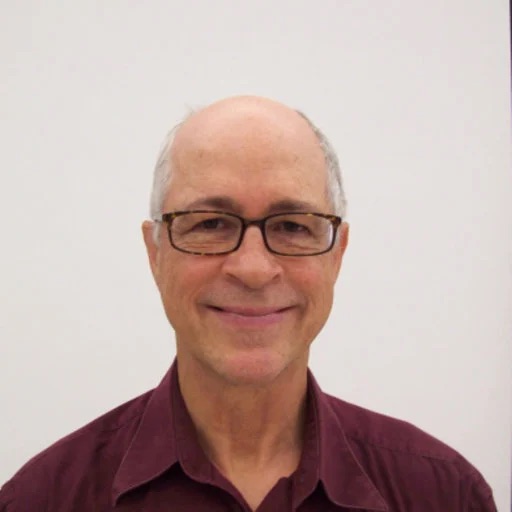
Swann is a professor of social and personality psychology, and he is best known for developing self-verification theory, which focuses on people’s desire to be known and understood by others. Swann also studies identity negotiation theory, which refers to the processes whereby people in relationships reach agreements regarding “who is who” and establish what people expect of one another. His most recent emphasis has been on identity fusion theory, a theory that people become fused with a group when they feel a visceral sense of connectedness with that group, which is so strong that the borders between self and group become porous and permeable.
Swann has been a fellow at Princeton University, the Center for Advanced Study in the Behavioral Sciences, the American Psychological Association, and the American Psychological Society. He has received multiple research scientist development awards from the National Institutes of Mental Health and research awards from the National Science Foundation and National Institutes of Mental Health. He received his Ph.D. from the University of Minnesota.
Contributing to a History of Service
Founded in 1780 during the American Revolution by John Adams, John Hancock and 60 other scholars, the academy was established to recognize accomplished individuals and engage them in addressing the greatest challenges facing the young republic.
“We celebrate the achievement of each new member and the collective breadth and depth of their excellence — this is a fitting commemoration of the nation’s 250th anniversary,” said Laurie Patton, president of the American Academy of Arts and Sciences. “The founding of the nation and the academy are rooted in the inextricable links between a vibrant democracy, the free pursuit of knowledge, and the expansion of the public good.”
Induction ceremonies for new members will take place in Cambridge, Massachusetts, in October, during which the newly elected members will sign the academy’s Book of Members, a tradition that dates to 1785.