Billion Dollar Boxes (Photo Essay)
One of the assets of a large research university is its ability to store the objects, treasures and memories important to the society it serves.
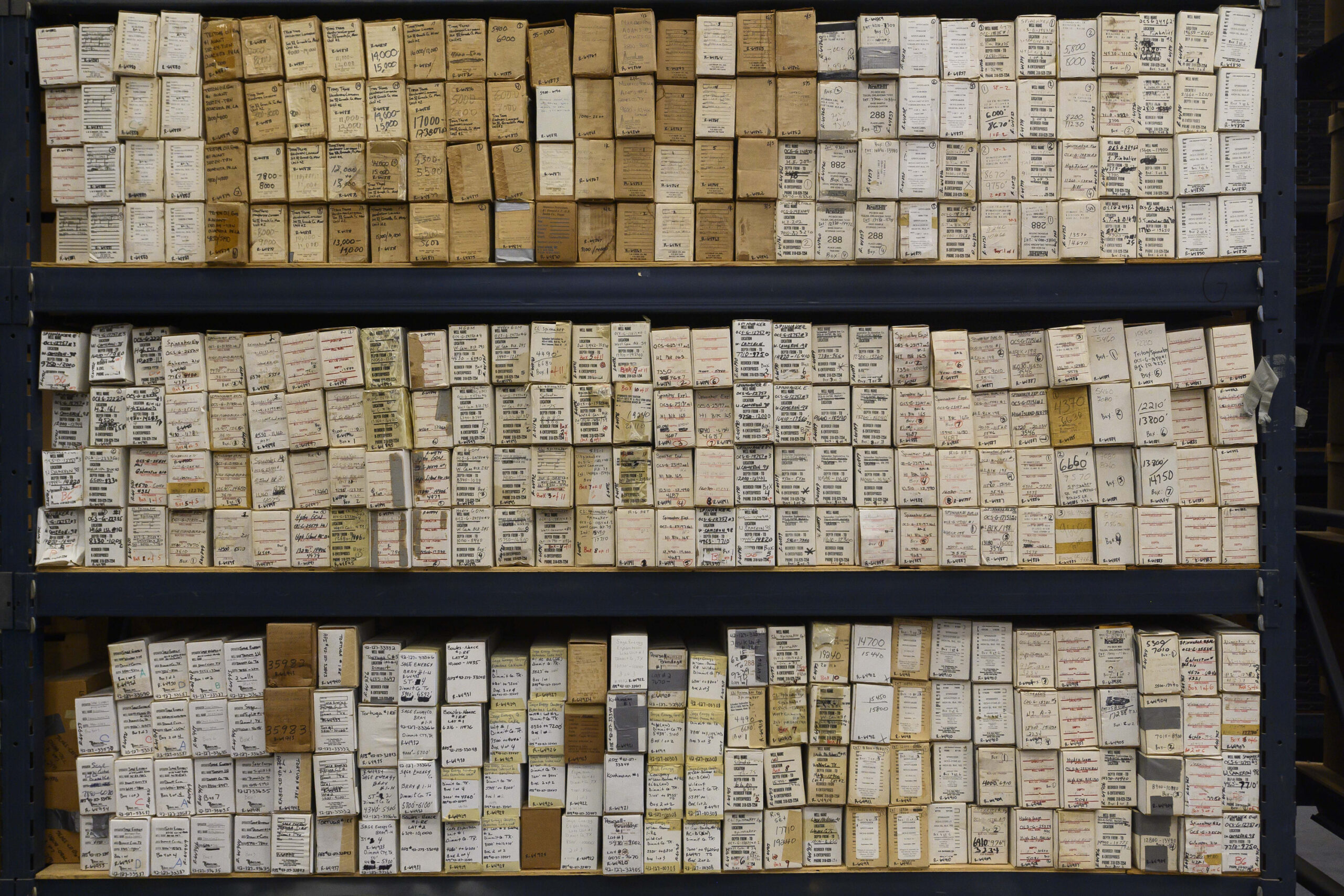
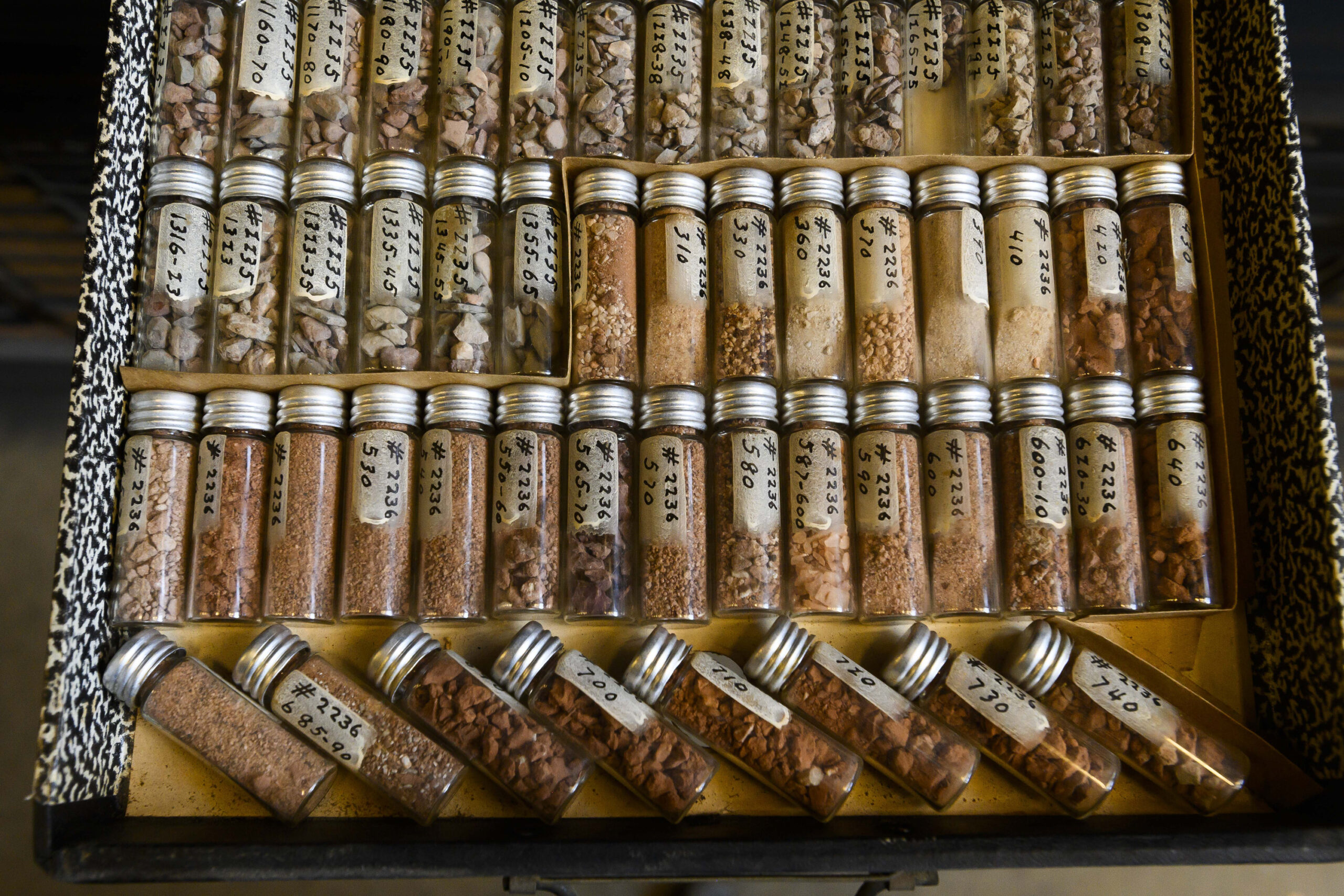
Image Credit: The now-famous Row 57 at the Bureau of Economic Geology, where the samples that led to the Eagle Ford discovery were archived and later analyzed by wildcatter and Jackson School of Geoscience alumnus Gregg Robertson.
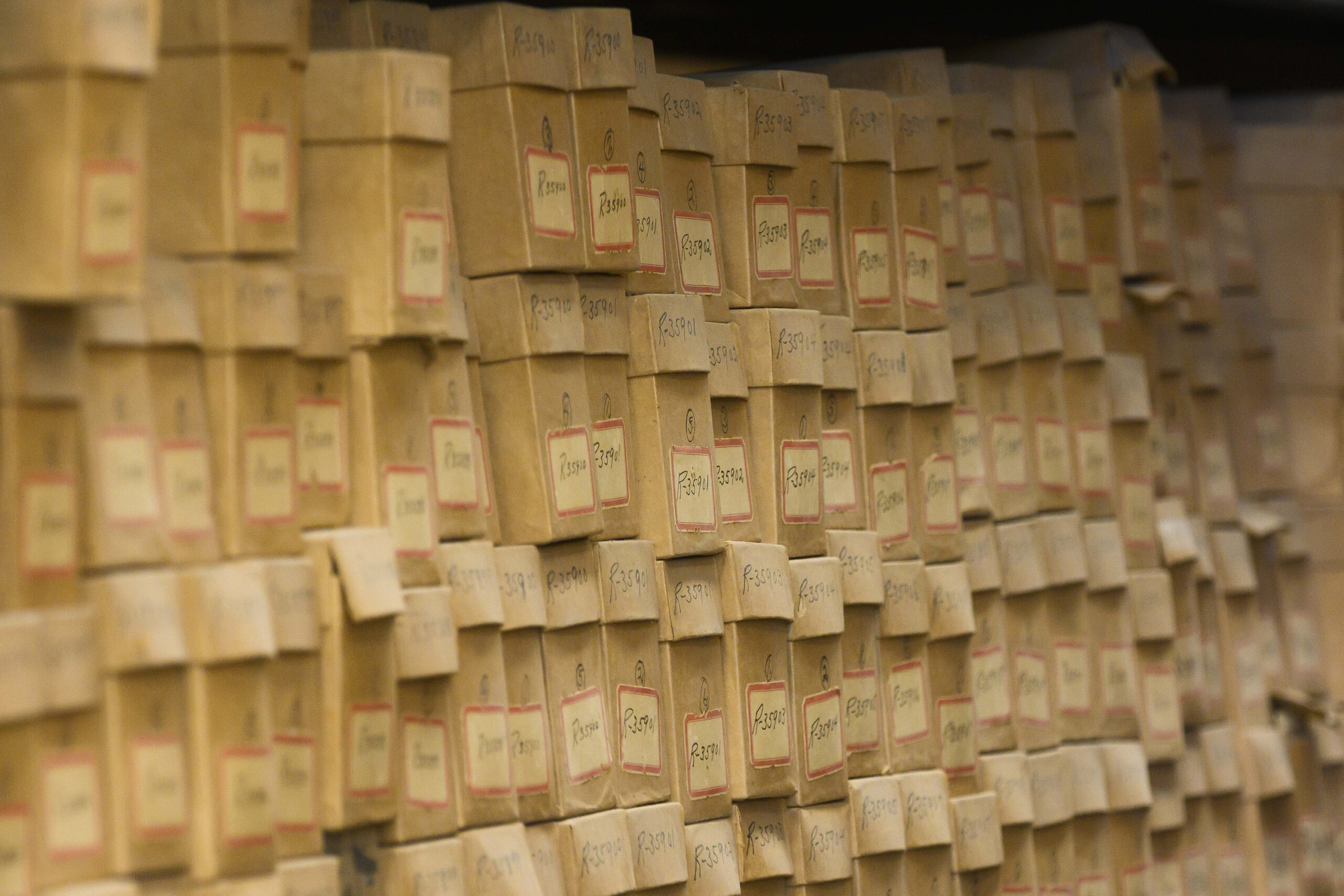
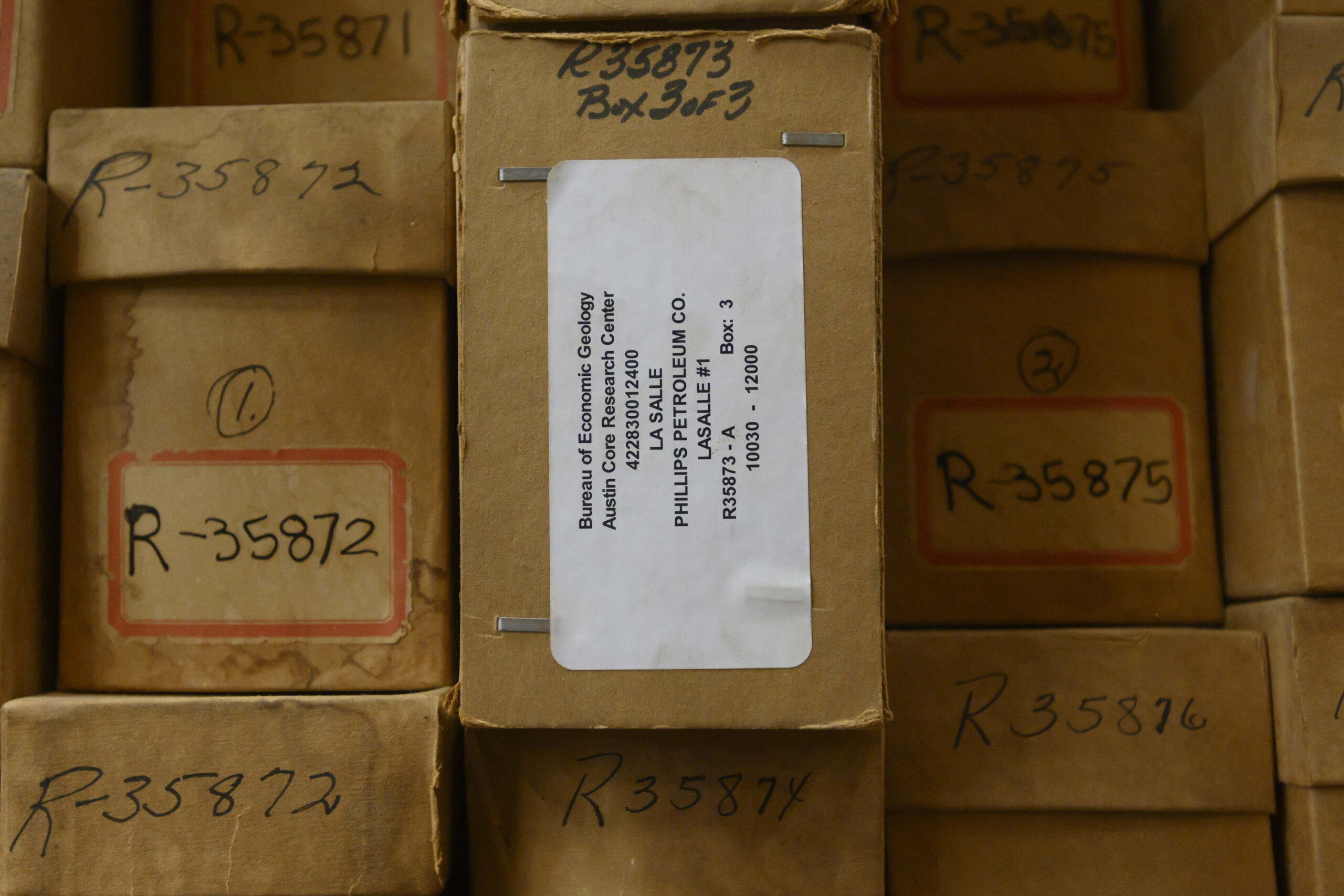
Why would someone hold on to a cardboard box of dirt and rock for more than half a century? Because what might look like plain dirt to one person is treasure to another. That was the case for the famous Eagle Ford discovery. Buried within the cavernous hallways of UT’s Austin Core Research Center were three boxes. Largely forgotten for more than 60 years, these unassuming packages sat among thousands of other small tan boxes stacked up to 15 feet high. Inside was a sample that led to the discovery of South Texas’ Eagle Ford Shale, one of the most prolific hydrocarbon-producing fields in the world.
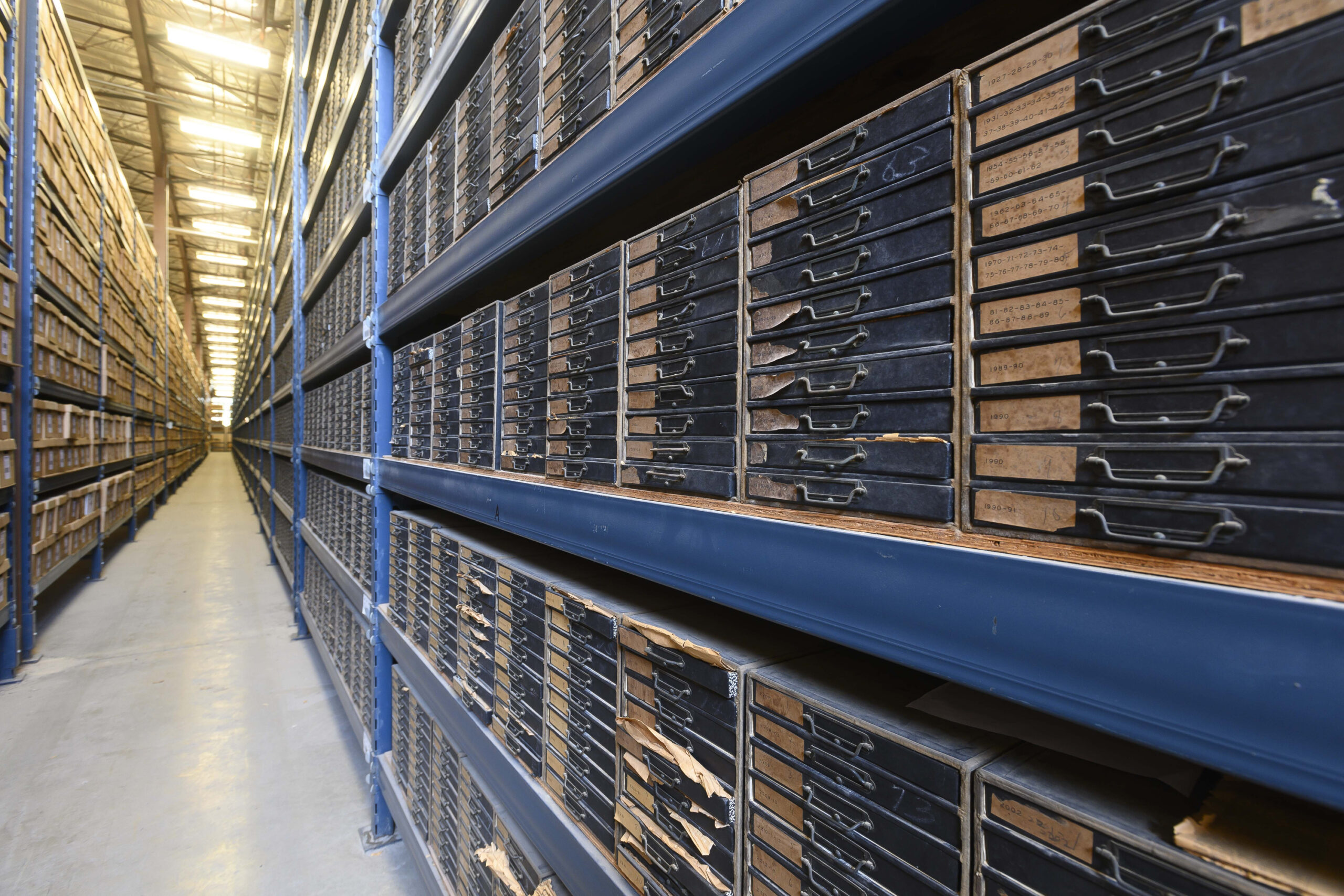
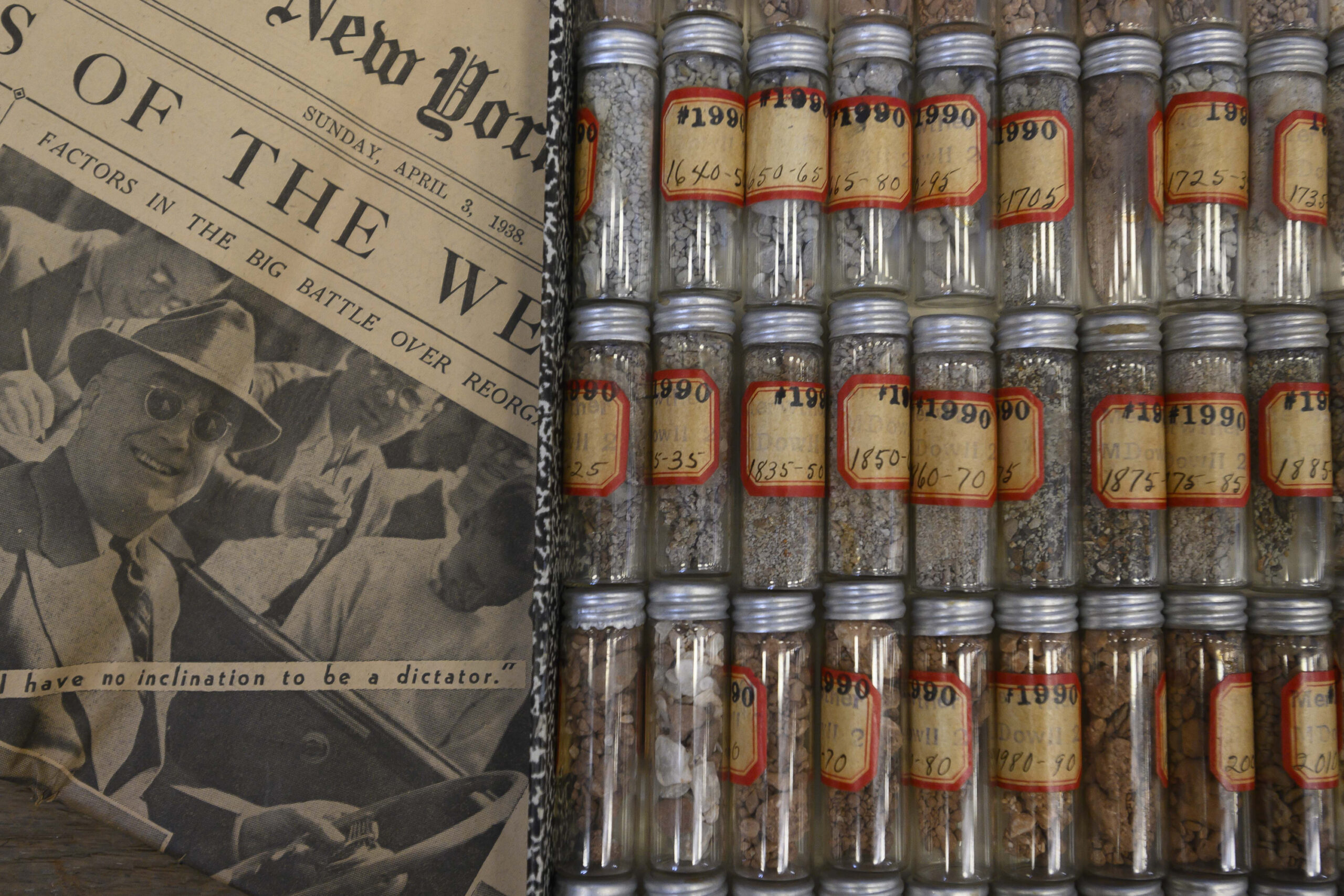
Just one aisle of the Austin Core Research Center holds more than 2 million vials of cuttings for use in geological research by anyone, public and academic alike. It is maintained by the Bureau of Economic Geology in UT’s Jackson School of Geosciences.
“It is the Library of Congress of rocks,” says Scott Tinker, state geologist and director of the Bureau of Economic Geology.
The University of Texas at Austin’s collections are of discoveries yet to be made. Here is a look into the halls and drawers of the Austin Core Research Center. Who knows what will be found next.
It is the Library of Congress of rocks.”
Scott Tinker, state geologist and director of the Bureau of Economic Geology