Proteins to Precision Robotics: Texas Researchers Collaborate To Break Ground in Cancer Care
UT Austin and UT MD Anderson are uniting to create the next breakthroughs in cancer care and research.
In the year ahead, Texas is expected to hit a record-high number of cancer diagnoses. Nationally, cancer remains the second-leading cause of death overall, and the leading cause of death among people under 85.
Tremendous progress in cancer research has led to better treatments, longer lives, more survivors and steadily declining mortality rates. But even so, cancer is still among the greatest challenges in medicine.
One of the world’s top public research universities and the nation’s leading cancer center are uniting to create the next breakthroughs in cancer care and research — faster.
Cancers are diseases like none other. They can grow uncontrollably, spread throughout the body and adapt to resist treatment. They can develop in the most vital and delicate parts of the body, swiftly, in both adolescence and old age. They can be found in all populations, in all corners of the world.
In Texas, researchers at top institutions are breaking down barriers to meet the moment. Announced in 2025, the Collaborative Accelerator for Transformative Research Endeavors combines The University of Texas at Austin’s national leadership in engineering, robotics, artificial intelligence, and life and computational sciences with The University of Texas MD Anderson Cancer Center’s world-renowned cancer care and exceptional research enterprise. Administered by the Office of the Vice President for Research, Scholarship and Creative Endeavors, the initiative includes over 50 researchers in cross-institution teams who are tackling cross-disciplinary projects that address pressing, unmet needs in oncology.
“The complexities of cancer don’t respect the boundaries between buildings and disciplines, and neither can we,” says Claudia Lucchinetti, M.D., senior vice president for medical affairs at The University of Texas at Austin and dean of Dell Medical School. “UT MD Anderson’s excellence and capabilities in cancer research and care, combined with the integrated academic health system we’re building in Austin, will unlock what’s next in treating and preventing cancer in a city where cancer leads all other causes of death.”
For each project, the goal is to deliver high-impact discoveries that translate to better, more efficient treatment, to improve cancer rates at the population level, and to innovate healthcare at scale. The first projects explore five distinct challenges and opportunities:
- The role of microplastics in cancer development
- Therapies that target metal ion levels in tumors to overcome radiation resistance
- Protein drugs that combat aggressive, difficult-to-treat forms of breast cancer
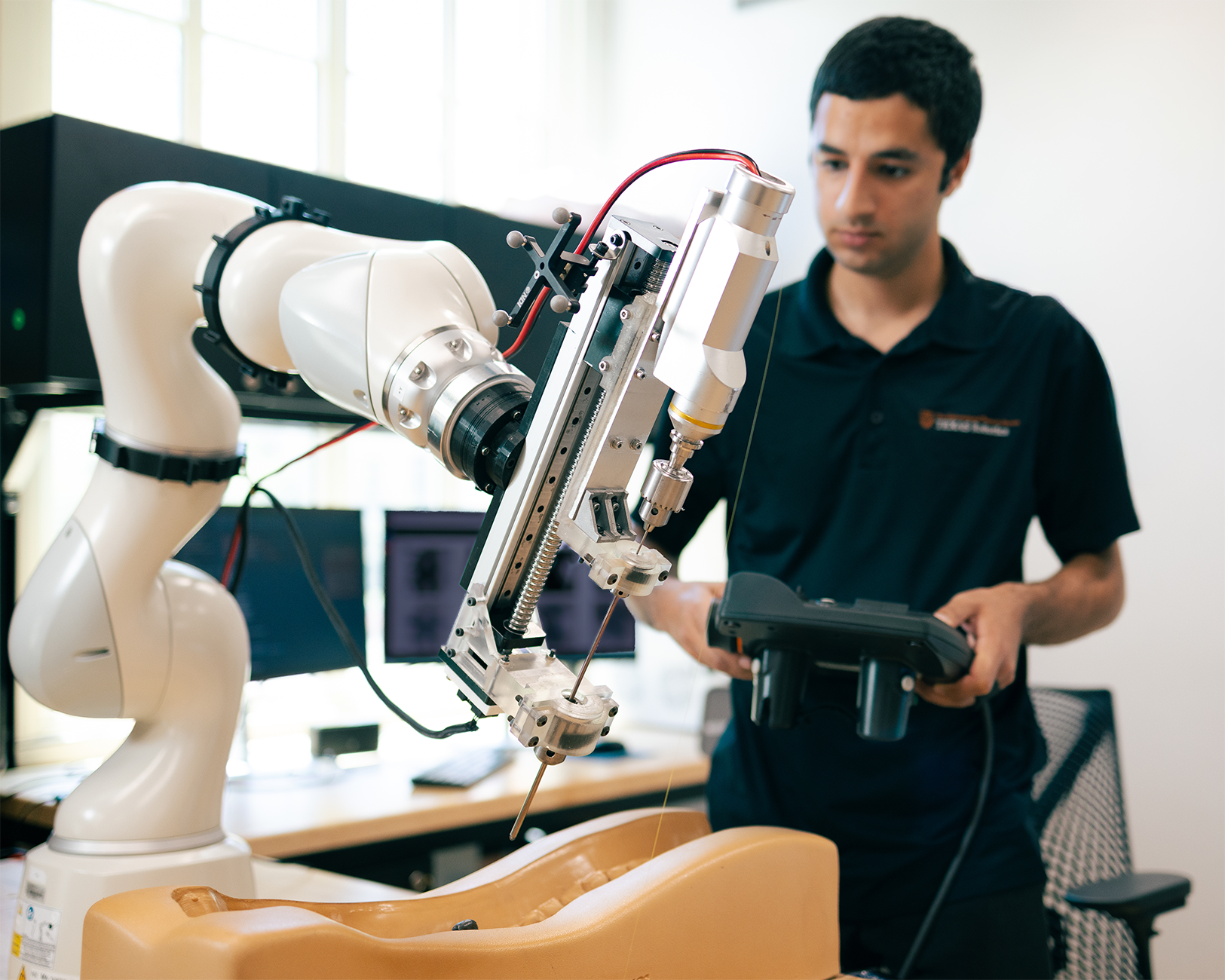
- Personalized, robotic-assisted surgery for patients with spinal and pelvic tumors
- An artificial intelligence system to find precision treatments for patients who otherwise have no options
“This collaboration is a launchpad for the next generation of cancer breakthroughs. We’re bringing the full weight of UT’s computational and engineering prowess together with UT MD Anderson’s expertise to advance our mission to end cancer,” says Scott Kopetz, M.D., Ph.D., professor of gastrointestinal medical oncology and associate vice president for translational integration at UT MD Anderson. “It is thrilling to be part of a team that is moving with such urgency to turn complex research into life-saving reality for patients across the state and beyond.”
A Research Ecosystem Built for Convergence
The collaboration applies the power of academic medicine — a sign of what’s to come for Central Texas. In 2030, the University’s emerging academic health system will integrate Dell Medical School, cancer care operated in strategic collaboration with UT MD Anderson, a new, state-of-the-art hospital, and UT’s leading research capabilities to deliver the best care possible, backed by the latest advances in science and technology.
“Cancer is a profoundly complex problem, and no single discipline can solve it,” says Fernanda Leite, Ph.D., vice president for research at UT. “UT MD Anderson offers unmatched expertise in cancer care and scientists who have pioneered countless innovative cancer therapies. UT contributes something just as powerful: a deep bench of engineers, computer scientists and AI experts who are used to tackling large‑scale, real‑world problems. By pairing their strengths, our teams can experiment, iterate and scale ideas faster, so discoveries in the lab reach patients far sooner than they otherwise would.”
It’s far from the first time the two institutions have joined forces. The Joint Center for Computational Oncology — shared between UT Austin’s Oden Institute, the Texas Advanced Computing Center and UT MD Anderson — laid the groundwork for the type of cooperative research undertaken by the new accelerator program. Since 2020, joint projects between the institutions have combined oncology, data science and high-performance computing to drive clinical advancements in cancer care — like using algorithms to create custom molds for breast reconstruction, or smothering cancer cells with their own desire to mutate.
‘Surgineering’ Better Care
All tumors are an unwanted presence, but few are as vexing as ones of the spine and pelvis. Squeezed between and around bones, tendons and delicately laced nerves, these tumors demand rigorous surgery that lasts days. In their wake, patients need implants to regain everyday movement and reinforce bones that were cut during the procedure. Over time, however, standard implants can degrade and collapse, leaving patients to trade cancer for a life of limited movement.
To ease the burden of orthopedic tumors for patients and surgeons alike, UT Austin and UT MD Anderson are envisioning a new approach altogether.
Surgery Is a Team Sport
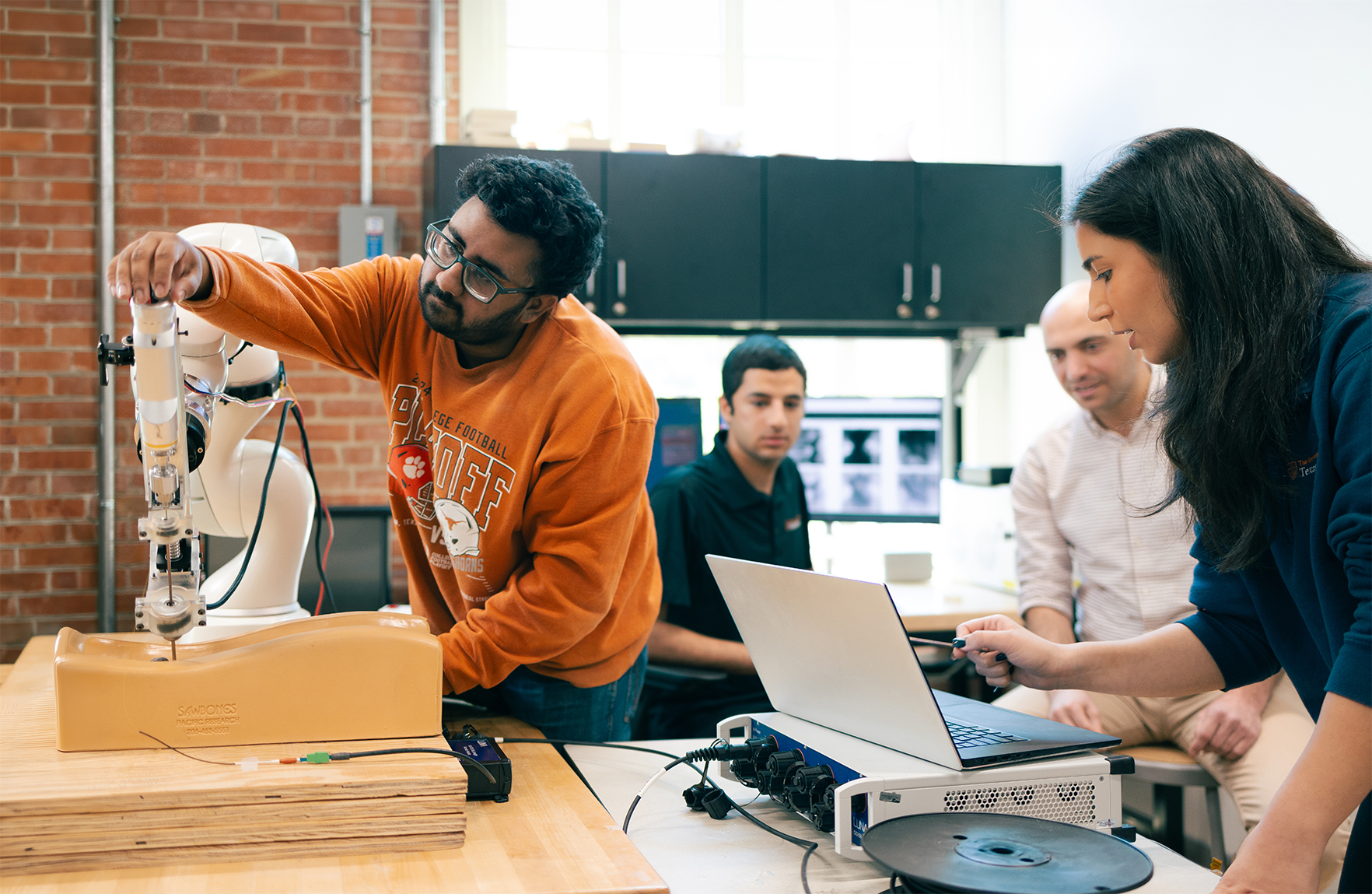
Pioneers of surgineering Jeff Siewerdsen, Ph.D., and Farshid Alambeigi, Ph.D., are working with leading surgeons such as Justin Bird, M.D., and biomaterials experts such as Maryam Tilton, Ph.D., to integrate computational models, patient-specific implants, and surgical robotics to shape a new standard of care.
“IG-RABIT is tackling challenges at the cutting edge of orthopedic cancer surgery,” said Bird, professor of Orthopedic Oncology at UT MD Anderson. “Successful translation of these advances in surgical guidance, robotic assistance and patient-specific implants will have major benefits to patients.”
The team aims to improve all ends of treatment. Drawing on UT MD Anderson’s deep volume of tumor imaging and clinical data, Bird creates imaging models that chart the least invasive path of surgery. Tilton and others infuse a biomaterials perspective, assessing and designing implants that better withstand the body’s mechanics and adapt to a patient’s bones and tissues over time. Reimagining the surgery itself, Alambeigi and Siewerdsen work in different areas of surgineering, which places engineers in surgical workflows to enhance procedures, outcomes and patient safety.
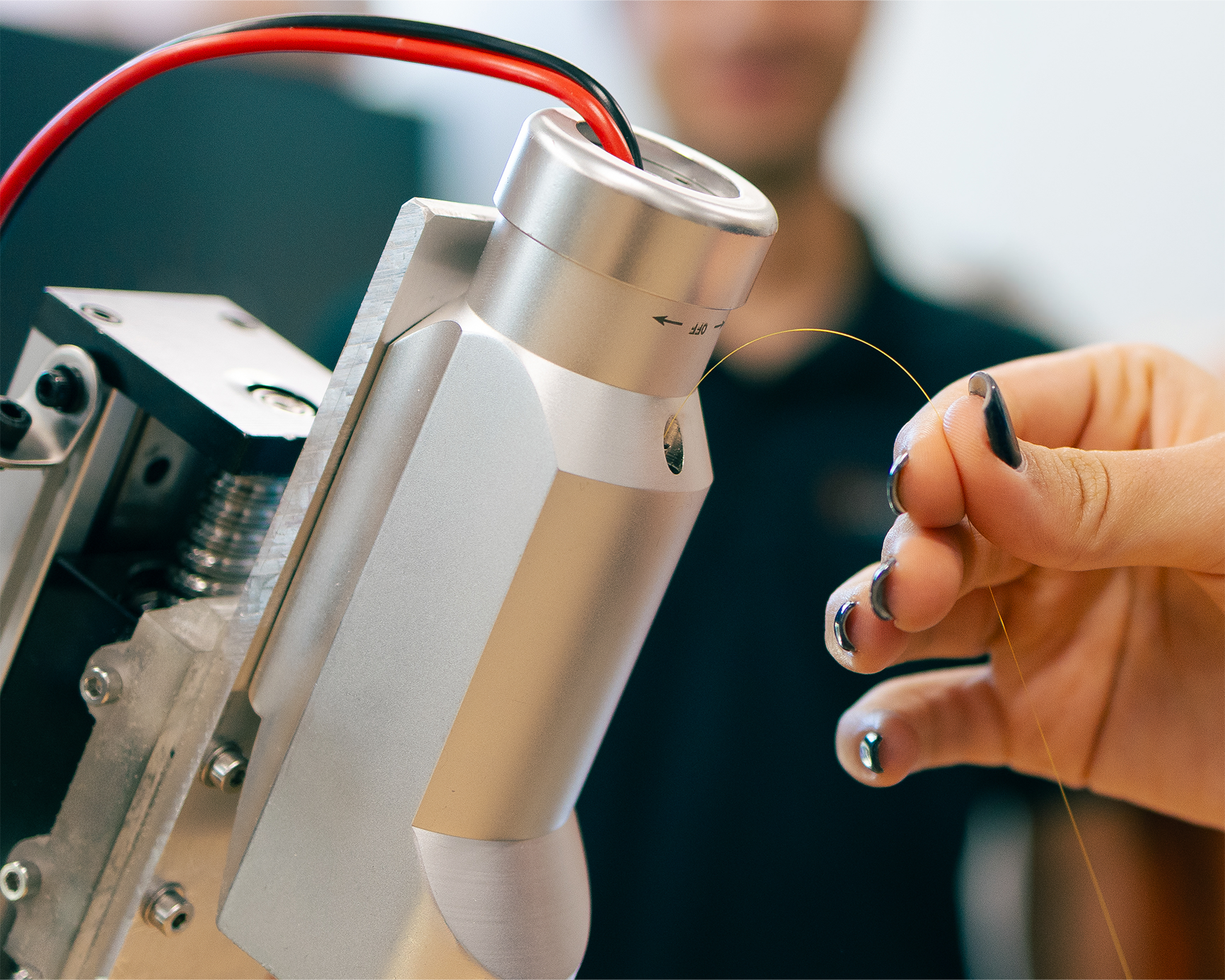
With both patient and surgeon in mind, Alambeigi is designing a robotic device that follows the safer, less-invasive paths from Bird’s imaging models. Guided by a surgeon, it inserts Tilton’s anatomy-friendly implants with precision, and far less physical and mental strain.
At the same time, Siewerdsen has his eyes on the operating room. He’s creating digital twins that account for each tweak and iteration in the project — simulations that mimic clinicians and patients in the OR and test outcomes of the procedure in different scenarios. His goal is to measure successful performance of the entire workflow so the team can translate the project in real-world clinical studies.
“Right now everything is manual,” says Alambeigi, a core faculty member at Texas Robotics, associate professor in the Department of Mechanical Engineering, and director of the Advanced Robotic Technologies for Surgery Lab at UT. “Imagine how hard it is to draw a straight line. Surgeons are using ultrasonic blades and planning entire procedures in their head.
“This is a holistic solution beyond the day of surgery. From biomechanics to clinical workflow to robotic technologies and biomaterials, we’re simulating everything together in parallel to increase the accuracy, safety and precision of these procedures.”
When Genes Have Nothing To Say
DNA is often described as the building blocks of life.
Advances in precision oncology allow clinicians to look at a tumor’s DNA, find errors responsible for its growth, and match a promising drug to the mutated gene. But the process has its limits.
For some patients with rare or advanced cancers, genetic tests can come back empty: no evident mutations and no target for even the most precise drug.
Still, somewhere in the dark and vast molecular space hides an answer — one that UT Austin and UT MD Anderson, armed with artificial intelligence, are poised to find.
“There are many new drugs in development targeting cell surface proteins, and there is much we can still learn about cancer biology by profiling both protein and DNA changes,” said Funda Meric-Bernstam, M.D., chair of investigational cancer therapeutics at UT MD Anderson. “By working together with our team members at UT Austin, we hope to find ways to better select therapies as well as to discover new therapeutic options.”
Intelligent Targets
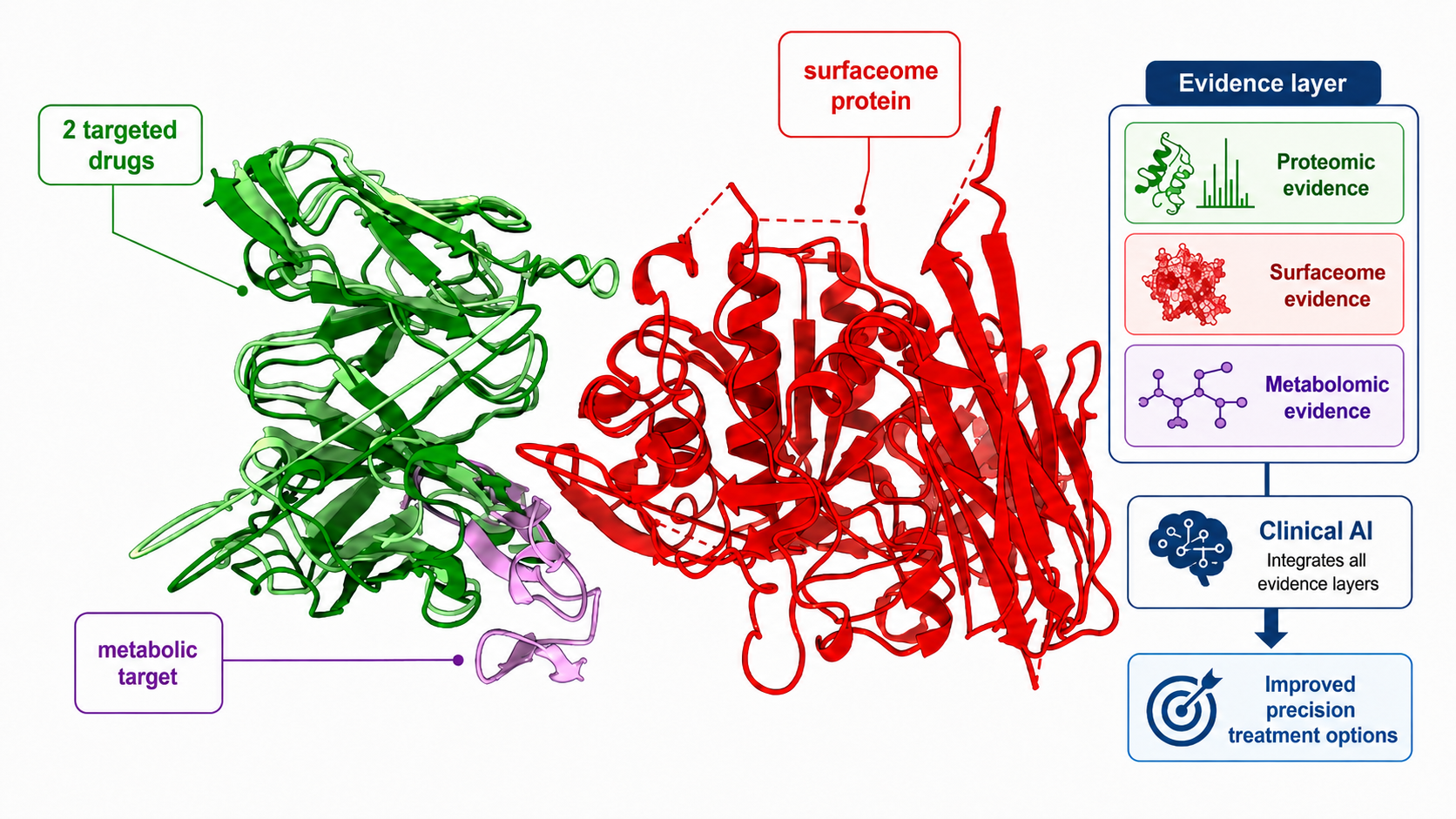
Proteins — the end product of DNA — play an important role in cancer development and its response to treatment, and they can harbor unique characteristics that would not be evident by looking at DNA alone.
Partnering with the Texas Advanced Computing Center, the research team is building a robust data set that folds together genetic information, protein markers and clinical information to build a “profile” for those in need of a precision treatment.
With a profile in place, AI and digital twins cross-reference public and institutional databases to find treatments that worked in similar cases. Going deeper, the team uses its custom AI models to scour relevant clinical trials and whether existing drugs might work in new ways. The AI models also draw on often-overlooked case reports: summaries that clinicians write when a patient responds in a way that wasn’t expected. An individual case report doesn’t signal much, but across thousands, they can show new patterns in treatment that otherwise go unexplored.
The result is a comprehensive AI system that evaluates connections in aggregated data and reveals new relationships between existing drugs and rare tumors, giving clinicians and patients a path forward, even when genes leave no clues.
“We’ve been so focused on DNA and the targeted therapies there that we forget to ask, ‘Where do we go next?’” says Jeanne Kowalski-Muegge, Ph.D., professor and quantitative oncologist at Dell Medical School. “We want to be able to go deeper with proteins to lead us to new hypotheses and drug discovery.
“UT has the heavy computational strength to pair with UT MD Anderson’s unmatched clinical insights to take on challenging cases with this algorithm.”