The American Experiment, Exhibit 2
The second exhibit of defining national documents by the LBJ Presidential Library and UT’s Briscoe Center for American History highlights forks in the road.
Experiments can have very different outcomes. And when curators at the LBJ Presidential Library and Briscoe Center for American History teamed up to commemorate America’s 250th anniversary with a series of exhibits called the American Experiment, they were clearly thinking about documents that showed things both going well and going poorly.
The second installment of “The American Experiment: Pursuing Our Promise” opened Saturday and will remain on view only through Aug. 2, so don’t dawdle on your way to the 10th floor of the LBJ Presidential Library. The exhibit’s 10 glass cases hold hugely consequential acts of Congress, treaties, Supreme Court decisions both famous and infamous, a scientific notebook and an Executive Order, all on loan from the National Archives.
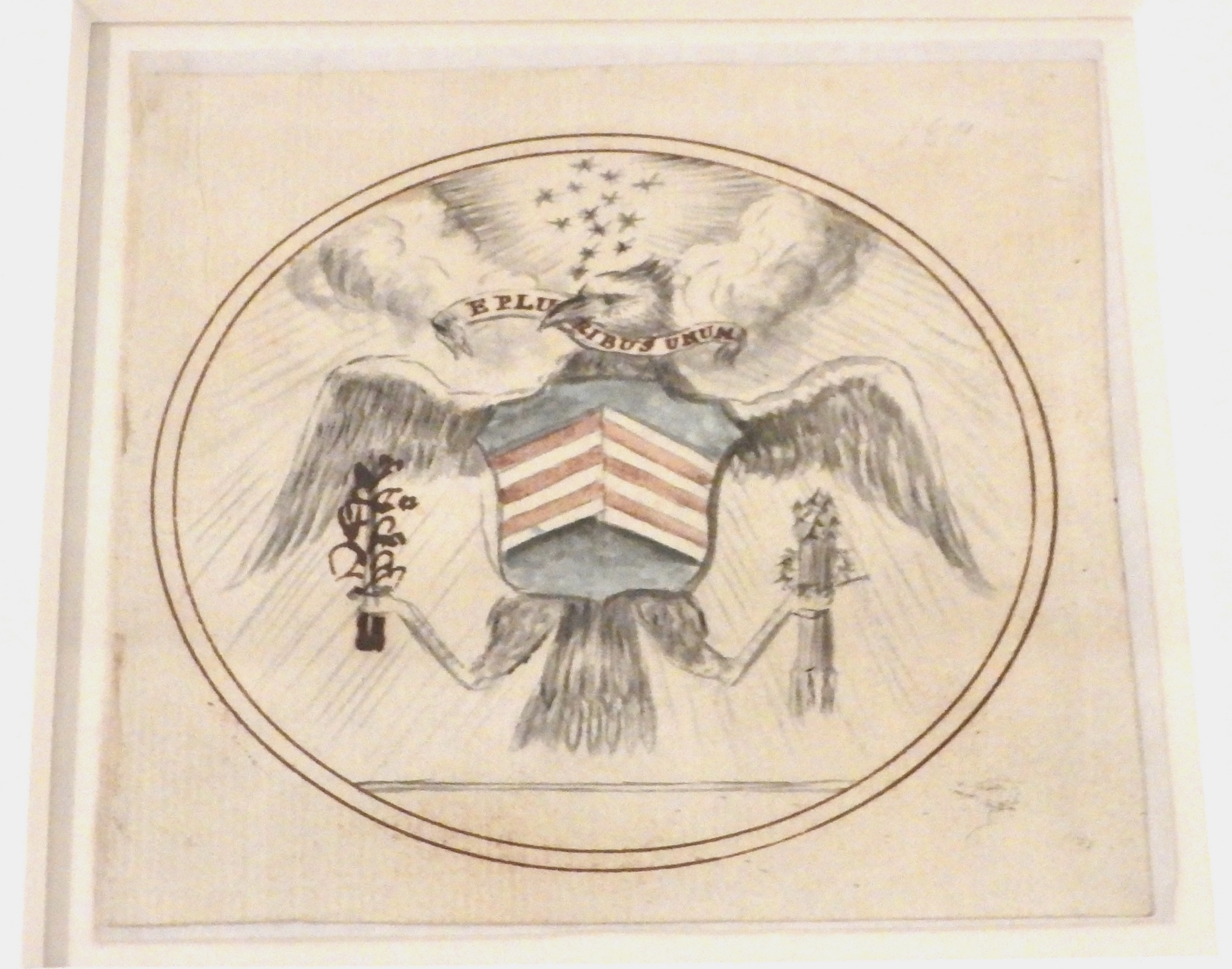
Chronologically, the documents go from the original design for the nation’s Great Seal created in 1782 (seen above), which was designed by Charles Thompson, secretary of the Continental Congress, to the 1971 passage of the 26thAmendment, which lowered the voting age to 18, since 18-year-olds were then being drafted to fight in Vietnam.
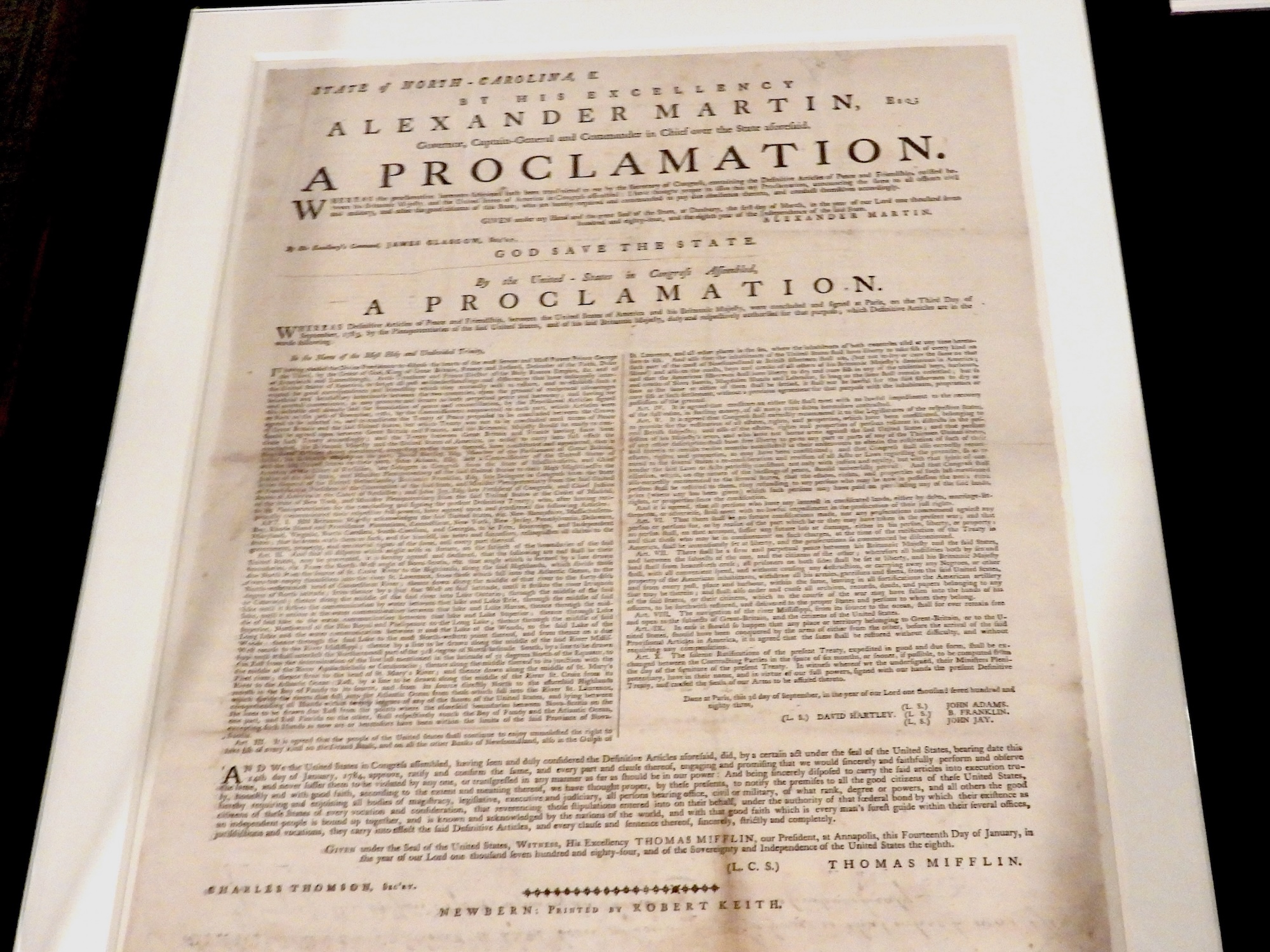
A 1784 proclamation by North Carolina Gov. Alexander Martin announces the formal signing of the Treaty of Paris between the former American colonies and Great Britain that ended the American Revolution.
A 1789 draft of the first 10 amendments to the Constitution, better known as the Bill of Rights, looks a bit unfamiliar; the first and second amendments here have nothing to do with freedom of speech or the right to bear ams, respectively. This draft contains most of the final text of the Bill of Rights, but what became the First Amendment here is “Article the third.”
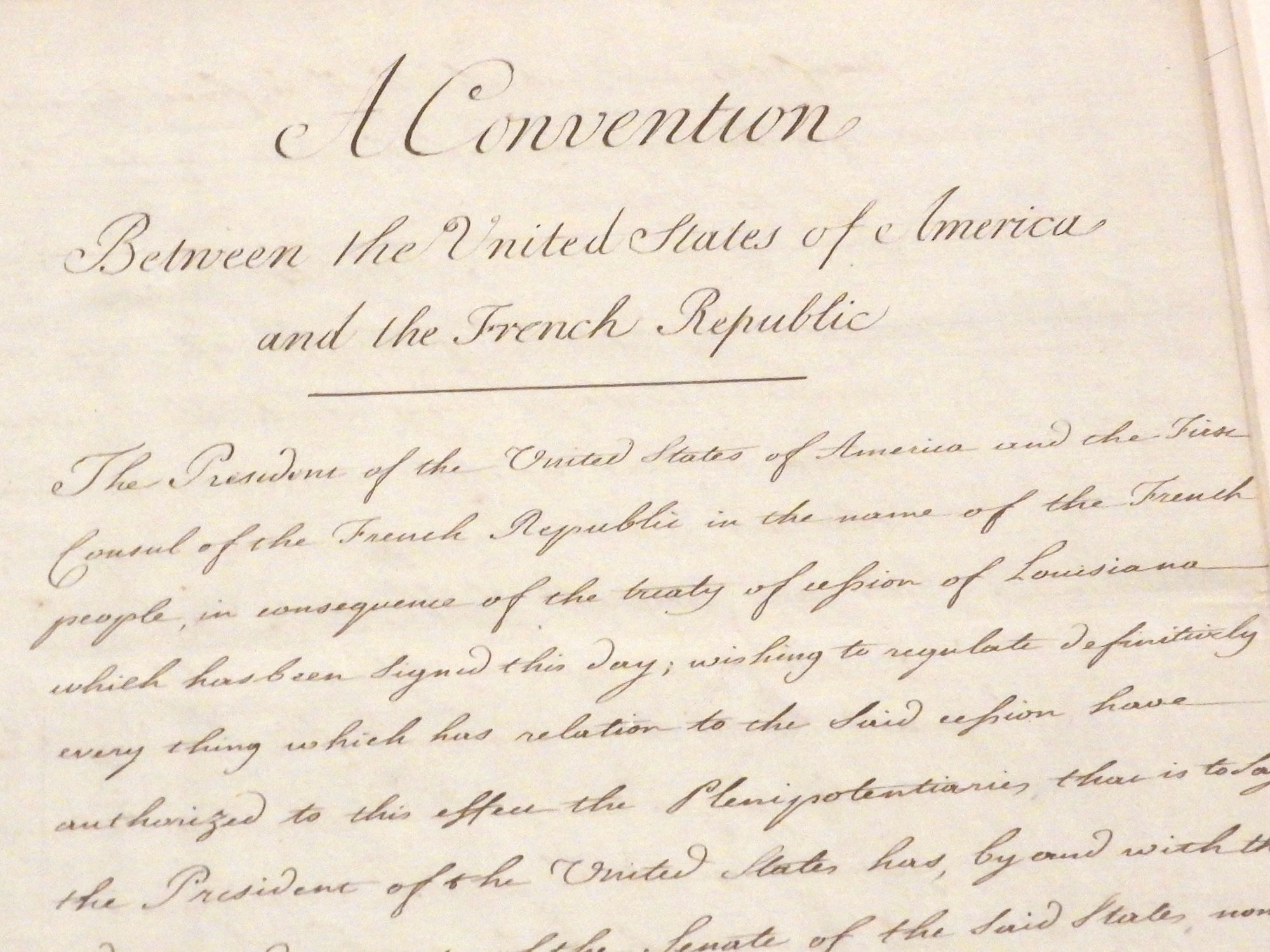
Nearby, we find the 1803 Louisiana Purchase Treaty. As the curators put it: “Negotiators Robert Livingston and James Monroe were originally authorized to pay France $10 million solely for the port of New Orleans and the Floridas. When they were offered the entire territory of Louisiana — an area larger than Great Britain, France, Germany, Italy, Spain and Portugal combined — they swiftly agreed to a price of $15 million.”
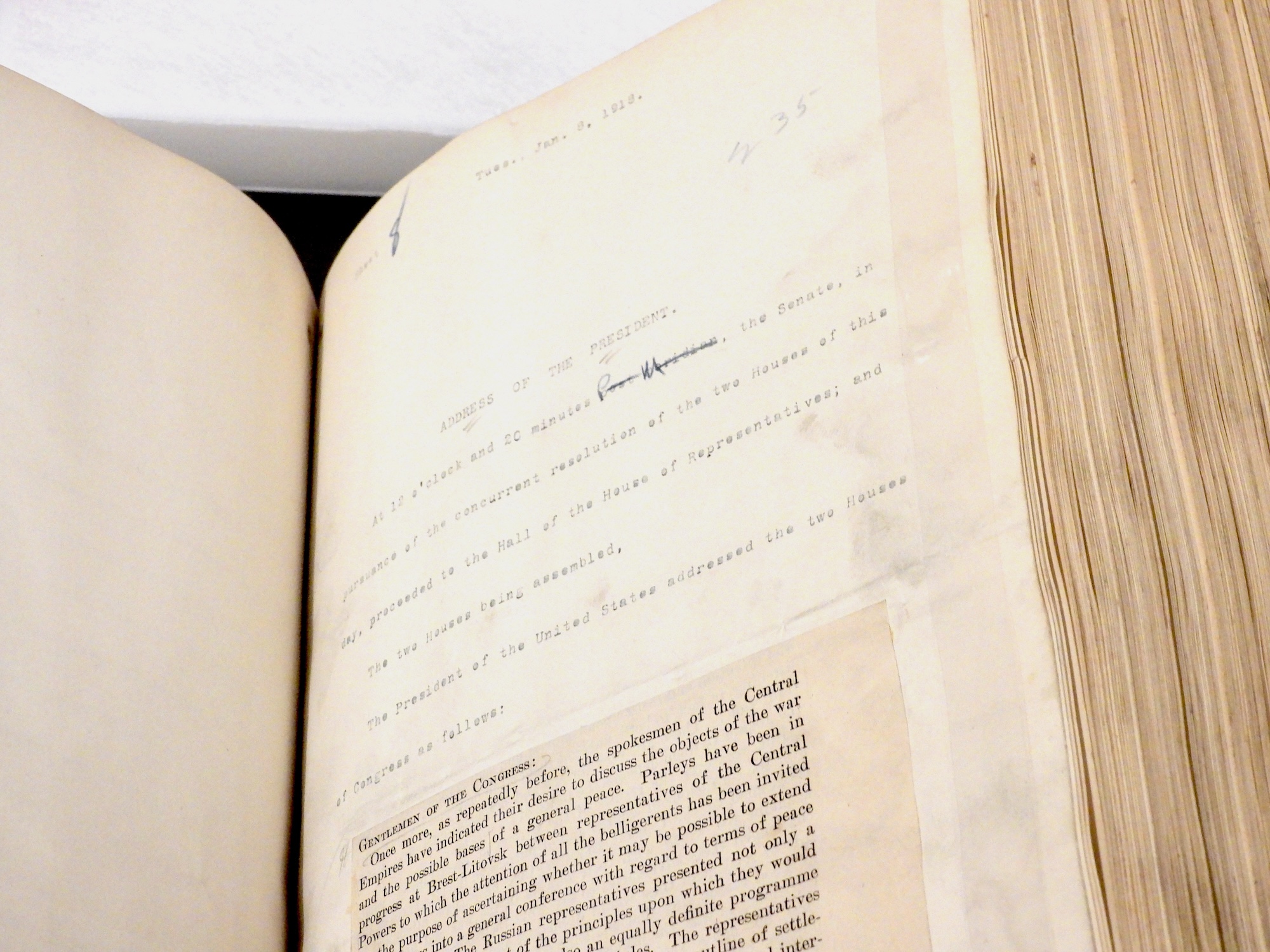
President Woodrow Wilson’s January 1918 address to Congress outlines his famous 14-point program for peace. These were taken as the starting point for negotiations at Versailles, but most of them were scuttled by the French and British. An interesting tie to the University is that the person Wilson appointed to chair the task force whose research resulted in the 14 points was Sidney Mezes, who served as president of The University of Texas from 1908 to 1914.
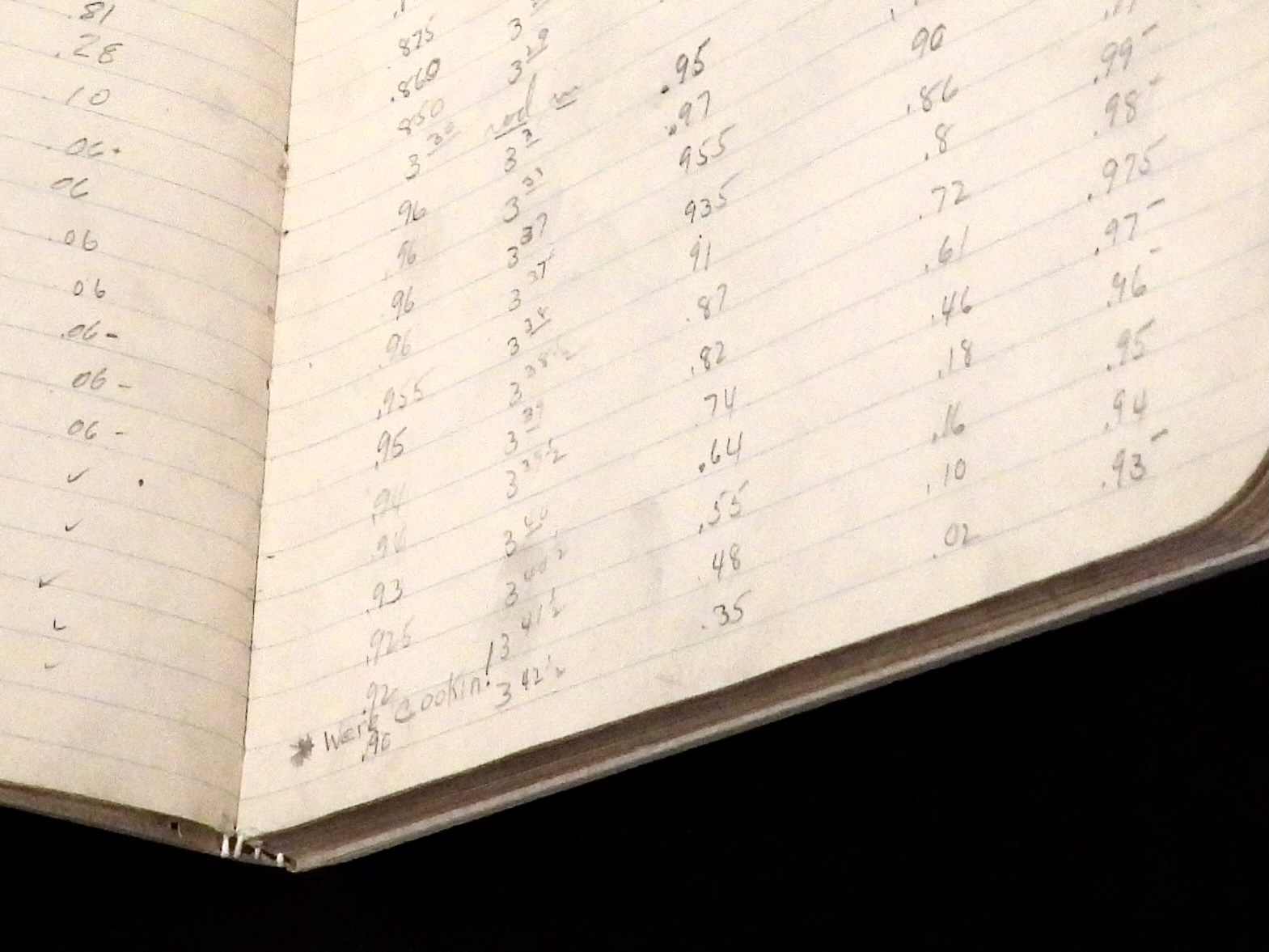
A notebook from 1942-1943 records the world’s first controlled, self-sustained nuclear reaction achieved on Dec. 2, 1942, as part of the Manhattan Project. At the bottom of the page, the scientist cheers, “We’re cookin!”
See the North Atlantic Treaty Organization mutual defense pact, signed in 1949 by the United States, Canada and 10 Western European nations against possible Soviet aggression. This document has bound the U.S. to the longest military alliance it has ever maintained.
Though not displayed as such, an unmissable theme through the exhibit marks the pivotal moments of legal progress and legal setback of Black Americans:
- A hand-written 1820 conference committee report on the Missouri Compromise, which admitted Missouri to the Union as a slave state but outlawed slavery above the 36-degree 30’ latitude in the remainder of the Louisiana Territory.
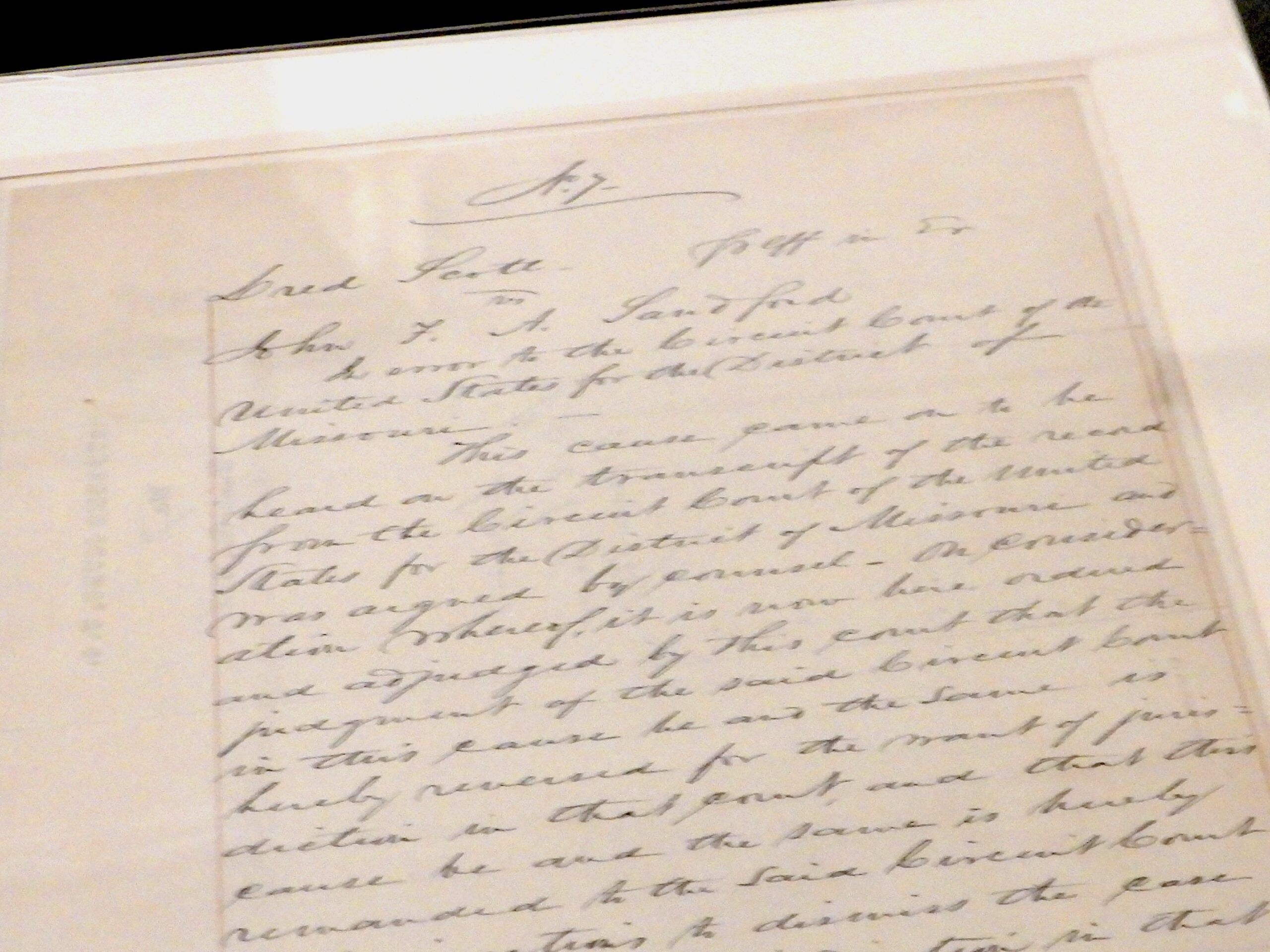
- The 1857 Dred Scott decision, ruling that Black Americans, whether free or enslaved, were not U.S. citizens and could not expect any protection from the courts.
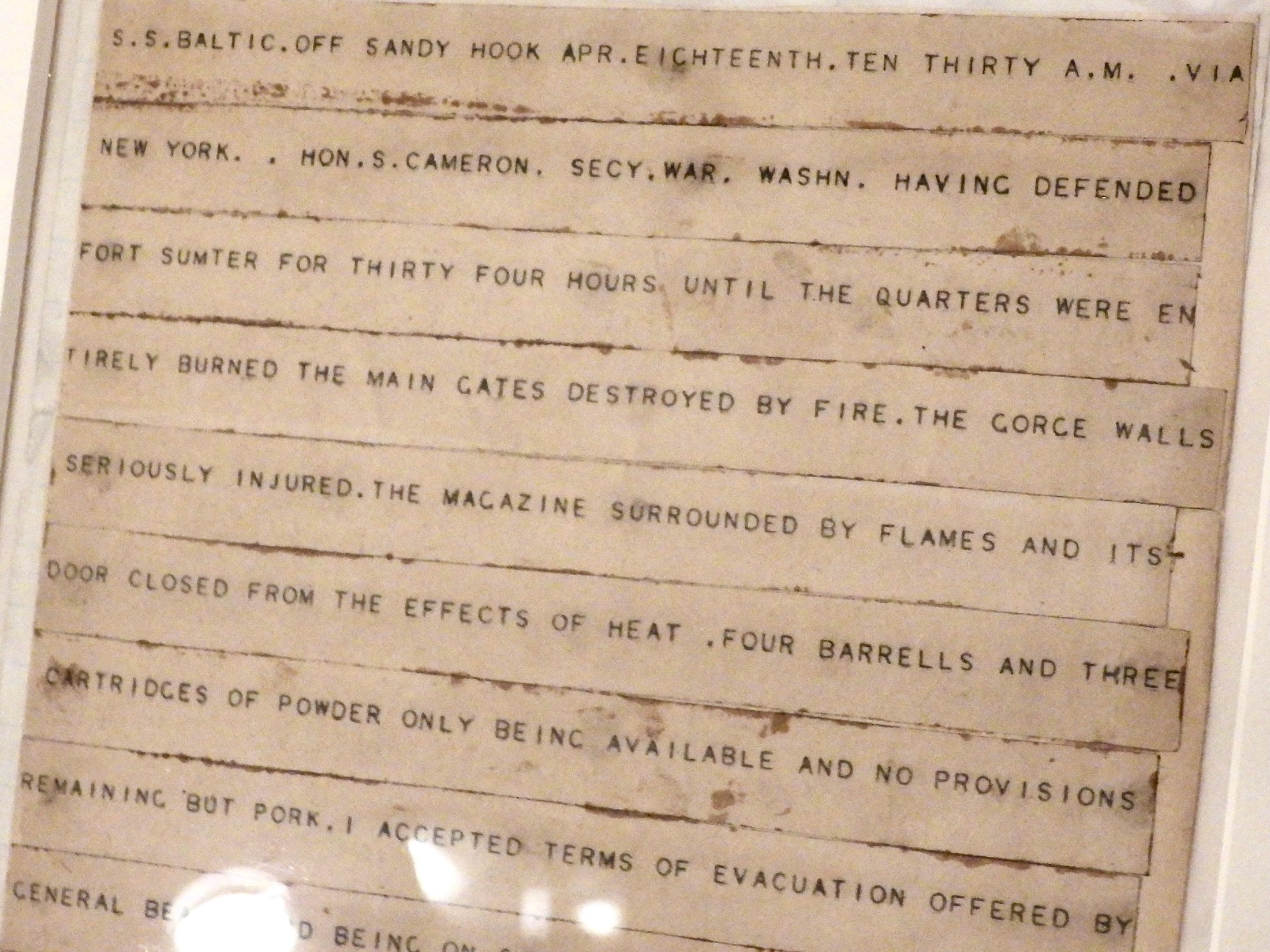
- A telegram announcing the surrender of Fort Sumpter in 1861, signaling the beginning of the Civil War.
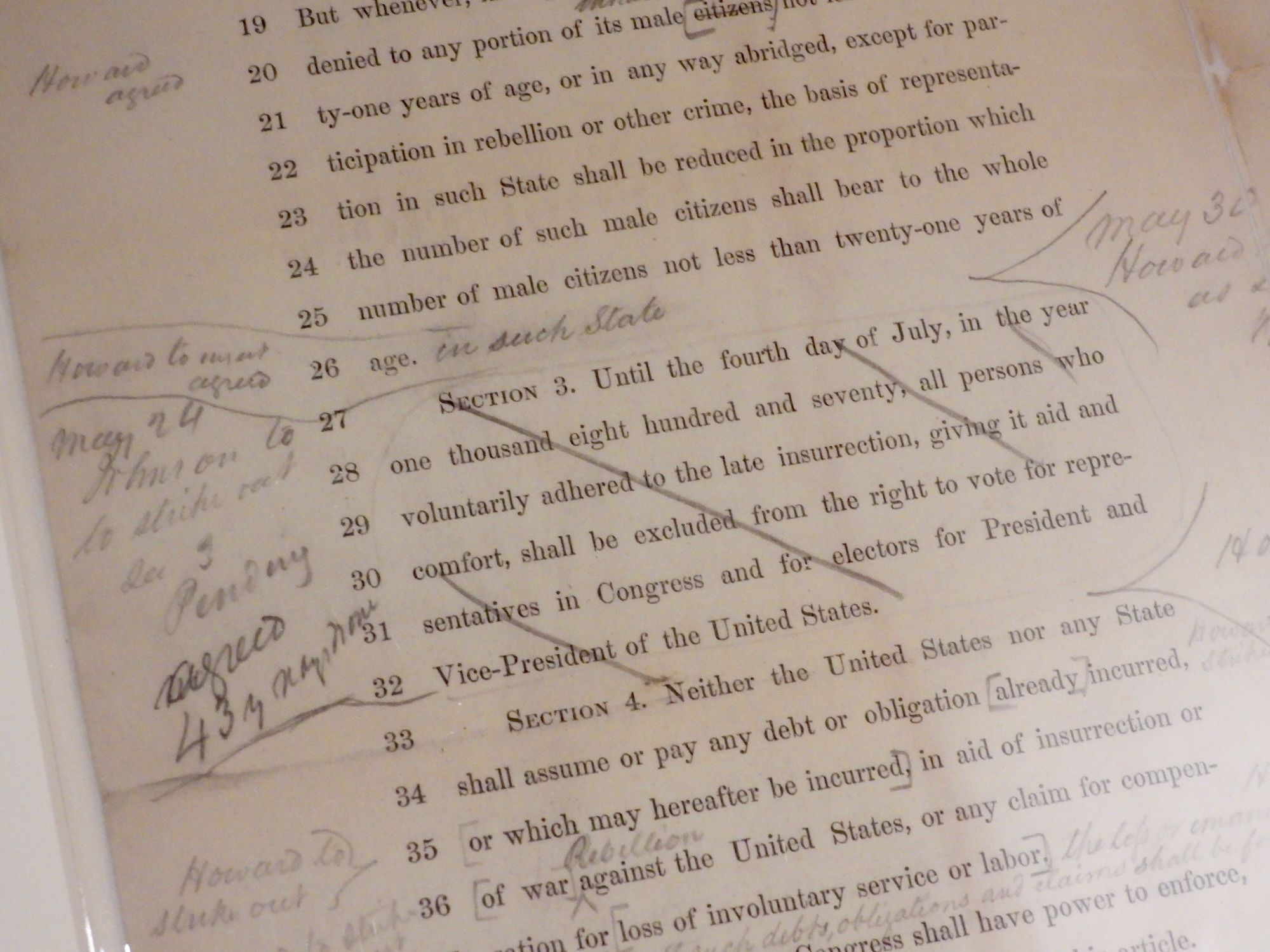
- An 1866 hand-edited draft of the 14th Amendment establishing birthright citizenship and undoing the three-fifths rule established by the Constitution in 1787.
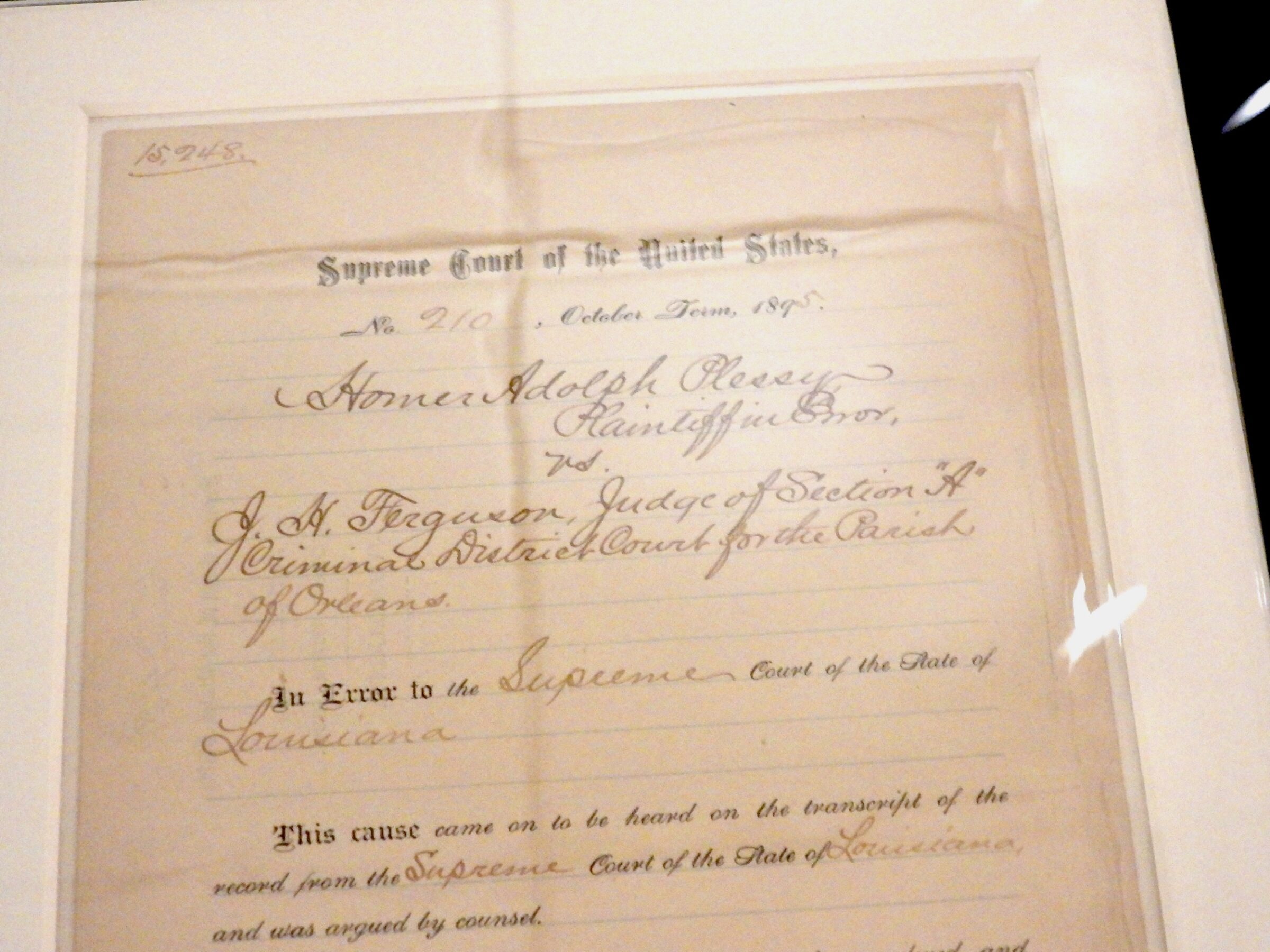
- The infamous Plessy vs. Ferguson decision of 1896 that ushered in the Jim Crow era with “equal but separate accommodations for the white and colored races.”
- The 1954 Brown vs. the Board of Education of Topeka decision that overturned the “separate but equal” doctrine established by Plessy vs. Ferguson. The 1950 Sweatt vs. Painter case, which played out at The University of Texas, was the precursor to this momentous decision integrating schools.
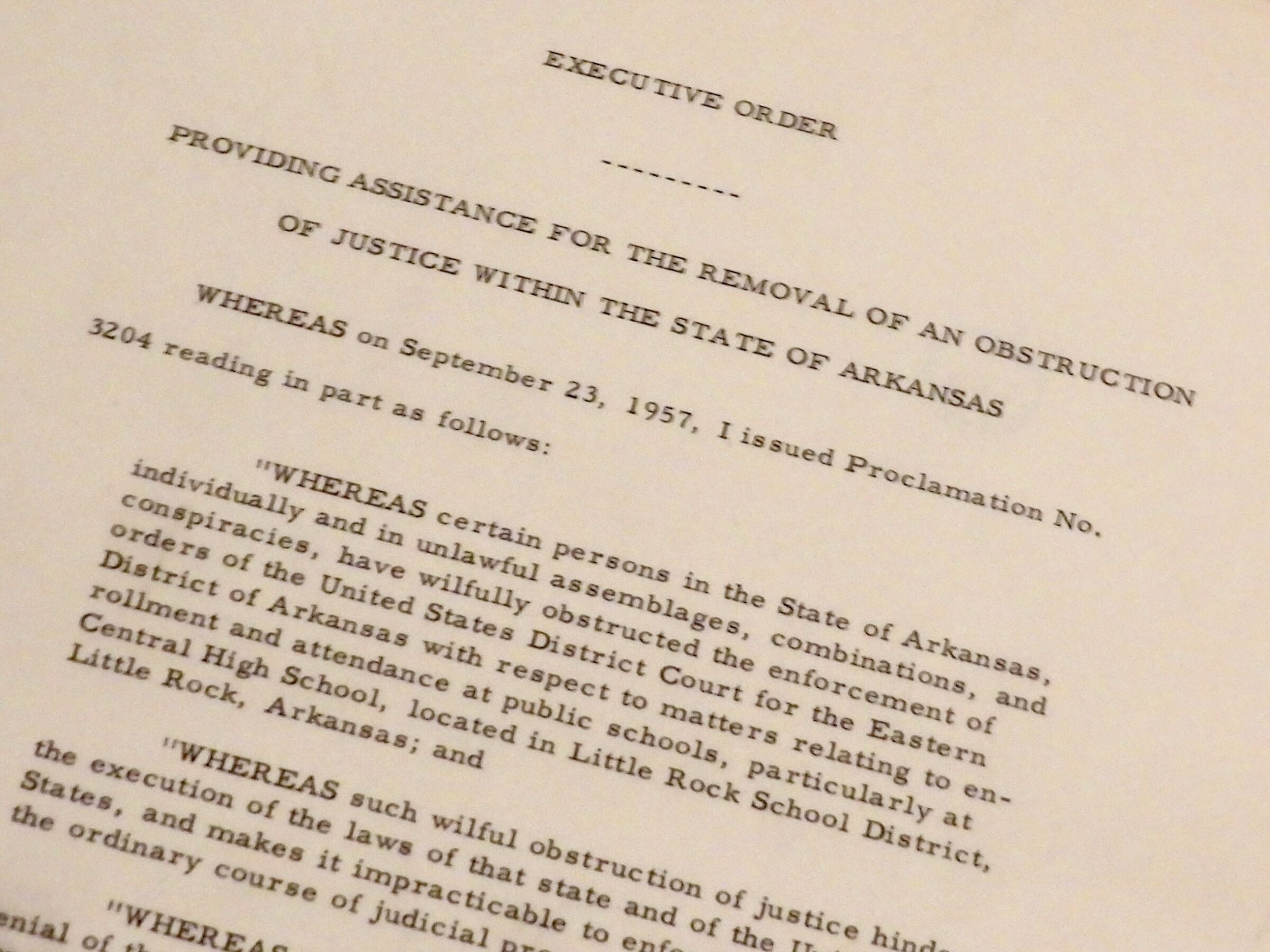
- The 1957 Executive Order by President Dwight Eisenhower placing the Arkansas National Guard under federal control after Gov. Orval Faubus called out the same National Guard to prevent Black students, the “Little Rock Nine,” from entering Central High School.
- And finally, the Voting Rights Act of 1965, a linchpin of President Lyndon Johnson’s legacy that the library preserves, which sought to abolish racially discriminatory practices such as literacy tests adopted by many Southern states after the Civil War.
As mentioned, these documents will be on display until Aug. 2. The next exhibit in the series, featuring Texas documents from the Briscoe Center for American History, will be on display Aug. 15 to Oct. 18.