UT To Lead NSF Center That Will Study How Robots and People Learn To Live and Work Together
A 5-Year Collaboration Between 6 Universities and Industry Partners Will Place Assistive Robots in Everyday Human Environments.
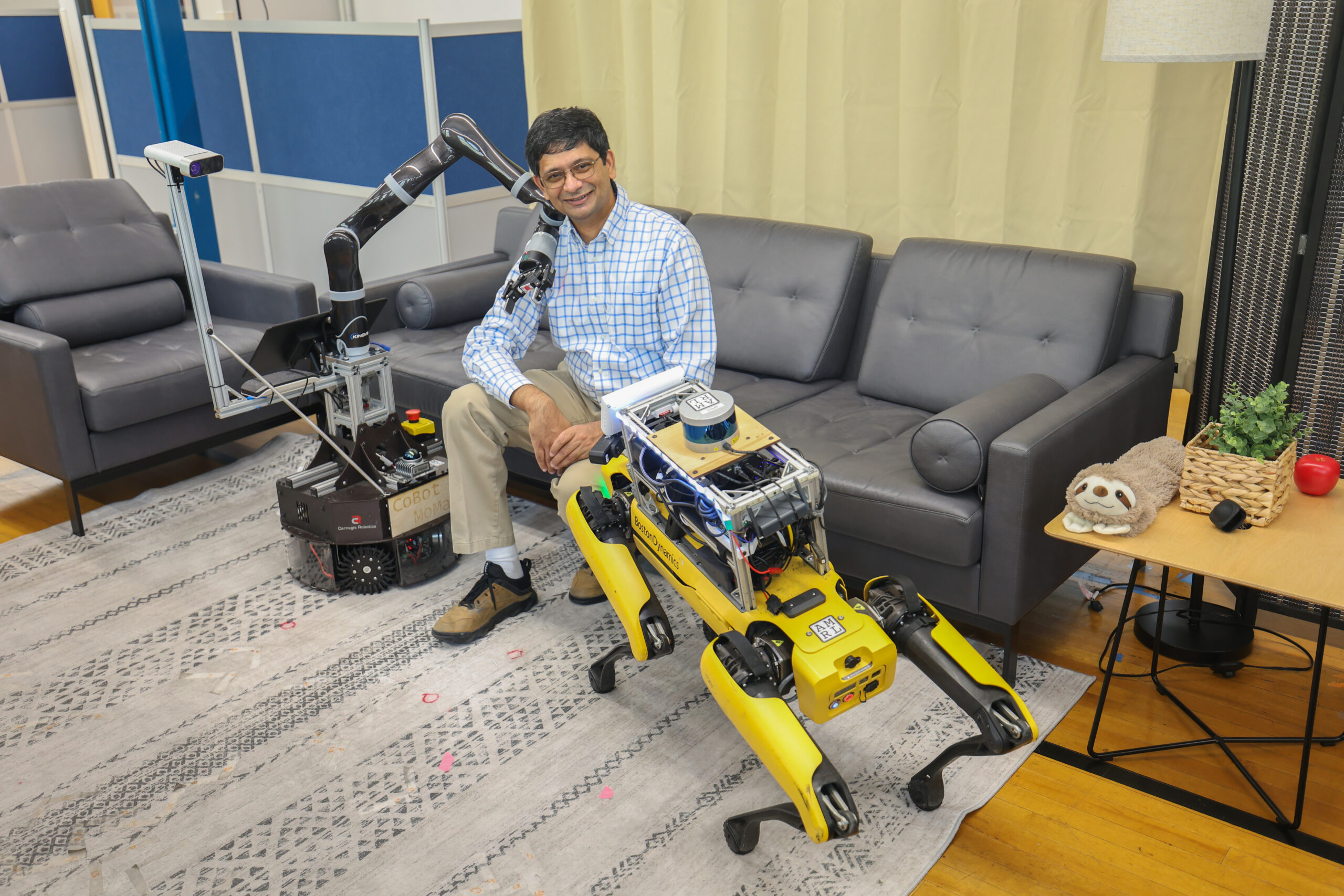
Joydeep Biswas, an associate professor of computer science at UT, will lead the team awarded the NSF grant and will serve as the director of the Center for Human and Robot Co-Adaptation.
The University of Texas at Austin will lead a new National Science Foundation Science and Technology Center to study what happens when assistive robots leave the lab and move into the real world to live and work alongside humans.
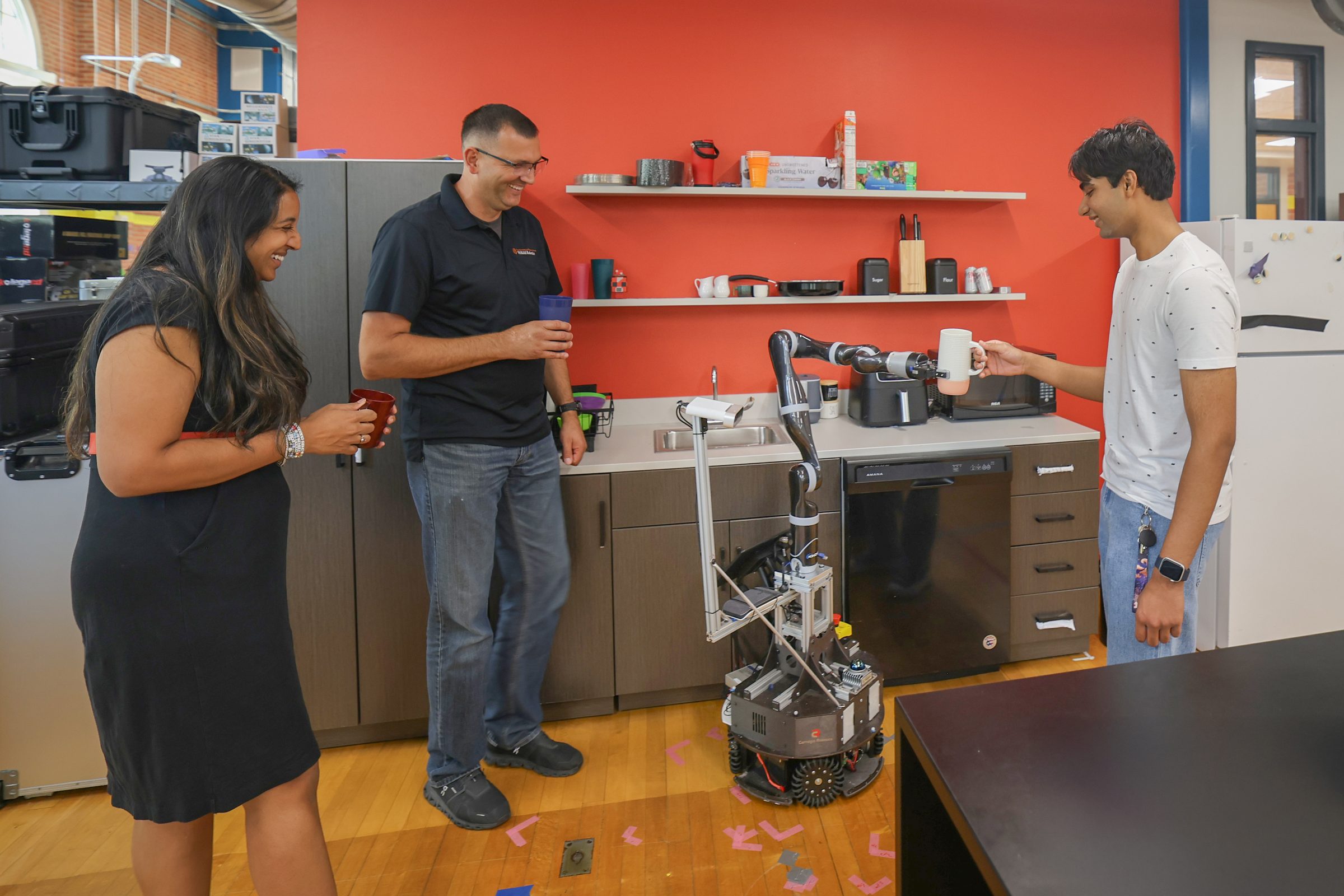
The forthcoming Center for Human and Robot Co-Adaptation will bring together 39 researchers from six universities and multiple industry partners to establish a new science of “human-robot co-adaptation” — how people and robots learn from one another and adjust their behavior over long periods in everyday settings that will include homes, hospitals and assisted-living residences.
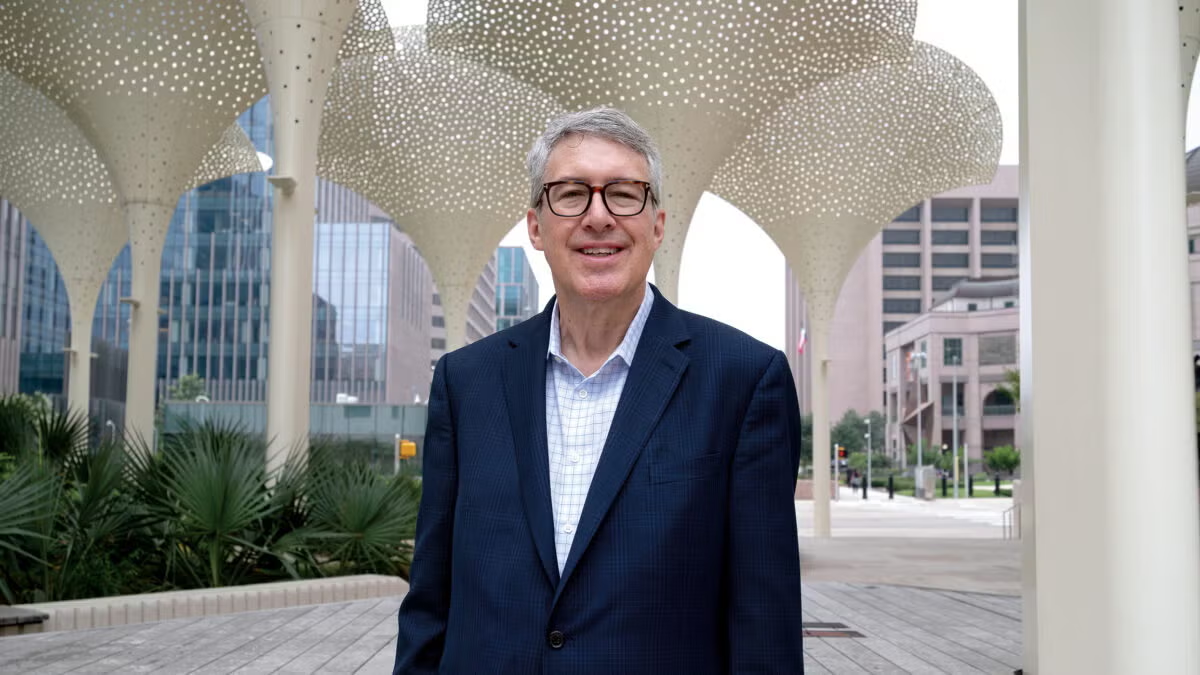
“UT is in a strong position to lead this new frontier of science,” said President Jim Davis. “Our researchers are already at the cutting-edge of robotics and AI, supported by generations of investment and a shared commitment to improving human lives. We are proud to unite leading researchers and industry partners from across our nation to advance this important work.”
Partner universities are the Massachusetts Institute of Technology, Yale University, Indiana University Bloomington, the University of Utah, and Tufts University. Industry collaborators include Amazon, Apptronik, Diligent Robotics, Google DeepMind, Hello Robot, MassRobotics, NVIDIA and Robust AI.
The Human Environment with Robots Journey
Most robots today are designed for specific tasks, tested and deployed in controlled environments, and judged on task completion. The new center is after something deeper: understanding how robots and people might adapt to each other over months and years — anticipating shifting needs, learning new skills, unlearning outdated ones, and picking up on unspoken social rules.
For example, teaching a robot to set a table is the easy part. Getting it to set the table before being asked — and then including soup spoons because it knows you’re making chili — is the real challenge.
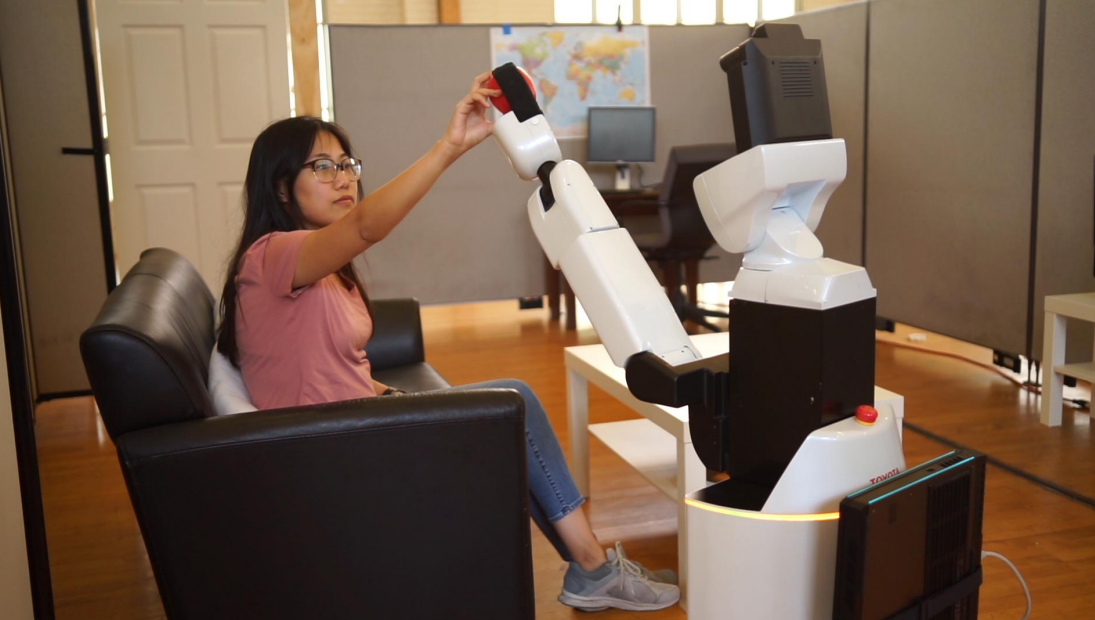
That same co-adaptability could make a crucial difference in settings such as rehabilitative care. An assistive robot could learn to adjust its reach based on a person’s physical limitations so that they can take a sip of water. As the robot adapts to the person, the patient learns what else to ask for — and how — gaining a new sense of independence.
“The next leap in robotics is not just getting robots to perform more tasks,” said Joydeep Biswas,an associate professor of computer science who will serve as the center’s director. “It is enabling robots to understand the people around them: their needs, preferences, values and constraints, while recognizing that people also adapt their behavior when they integrate robots into their environment.”
The five-year, $30 million award will bring together researchers from disciplines spanning artificial intelligence, robotics, cognitive science and social science to not just build better robots, but also to understand how humans and robots can coexist. It is one of three center grants recently announced by NSF.
“As advances in foundational science and technology open new possibilities, these Science and Technology Centers will help American researchers seize those opportunities, accelerate scientific discovery, and develop the talent and technologies needed to turn innovation into solutions that benefit the American people,” said Brian Stone, who is performing the duties of the NSF director.
The research will be grounded in findings from the Human Environment with Robots (HERO) Facility Network, a set of real-world deployment sites hosted at UT and the partner institutions: houses, dorms, cafés, a public museum, a rehabilitation hospital, and elder-care and assisted-living residences.
Every step of the way, community members will have an opportunity to influence how, when and where robots get deployed, and help shape the development of the technology so it best meets the needs and values of their community. An internal ethics board will oversee the research and develop consent and opt-out procedures.
The center grew from a core project of Good Systems, UT’s research grand challenge focused on ethical artificial intelligence, and includes faculty members from UT’s School of Computing, College of Liberal Arts, Cockrell School of Engineering, Moody College of Communication and Texas Advanced Computing Center.
“Creating robots that can meaningfully improve people’s lives requires both deep technical expertise and a genuine understanding of people and society,” said Peter Stone, head of the UT School of Computing and a member of the Good Systems executive team. “This center reflects the central purpose of Good Systems and our new School of Computing: to unite people across disciplines to tackle ambitious challenges no one field can solve alone.”
UT’s Texas Advanced Computing Center (TACC) — home to the most powerful supercomputers in academia — will provide the computational muscle for the simulation, machine learning, data storage and digital twins of HERO sites, allowing researchers to test ideas virtually before deploying them in dorms and nursing homes.
Industry partners will help ensure that the research is grounded in the most cutting-edge technologies available today. By leveraging NVIDIA’s accelerated computing, simulation and robotics platforms, researchers will develop and validate new robotic capabilities, conduct large-scale training and evaluation, and explore how AI can be deployed and tested on robotic systems. The work will also examine NVIDIA foundation models designed to advance human-robot collaboration and adaptation.
“For robots to become a part of daily life, they must stay useful as people’s needs, tasks and environments change over time,” said Deepu Talla, vice president of robotics and edge AI at NVIDIA. “UT Austin’s Center for Human and Robot Co-Adaptation is advancing the research needed to make that possible, with NVIDIA accelerated computing and physical AI technologies helping researchers train, develop and test new approaches to move robots from labs into homes, hospitals and communities.”
Also helping drive the initiative is industry partner Apptronik, a premier robotics company that spun out of UT Austin’s Human Centered Robotics Lab in 2016. Researchers will incorporate Apptronik’s advanced physical robotics designs and computing models to explore safe deployments of humanoid robots in human spaces.
“Apptronik got its start at UT Austin’s Human Centered Robotics Lab, and many of our core principles today are rooted in the research started here. Building robots that can actually work alongside people in everyday environments requires deep research into how humans and machines adapt to one another. We’re proud to see UT receive this NSF award and excited to see the work that comes out of the new Center for Human and Robot Co-Adaptation,” said Nick Paine, Apptronik co-founder and CTO.
Beyond the research itself, the center will build open-source AI and robotics curricula, expand undergraduate research opportunities, and collaborate with high school teachers to launch a Co-Adaptive Robotics for All Learners (CORAL) program.
“Success would mean creating robotics education that is easy to teach, reproduce and adapt from university classrooms to high schools and communities with very different resources,” Biswas said. “As we establish a new field of human-robot co-adaptation, we also want to leave a legacy of making robotics and human-technology education more accessible to all.”