Why Is Burnt Orange Our Color?
The journey to the well-known burnt orange and white has a long and winding history.
Photo courtesy of Jim Nicar.
As the story goes, The University of Texas’ colors first appeared under overcast April skies in 1885, clutched in the fists of a trio of students rushing to make their train. With orange and white ribbons in tow, friends Gussie Brown, Venable Proctor and Clarence Miller headed to Georgetown, along with most of the student body, to watch UT’s first baseball team face off against Southwestern University.
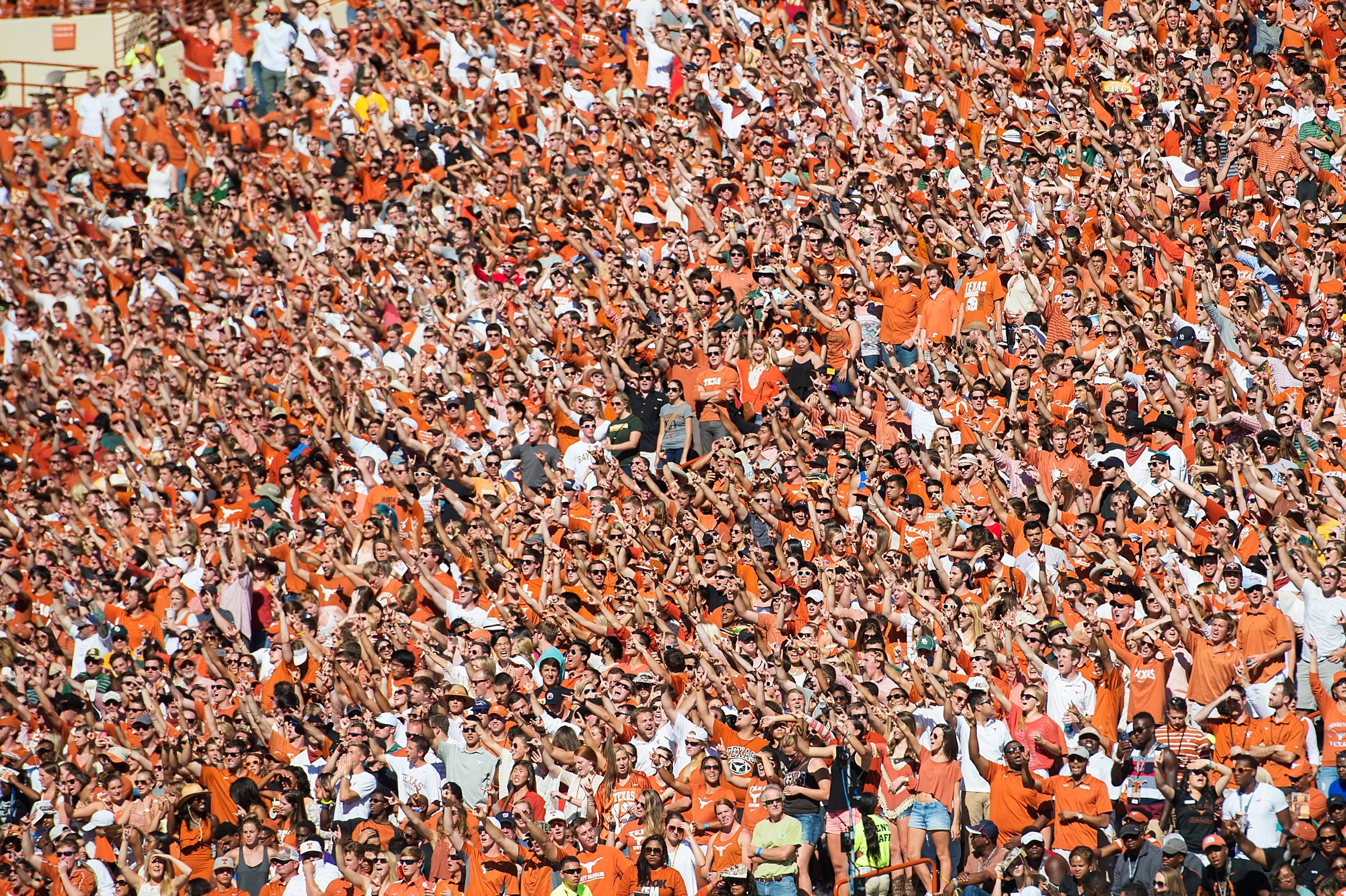
Before the days of stadium crowds standing shoulder to shoulder in burnt-orange shirts, caps and the occasional face paint, it was typical of fans to showcase their spirit by pinning colored ribbons to their lapels. On the day of the baseball game as eager students arrived at the station in their suit jackets and bustle dresses, Brown was insistent that the visiting Longhorns needed their own ribbons to stand out.
According to a 1913 article of The Alcalde penned by Proctor himself, he and Miller quickly made their way down the street to a nearby general store in search of game-day ribbons. Out of breath, the pair asked the shopkeeper to give them whichever fabric was most available. Thus, the students soon became adorned in orange and white — highly stocked colors that UT historian Jim Nicar chalked up to two simple reasons. “White for weddings,” Nicar said. “And bright orange, because nobody would buy that.”
The color orange’s popularity in stores aside, that fateful day planted the seeds for what Longhorns know today. Despite the color’s ubiquity now, the road to the perfect shade of orange, often called burnt orange or Texas orange, was a winding one.
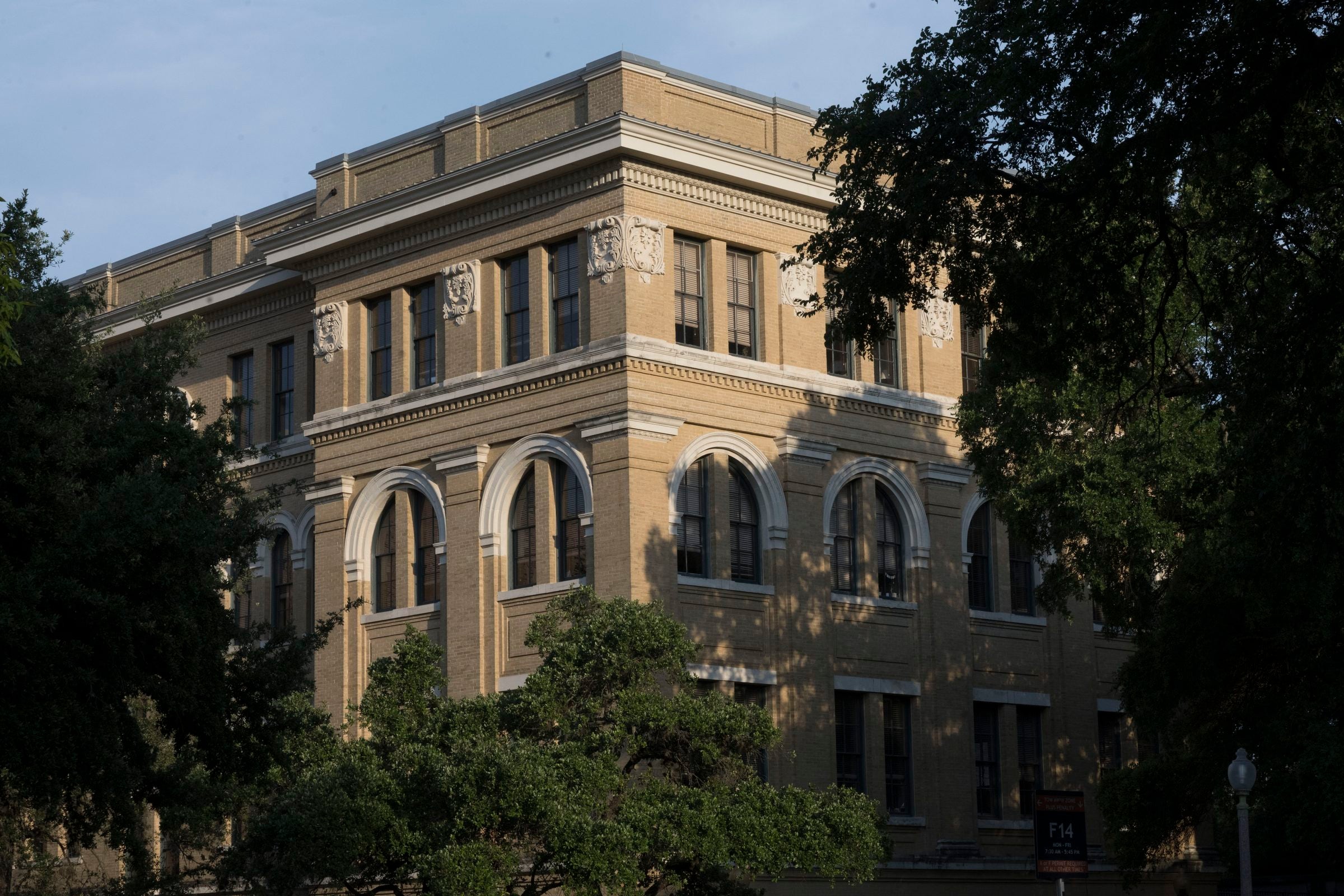
Since its appearance at the baseball game, students and faculty members alike have long debated about what color scheme they wanted to represent UT. In 1893, the interpretation was a gold and white that matched the design of many campus buildings at the time. In fact, the Dorothy L. Gebauer Building, which was once the engineering school, is still composed of the pale yellow brick and limestone trim that gave it these hues.
During the following year, the University began to move away from the color gold and back to a true orange because gold was deemed too “feminine” for the sports teams of the time. Nothing stuck for long, though. In 1898, the white of the football team’s uniforms became too difficult to clean, which prompted the student manager to call for a change to maroon and orange. The thought of a maroon Longhorn may come as a surprise to some, but Texas A&M University didn’t adopt the color until the late 1920s.
Today, just like before, fans are particular about the look of their UT merchandise. Anything carrying official branding should be the exact Pantone shade No. 159, or it might risk looking too much like the colors of other universities or sports teams. This, Nicar said, is the subject of many online debates come football season each fall.
“You’re so used to seeing that color attached to The University of Texas that anything different feels off-kilter,” Nicar said.
As the football team’s choice of uniforms continued to fluctuate between color palettes, feedback and petitions on the University’s colors continued for the next few decades. In 1900, the Board of Regents held a vote for respondents across campus, with options including orange and white, orange and maroon, and even royal blue and crimson. Ultimately, orange and white won with a margin of just seven votes.
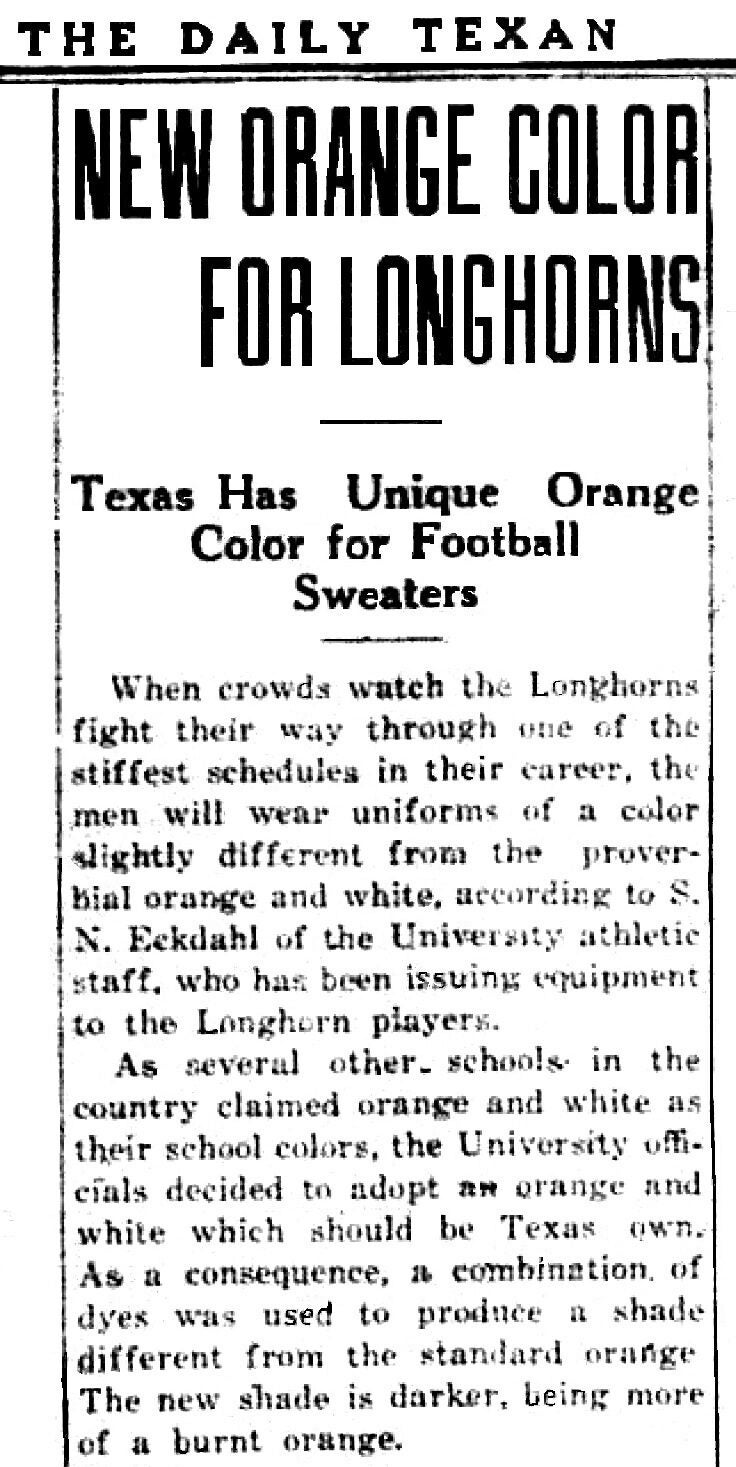
While orange secured its official place as the primary color at UT, it wasn’t until 1925 that the term “burnt orange” appeared in The Daily Texan with the headline, “New Orange Color for Longhorns,” announcing a new, darker kind of orange for the football team that was specially made just for the University. The fabric was later lost, though, following a halt in production from the German manufacturer during World War II.
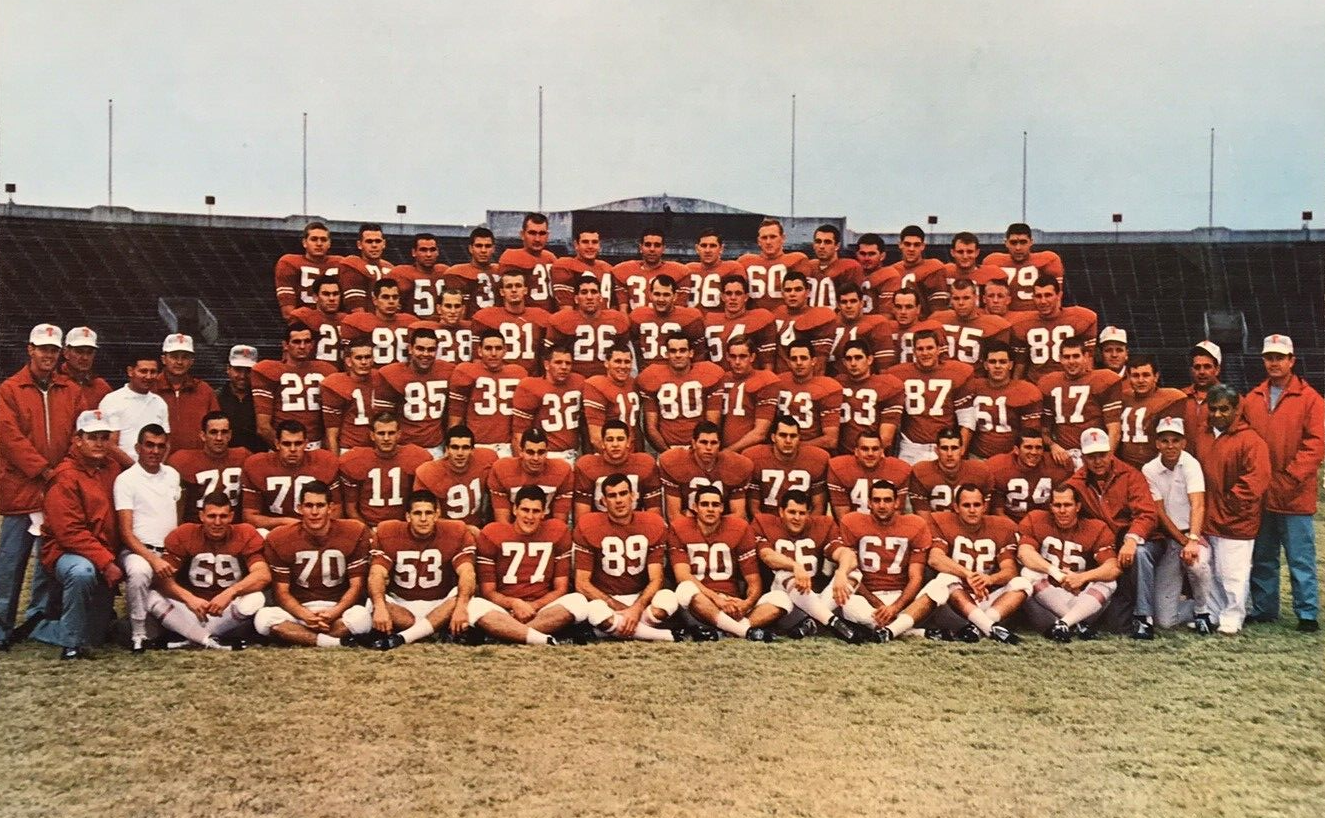
For the following years, the team transitioned back to a light orange until football coach Darrell K Royal entered the scene in 1957. During his tenure, Royal felt the University and its colors were important to giving the players a sense of identity. Though popular myth suggests Royal selected the return to burnt orange to more closely resemble a football for an optical illusion during play, the choice was made to differentiate UT from the University of Tennessee. “He wanted that distinctive Texas orange,” Nicar said.
Royal’s influence proved to have staying power as burnt orange became the University’s tried and true color. The decision was reached following another vote in 1967 after a group of 72 students and alumni presented a petition for the return to light orange. Consulting the shade of the official seal adopted in 1950, they claimed that the lighter version was truer to the intentions of UT’s early regents. But an investigation into the history of the color led the board to maintain that burnt orange was the best choice.
Come early, stay late and wear orange
These days, football season is marked by Saturday mornings and afternoons painted in the distinct burnt-orange hue. All throughout the campus streets, game-day attendees dress to the nines, donning cowboy boots and other Western-inspired wear with an orange twist, often coming from the University Co-op store. But according to Nicar, it wasn’t always this way. When he was an undergraduate student during the 1980s, he said attending in orange gear was a rarity.
That is, until football coach Mack Brown joined the University in 1998, determined to revitalize interest in the games and school spirit.
“Coach Mack Brown came along with his mantra of ‘Come early, stay late, and wear orange,’” Nicar said. “That was new to football stadiums across the country. Before then, everybody just showed up as they were.”
Through all the back and forth that led UT to its colors, which consistently rank among some of the best college uniform color combinations by USA Today, one thing remains consistent — the color of the University represents decades of history and belonging that you can’t achieve as easily with anything else.
“The Tower is a visual icon, but you can’t take the Tower everywhere with you,” Nicar said. “But when you can have a burnt-orange T-shirt or a hat or something else … it’s a visual unifier.”