Alumni Exhibit Marks 60 Years of UT’s Photography Program
What Russell Lee began in 1966 has blossomed into a multimedia powerhouse in visual art.
“Experimental Seeing: Russell Lee’s Pedagogical Legacy”
Up through Dec. 19 at the Visual Arts Center
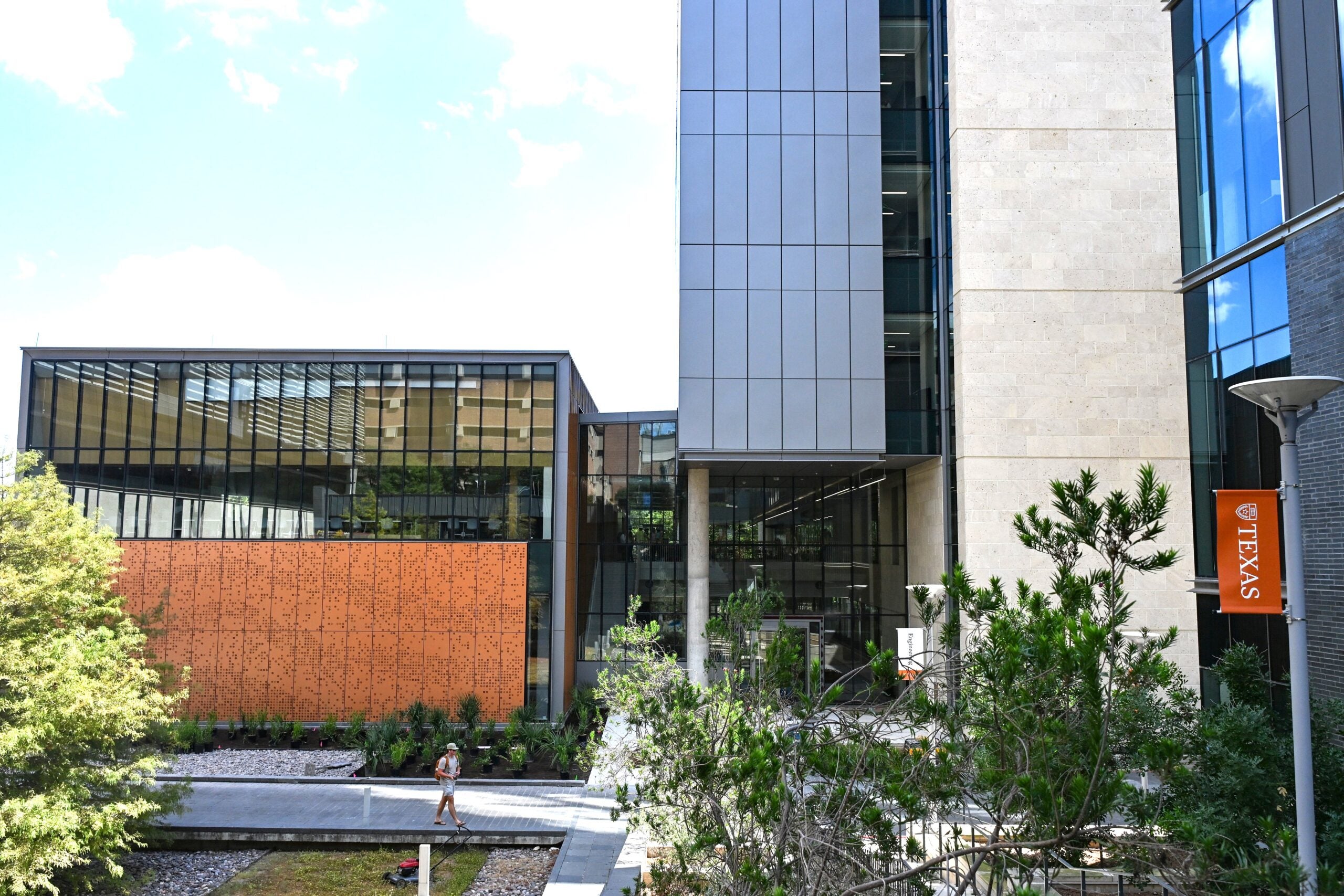
In 1965, photographer Russell Lee held a retrospective exhibition at The University of Texas’ three-year-old Art Museum at the corner of 23rd Street and San Jacinto Boulevard. This gallery in the Art Building is now the Visual Arts Center, so the fact that “Experimental Seeing: Russell Lee’s Pedagogical Legacy” has just gone up in that same space is a full-circle moment.
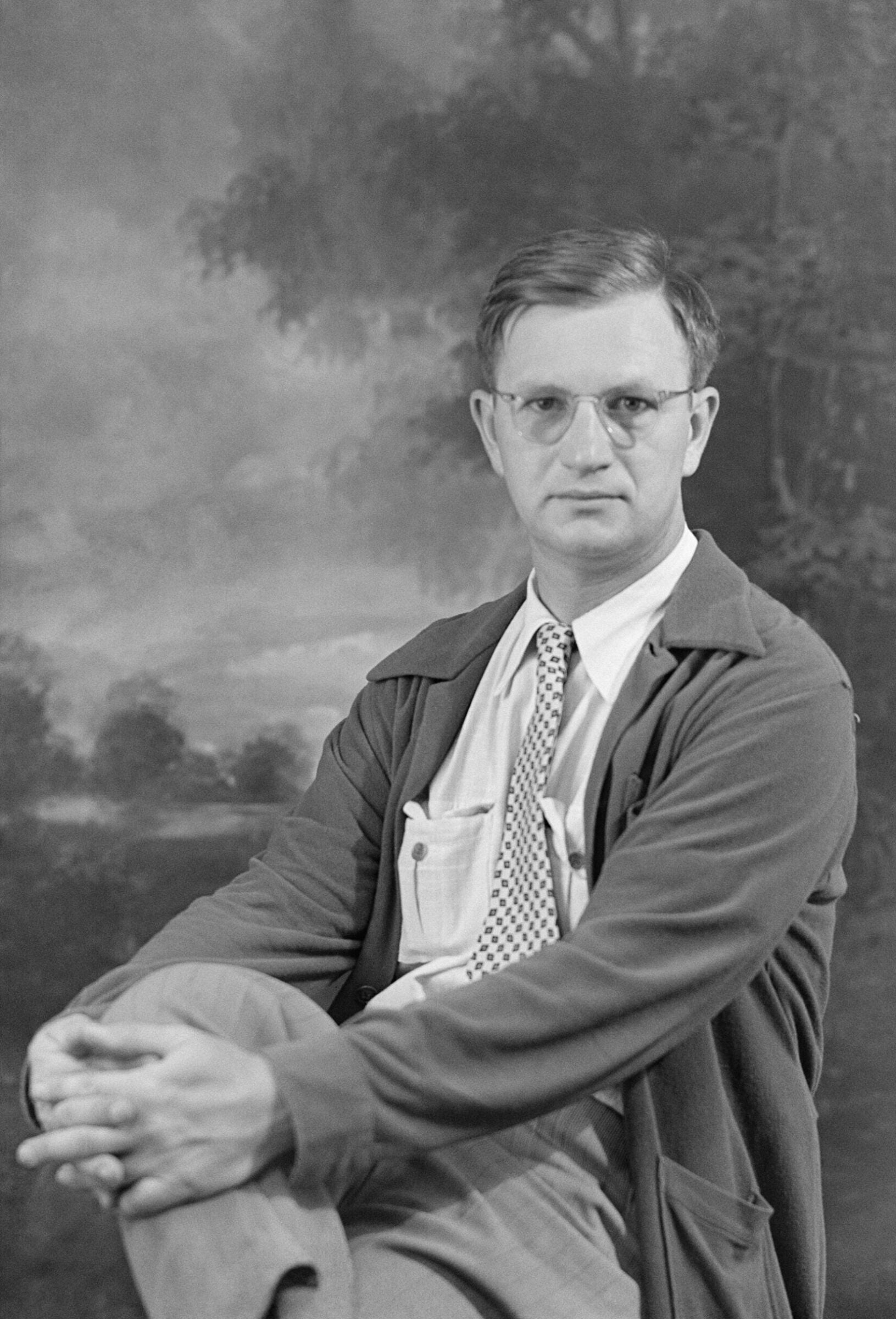
Just after Lee’s show, he was recruited to build the first photography program in the College of Fine Arts. “Eschewing technical language, Lee described his innovative curriculum not as a series of photography classes, but as ‘experimental courses in seeing,’” explain curators Teresa Hubbard, a UT studio art professor, and Jana La Brasca, art history alumna and critic-in-residence at the Museum of Fine Arts in Houston.
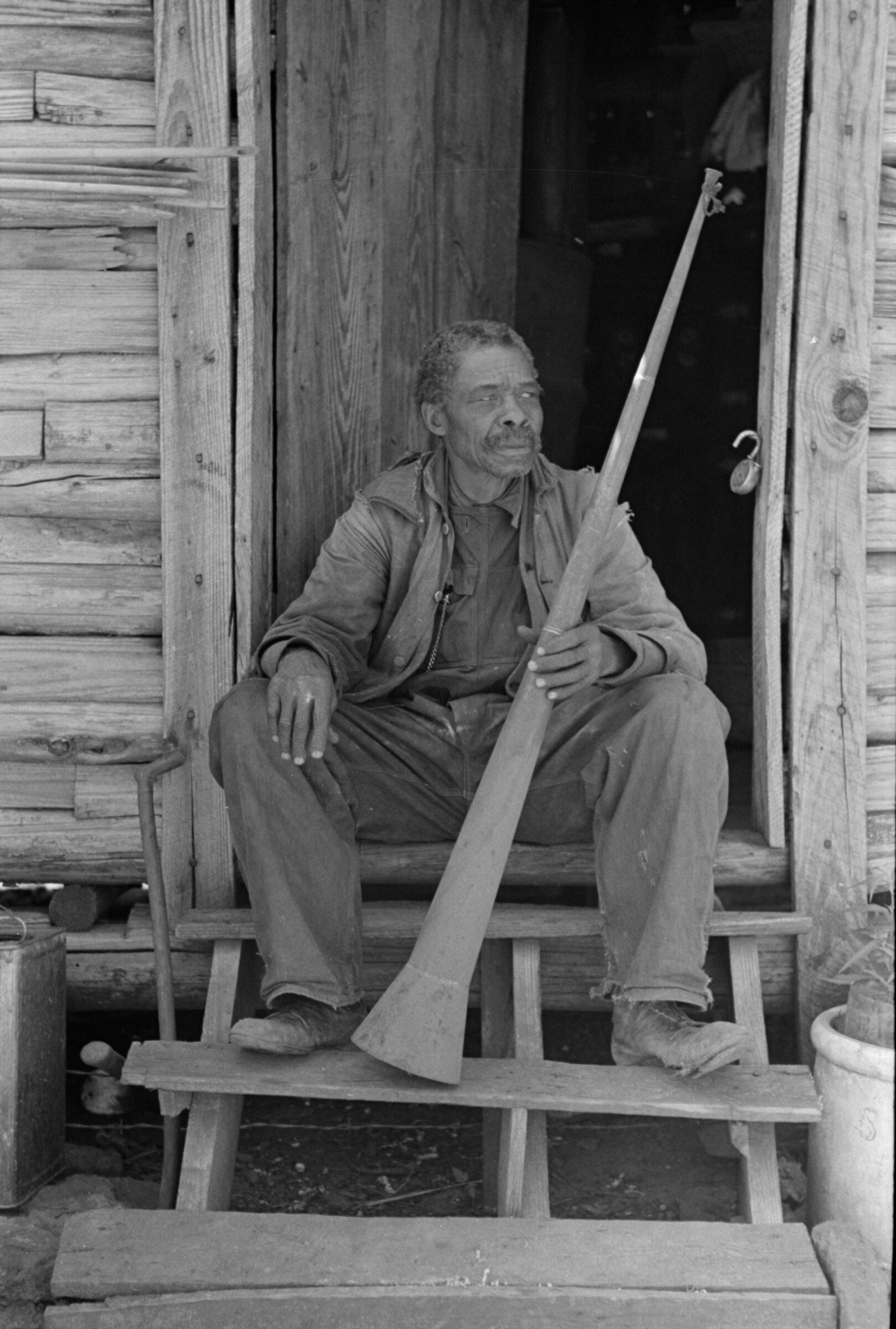
Lee began photographing objects to use as references for his painting, but eventually, the medium became his primary focus. He worked extensively to document American life as part of the New Deal’s Farm Security Administration and later the Coal Mines Administration. He was also one of the primary photographers to document Japanese internment camps of World War II. Much of Lee’s work is now housed just up the hill at UT’s Briscoe Center for American History. In 2016, Austin’s Robert E. Lee Elementary School was renamed for Russell Lee.
The exhibit marks the 60th anniversary of the College of Fine Arts’ photography program with photographs not by Lee, who died in 1986, or by students of Lee, but by 25 relatively young MFA graduates who nevertheless have benefited from Lee’s pedagogical legacy. The earliest graduates are Adam P. Schreiber and Dave Woody, both MFA 2007; the latest, Nolan Zunk, MFA 2026.
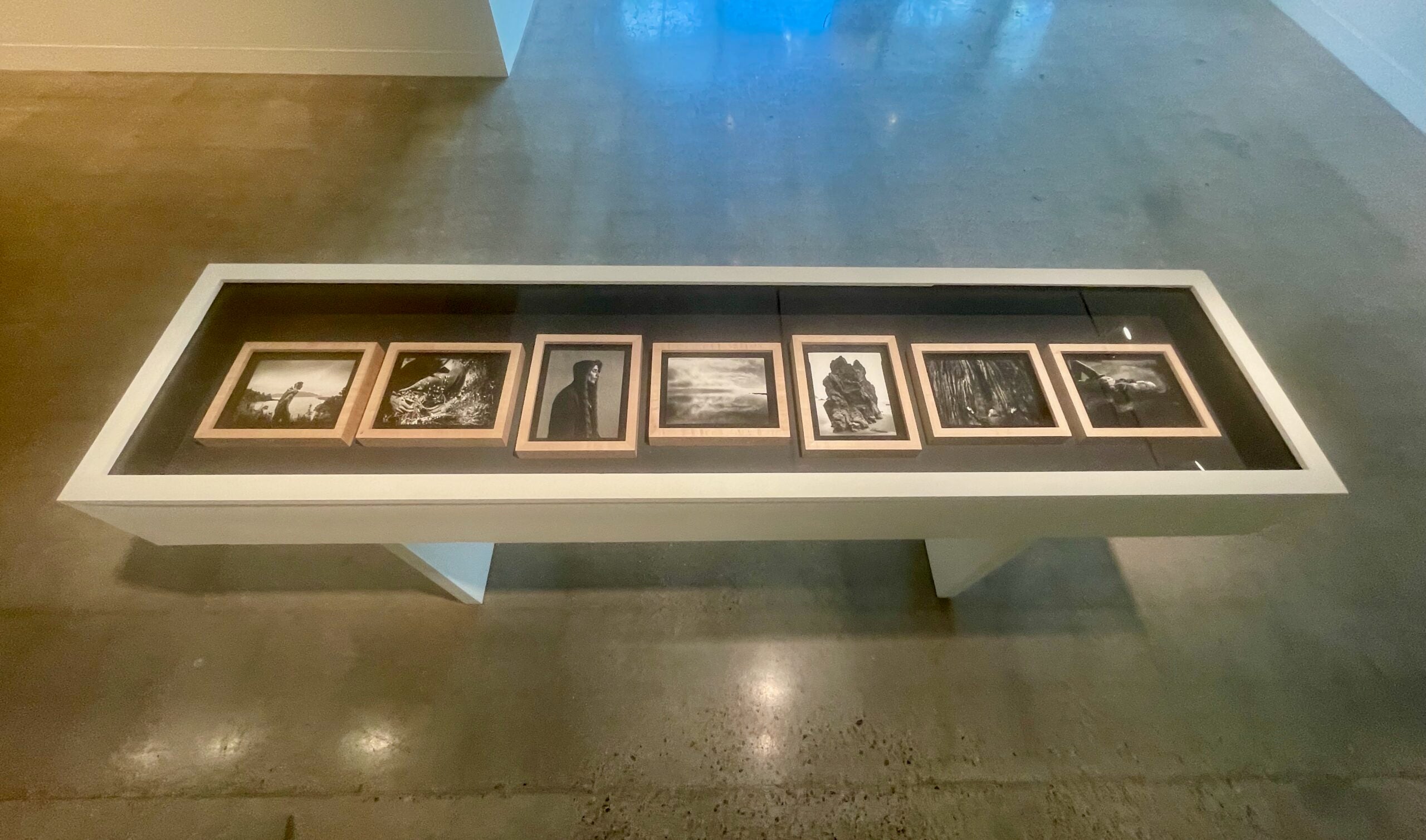
The show does not include every single method for displaying an image, but it comes pretty close. There are, of course, many fine photographs in the exhibit, such as a set Woody made in California during the past seven years displayed in a case in the gallery’s center. (Pictured at top of article.)
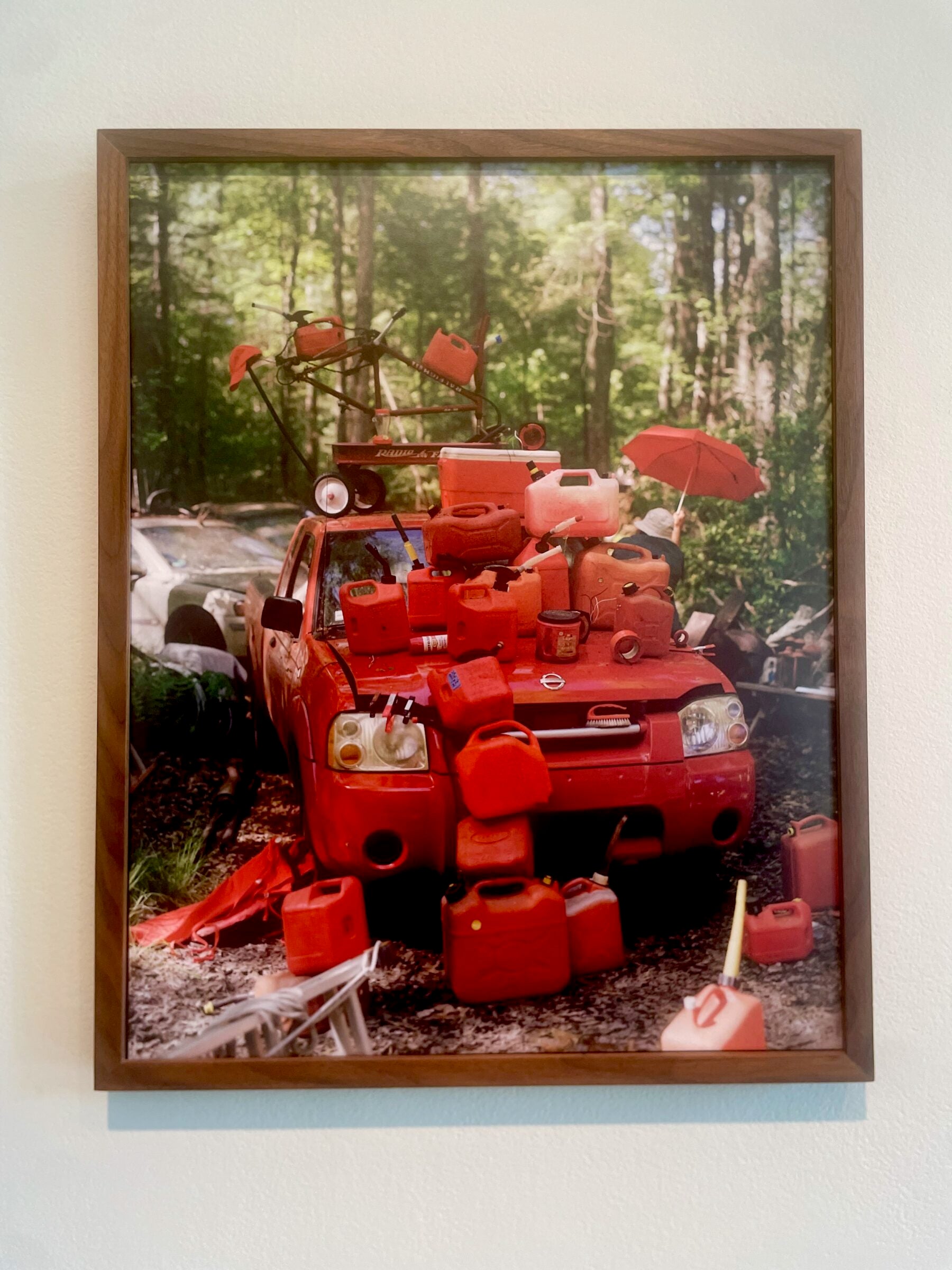
And another set, Schreiber’s “Selections” from Mess Ledger (2008-2019), is composed of archival prints on aged ledger paper and runs vertically all the way to the ceiling.
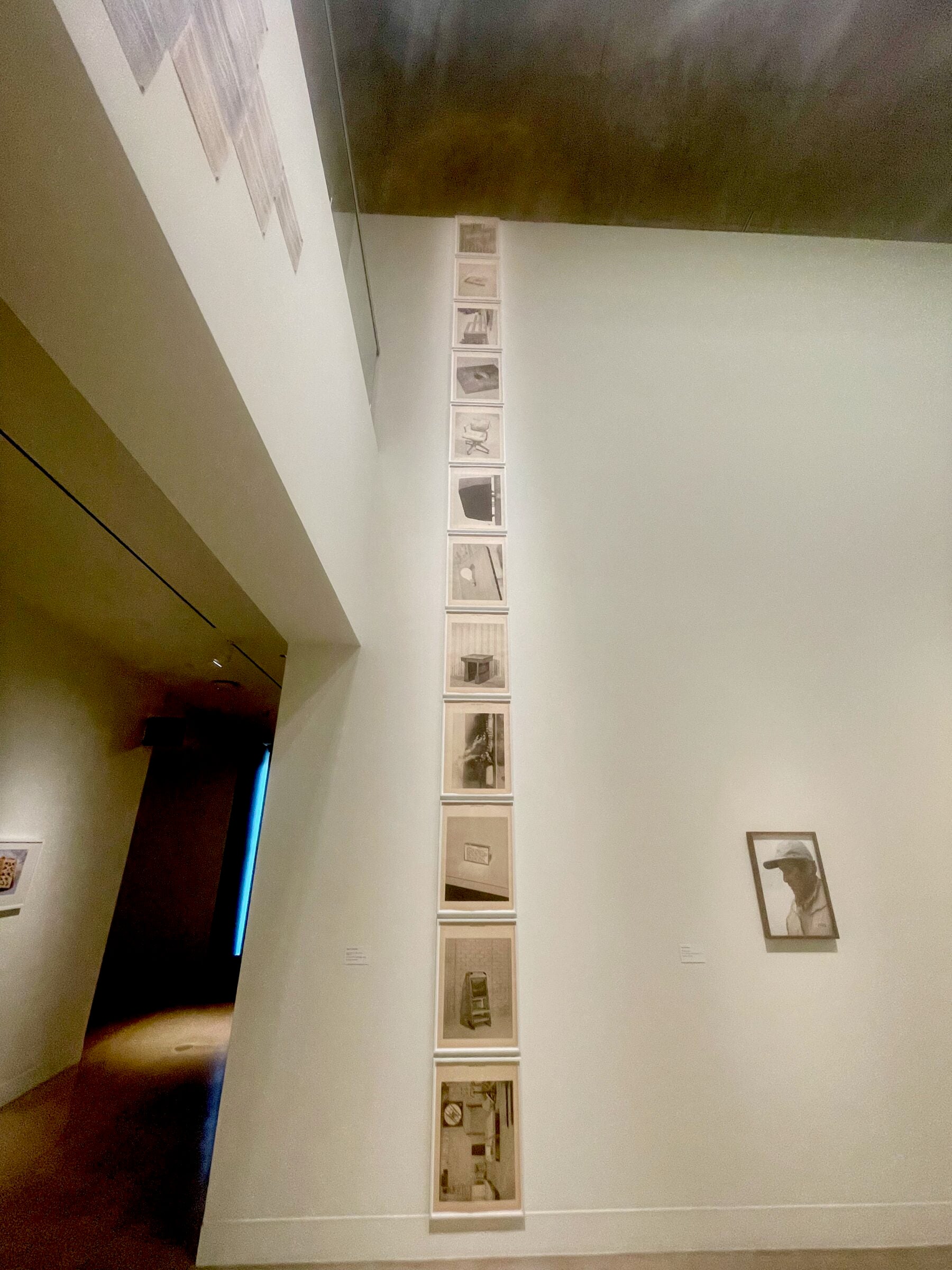
Rosie Clements’ “Dogleg” (2025) is folded at a right angle so that it hangs flush to a corner (in a frame she made too). And Zunk’s “Mo, 2025” is an 8-by-10-inch positive film slide mounted on its own custom-built light box.
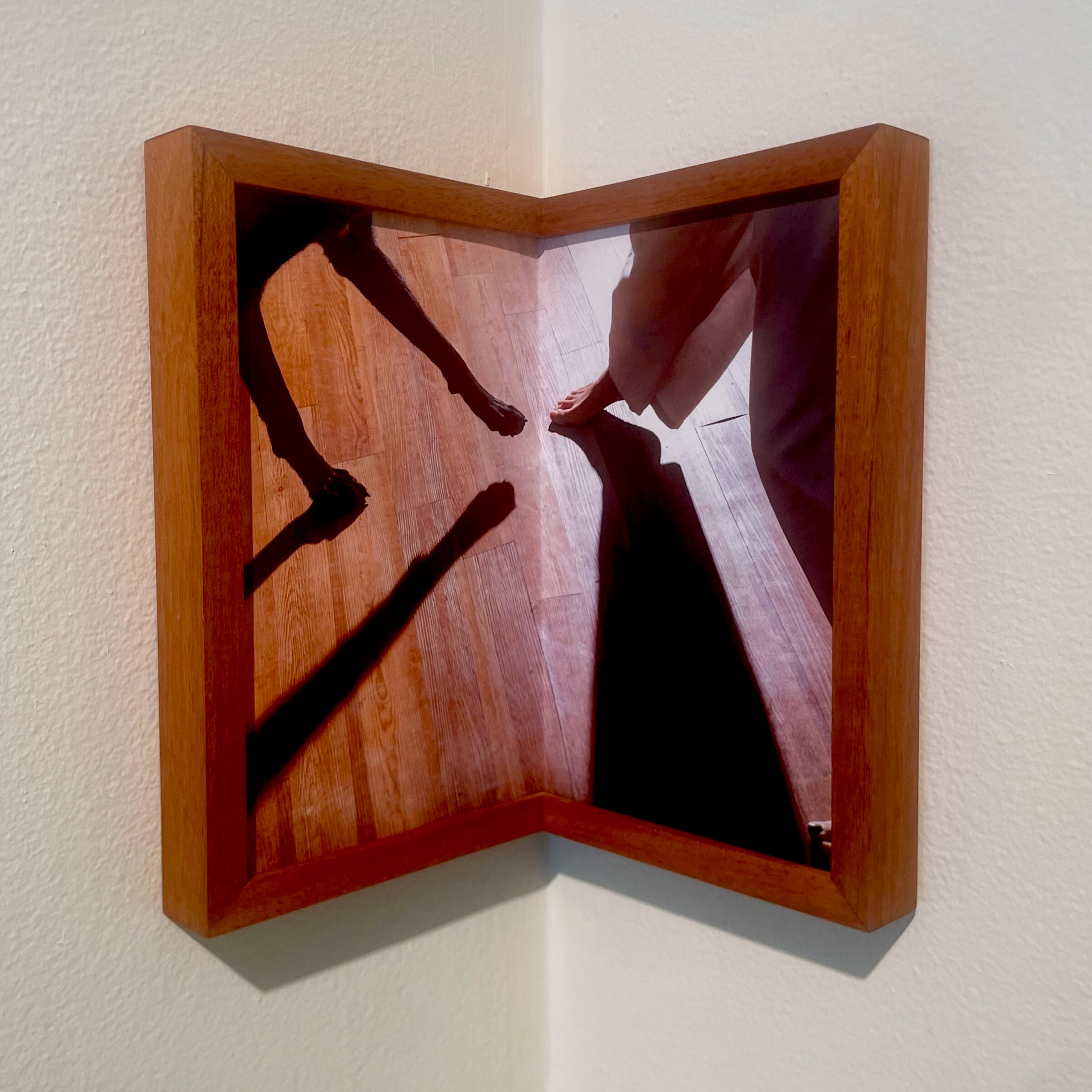
But beyond prints and transparencies, there are also videos and other installations that have rippled out from the program Lee began. In one video projected just inches wide on a wall, (“Appa In Between, Sleeping” (2020-2022) Aishwarya Arumbakkam’s father sleeps sitting up for 11 minutes, and one must wait for a breath or other subtle movement to realize it is a video and not a slide.
Want more sleeping fathers? Jennifer Teresa Villanueva’s “Papá en casa después del trabajo tomando una siesta mientras ve el partido de fútbol / Dad home after work napping while watching the football match” (2021) — well, the title pretty much says it all.
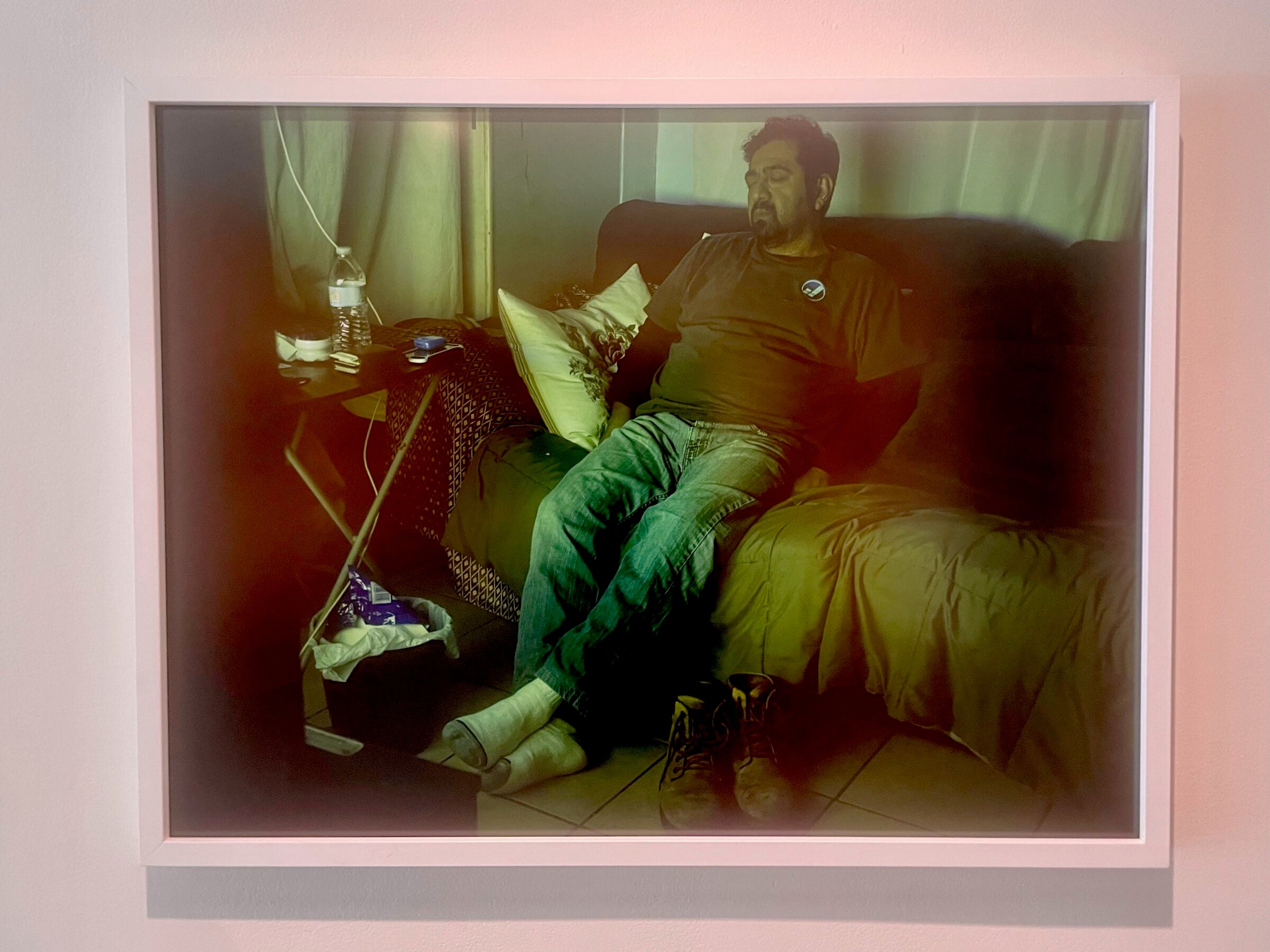
Yet another paternally inspired print shows dozens of red objects — a pickup, gas cans, a wagon, umbrella, duct tape — that artist Phoebe Shuman-Goodier found at her father’s woody property and staged together for “Red” (2023). While in the program Shuman-Goodier received the Russell Lee Endowed Presidential Scholarship in Photography.
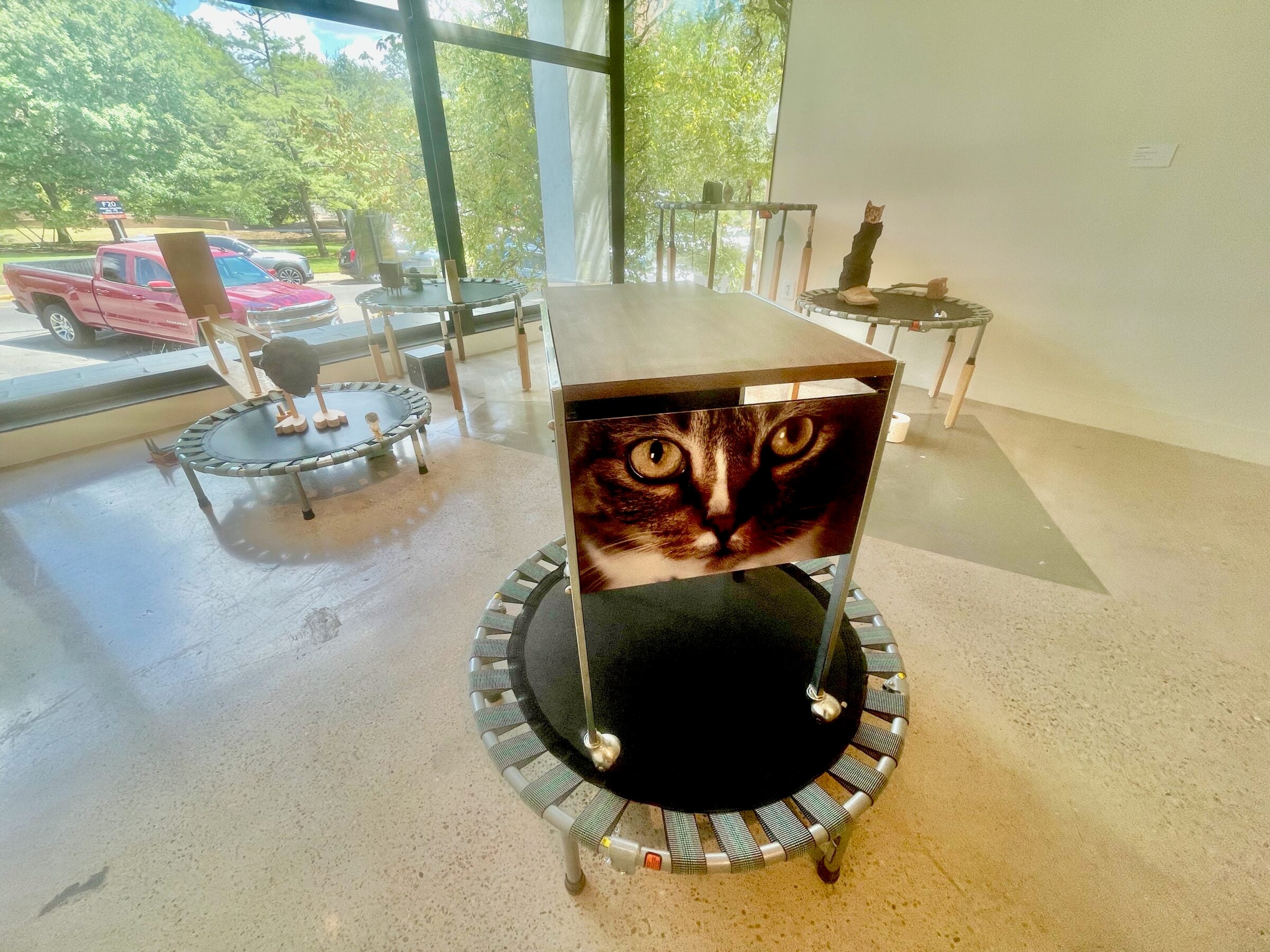
In another installation, which takes over a whole corner of the gallery, large closeups of a cat’s face are affixed to pieces of four-legged furniture, suggesting overgrown pets.
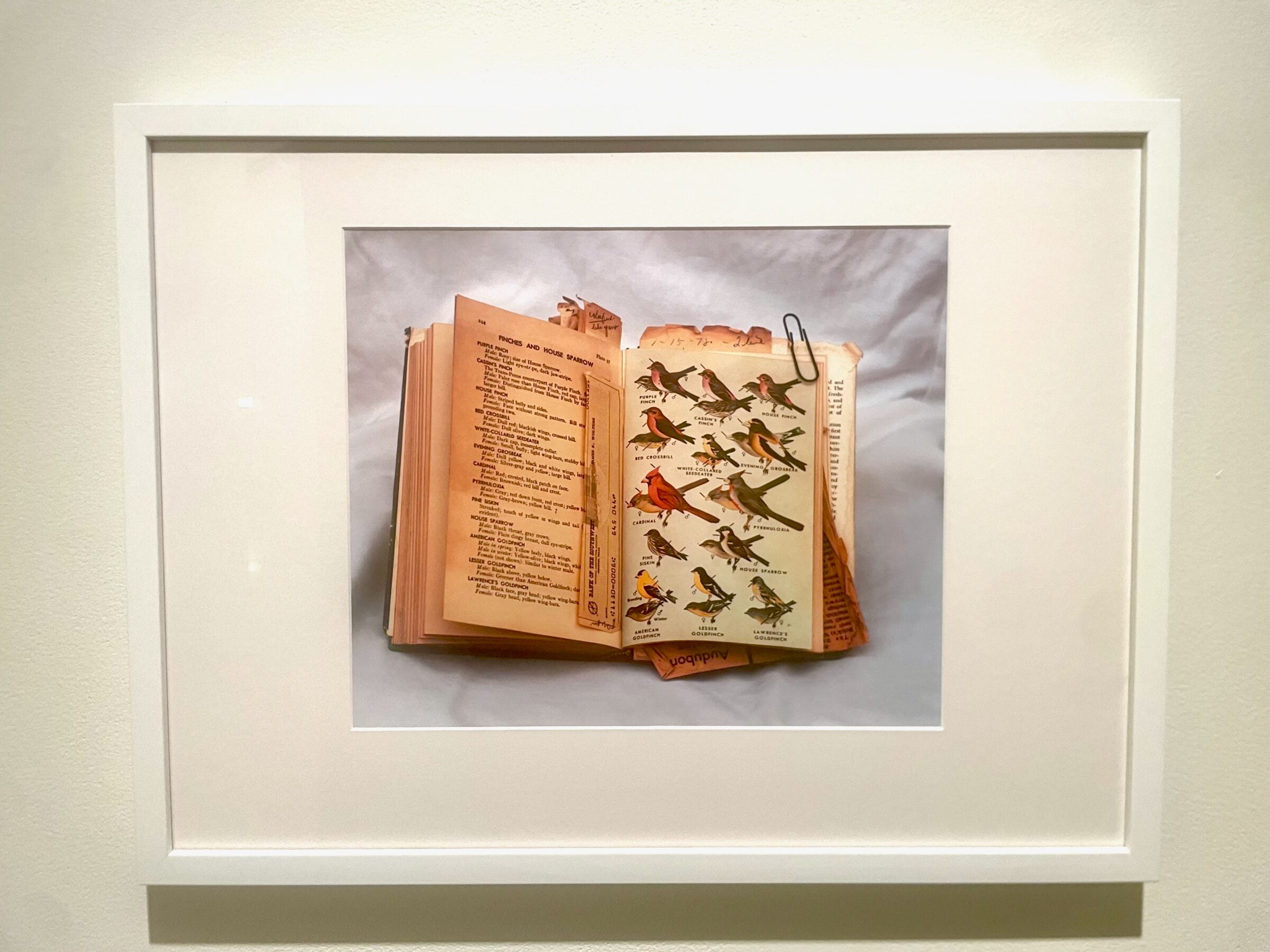
Laura B. Turner’s “Birdwatching” (2011) is simply a portrait of a birding field guide in all of its glorious age and wear.
Have a seat in front of a large TV screen and order up a short film by photography program alumni, such as Santiago Forero Ramírez’s “Eclipses” (2024), a suspenseful, atmospheric 17-minute film that follows four speechless characters through a mysterious visual nocturne.
Or enjoy Tova Katzman’s entertaining guerrilla-cinema documentary “Searching for the Source” (2024), which captures her quest to find the source of Texas’ Colorado River in West Texas.
According to the curators, the artists, who reside in nine states and four countries, “respond to Lee’s proposition by treating photography not as a destination, but a starting point through which to see the world.”
“Experimental Seeing: Russell Lee’s Pedagogical Legacy” is up through Dec. 19. The Visual Arts Center, 2301 San Jacinto Blvd., is free and open to the public Tuesday-Saturday (except during home football games) noon-5 p.m..