
Spooky Science: Arctic Wolf Spiders’ Eating Habits Are Shifting Over Time
Integrative biology professor Amanda Koltz explores the ways that arctic wolf spiders’ diets are shifting over time in a recent paper.
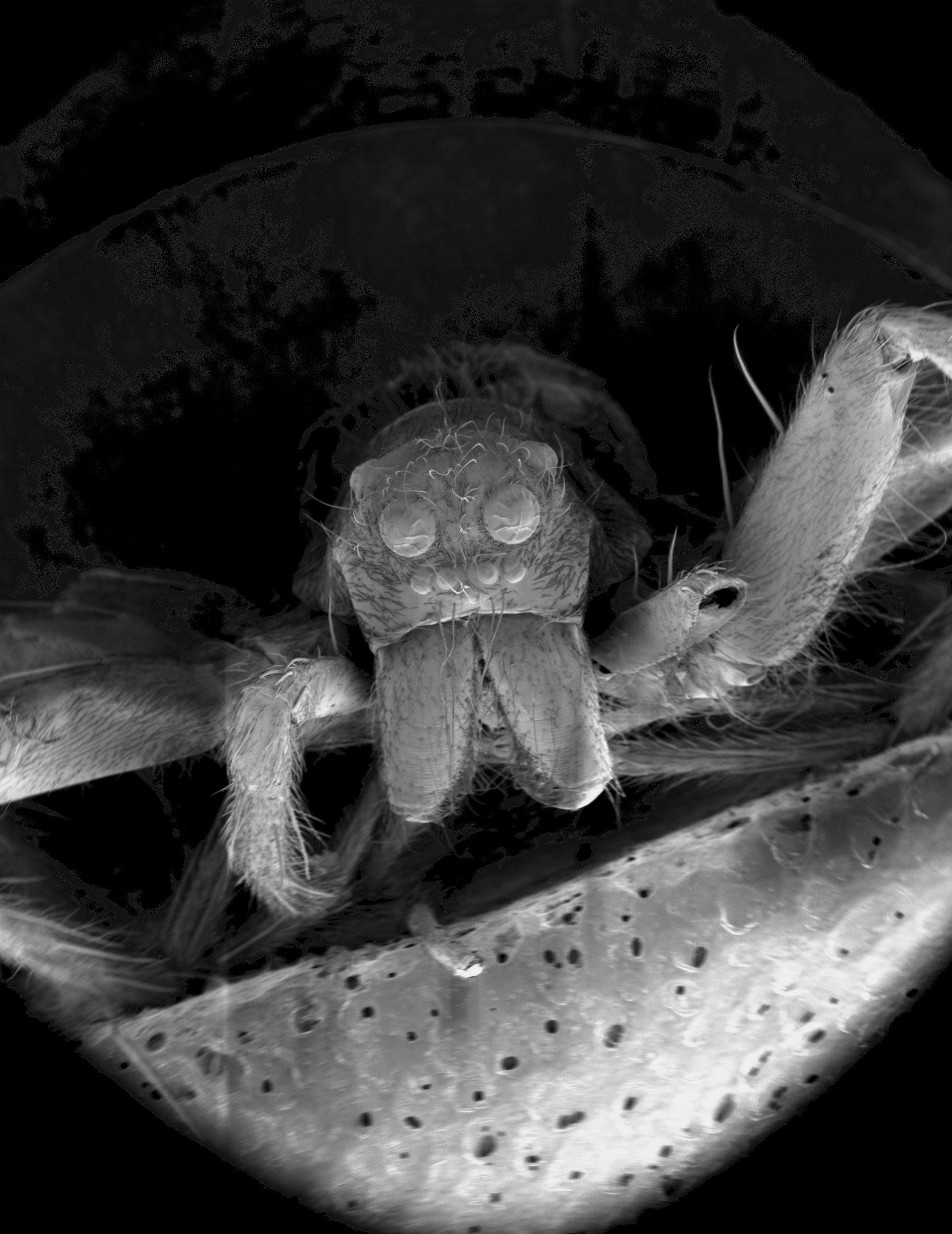
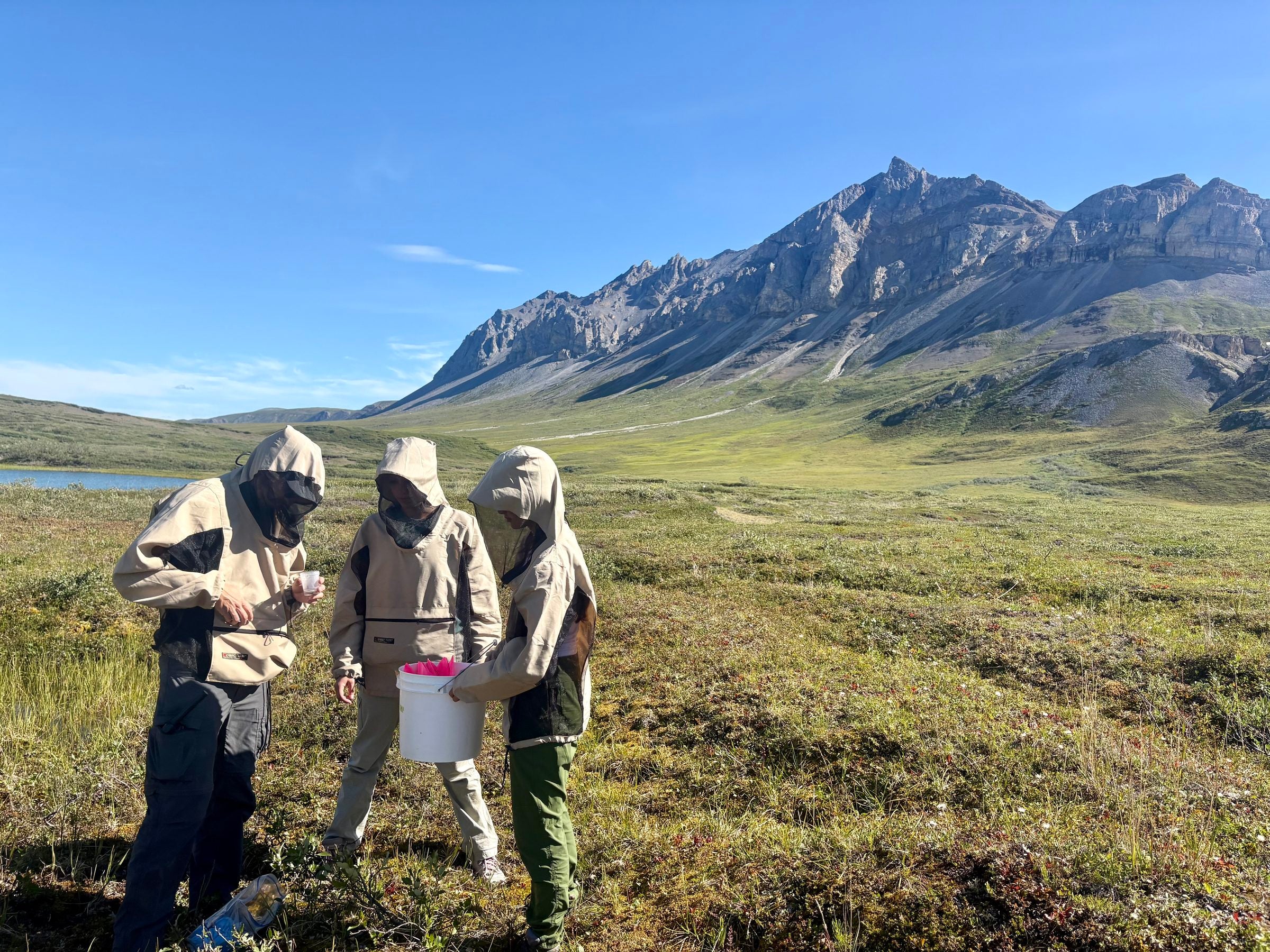
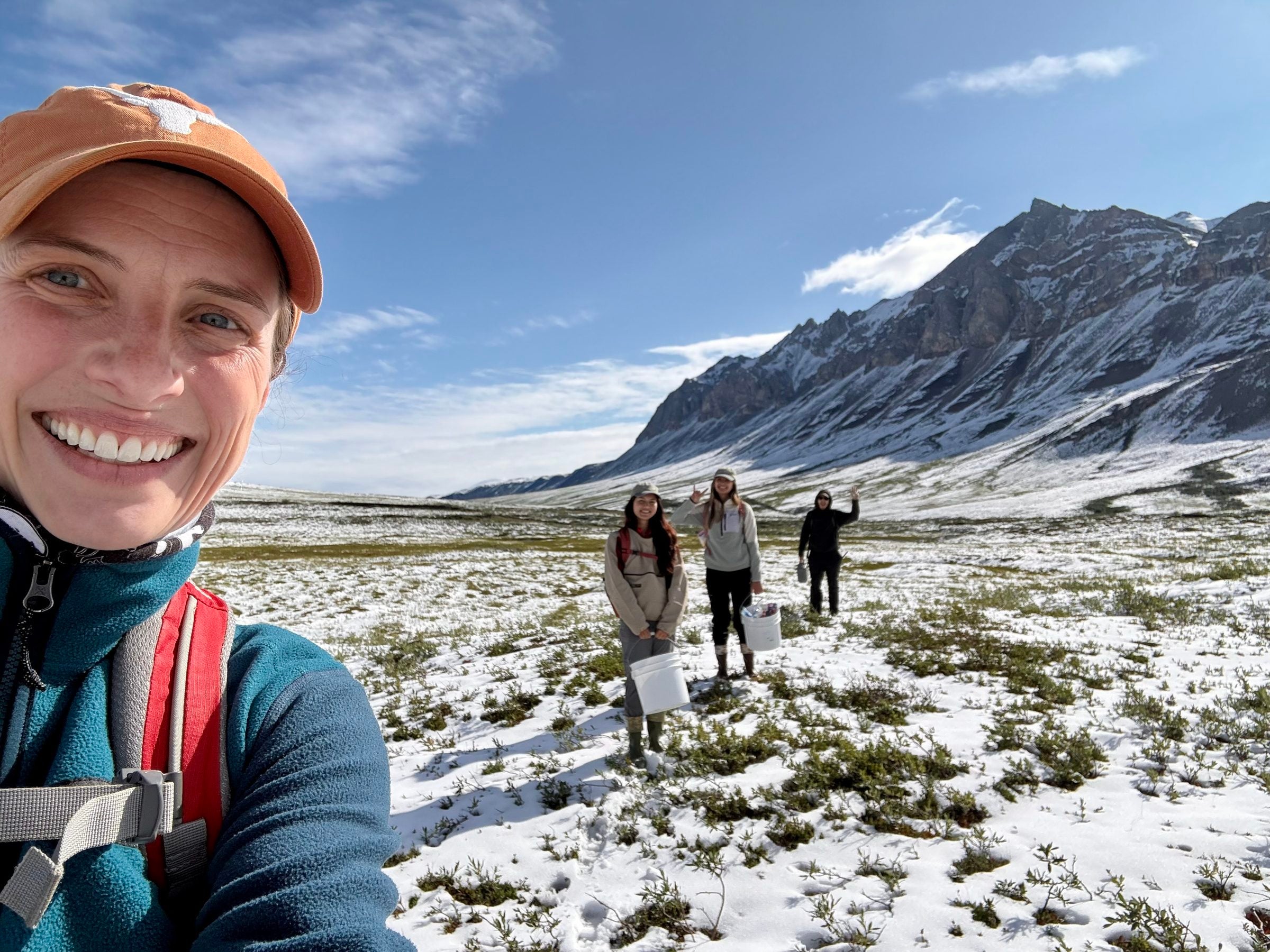
Wet squelching sounds filled the air as Amanda Koltz and her team trudged through the thick patches of grass and snow covering the northern parts of the Alaskan tundra. The melting permafrost, which had seeped into the ground in the summer, made walking clumsy, almost like walking through piles of laundry.
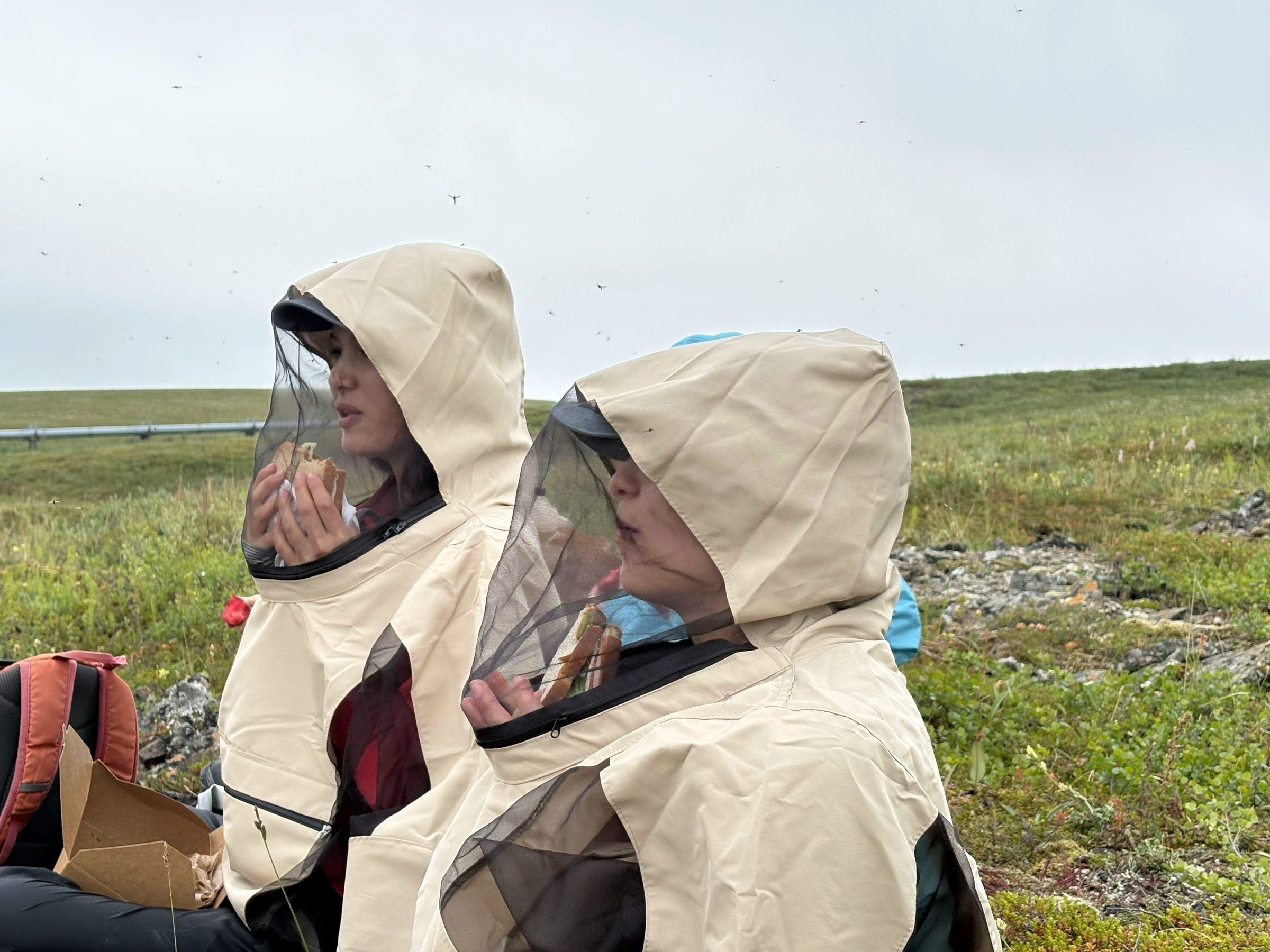
Covered head to toe in protective gear and mosquito netting, the crew worked at several different sites along Alaska’s Dalton Highway— one of the state’s most iconic and dangerous roadways, as they searched for their subject: the arctic wolf spider.
The scent of crisp evergreen and earth reached Koltz’s nose with every breath, bringing with it the stinging cool of the subzero temperatures and a growing sense of awe.
“Part of the reason I became an ecologist was to be able to study these processes in incredible and rapidly changing places like the Arctic,” Koltz, an assistant professor in the Department of Integrative Biology, said. “These sites are very remote, and most people will never get the chance to experience them firsthand. That makes the opportunity to work there feel like a privilege and a responsibility, and I don’t take either for granted.”
Last week, Koltz and Nevo Sagi, a post doctoral fellow in her lab, published a research paper in the Journal of Animal Ecology that explored the findings of their recent field work. According to the research led by Sagi, arctic wolf spiders are expressing changes in their diets that may prove to be beneficial for future scientific discoveries.
After the release of the new paper, we talked to Koltz about the findings and what these spiders can do for the ecosystem.
Q: Could you explain why spiders play a significant role in the environment? I think a lot of people are either scared of them, or see them as a bit of a pest, but they also play a bigger role. How would you summarize that?
At a broader level, spiders are critical predators within our communities and ecosystems. They’re almost never a threat to people, but they are important predators that can consume pests.
From an ecological perspective, spiders integrate many different interactions within a biological community. For example, the wolf spiders we study eat herbivores that feed on living plants, but they also eat detritivores, which are organisms associated with the decomposition of dead plant material. That connects them to different parts of the food web. And because there are so many wolf spiders in the tundra, those interactions can have meaningful effects on how the ecosystem functions.
Q: With your new research paper coming out, what were some of the big picture questions that you and your team were setting out to answer?
Studying wolf spiders in the Arctic may sound very specialized, especially from here in Texas. But wolf spiders are found in almost every terrestrial system on the planet. Learning about what they do in the Arctic can help us understand and predict how these abundant predators may influence food webs and ecosystem processes elsewhere too.
The big question for this study was how the role of these predators changes over space and time. We wanted to understand what wolf spiders are eating and how their diets change across different locations and over the summer season. This information can then be used to help us predict when and where the wolf spiders could have meaningful effects on ecosystem processes like plant growth and decomposition.
Q: What are some of the biggest takeaways from the research that you and your team have been conducting?
Over the last few years, we’ve learned that wolf spiders are a good model system for studying how animals are affected by environmental change. As conditions in the Arctic shift, we can see changes in the wolf spiders themselves and in how they interact with the rest of the food web.
There’s evidence that wolf spiders might be getting bigger with warming temperatures because summers are getting longer, which means they have more time to feed. Remember this is a very extreme environment where it’s below freezing most of the year, so extending the summer season opens up new opportunities.
An example of this is that we’ve found wolf spiders reproduce more when summers are longer by producing multiple clutches instead of just one. And we know that when there are more wolf spiders in an area, they choose different prey. All of these together suggest warming could change both the number of predators in the ecosystem and the interactions they have with their prey.
The next question is what the consequences of those changes are for the ecosystem. If wolf spiders become more abundant and they eat different prey, how might those changes cascade through the food web and ultimately affect ecosystem functioning?
Q: Have you already started thinking about what research questions might come next, or how the findings from this paper influence what you’re looking at?
With some animals, like fish, you can learn about what they eat by dissecting them. That doesn’t work well with spiders because they digest their prey externally, so we are exploring different approaches to figure out how wolf spider prey choice changes across space and time. In our most recent paper, we used an emerging approach called essential amino acid carbon isotope fingerprinting to trace carbon from plants, fungi, and bacteria to the wolf spiders. The results from this study showed wolf spiders rely more on fungal-derived energy at less productive sites and early in the summer but then they shift toward plant-based energy during the peak summer season. This gives us some new clues about what kinds of effects wolf spiders may have on the ecosystem during different periods in the summer. For example, if they rely on fungal-based energy early in the summer, that might be when they are most likely to affect decomposition compared to later on when they rely on plant-based energy.
We also found bigger wolf spiders relied more on plant-derived carbon, suggesting prey choice and ecosystem impacts might vary between bigger and smaller wolf spiders.
Q: Do you have any spooky wolf spider facts to share?
One cool thing is that many of the insects and spiders in the Arctic have extended life cycles because the summer is too short for them complete their life cycle in one year. Because of this, wolf spiders – can live longer in the Arctic than they would in Texas or other locations with more temperate climates.
All the animals that live in the Arctic also have special adaptations to cope with the long winters and extreme cold temperatures. For wolf spiders to accommodate that longer life span up north, they need to survive those cold temperatures. They do this by synthesizing antifreeze proteins that prevent their bodies from freezing in winter.
Scary Good Adaptations
Pop culture knowledge tells us that anything with fangs, cold-resistant blood and an extended lifespan is probably a vampire, but in this case, it might just be the arctic wolf spider.
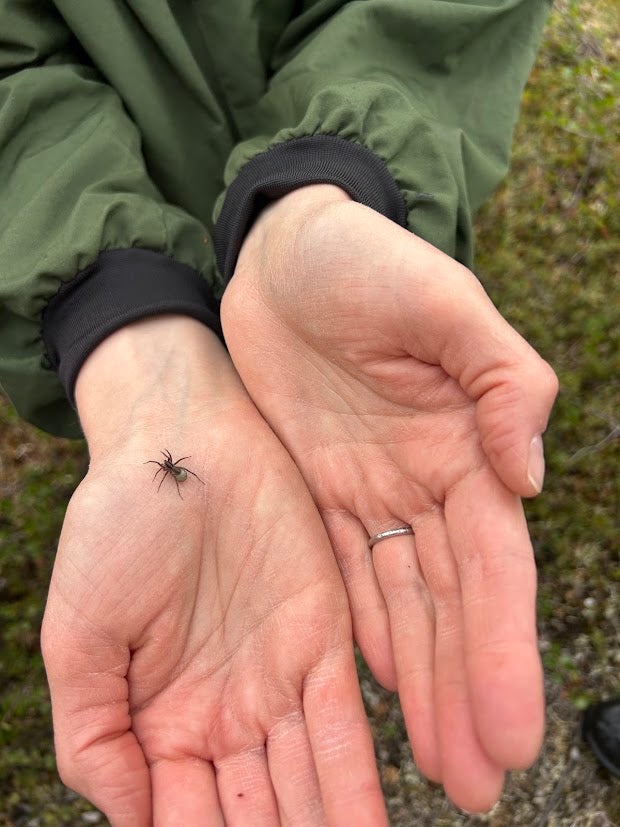
But don’t fret. The similarities end there. Though these spiders might look scary, they are harmless to humans. As Koltz pointed out, most things truly are bigger in Texas, including the wolf spiders, which are just about the size of a fingernail in the Arctic — and they offer ecological benefits too.
Over the past decade, Koltz’s research has revealed that changes in the Arctic environment can affect wolf spiders in ways that have broader ecological consequences. Environmental conditions shape how wolf spiders reproduce, what they eat, and how they interact with other organisms. In turn, those changing interactions can have cascading effects on Arctic food webs, microbial communities and processes such as decomposition.
Building on these findings, Koltz and her team are working to understand when and how changes in the spider’s menu can ripple through food webs, both in the Arctic and beyond.