
The Longhorn Marching Band Celebrates 70 Years of Women in the Program
This year is a milestone anniversary for the history of the marching band. To mark the occasion, the Longhorn Alumni Band honored some of the program’s trailblazing women.
Awash in the fluorescent glow of stadium lights, Paula Crider’s arms flitted back and forth from her spot on the conductor’s podium above the Longhorn Alumni Band. With extended hands, she commanded tension through her fingertips, drawing out the chirping notes of the wind section before reaching for the rich timbre of the brass instruments.
Crider guided a performance from the band during last week’s game — a matchup between the Longhorns and the Mississippi State Bulldogs — as the thump of drums rolled through DKR-Texas Memorial Stadium.
With each sound, the buzz in the stands climbed higher. Crider, who stood in the forefront of it all, said the feeling is indescribable.
“Your body can become alive with the music-making,” said Crider, who led the Longhorn Band from 1995-1999. “The energy that’s created in great moments of music — the feeling becomes exponential.”
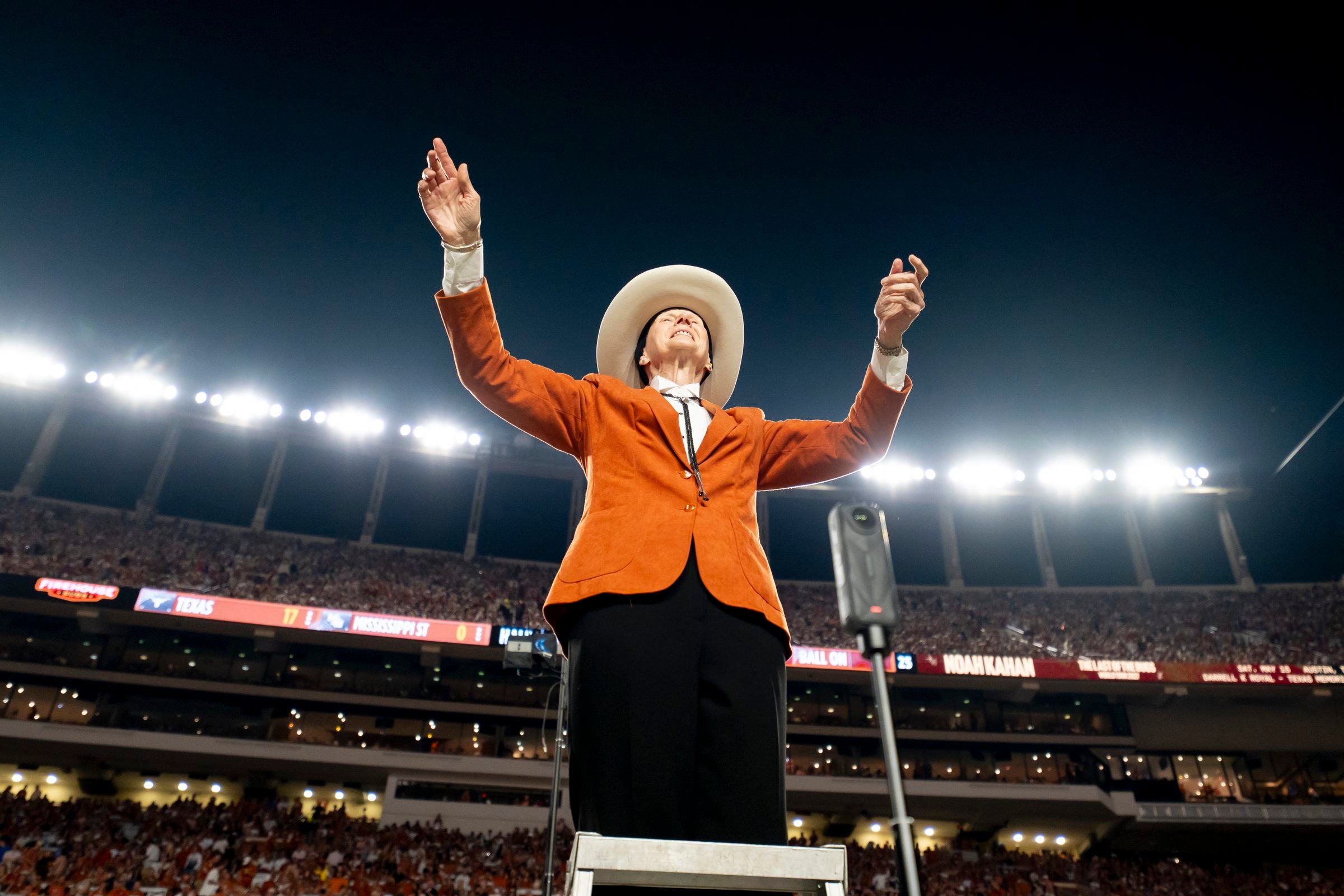
On the raised platform, thousands of eyes peer at the conductor from all directions. As the only female conductor in the University’s history, Crider said the weight of the audience’s stare was amplified.
This year, which marks the 70th anniversary of women joining the band, Crider took to the field again for the annual Longhorn Alumni Band Weekend. Additionally, Donna Beth McCormick and Marye Hortsmann Davis, who were part of the original groups of women brought into the program in the 1950s, were recognized at the game. Over the decades, the legacy of women in the Longhorn band has only grown, even with initial hesitance towards a co-ed program.
“There was always pressure to prove myself, because there’s always that doubt, especially when you’re someone who is taking on a role that’s never been taken on before,” Crider said. “That made me stronger. It made me determined.”
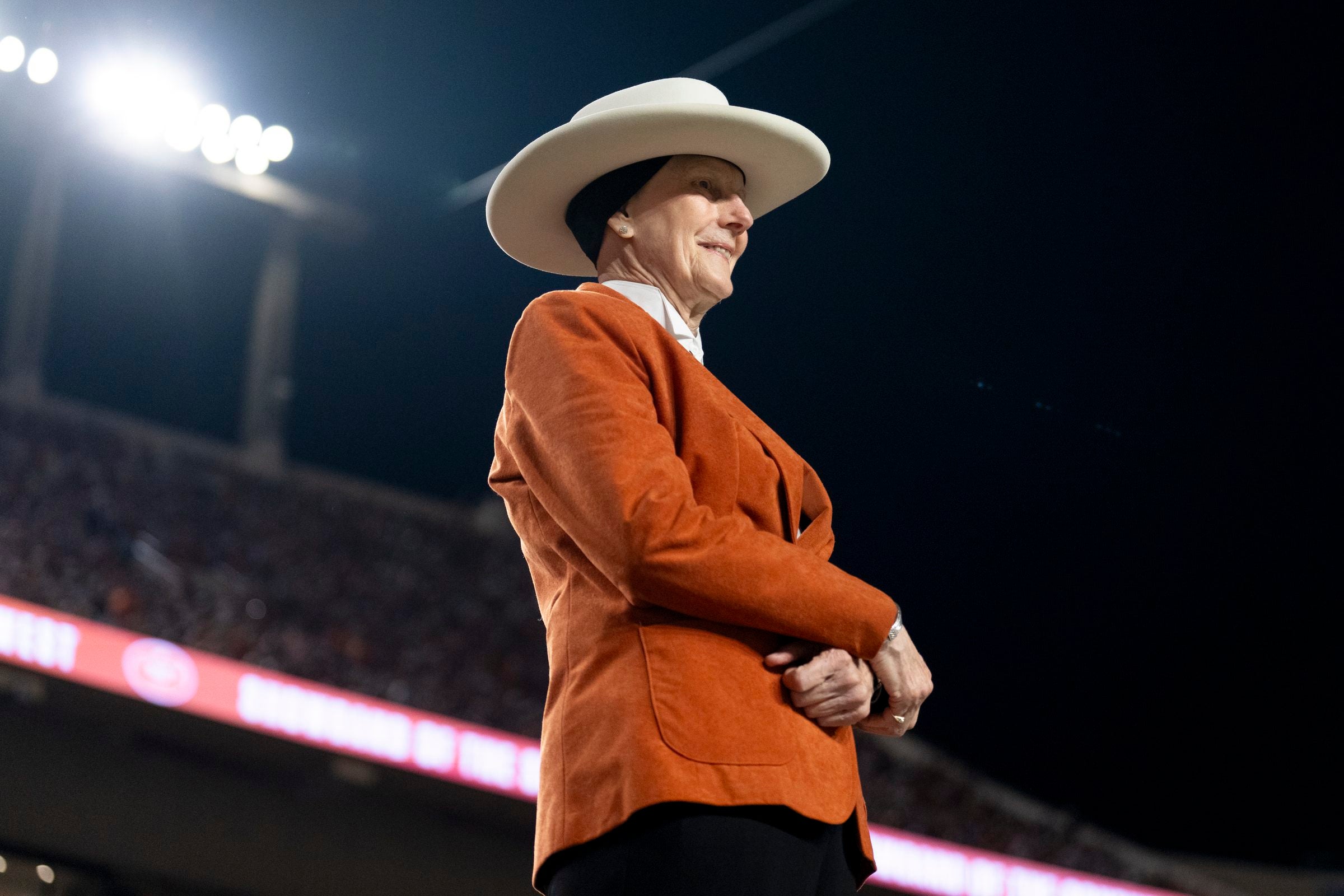
As a long-time music educator, Crider, who has traveled the world conducting and delivering clinics for musicians in addition to years teaching at the University, said she’s been humbled by the experience of meeting other women in the field who feel represented by her work.
“I’ve gone all over the world to conduct young people and to work with teachers, which is a real privilege. I’ll have young ladies come up to me and say, “I’ve never had a female band director before,’” Crider said. “And just last summer, I was at a workshop and one of the clinicians came to me and said, ‘I decided, because I saw what you do, that I could do it too.’”
Marching to Their Own Drum
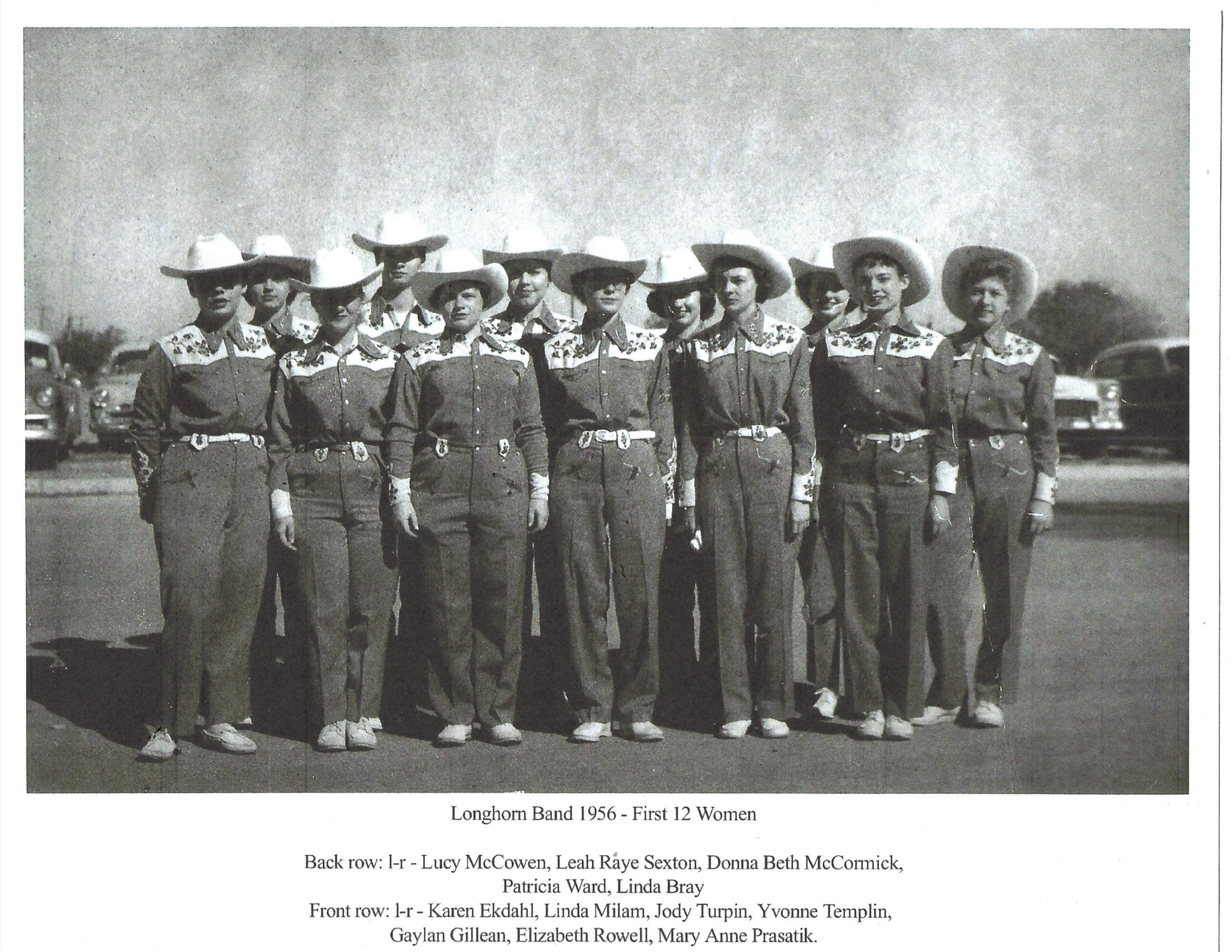
In 1956 when director Vincent DiNino first opened the doors for women to join the program, he recruited the first female drummer in the band, Leah Raye Sexton from Harlingen, Texas, with a $50 scholarship — at the time, tuition for one semester was $25.
From there, the inaugural group of women in the band rose to 12 through word-of-mouth invitations. Sexton’s roommate, Donna Beth McCormick, who played the flute in high school, came on board as well. McCormick said she initially sold her instrument when she came to The University of Texas because there hadn’t been a place for women in the band, and once inducted to the newly co-ed team, she quickly found a loaner from another student in her dorm.
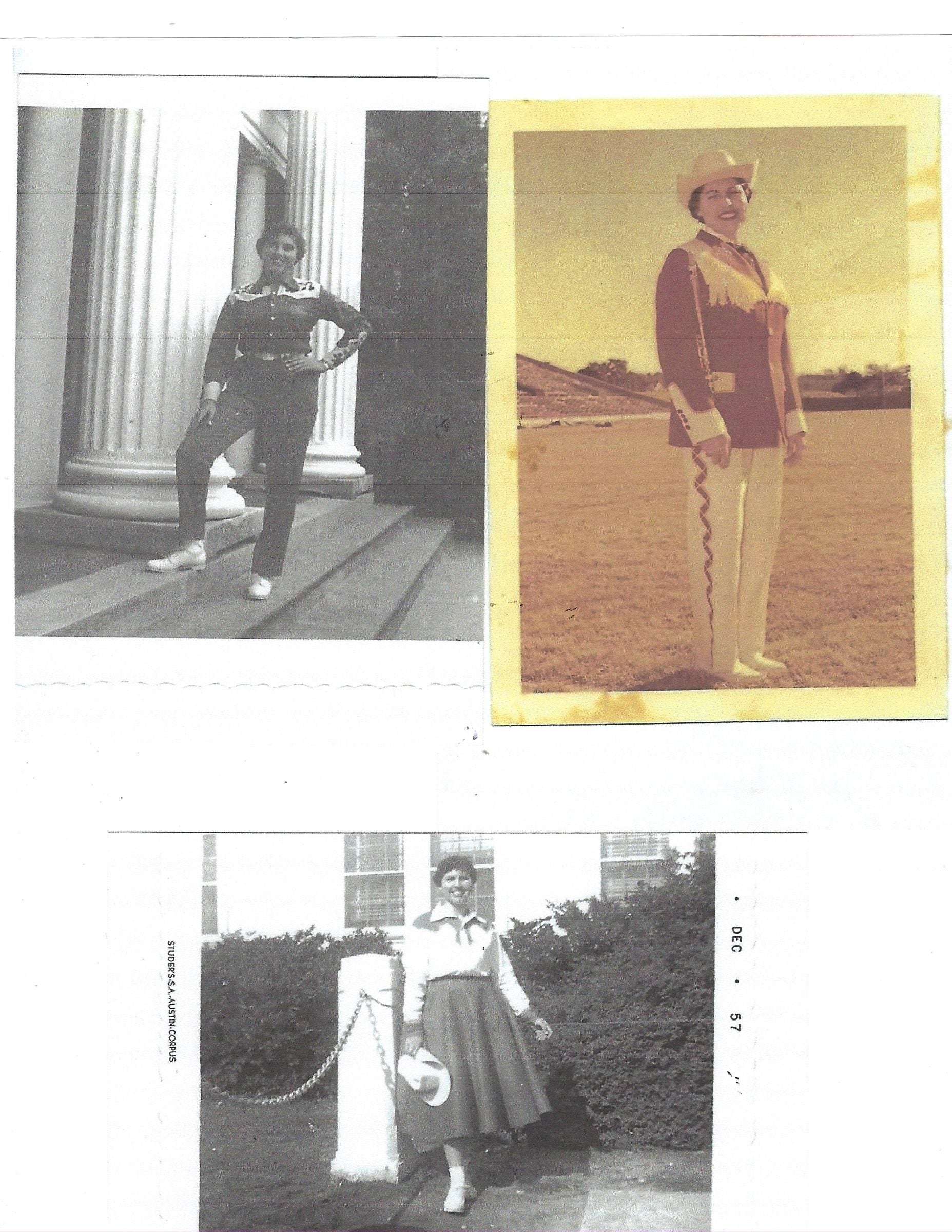
With the arrival of the women, comments spread like wildfire. Loud voices questioned how 12 women would fit in with the hundred men in the band. Sporting uniforms that were a hodgepodge of old shirts and pants and handmade felt skirts, the women weren’t brought into the marching formations until the following year, when the 1957 flu epidemic struck campus.
With many members sick, the women stepped in to fill their spots. And with that, McCormick and her friends proved to the naysayers that women could march too.
“They were messing with strong women,” McCormick said. “They asked if women could step 6-5 or 8-5 — we could do that. We had to work our way.”
Throughout McCormick’s long career working on political campaigns across the country and at various positions within the University, she encountered many situations where she was the only woman at the table. McCormick encourages young women to speak up and always pursue opportunities like the women before them.
“We’ve paved the way,” McCormick said. “I tell the girls in the band, ‘You can do anything you want to.’”
Carrying on the Longhorn Legacy
Today, the Longhorn Band, also known as the Showband of the Southwest, is approaching 127 years since its debut in 1900, and since then, women have stepped into leadership roles across the board.
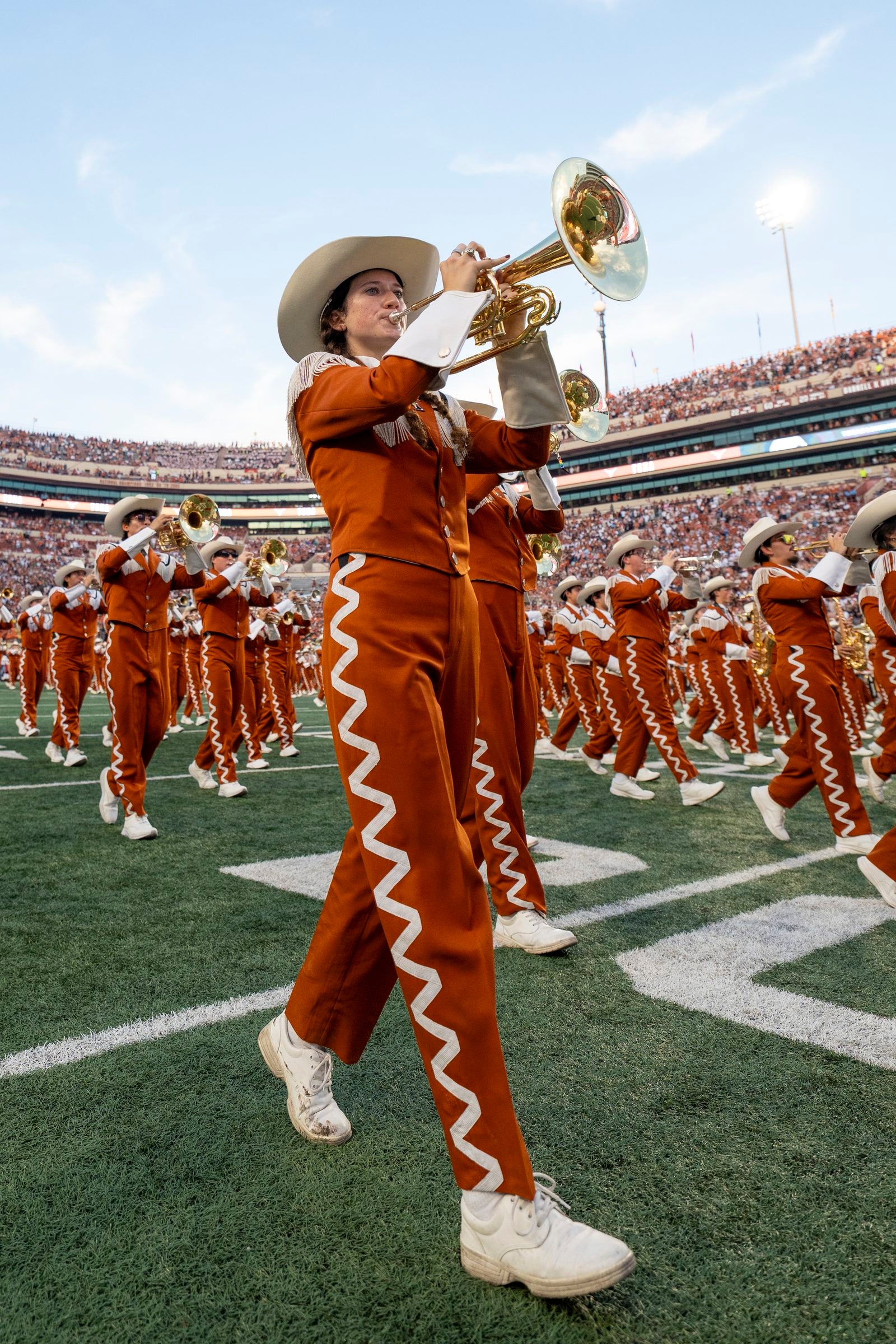
Ashley Young, president of the Longhorn Band Student Association, is responsible for leading meetings and end-of-practice announcements in addition to planning social events for the group.
Young, who is a senior studying English, decided to apply for the band’s council before becoming the vice president of social media and eventually, the president of the entire program. Immediately, she said, her connections with her peers in the band only deepened with the added responsibilities.
“Putting so much of yourself into anything, you’re going to get a lot more out of that. It makes it all the more meaningful,” Young said. “As president this year, I’ve had the chance to meet so many more people in the band because it feels like a super close community. There are 425 people, but this year I’ve had the chance to really talk to a lot more.”
Standing before the program from the towering height of the band ladder stirred up nerves in Young’s stomach at the start of her tenure as president. But as the weeks of summer practice slipped into the fall football season, Young’s confidence grew.
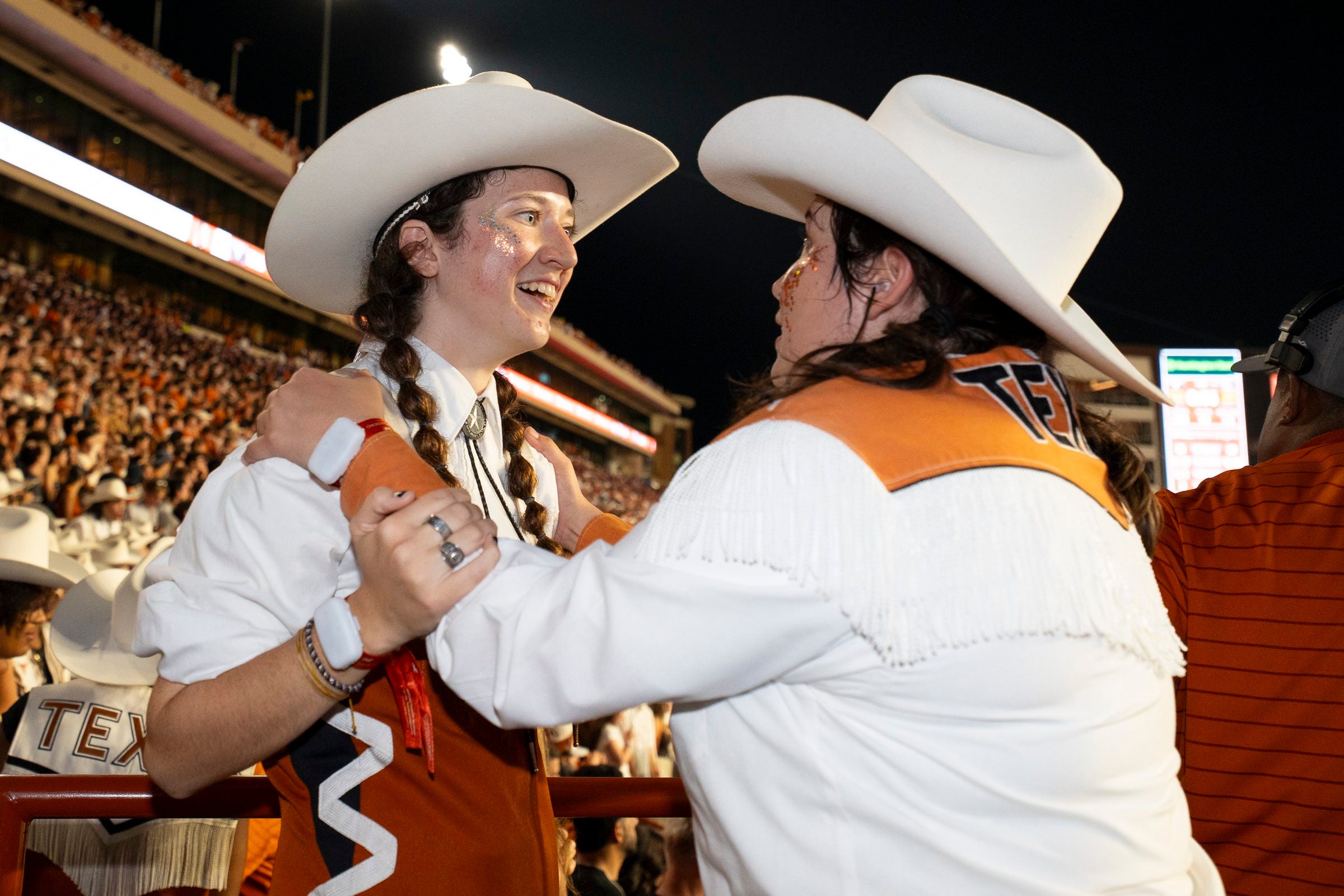
Under the afternoon sun or in the glow of the stadium at night, flecks of glitter catch and reflect orange- and silver-tinted light on Young’s face across the tops of her cheeks. From the raised platform during a game, joined by her friend and current drum major, Madison Bookman, Young’s energy radiates from her smile. With it being her final year in the band, and the milestone anniversary of women in the program, Young said this season has felt impactful.
“I’m just so grateful to those women for paving the way for all of us. They’ve allowed me to have this insane opportunity I’ve had to be in the band,” Young said. “It’s really cool that I get to be part of that legacy, and then I get to leave my mark on the band in that way too.”
Stepping into the role of the drum major for the current year, Bookman is not only a leader in the band — she also guides the tempo and performances during games. Decked out in a bright white button-up and tassel-lined skirt, Bookman is often seen with a beaming smile and her arms raised high with the Hook ’em hand sign.
As the eighth woman in the band’s history to be drum major, Bookman is the latest to join the line of trailblazing Longhorns before her.
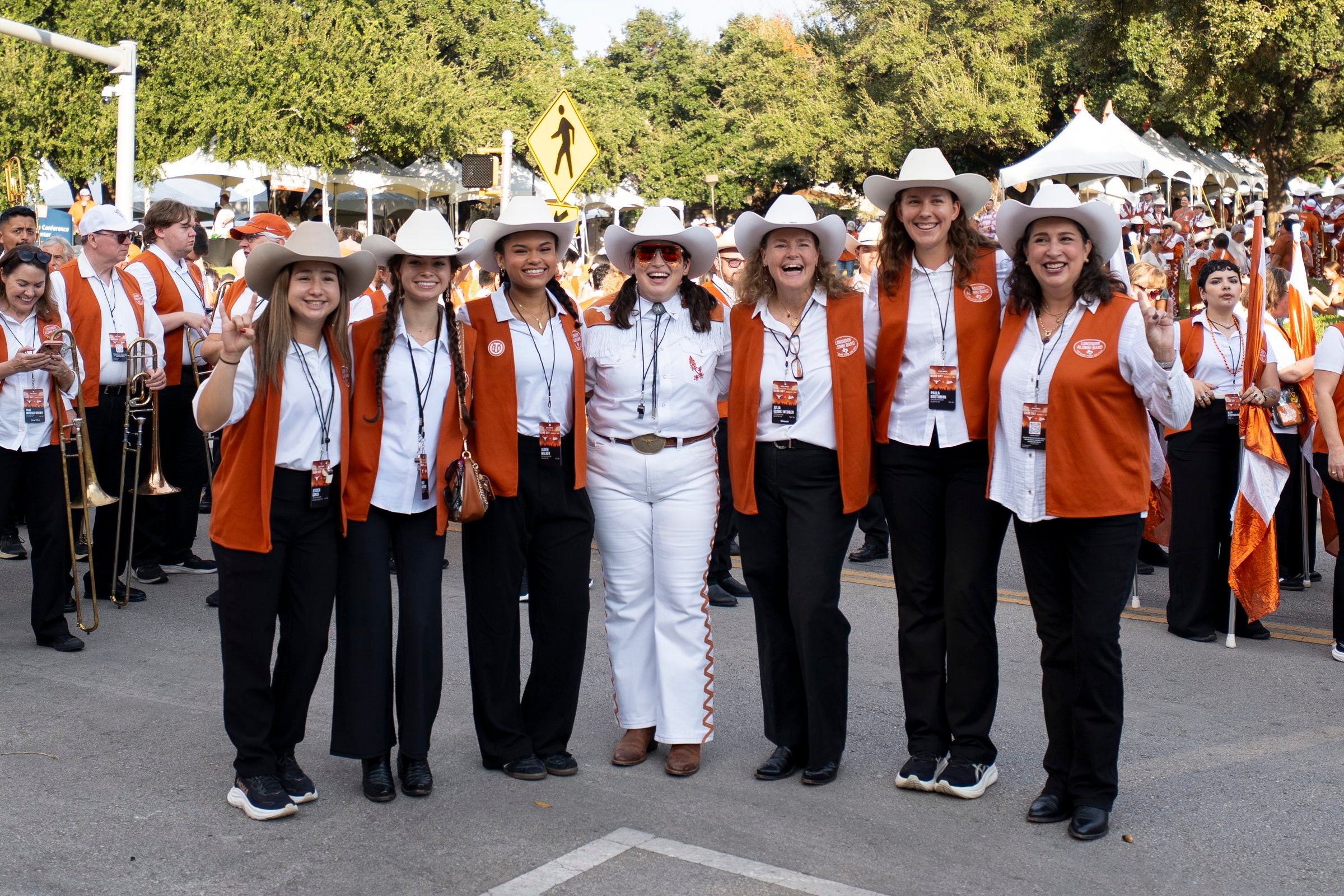
“With it being 70 years, it hit me. I was like, ‘Wow, this is something really special that I hope to continue,’” the music studies senior said. “It means a lot to just reflect and think about that.”
With this anniversary of women in the marching band and a program that is only growing and welcoming more students into the fold, Bookman credits the Longhorn women like McCormick and Crider and the first female drum major, Julia Cook, for the legacy they have left and the one she is contributing to now.
“I think we’re getting to a place now where it’s very normalized for women to be in these roles,” Bookman said. “I’m excited for the point where we can stop keeping track of how many women directors and drum majors are in all these programs — it’s just going to be so normal.”