Honoring Those Who Served: Veteran Landmarks and Resources at UT
This Veterans Day, explore the places and spaces that recognize and support Longhorn veterans.
Since Armistice Day at the end of World War I in 1918, Americans have spent Nov. 11 honoring veterans.
Veterans Day, an official U.S. holiday since 1954, recognizes all military veterans who have served in the U.S. armed forces, both living and deceased, during war or peacetime.
That spirit of recognition has a home across the Forty Acres. The University of Texas at Austin, ranked No. 1 in Texas for veterans by U.S. News & World Report, brings remembrance and support into campus life. Landmarks preserve the stories of military service, while student veteran organizations and services help Longhorns write the next chapters of their own.
This Veterans Day, we’re taking a closer look at some of the places and spaces that honor and support those who have served.
Darrell K Royal-Texas Memorial Stadium
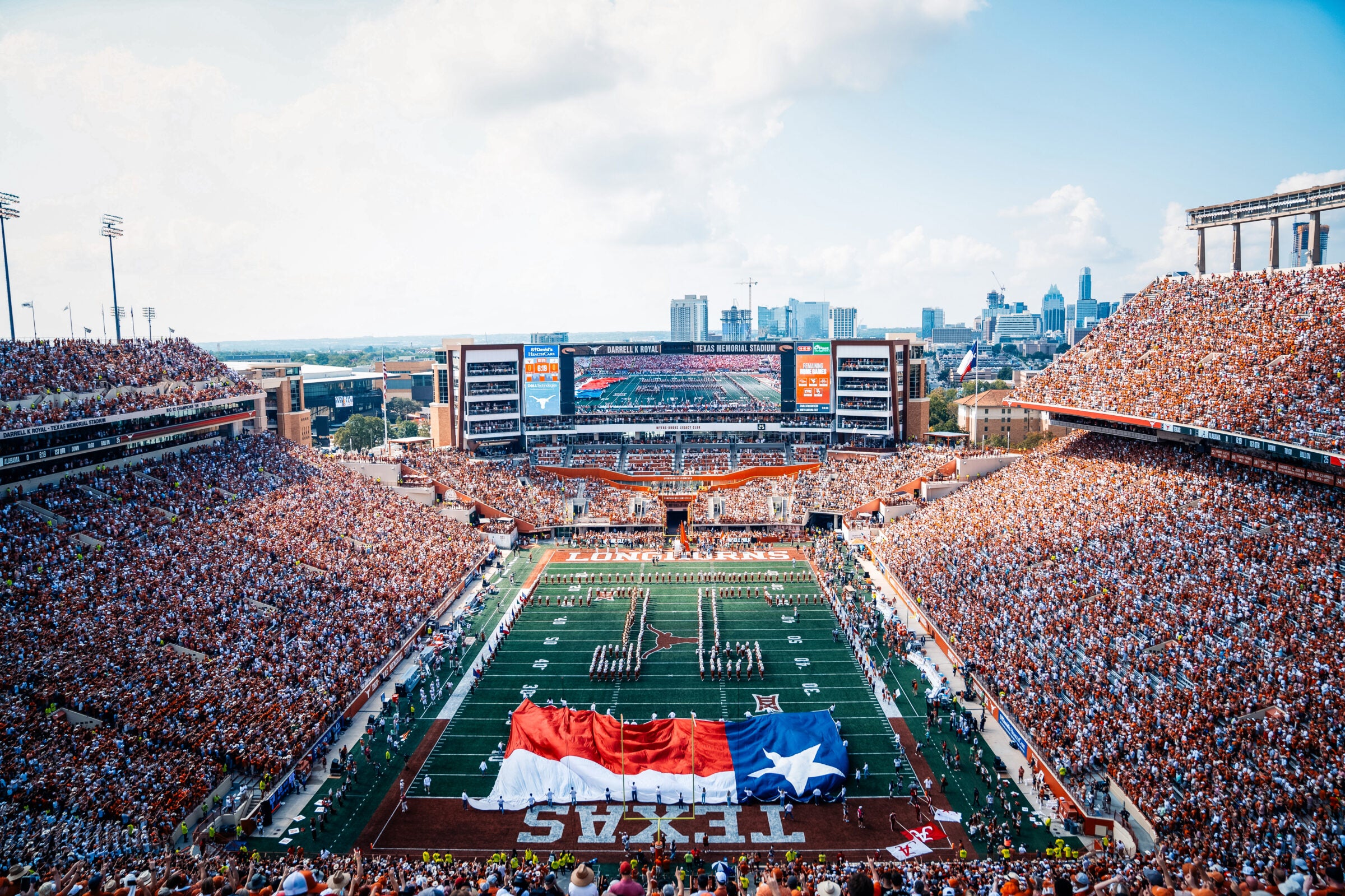
It was 1923 when then-UT Athletics Director L. Theo Bellmont decided that the Longhorn football team needed a permanent home. For decades, the team played at the Varsity Athletic Field on 24th Street and Speedway, now known as Clark Field, where fans watched from wooden bleachers. Bellmont and a group of student leaders took the idea of a concrete stadium to the Board of Regents, and in 1924 construction began on a stadium estimated to cost $275,000. That’s about $5.3 million today, according to the U.S. Bureau of Labor Statistics.
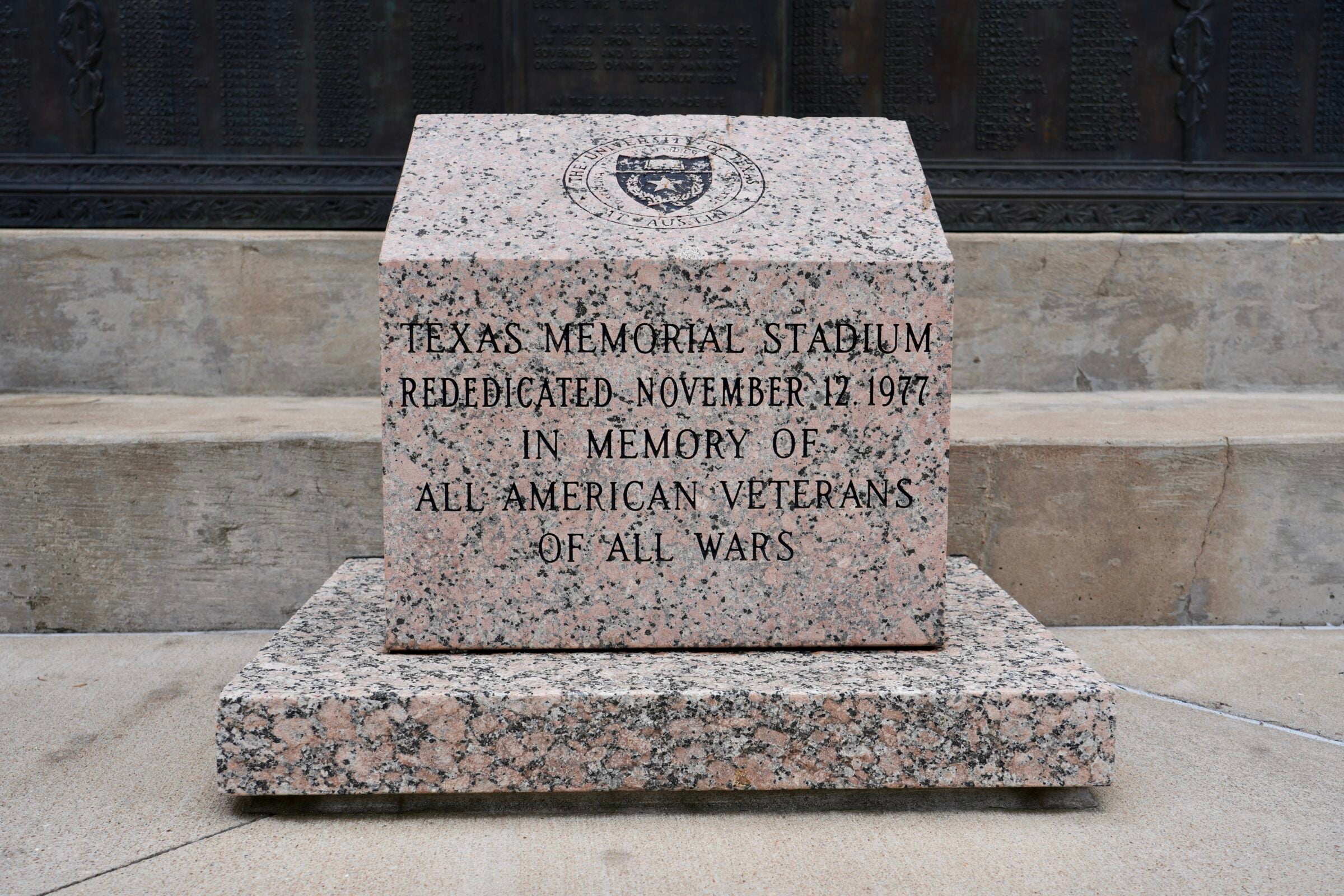
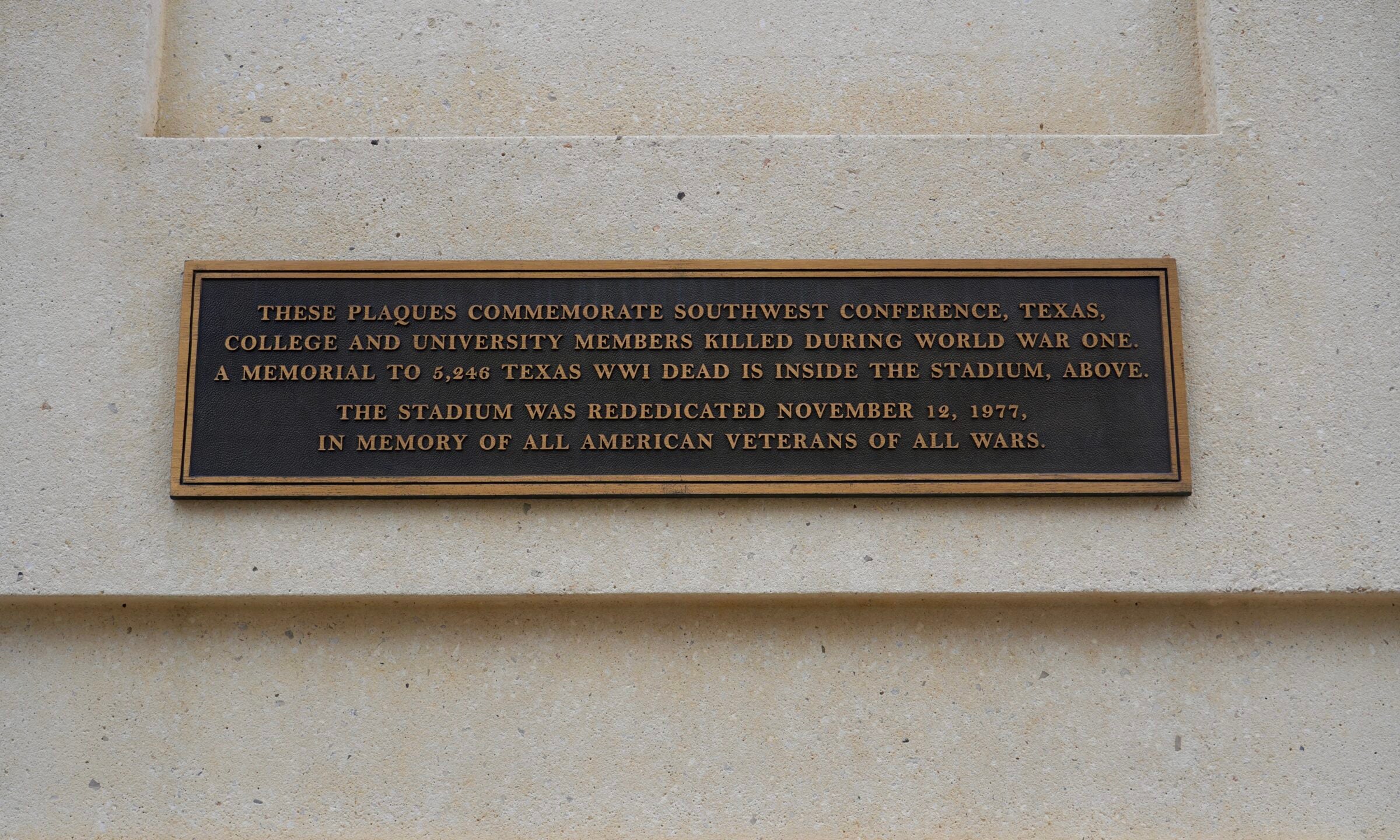
The Longhorns played their first game in the new stadium on Nov. 8, 1924, but it wasn’t until the Thanksgiving Day game against Texas A&M University that the stadium was officially dedicated. The student body had decided to honor the 198,520 Texans who fought in World War I, including the 5,280 who lost their lives. In 1977, the stadium was rededicated to veterans of all wars.
In 1996, the stadium became Darrell K Royal-Texas Memorial Stadium. Royal, a veteran of the U.S. Army Air Corps, coached Texas football for 20 years, winning three national championships, 11 Southwest Conference titles, and finishing in the top five of the AP poll nine times. After stepping away as coach in 1976, he was athletics director until 1980. But Royal agreed to have his name added only if “Texas Memorial Stadium” stayed in the title, and alumni pushed for a hyphen between the two names so no one would mistake it for a memorial to Royal himself.
Student Veteran Association
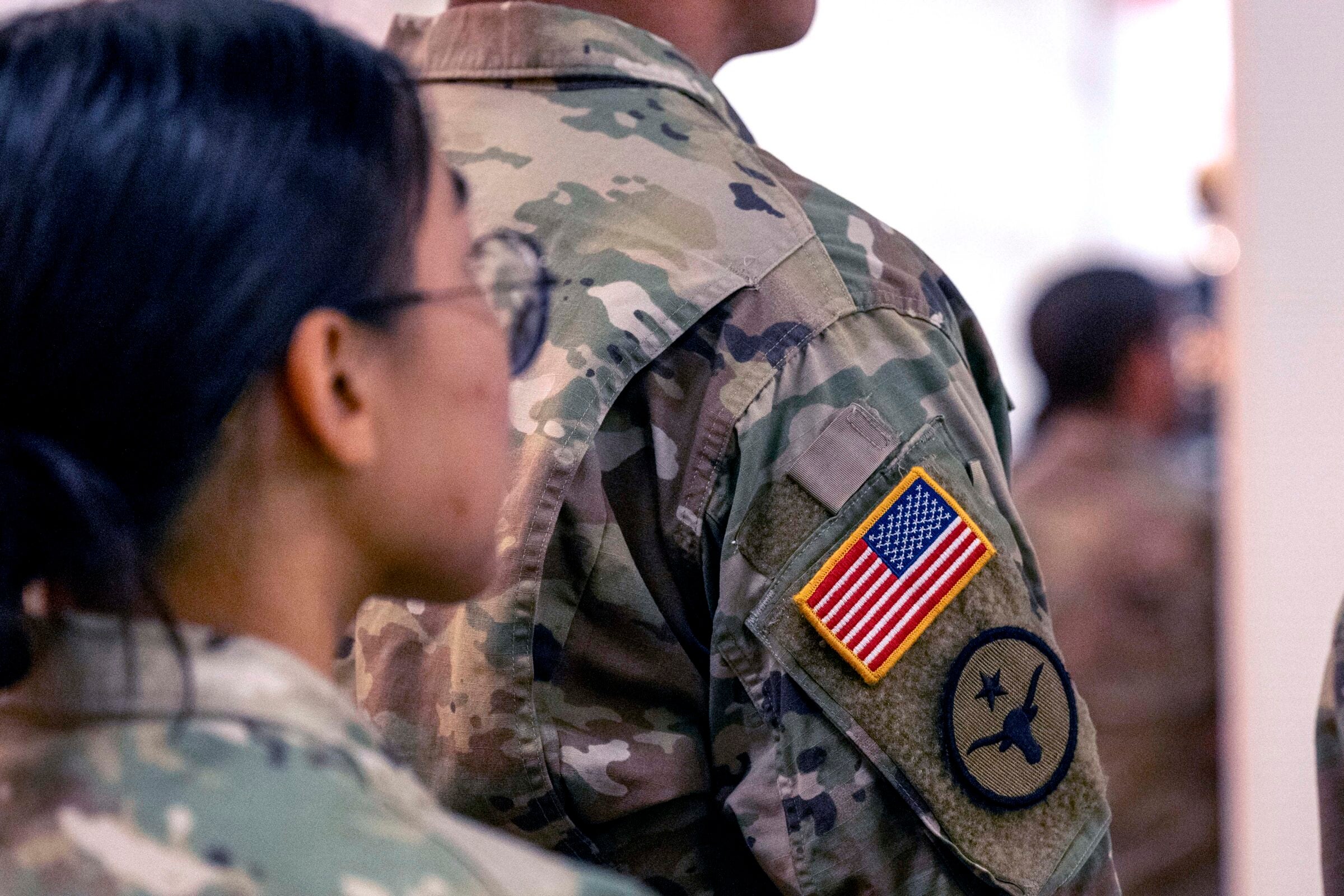
UT Austin’s Student Veteran Association (UT SVA) is an officially recognized student organization sponsored by Veteran and Military Affiliated Services in the Office of the Dean of Students.
The organization’s mission is to create a welcoming social environment for veterans and military-affiliated students, while furthering their academic and professional skills and advocating for their needs and experiences.
The group hosts events such as the New Student Campus Crawl (each semester), Fall Kickoff Tailgate (first home football game), Salute to Service Football Game Tailgate (game closest to — but before — Veterans Day), Salute to Service Baseball Game Crawfish Boil Tailgate, end of semester celebrations, and social hours.
UT SVA also promotes academic and professional success by organizing weekly study sessions, tutoring, and resource guidance. The group’s professional events host guest speakers, veteran-specific employment events, and networking opportunities.
Frank Denius Veterans Memorial Plaza
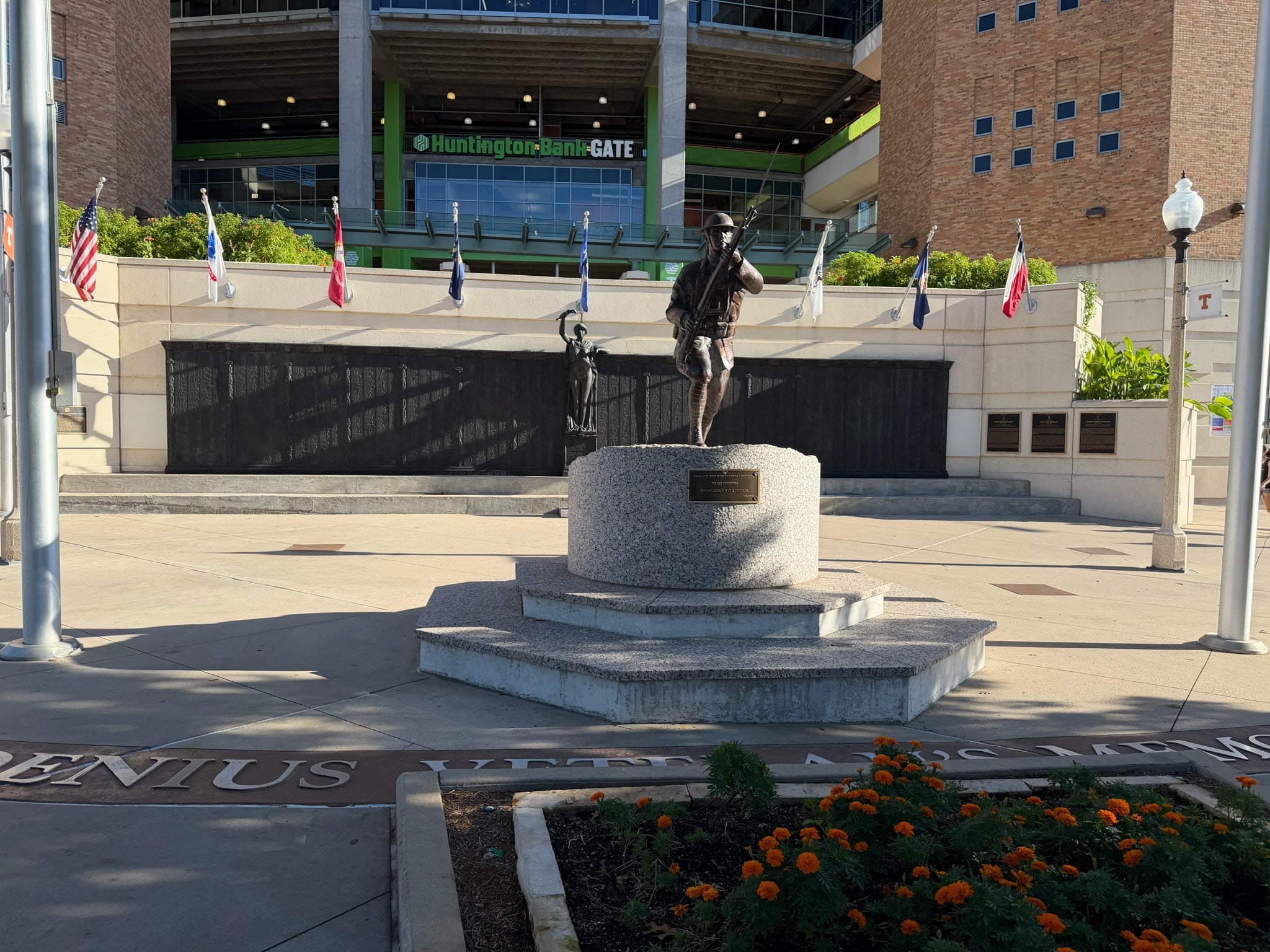
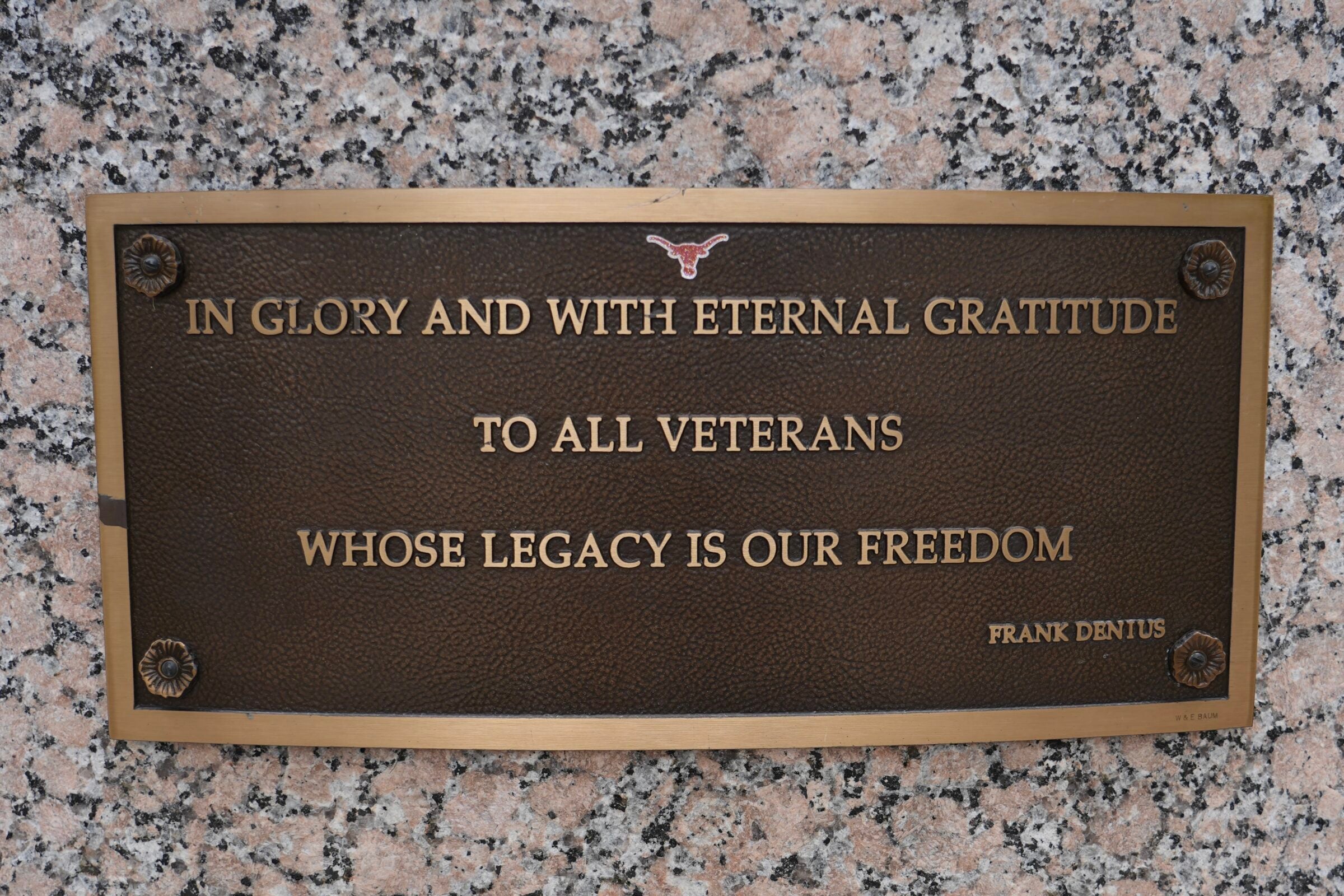
On Veterans Day in 2009, UT Athletics dedicated a new plaza at the northwest corner of Darrell K Royal-Texas Memorial Stadium, named for alumnus Frank Denius — one of the most decorated soldiers of World War II. After his discharge, he enrolled at UT. Decades later, he served as chairman of the stadium’s veterans committee, a group that oversees its relationship with veterans to ensure the stadium’s original purpose is still recognized.
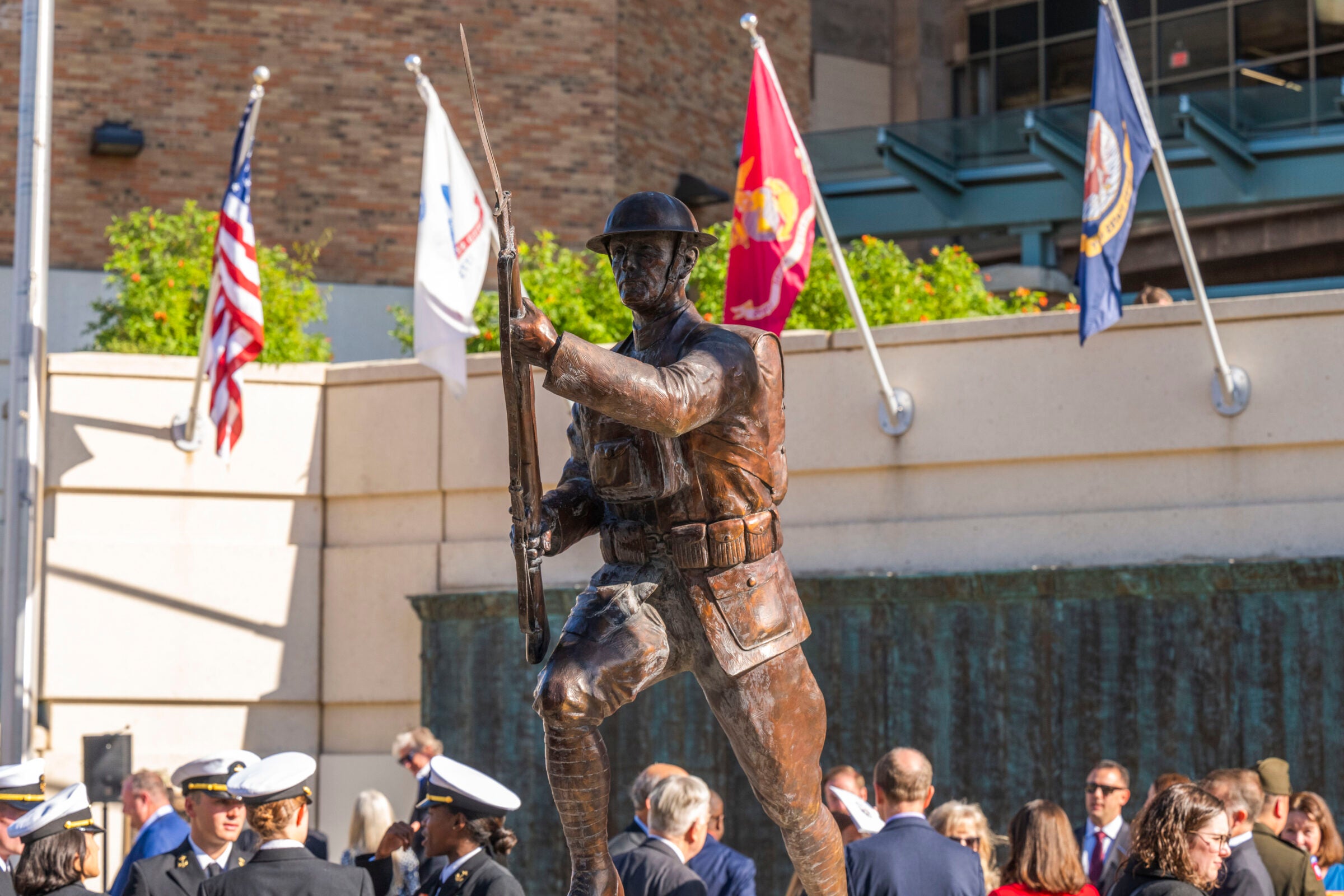
The plaza features the stadium’s original bronze tablature displaying the names of all students and faculty members who sacrificed their lives during World War I as well as a bronze “Doughboy” statue commissioned by Denius. Doughboy was a popular nickname for American infantry soldiers during World War I, but the statue is representative of all American veterans.
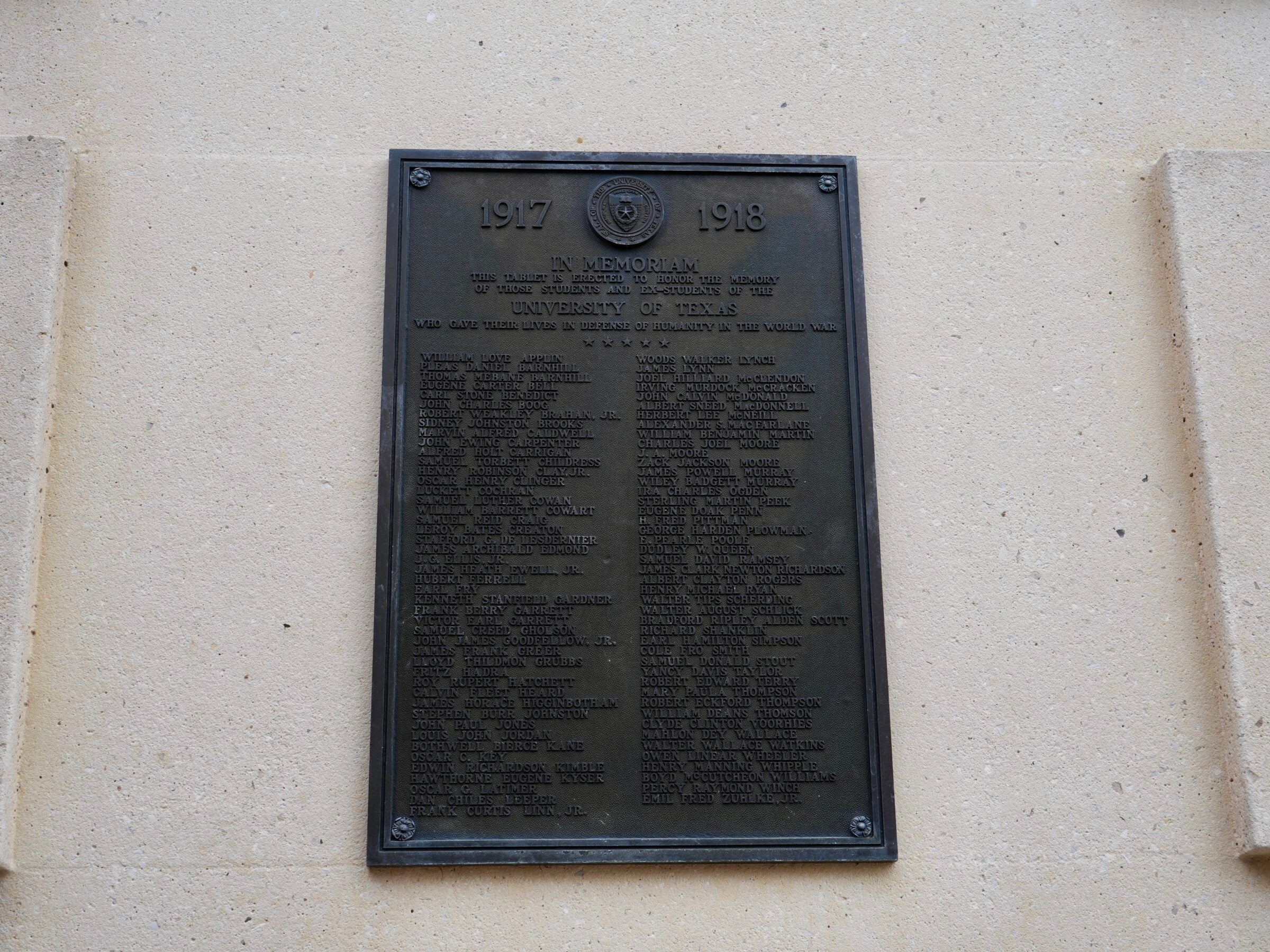
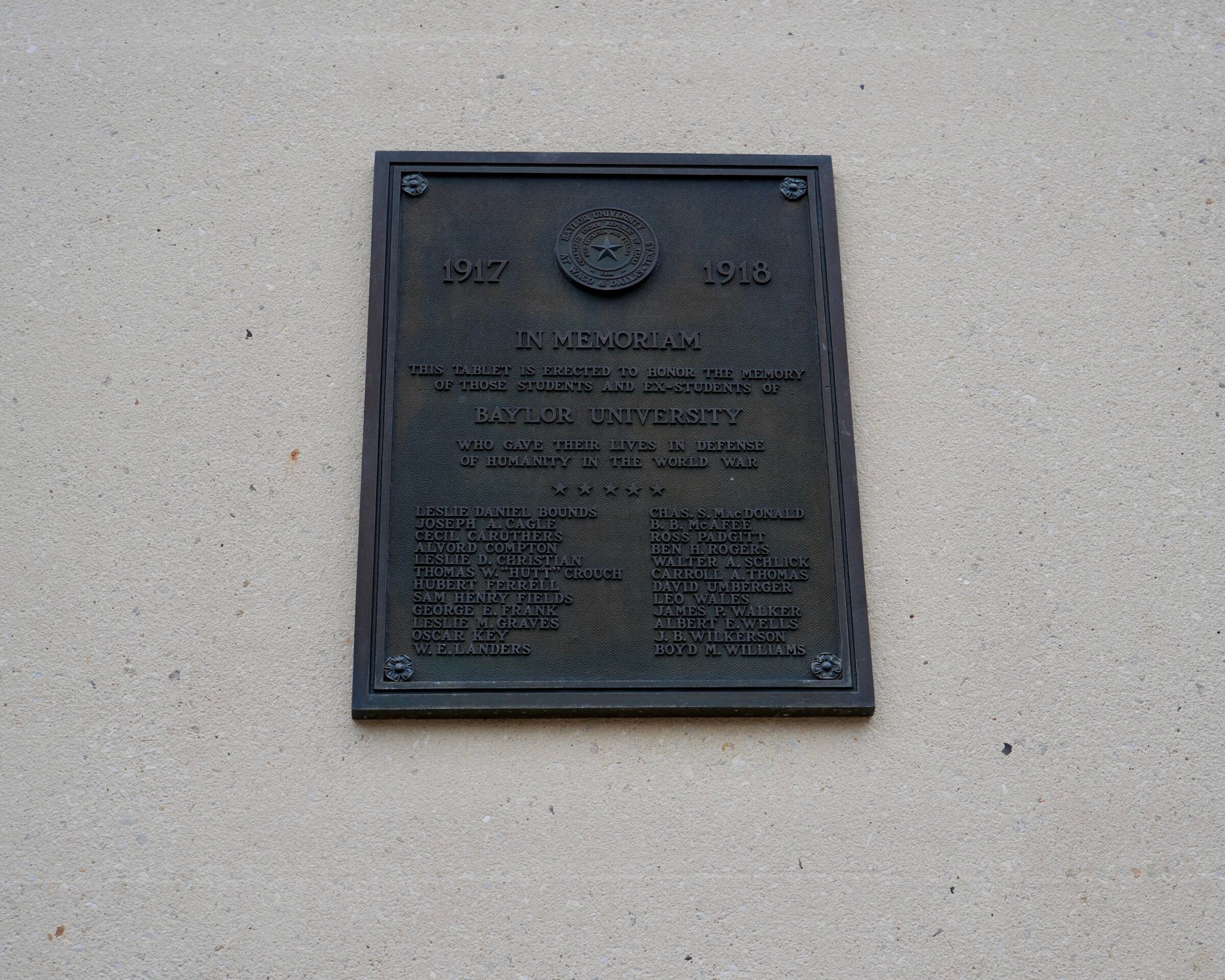
Along the north walls of the stadium are plaques from schools across the Southwest Conference honoring students lost in World War I “who gave their lives in defense of humanity.” Rice Institute (now Rice University), Southern Methodist University, Texas Christian University, Baylor University, UT and The Agricultural & Mechanical College (now Texas A&M University) are all represented.
Lt. Col. Herb C. White, Jr. F-22 Memorial in Military Courtyard
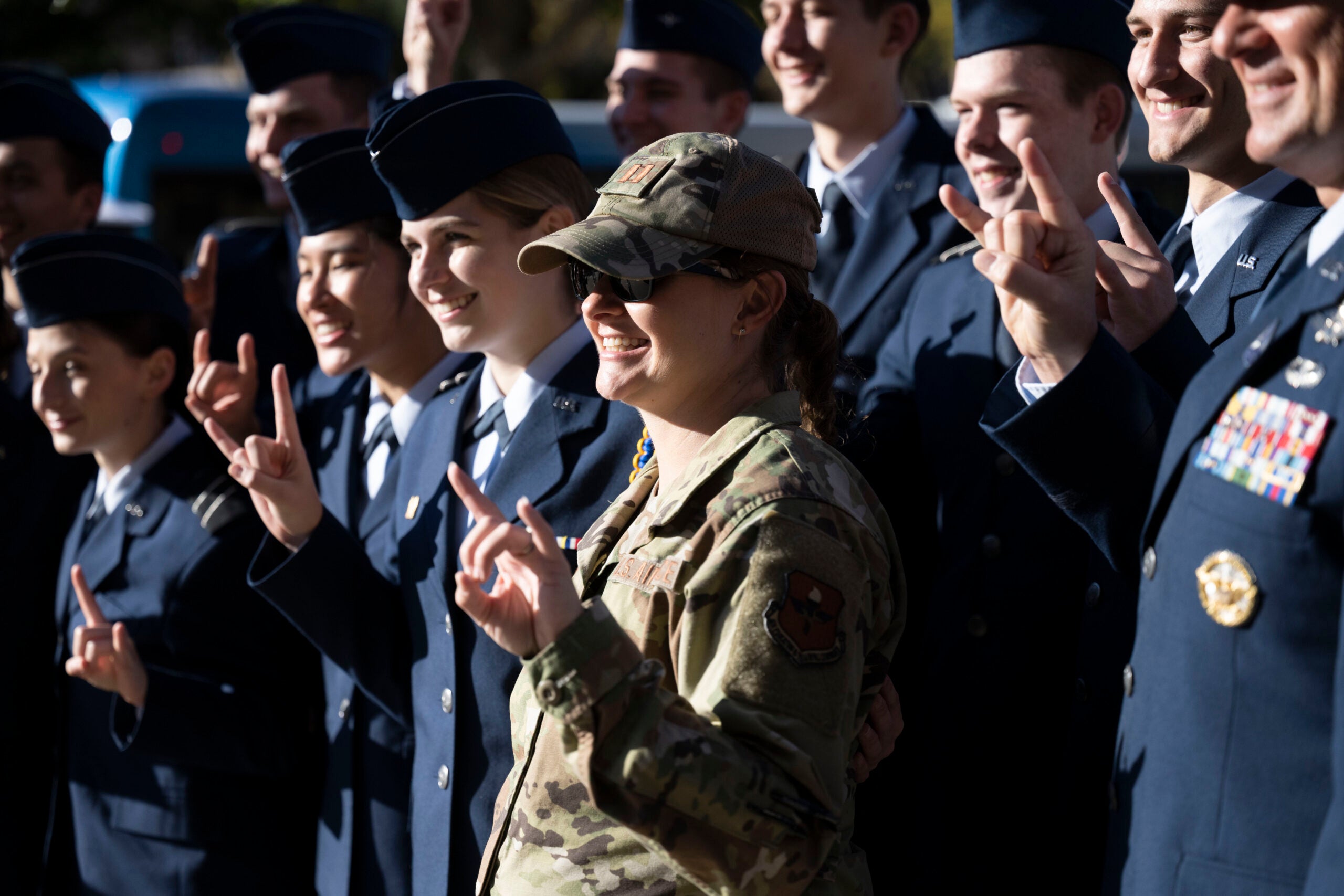
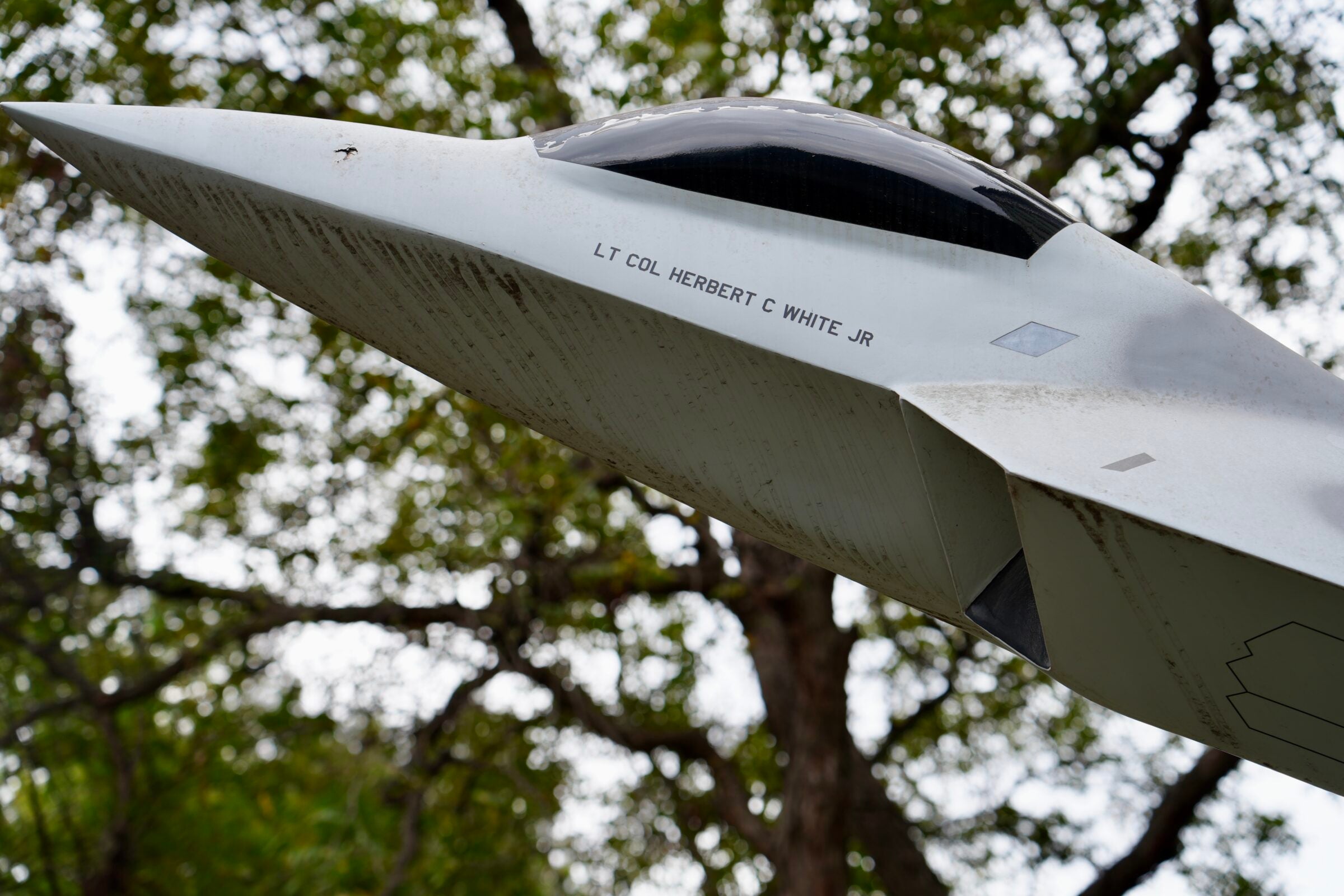
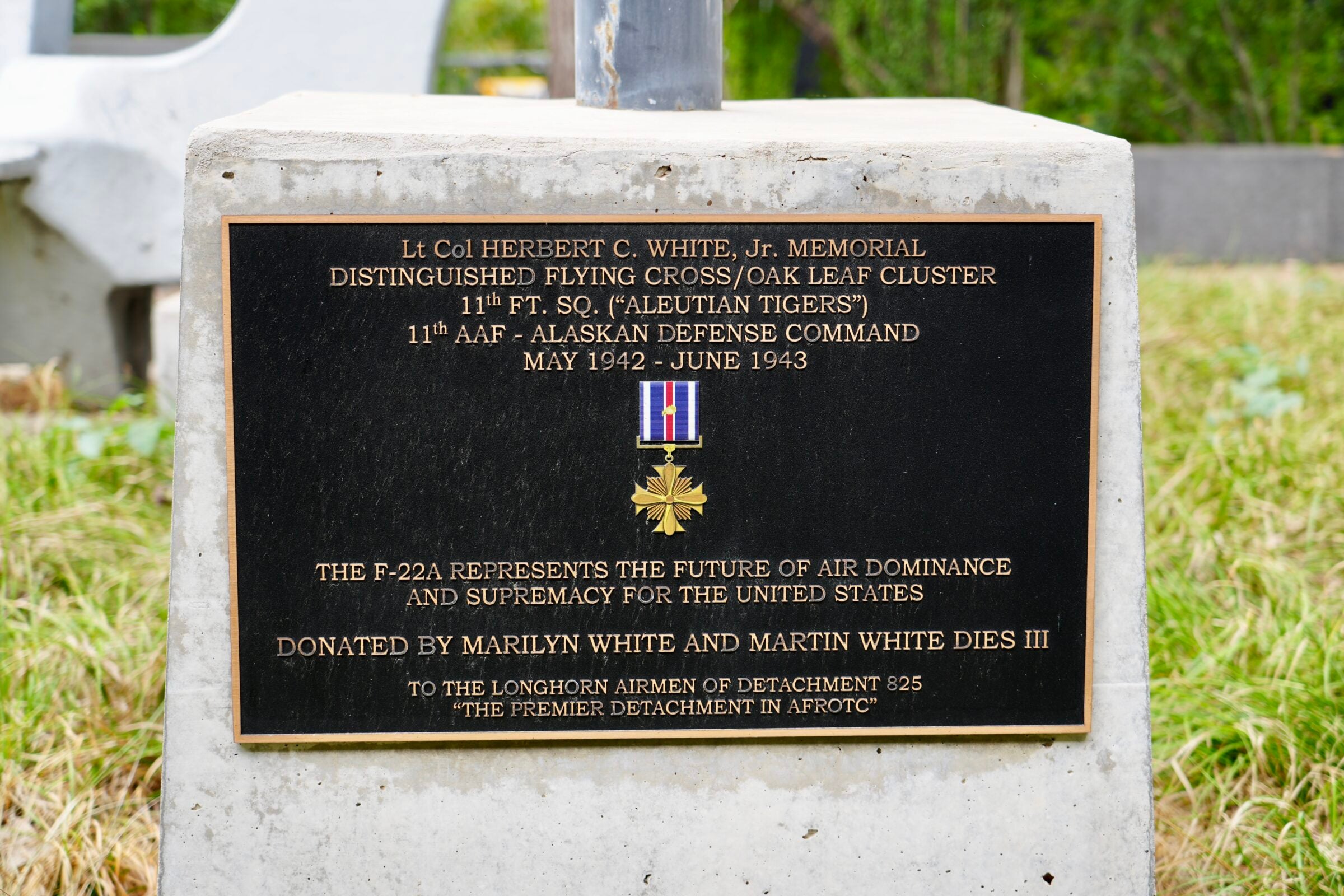
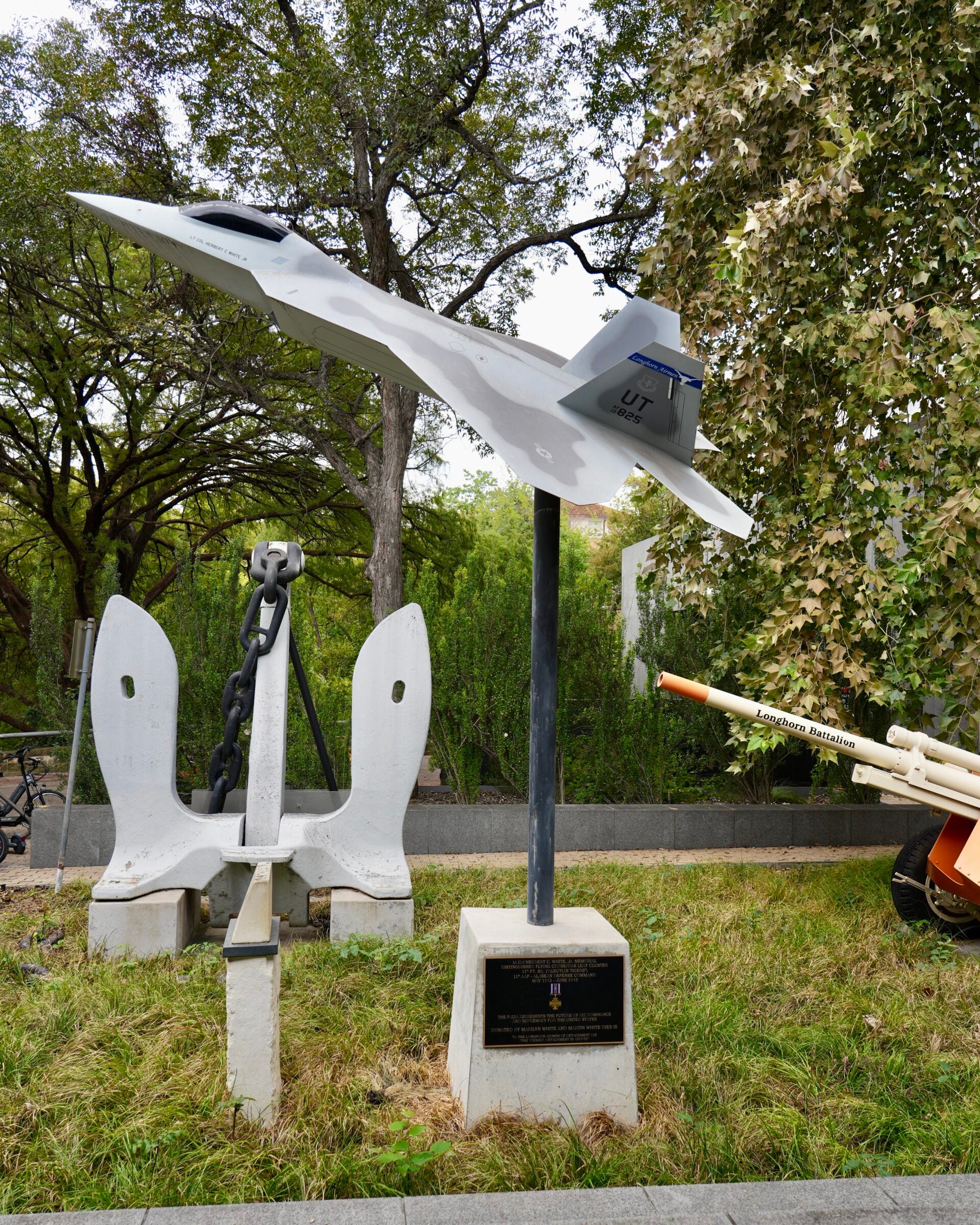
On Nov. 15, 2013, UT’s Air Force ROTC Detachment 825 dedicated the Lt. Col. Herb C. White, Jr. F-22 Memorial in the Military Courtyard at the east end of Patton Hall. The memorial is a model of an F-22 fighter with White’s name under the canopy, customary for fighter pilots. A bronze plaque on the model’s base honors his service with the 11th Fighter Squadron, the “Aleutian Tigers,” in Alaska from May 1942 to June 1943.
At the same ceremony, the ROTC dedicated the Lt. Col. White Air Force ROTC Administrative Suite on Patton Hall’s fifth floor, home to UT’s ROTC. White’s daughter, Marilyn A. White, and nephew, Martin W. Dies, created the Lt. Col. Herb C. White, Jr. Leadership and Scholarship Fund Endowment, which gives an annual award to one or more outstanding Air Force ROTC cadets who demonstrate superior leadership skills and abilities. White attended UT before volunteering as an aviation cadet in World War II.
Texas Veteran and Military Student Experience
Texas Veteran and Military Student Experience (VMSE) is a dedicated unit in the Office of the Registrar with a distinct identity and student-centered model that delivers programs and services for UT’s veteran and military community.
VSME’s community outreach includes several organizations and programs such as the Women Veterans Group, a faculty-led group that meets throughout the school year providing mentoring, networking and special events on and off campus. In the Mentor Program, current student veterans volunteer to support incoming ones. Each mentor is assigned to several new students and helps them settle in by serving as a familiar face throughout the semester. The Veteran Orientation is designed for incoming student veterans. It covers class registration, what to expect on campus, community resources, common pitfalls, and one-on-one assistance with benefits.
“Making the transition to the classroom can at times be challenging. Our veterans bring a wealth of knowledge and experience that can be difficult to translate to those unfamiliar with military culture and operations,” said EJ Goodroe, associate registrar for Veteran and Military Support and Certification Services. “VMSE is not only a space for these students, but a clear starting point in their academic journey. They honorably and proudly served our country, and it is our responsibility to help them navigate this next chapter as they learn new concepts, discuss ideas, and explore different fields.”