
College of Education’s National Deaf Center Awarded Funding for Video Game
Last month, the National Deaf Center for Postsecondary Outcomes received federal funding for future research and development of the first American Sign Language-accessible learning game, “Deafverse.”
Ripples of static splinter the screen as the colorful pages of a comic book flutter to life in “Deafverse World One: Duel of the Bots,” the first American Sign Language-accessible video game. With hand-drawn graphics and lush storytelling narrated in both ASL and accompanying text, players are dropped into the Deafverse, which is a collection of ancient comics that a mysterious group is after.
And that was just the beginning. “Deafverse” has only grown since its inception in 2019 and now has three unique worlds for players to explore, including “Revenge of the Deep” and “Legends of the Eldertree.” With its choose-your-own-adventure format, the games focus on building real-world skills through a first-person perspective.
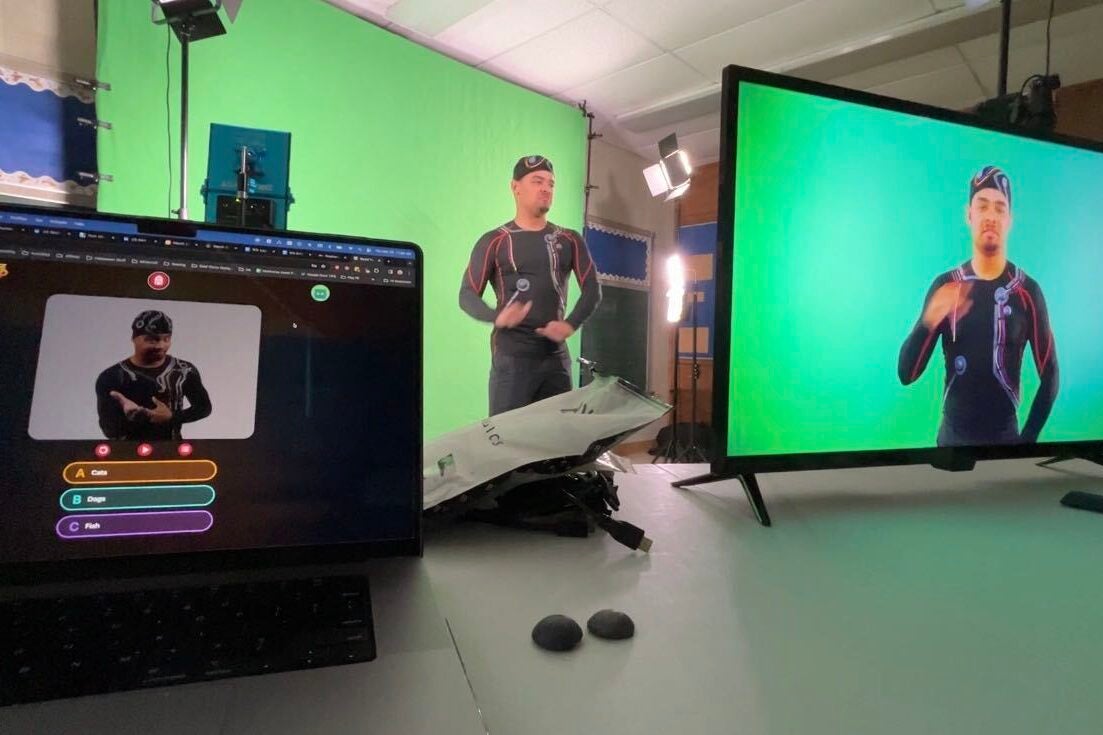
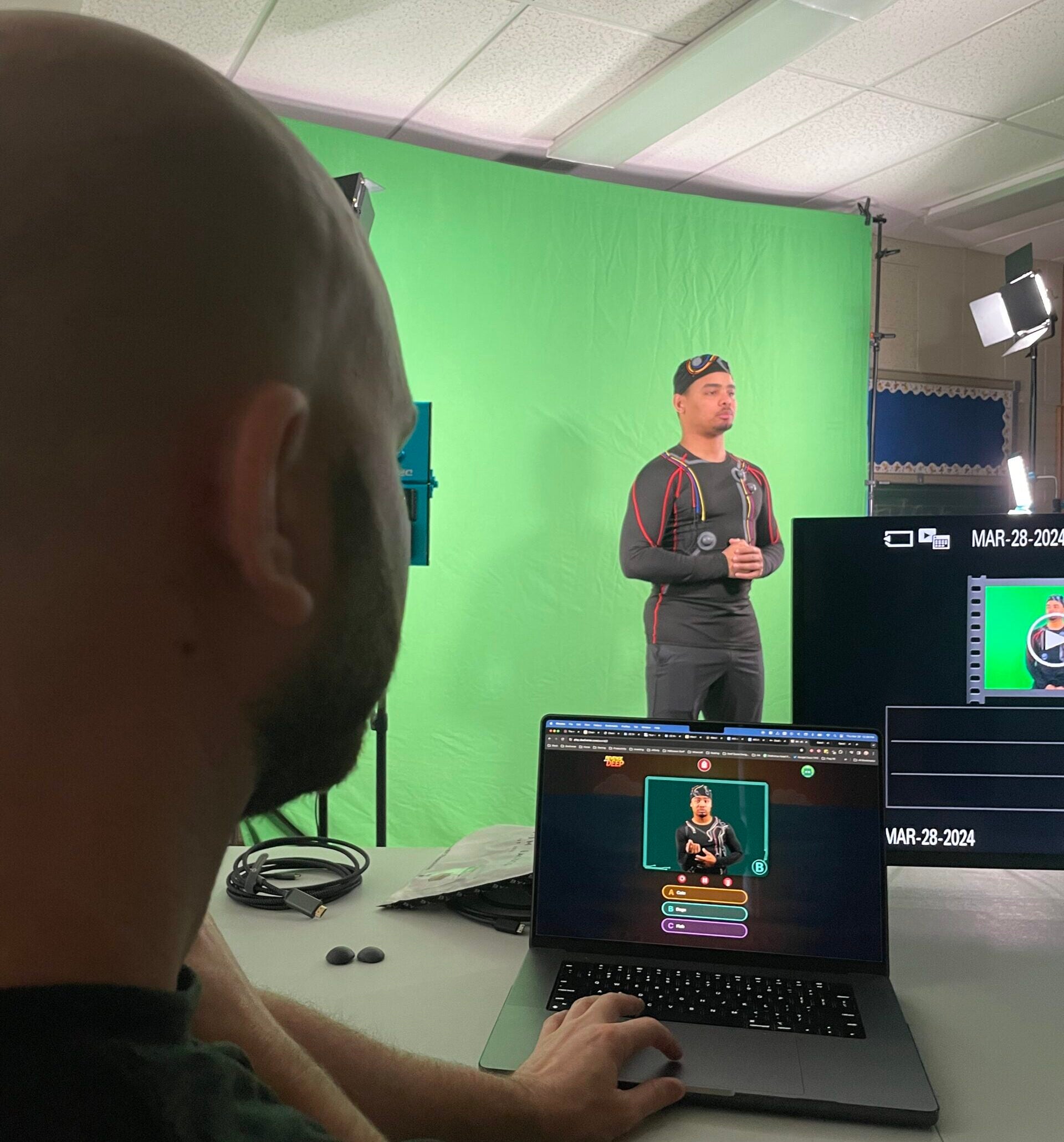
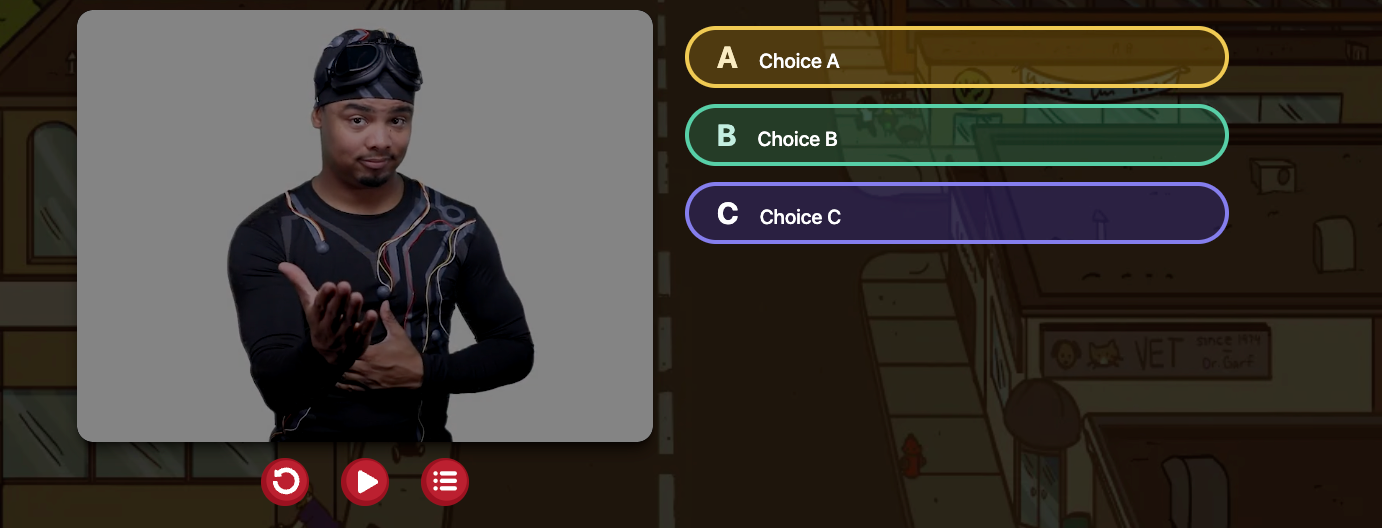
Joined by narrator and guide Justin Perez, who delivers the story of the Deafverse with ASL and full-body performance, players are led deeper into the world and its wild imagination. Confronted by robots, monsters and elves, players also encounter real-life scenarios such as college applications or communication with instructors who don’t know ASL. Game designer Kent Turner said the blend of fantasy and reality make the everyday feel less heavy while giving deaf youths an opportunity to find themselves in a video game.
“Today, it feels like we’ve carved out a space for ourselves in storytelling, and the world has taken notice. In ‘Deafverse,’ the characters sign, the story is told in ASL, and the situations reflect deaf students’ lives, not a hearing perspective,” Turner said. “When deaf students see themselves in a game, it tells them they’re part of this world, just like anyone else.”
Housed within the College of Education at The University of Texas, the National Deaf Center for Postsecondary Outcomes created and produced “Deafverse” to fill the gap in educational games for deaf learners. In October, NDC received $20 million in federal funding to continue programming for the next five years.
Soon after, the organization was also awarded $2.5 million for Beyond Access: Strengthening Interpreter Capacity for Deaf Youth in Transition to support interpreter training. The NDC also received an additional $2.1 million through the National Institute on Disability to develop Deafverse Career Connections, which will connect “Deafverse” with a career exploration tool.
With all the incoming funding streams, Carrie Lou Bloom, the director of the NDC, said the growth of “Deafverse” will allow the team to continue meeting the needs of deaf youths in new and creative ways.
“What excites me is how these projects fit together,” Bloom said. “We’re continuing our national systems-change work while investing more deeply in two areas that can make a real difference in deaf young people’s futures.”
From top to bottom, “Deafverse” was created by an all-deaf team of producers, actors, animators and developers. Senior software engineer William Albright said the experience of making the game with other deaf creatives kept him grounded in a sense of community.
“Working with an all-deaf team feels like a mind meld,” Albright said. “We don’t have to stop and explain what makes an experience accessible to deaf people. We share that understanding, so we can focus on building the experience we want. It’s ‘for us, by us.’”
In a 2025 study from the Entertainment Software Association, over 200 million Americans reported that they play video games, and of that number, 84% were between the ages of 5 and 17. The popularity of game-based learning has only risen in classrooms as well, with research showing that students can grow their creativity and decision-making skills.
Considering the prevalence of digital learning platforms, the NDC recognized an area for its work to make a difference in the gaming experience for young deaf students.
“Educational materials often aren’t available in ASL or aren’t suited to the situations deaf teens actually face,” Turner said. “We knew video games are one of the best tools for motivating kids to learn and retain information, so we built one for deaf teens.”
Through data gathered by the NDC in 2025, youths who played “Deafverse” reported a significant impact on their abilities to advocate for themselves, and since its start, the game has grown to 20,000 users.
“The programming is only one small slice of the impact. NDC’s data shows players report more confidence making decisions, and teachers tell us the game gives them a tool that wasn’t there before,” Turner said. “But the biggest part is that deaf people made a video game. What does that tell deaf students? That anything is possible.”
In addition to the game itself, “Deafverse” also features a comprehensive toolkit for educators including maps, coloring pages, visual descriptions and guides for both teachers and students to use alongside the online platform.
This past summer, the NDC recorded its largest print run yet, sending 2,300 resource packets for teachers at 680 schools and organizations. Sara Fair, the communications director at the NDC, said the “Deafverse” resource kits offer educators and students alike a starting point to communicating in the classroom.
“It doesn’t feel like homework, and it’s not just for deaf students. When a hearing teacher or a parent plays alongside a student, they start to really get what that student deals with every day,” Fair said. “Suddenly they have something to talk about together. It opens doors for conversations that might feel awkward otherwise.”
Bloom’s work as director is deeply intertwined with her own experiences encountering both deaf and mainstream schooling as a child and adult. Though academically successful as a child, Bloom, who is deaf and was raised in a deaf family, said she noted the ways that mainstream schooling didn’t always provide the same opportunities for connection with peers as deaf education — which allowed her to thrive as a leader and member of a vibrant social community outside of classes.
“In mainstream settings, we often focus on whether deaf students have access to classroom instruction through interpreters or other accommodations,” Bloom said. “That’s important, but it doesn’t address everything else that contributes to a student’s development: friendships, extracurricular activities, leadership opportunities, and simply feeling like you belong.”
Bloom’s father, Walter Camenisch — who is also a UT alumnus — was not provided an interpreter in his graduate program during the 1980s. He fought for disability access, even taking a case all the way to the Supreme Court. Decades later, Bloom followed in her father’s footsteps, pursuing a doctorate at UT before becoming director at the NDC.

Seeing her own work as a continuation of her father’s, Bloom hopes the NDC’s research and outreach, including “Deafverse,” can give deaf youths the confidence to learn and grow in both their personal and future professional lives.
“Deafverse grew out of a need we saw in our work with deaf young people and the professionals who support them,” Bloom said. “We wanted something that went beyond telling students what to do — allowing them to navigate realistic situations, make choices, and explore the consequences of their decisions.”
As “Deafverse” continues to develop with the support of the recent funding, the team is looking to test avenues for artificial intelligence and human creativity to work together in crafting more personalized playing experiences for users.
Beyond the gameplay, the addition of the “Deafverse” career tool is intended to demonstrate all possibilities and interests available to deaf youths. Fair, who specializes in merging advocacy, communications and digital resources, envisions the tool as another facet of representation in the deaf community.
“With Deafverse Career Connections, students will get to connect with deaf professionals who’ve been where they are,” Fair said. “I want every deaf student to know someone who’s doing the job they’re dreaming about.”
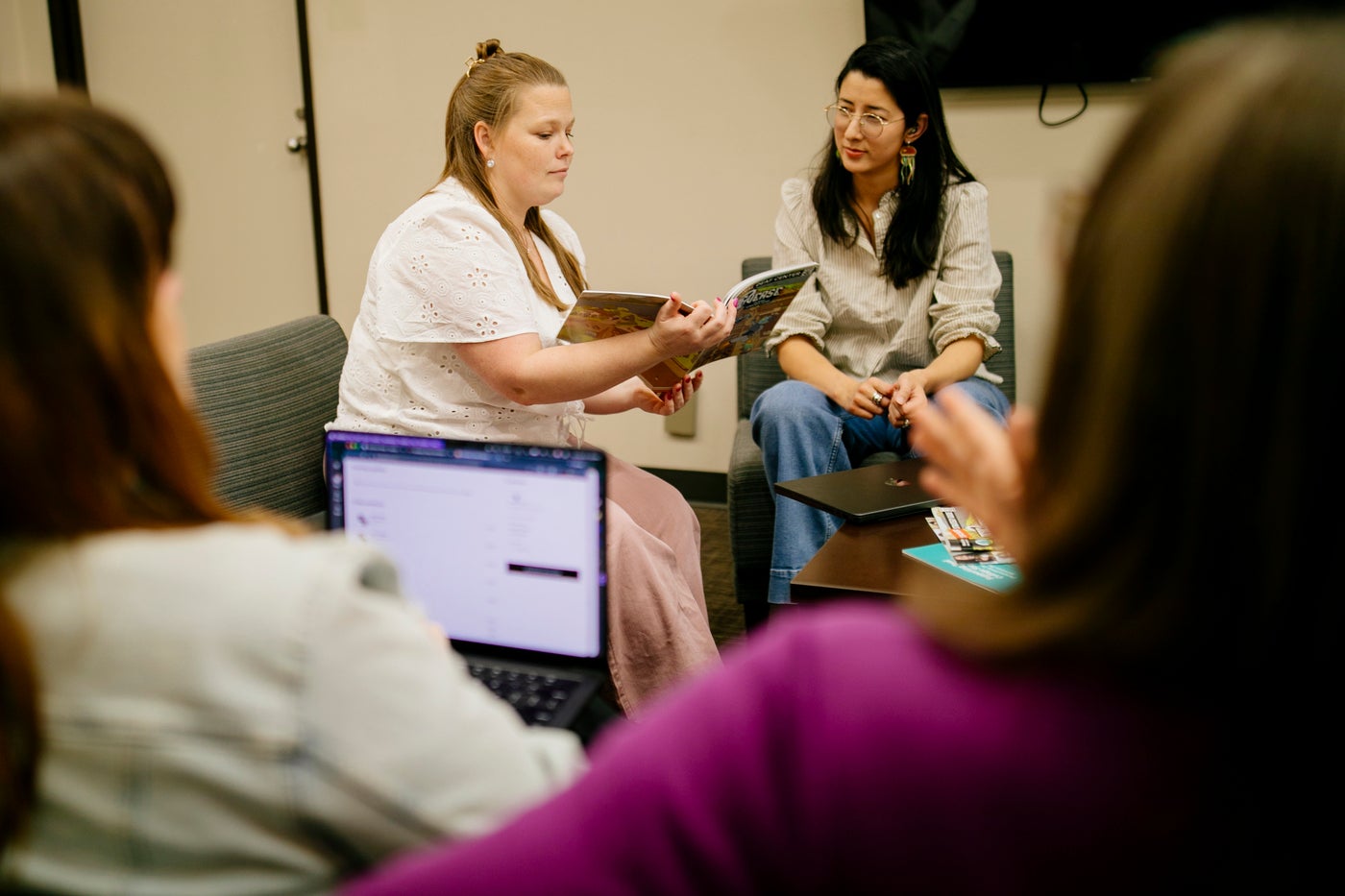
Each member of the team at the NDC, including the crew behind the “Deafverse” platform, brings pieces of their own lives into their everyday work. For Fair, contributing to new pathways of communication for the next generations of deaf youths is a key motivator.
“I’m doing this for the version of me in high school who didn’t have any of this. And I’m doing it for my deaf daughter, who’s growing up in a digital world that’s changing so fast. I want her to have every resource she needs,” Fair said. “That starts at home, and it continues with the work we do at NDC.”