
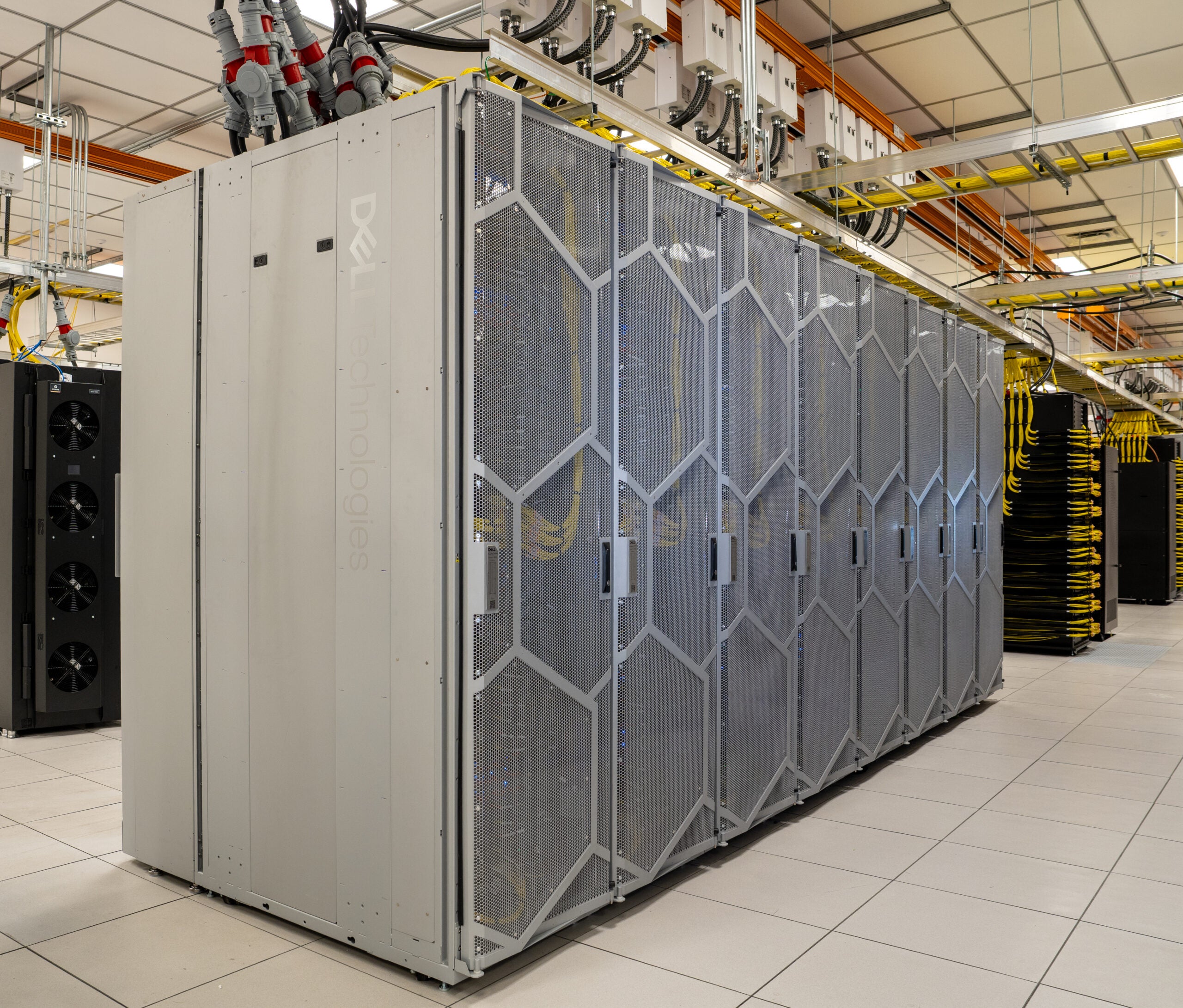
Horizon Opens to Early Users: America’s Most Powerful Academic Supercomputer Begins Serving Science
NSF-funded system at TACC puts record-setting GPU computing and AI capabilities in the hands of the nation’s leading researchers
The Texas Advanced Computing Center at The University of Texas at Austin continues to be home to the nation’s fastest, most powerful academic supercomputer in the U.S., as ranked on the November 2026 TOP500 list.
Horizon, which has now opened to early users, gives the nation’s leading researchers first access to its 4,000 graphic processing unit (GPU) system, far exceeding any previous TACC system, allowing them to tackle the nation’s most ambitious scientific challenges.
With the addition of Horizon, TACC has amassed nearly 5,500 GPUs, the highest concentration of computing power at any university in the United States. Horizon, which is the centerpiece of the U.S. NSF Leadership-Class Computing Facility (NSF LCCF), continues a legacy in which TACC has hosted the nation’s most powerful academic supercomputer for most of the past two decades.
“With Horizon, NSF is making its biggest-ever investment in computing infrastructure, and we can’t wait to see the discoveries it makes possible,” said Katie Antypas, senior science and engineering adviser for the NSF Computer and Information Science and Engineering Directorate. “After years of planning and building, it’s exciting to finally put this system into the hands of researchers.”
Horizon ranks No. 24 on the November 2026 TOP500 list of the world’s most powerful supercomputers, delivering 132 petaflops on the High-Performance Linpack (HPL) benchmark, the long-standing measure of sustained 64-bit floating-point performance. These results are only the beginning: Horizon’s performance will climb further when its CPU capacity is installed in early 2027.
“We have built an engine for discovery, a balanced system for both AI and simulation, which will unlock entirely new approaches to scientific problems and fundamentally change the pace and scale at which science is done,” said Dan Stanzione, executive director of TACC and associate vice president for research at UT Austin.
“Our work with Dell Technologies, NVIDIA and VAST Data represents a fundamental leap forward in scientific computing. Horizon brings together accelerated computing, advanced AI capabilities, and high-performance data infrastructure at unprecedented scale, giving researchers the ability to train and deploy increasingly sophisticated models against the world’s most complex scientific datasets.”
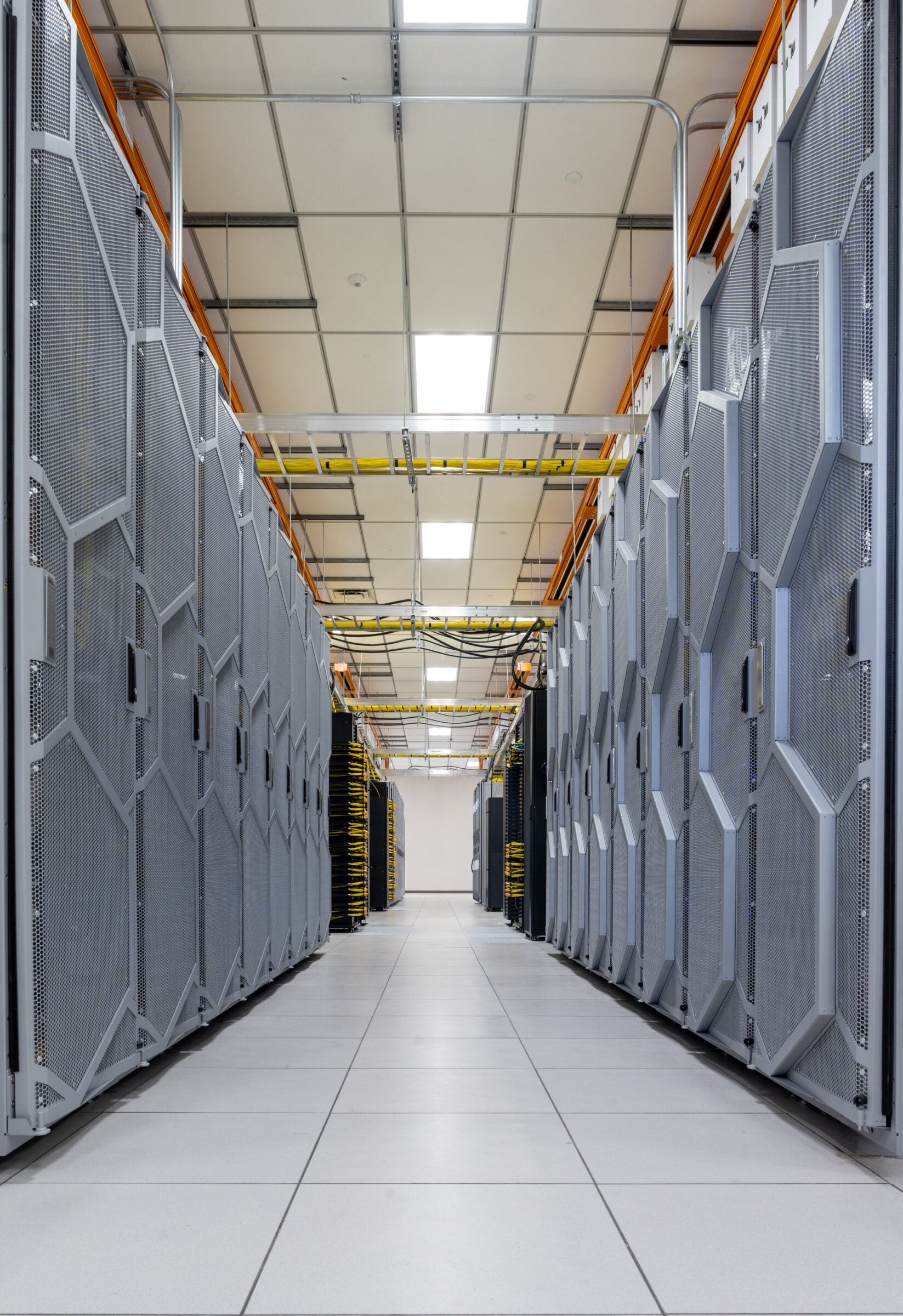
Horizon provides U.S. researchers with unprecedented computing and artificial intelligence capabilities, such as highly complex workloads blending AI techniques, numerical simulations, and inference, which will enable breakthroughs across medicine, earthquake science, quantum materials, lattice quantum chromodynamics, biophysics, astronomy, and more.
“Horizon is built for questions that matter most to Texas and the nation but are too big, too complex or too risky to test in a lab: tracing how a flash flood will move through a Hill Country watershed, stress-testing the power grid before the next winter storm, or analyzing massive amounts of biological data so that a treatment for a deadly disease can reach patients sooner,” said Fernanda Leite, vice president for research at UT Austin. “Its impact will reach every facet of our lives, and it gives researchers across UT and across the country, whatever their field, the chance to ask bigger and bolder questions.”
TACC’s previous large scale systems have enabled the work of more than 130,000 students and researchers, leading to countless discoveries ranging from subtle changes in building codes to increase resilience in hurricanes to Nobel Prize-winning research, including the 2026 Nobel Prize for physics award to Francis Halzen for his decisive contributions to the NSF IceCube Neutrino Observatory and its groundbreaking discovery of high-energy cosmic neutrinos.
Built For The Discoveries To Come
Developed in collaboration with NVIDIA, Dell Technologies and VAST Data, the Horizon supercomputer GPU system combines cutting-edge technologies with advanced infrastructure to redefine what is possible in scientific computing.
“Horizon is the centerpiece of the NSF LCCF, and it’s only part of the story. Alongside it, we’re building the software, storage, user support, training and partnerships across the country that will help researchers turn its power into discovery,” said John West, deputy director of the NSF LCCF.
Horizon Specifications (full system) Scale
- Phase One: 4,000 GPUs
- NVIDIA Grace Blackwell platform
- Phase Two: CPUs to be added in early 2027
- NVIDIA Vera CPU servers
Performance
- 140 GPU peak petaFLOPS (180 petaflops projected for combined GPU/CPU)
- 10x improvement in simulation speed over Frontera, the former No. 1 academic supercomputer in the United States
- AI Power: 20/80 AI exaFLOPS
- 20 exaFLOPS for AI at BF16/FP16 / 80 exaFLOPS for AI at FP4, more than 100x improvement over today’s systems
Networking
- NVIDIA Quantum-X800 InfiniBand
- Interconnected by the NVIDIA Quantum-X800 InfiniBand networking platform with in-network computing
Local All-Solid State Storage
- 400PB
- Delivering more than 12TB/s of read bandwidth along with multi-tenancy and quality-of-service capabilities
Efficiency
- Up to 6x more energy efficient
- Powered by a new 20 megawatt data center with advanced liquid cooling in Round Rock, Texas.
“Bringing accelerated computing and simulation together at this transformative scale lets scientists explore more ideas and tackle problems that were once beyond their reach,” said Ian Buck, vice president of hyperscale and HPC at NVIDIA. “With Horizon, TACC and NVIDIA are putting unprecedented academic compute capabilities into the hands of researchers across the country to drive the next age of discovery in medicine, materials and our understanding of the universe.”
“Horizon represents what becomes possible when world-class teams build toward a shared ambition,” said Arun Narayanan, senior vice president, Compute and Networking, Dell Technologies. “This system is the clearest expression yet of what Dell and TACC’s long-standing collaboration can produce. At this system’s core, Dell AI infrastructure provides the compute backbone, designed to meet the demands of the most complex AI and scientific workloads. Together with NVIDIA, we’re giving researchers the foundation they need to make discoveries that matter.”
“Horizon represents an extraordinary milestone for American science, giving researchers access to a new generation of computing capabilities that will accelerate discovery across disciplines,” said Jeff Denworth, co-founder of VAST Data. “Our partnership with TACC has grown from Stampede3 to Vista and now Horizon, with each generation pushing the boundaries of what’s possible. Scientific discovery increasingly depends on the ability to combine massive datasets, complex simulations, and AI within a single computing environment. With the VAST AI Operating System providing Horizon’s unified, high-performance data foundation, we’re proud to help accelerate the pace and scale of scientific discovery across the country.”
Laying The Groundwork For Horizon
TACC retired Frontera in October 2026 after more than seven years of service to the open science community. Frontera entered production in June 2019 and became the longest-running system in TACC’s history, completing more than 8 million jobs.
Frontera represented the first phase of the NSF LCCF, and Horizon was designed to deliver 10 times Frontera’s performance for simulation. And as AI has transformed scientific computing in the years since, Horizon’s GPU system also brings AI capabilities far beyond anything Frontera offered.
Vista, TACC’s AI-focused supercomputer, served as the prototype for the move to Horizon. Built on 600 NVIDIA Grace Hopper Superchips, it is the first TACC system in nearly 20 years to move away from x86 processors. The move to Arm-based design pairs GPUs and CPUs more tightly, a better fit for the AI-driven workloads that increasingly define scientific computing.
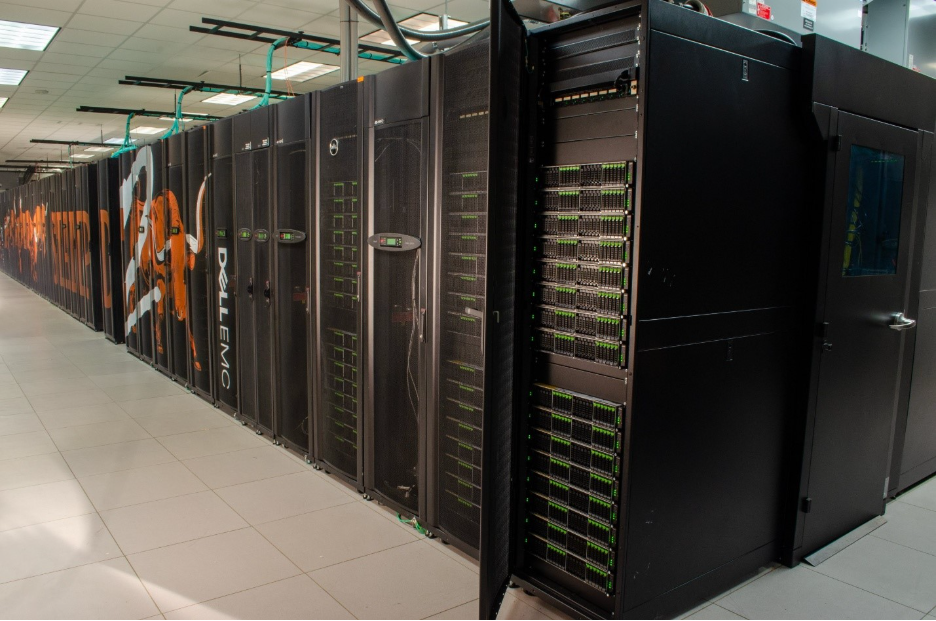
Vista is the proving ground for Horizon. On Vista, TACC and its research partners are porting and tuning applications for the new architecture, making final performance projections, developing and testing new algorithms and system software, building user training, running the storage technology that will become Horizon’s primary storage, and prototyping AI inference systems for future machines.
With Frontera’s retirement, TACC’s production fleet now includes Horizon, Vista, Lonestar6, Stampede3, Jetstream2, Ranch, and Corral.
Learn more: lccf.tacc.utexas.edu
Construction for the U.S. NSF Leadership-Class Computing Facility is supported by NSF Award #2323116.