UT, Then and Now
What was UT in the mid-1930s, when its iconic Tower was built, and what is it today?
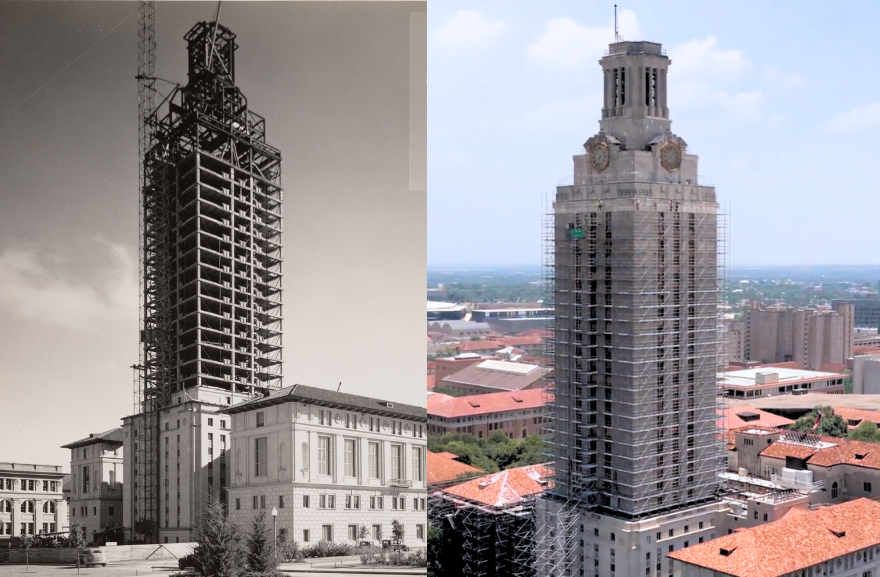
In 1936, the Tower’s contours were framed out in steel, and it was the tallest building in Austin. For the better part of 40 years, the Capitol and the Tower were the unrivaled twin peaks of the city’s skyline, a perfect embodiment of what Austin was then: a state government and college town. The Capitol is 302.64 feet, the Tower, 307. The Tower is made taller still by the fact that it sits on higher ground, “College Hill,” as they called the modest rise in the early days.
In 1972, construction began on the American Bank Building at the corner of Lavaca and Sixth Street. It would be six feet taller than the Tower and therefore dethrone it as Austin’s tallest edifice. Now, the UT Tower is — get this — the 55th tallest building in Austin. The city’s tallest building is Waterline, which stands 1,025 feet, more than three times the height of the Tower.
Just as Austin has changed, so has the University, of course. Here are a few ways:
The campus was 220 acres, more than five times the size of the original Forty Acres. Today it is 441 acres.
In the mid-1930s, the student population was about 10,500, and today it is 55,000.
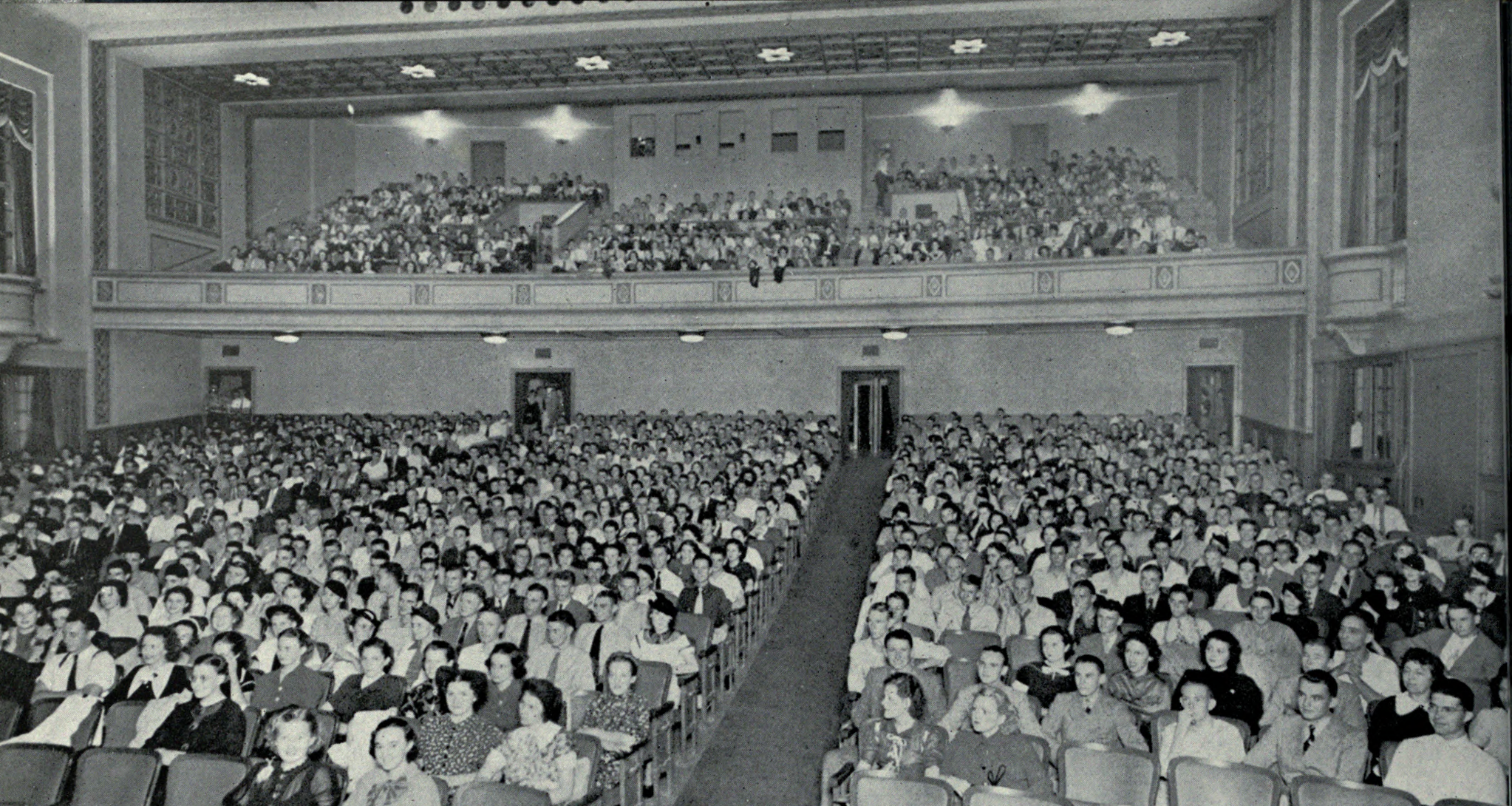
In 1936, UT conferred 1,612 degrees (subtracting the Medical Branch, which was then considered a unit within the University). Now, it’s 10X: about 16,000 a year.
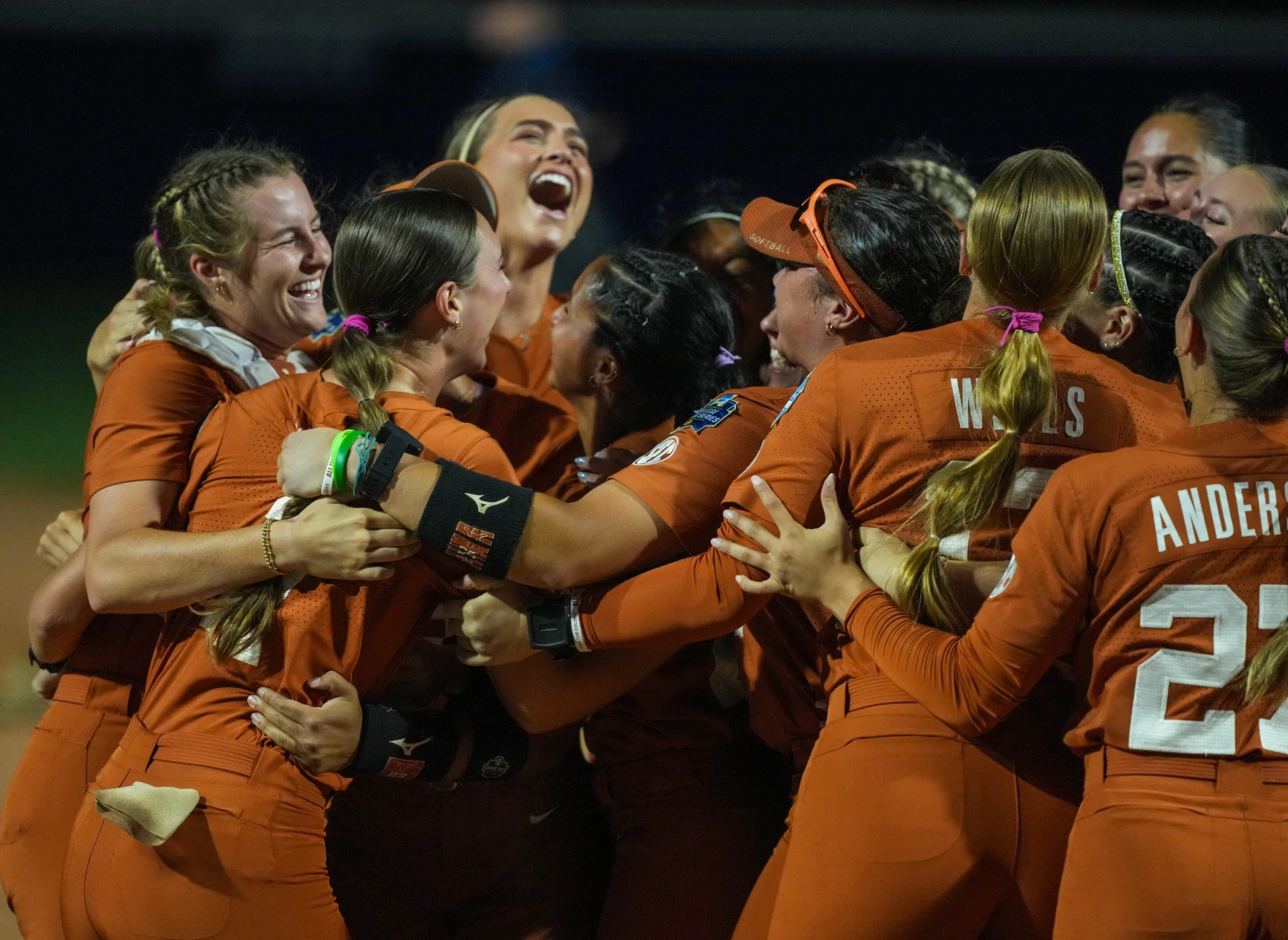
In 1936, UT fielded eight varsity teams, in football, basketball, baseball, track, tennis, golf, cross country and swimming — all of them men’s. Now, there are 17, adding to the previous list women’s teams in basketball, golf, tennis, track, swimming and diving and soccer, as well as softball, volleyball, beach volleyball and rowing.
The first women’s varsity sports, basketball and volleyball, began in 1966, though women had been playing club basketball before any men were playing the sport at UT.
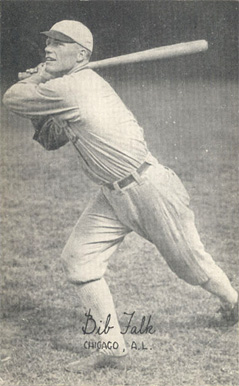
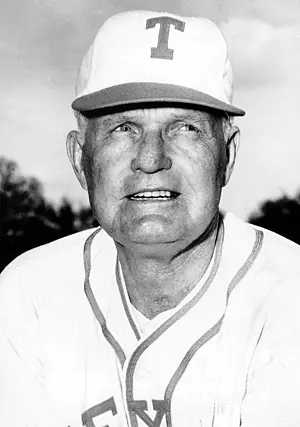
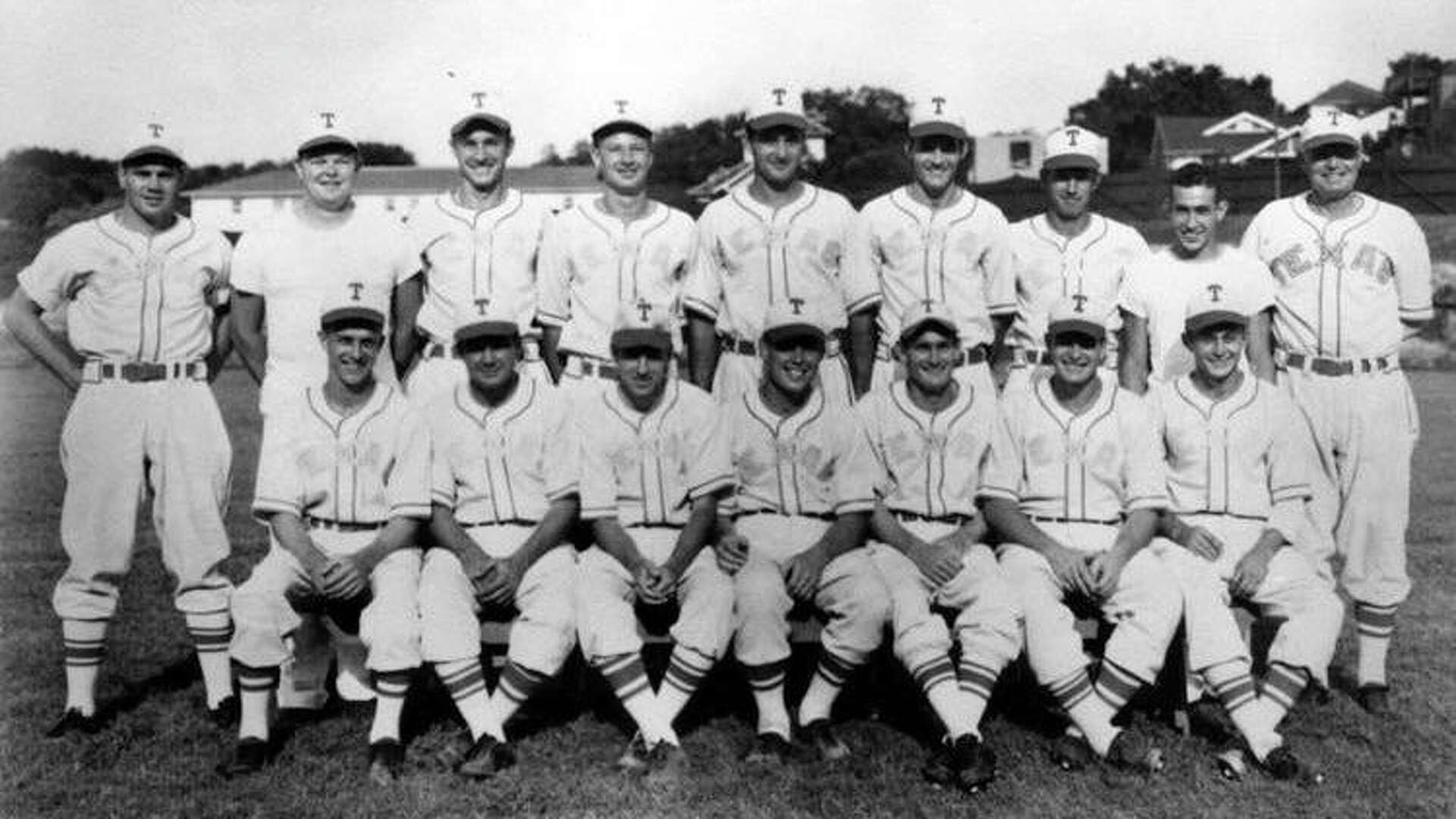
National Championships in 1936: 0. Now, 72. The first national championship in any sport came in 1949, when Bibb Falk led the baseball team to the top.
The population of Austin was 60,000 then. Now, it is 1 million, making it America’s 12th largest city.
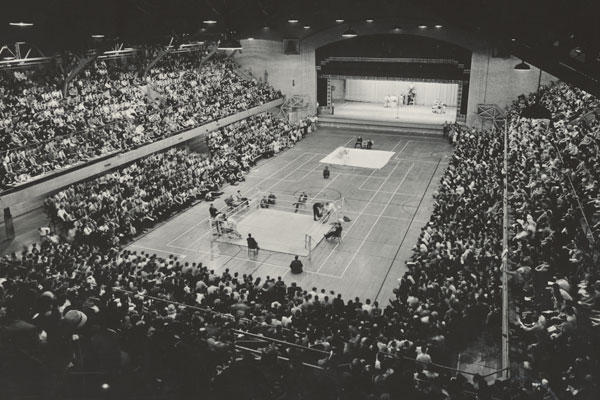
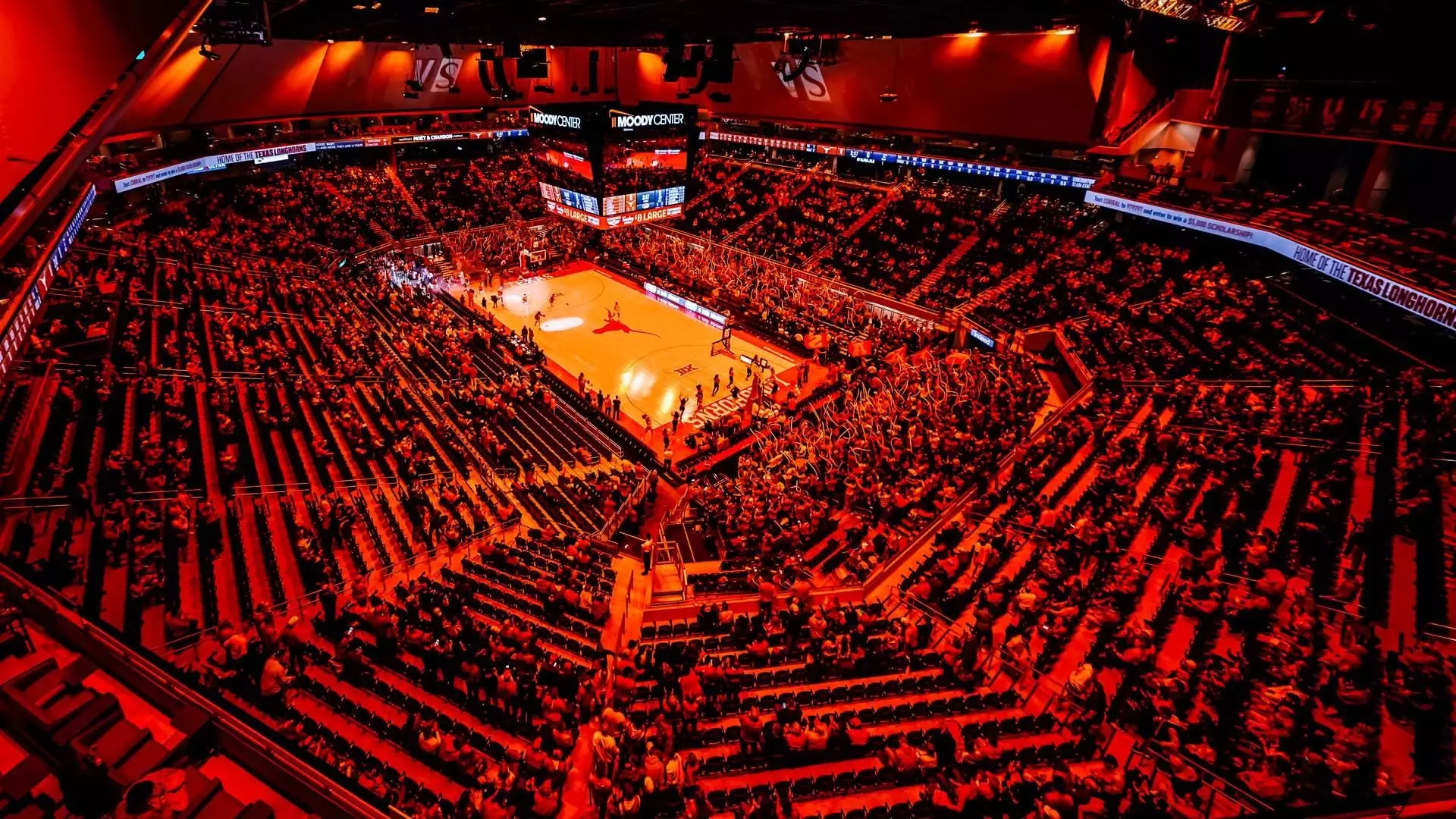
The biggest indoor venue on campus was Gregory Gym, built in 1930 with 4,000 seats. Now, UT’s Moody Center, which opened in 2022, holds 15,000.
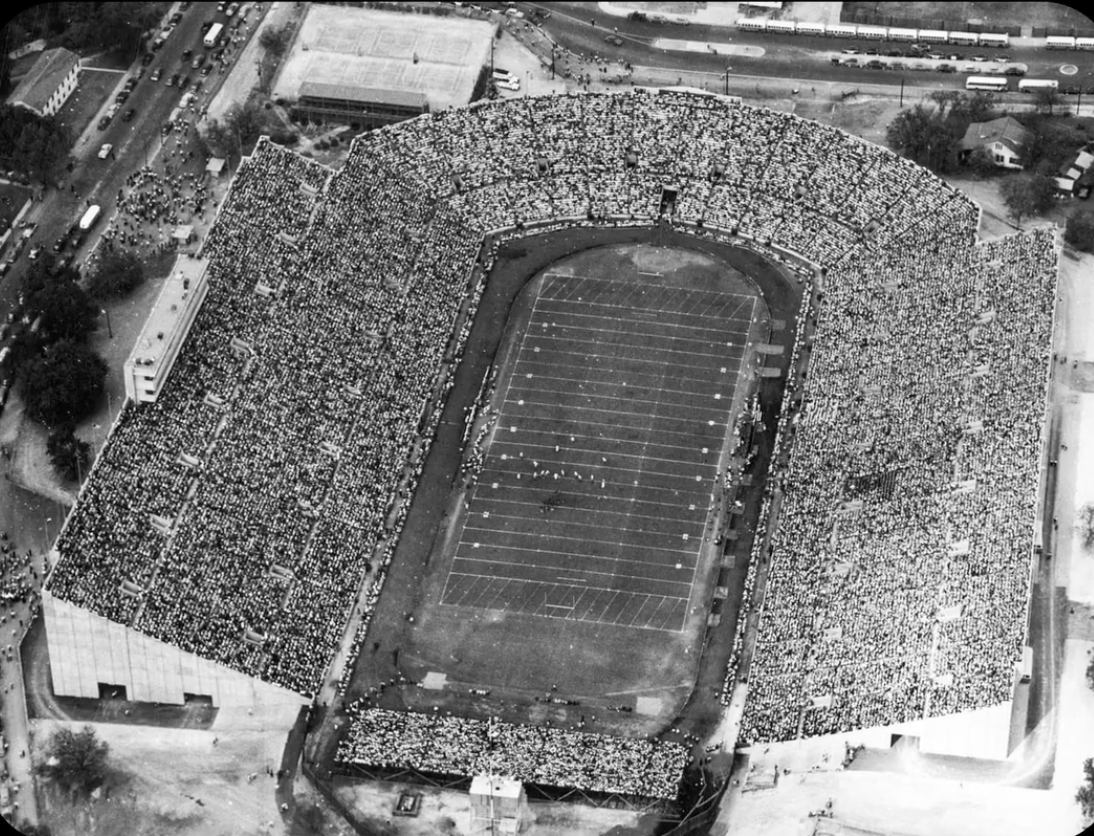
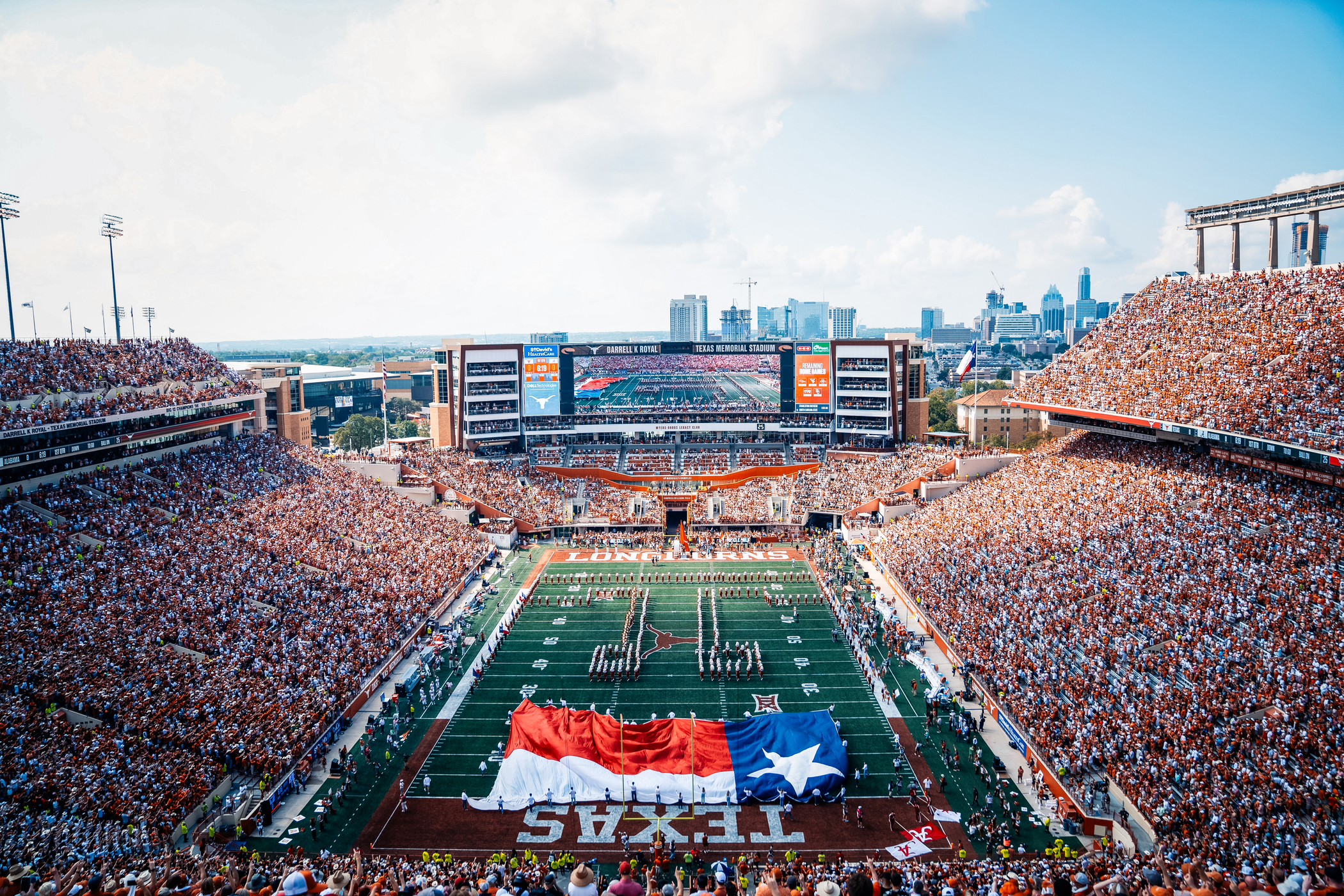
In 1937, Texas Memorial Stadium had a seating capacity of 40,500. This was set after the north end zone was enclosed in 1926 to form a horseshoe shape, and it remained that size until the next major expansion in 1948. Today, Darrell K Royal-Texas Memorial Stadium holds 100,119 screaming fans and is the eighth largest stadium of any kind in the United States.
In the 1937 Cactus Yearbook, President H.Y. Benedict summed up his view of the University this way: “One of the three southern members of the exclusive Association of American Universities, the University is today certainly one of the ten greatest state universities of the United States, one of the thirty greatest Universities in North America. Contrariwise, its cost per student is very low, quite below the average for the state universities as a group. The educational task of the next ten years is to make The University of Texas a worthy rival of any state university. The boys and girls of Texas are as good as any and they deserve a University as good as any.”
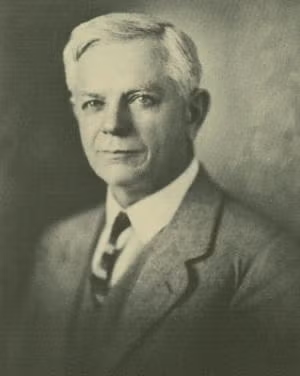
Previously a professor of mathematics and astronomy, he continued by cogitating, in an amusingly precise way, on what the University reasonably could take credit for: “Actually, the University is to be judged mainly by its effect on the students who flow through it in such large numbers. But it is impossible for any human being to make the measurements wherewithal to arrive even approximately at such a judgment. Each student upon entering the University has certain capacities, habits and accomplishments that make a totality so unknown, even to fond parents, as to be called X. Each student upon leaving has also a totality Z almost as unknown as the X.
“And since the University is not the only influence operating on a student during his residence in it, the University is not to be debited or credited with the difference between the unknown Z and the unknown X. A few differences between Z and X may be known fairly accurately to a few people, but there is no Registrar’s Office where the University part of all the differences may be added up and the effect of the University on all its students determined. We of the staff of the University work on in the faith that Z is greater than X in most of the cases and that enough of the favorable difference is due to the University amply to justify its existence.”
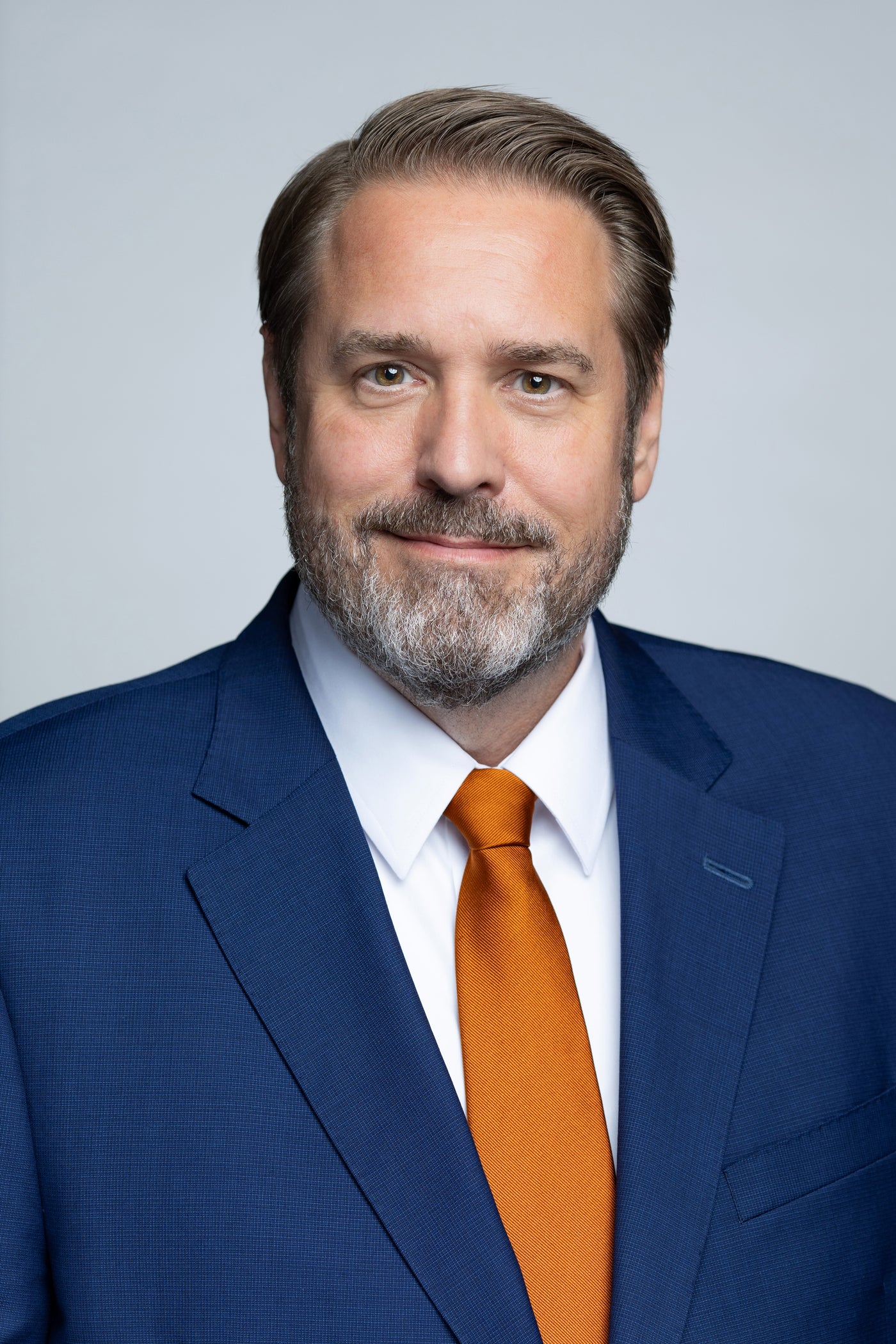
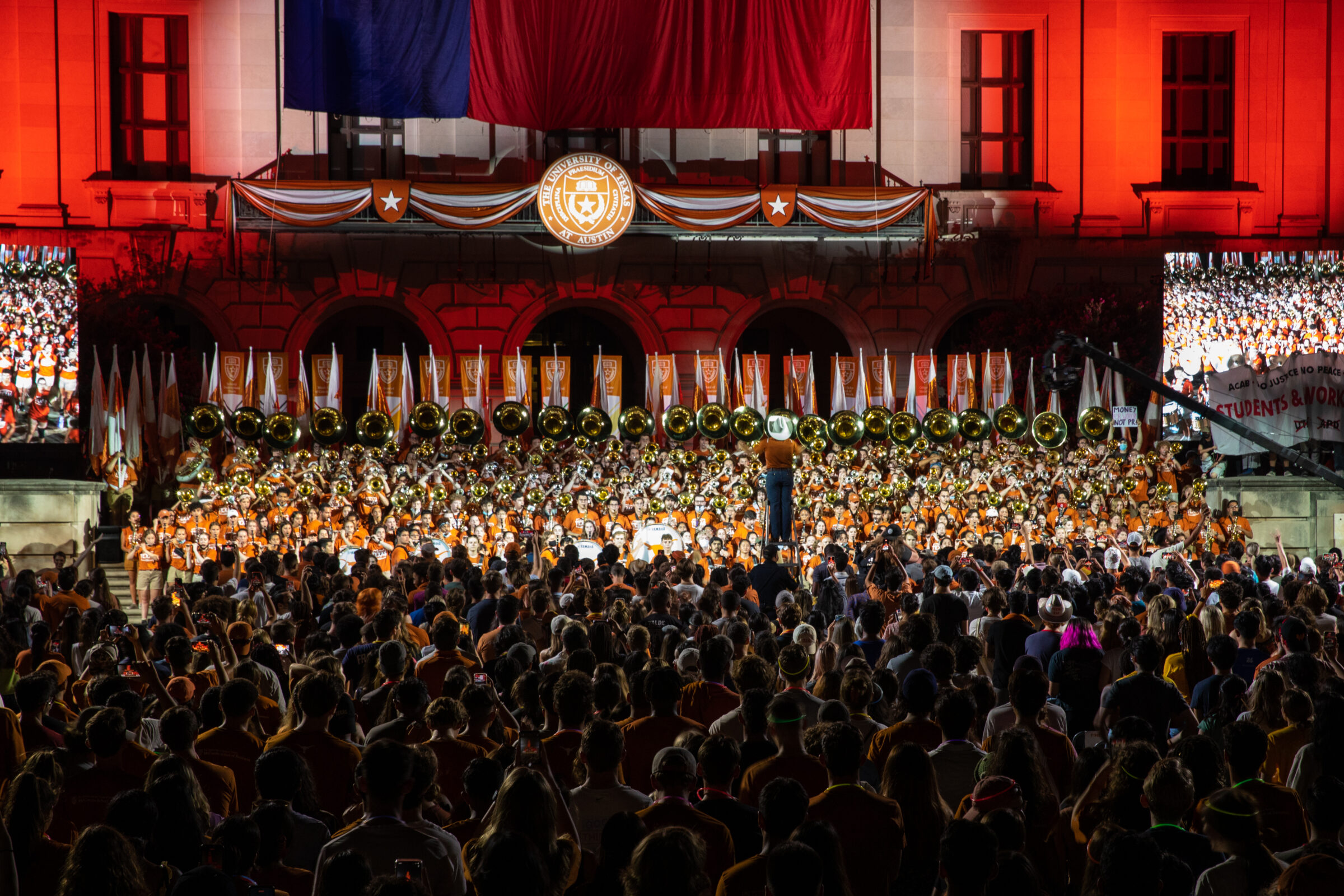
For his part, in his inaugural address last year, President Jim Davis named the restoration of the Tower as one of five priorities of the University, saying: “As much as the Tower has done for us over the ages, now it is our time to take care of it. Just as we restore public trust, revitalize our academic commitment, and reimagine our missions in research and medicine, we are doing the same for that great symbol of our university. We will restore, revitalize, and reimagine the Tower. We will return it to its original glory and prepare it to be the everlasting beacon for Longhorns of the future.
“And when we come together to celebrate great moments of our shared history, the Tower will be there. And when those moments come — at commencement, at Gone to Texas, at the next national championship — we will light the Tower. We will strike up the band. We will raise our horns. And we will remember that we are part of the greatest university in the world.”