Academic Medicine Raises the Bar for Pediatric Neuroscience Care in Austin
Less than a decade after its founding, the pediatric neuroscience program at Dell Children’s Medical Center, led by Dell Medical School faculty, is among the Top 25 in the U.S.
By the time Charlotte “Charli” Hilz’s family drove from Dallas to Austin, they had tried nearly everything they had been offered to control her seizures: Seven medications, dietary changes and steroids had failed. Some treatments helped briefly, while others brought difficult side effects. All the while, two-year-old Charli was losing abilities she had already developed.
Her parents knew the situation was worsening. What they did not have was a clear path forward.
“My trust began to waver,” says Charli’s father, Trevor Hilz. “But I also didn’t know where to go.”
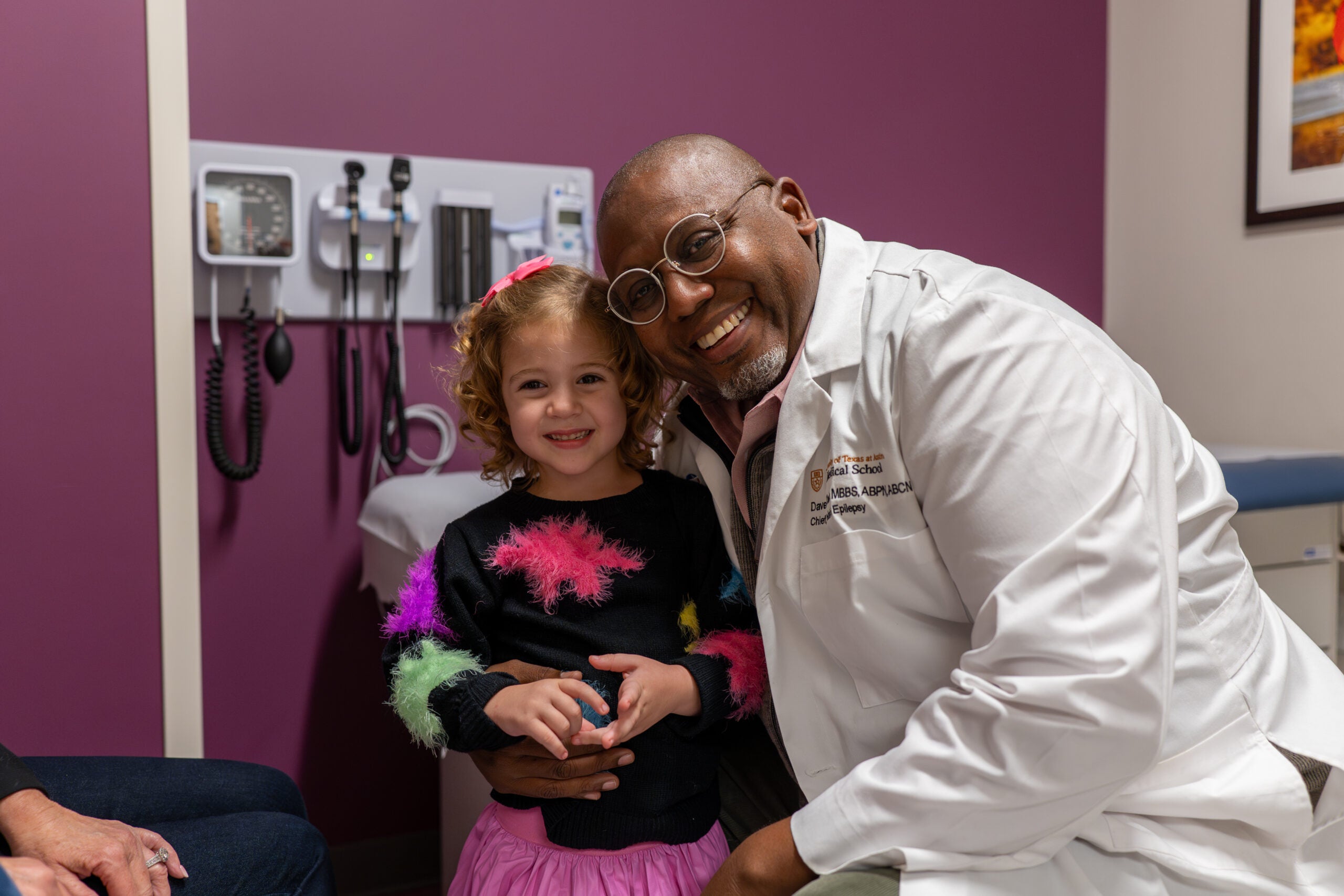
A family connection led them to Dave Clarke, M.D., chief of the Comprehensive Pediatric Epilepsy Program within the neurology clinic at Dell Children’s, a clinical partnership with Dell Medical School that is now ranked No. 21 in the country. Within a week, they had made the trip to Austin and begun a new evaluation — one designed not simply to try another medication, but to understand why the treatments had failed and whether a more definitive option was possible.
“Our program is designed to engage closely with families and across our disciplines to get to the root of the problem,” says Clarke, professor of pediatrics and neurology at Dell Medical School at The University of Texas at Austin. “Highly trained epileptologists, neurosurgeons who are able to take on high-risk procedures if needed, neuropsychologists, social workers, advanced practice providers and nurses — we all collaborate with the child and family at the center. That’s what makes the difference here: We are both capable and willing to go the extra mile for each child.”
National recognition for Austin pediatric programs
Charli’s journey points to a larger shift in the Central Texas medical landscape. For years, families in Austin routinely traveled to Dallas, Houston and elsewhere for highly specialized pediatric care. Charli’s family came in the opposite direction, seeking capabilities that an emerging academic pediatric neuroscience program had assembled here.
Created in 2019, the program brought pediatric neurology, neurosurgery, neuropsychology, neuro-ophthalmology, rehabilitation and related specialties into a more integrated model. It earned its first national recognition from U.S. News & World Report three years later. By 2025, the program had reached No. 25 in the country for pediatric neurology and neurosurgery. Today, it is tied for No. 21, one of a handful of programs led by Dell Med faculty now climbing in national recognition.
“The power of academic medicine is that patient care, research and education continually strengthen one another,” says Claudia Lucchinetti, M.D., senior vice president for medical affairs and dean of Dell Medical School at The University of Texas at Austin. “The needs of patients shape research, new discoveries create better outcomes, and education prepares more physicians to deliver the most advanced care. At Dell Children’s, Dell Med faculty bring that model together with outstanding clinical teams and the broader capabilities of UT to take on complex cases and find a path forward when standard answers fall short.
“These rankings reflect what matters for children and families: deeper expertise, more options, and access to nationally recognized care here in Central Texas.”
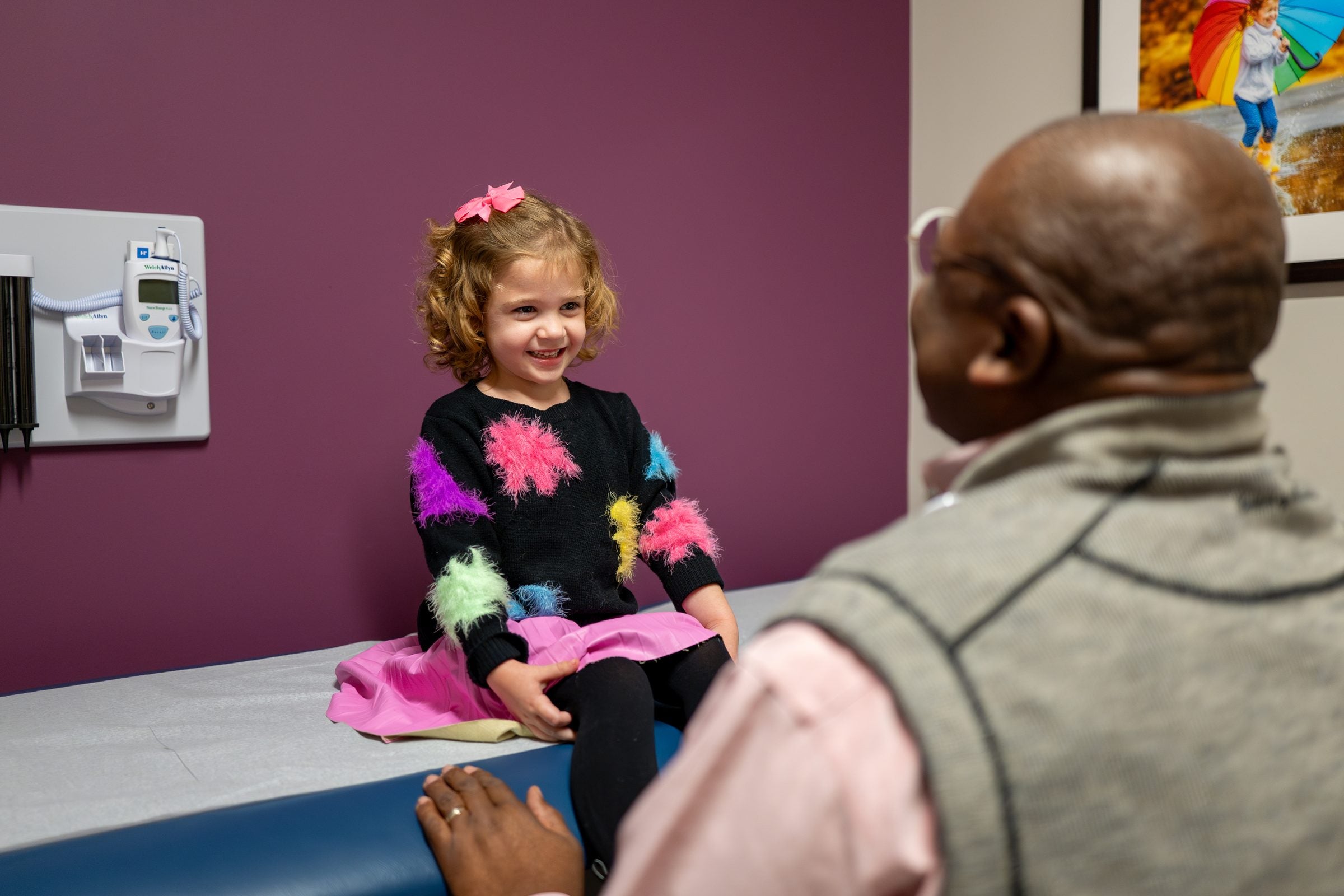
Charli’s journey from uncertainty to recovery
Other leading pediatric epilepsy centers around the country have access to many of the same advanced tools. But what Charli and her family needed — and had not yet found — was a team of advanced specialists prepared to put them together around her particular case.
“When advanced specialists come together, we can look at complex cases from every angle,” says Adam Messer, president of Dell Children’s Medical Center. “This collaboration helps us understand each child’s unique needs so we can provide comprehensive care that supports the entire family.”
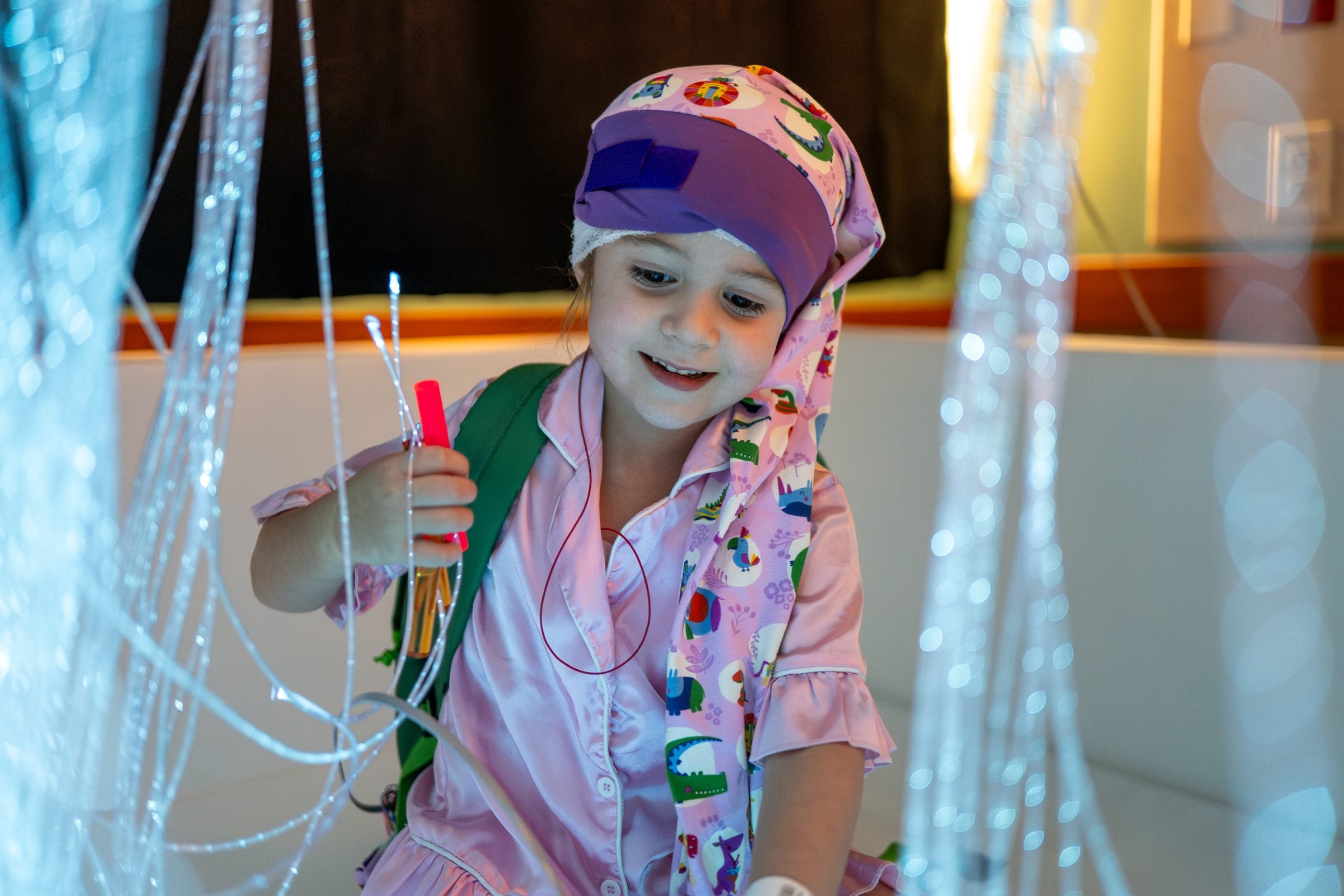
Charli’s epilepsy began in one area of the brain but spread so rapidly that it could resemble a different type of seizure disorder. At the same time, abnormal electrical activity was disrupting more than half of her sleep, interfering with her brain’s ability to rest, learn and develop. She was having as many as 20 seizures a day, struggling to walk and speak clearly, and losing the use of her left hand.
At Dell Children’s, the team began again with inpatient monitoring, capturing Charli’s seizures and studying the electrical activity in her brain. Advanced imaging helped narrow the suspected source. Epileptologists, neurosurgeons and neuropsychologists then used stereo-EEG, placing small electrodes in and around the target area to determine precisely where her seizures began and how closely that area bordered functions that needed to be preserved.
The evaluation located a small area of atypical cells near Charli’s sensory cortex. The target was so tightly surrounded by functional tissue that conventional surgical removal could have caused harm.
Instead, the team guided a needle-sized probe between two folds of her brain and used laser energy to deactivate the cells driving the seizures while protecting the surrounding tissue.
Today, Charli is six years old and remains seizure-free. Her overnight epileptic episodes have largely disappeared. She is using both sides of her body more fully, taking fewer medications and rapidly regaining function her family once feared had been permanently lost.
“For the first time, we felt heard,” says Charli’s mother, Mackenzie Hilz. “Dr. Clarke believed us. He looked at her and us and said, ‘I have a plan.’ We hadn’t heard that from anyone before. We took the leap, and it saved her life.”