

Research
-
Two University of Texas Engineering Professors and Two Alumni Elected to National Academy of Engineering
The National Academy of Engineering (NAE) announced today that two professors and two alumni from the Cockrell School of Engineering at The University of Texas at Austin have been elected to the prestigious academy.
-
Provost Appoints Interim Director to Lead Energy Institute
Professor Thomas F. Edgar, a chemical engineer with extensive teaching, administrative, research and industry experience, has been named interim director of the Energy Institute at The University of Texas at Austin.
-
SXSW Interactive Preview: Space Exploration featuring Richard Garriott
Event: The Austin Forum on Science, Technology and Society will host a SXSW Interactive preview: “Space Exploration with Richard Garriott.” When: 5:45 p.m., Tuesday, Feb. 5. This event is free and open to the public.
-
The University of Texas at Austin Wins First Place in National Nanosatellite Competition
The University of Texas at Austin’s Satellite Design Lab has won first place in the national University Nanosatellite Program competition for designing and building a small satellite called ARMADILLO.
-
ARMADILLO Wins National Satellite Prize
The winning team from the university’s Satellite Design Lab will be honored Feb. 4 with a tower lighting. Their satellite, ARMADILLO, will launch in 2014 or 2015.
-
Advertising Professors Rate Super Bowl Ads
Sharing their expertise, advertising professors live-tweeted opinions of Super Bowl ads during the big game, joining millions in an online conversation. #SBAdJudge
-
Former Education Secretary William Bennett to Discuss Education Policy at UT Austin
William Bennett will discuss “Education Policy and the American Future” at a public lecture sponsored by the College of Liberal Arts and the Lyndon B. Johnson School of Public Affairs at The University of Texas at Austin. When: 4 p.m., Monday, Feb. 4
-
Aztec Conquest Altered Genetics among Early Mexico Inhabitants, New DNA Study Shows
For centuries, the fate of the original Otomí inhabitants of Xaltocan, the capital of a pre-Aztec Mexican city-state, has remained unknown. Researchers have long wondered whether they assimilated with the Aztecs or abandoned the town altogether.
-
McCombs Team Wins FanTAXtic Victory
The UT Tower will be lit Wednesday to celebrate a victory in the Deloitte FanTAXtic Case Competition. In winning, the McCombs School of Business team defeated the defending champion.
-
UT Chemist Wins Japan Prize (50 Million Yen) for Innovative Semiconductor Materials
Willson and a colleague first conceived of chemically amplifed resists in 1979, when Willson was a researcher at IBM Corp.
-
UT Austin Can Cut Costs and Generate Revenue to Support Education
The University of Texas at Austin could generate as much as $490 million in savings and new revenue over a decade while enhancing its excellence in teaching and research, according to a report submitted by private sector experts who have reviewed university operations.
-
Forum Explores How Citizens Can Hold Elected Leaders Accountable
The Annette Strauss Institute for Civic Life at The University of Texas at Austin College of Communication, KLRU-TV, Austin PBS and KUT 90.5 FM are hosting a community conversation to explore how citizens can hold elected leaders accountable. “Why Bother? Your State Legislature, Your Voice” is the third event in the news and public dialogue…
Latest News
-

The Brain’s Tug-of-War Between Impulse and Self-Control
-
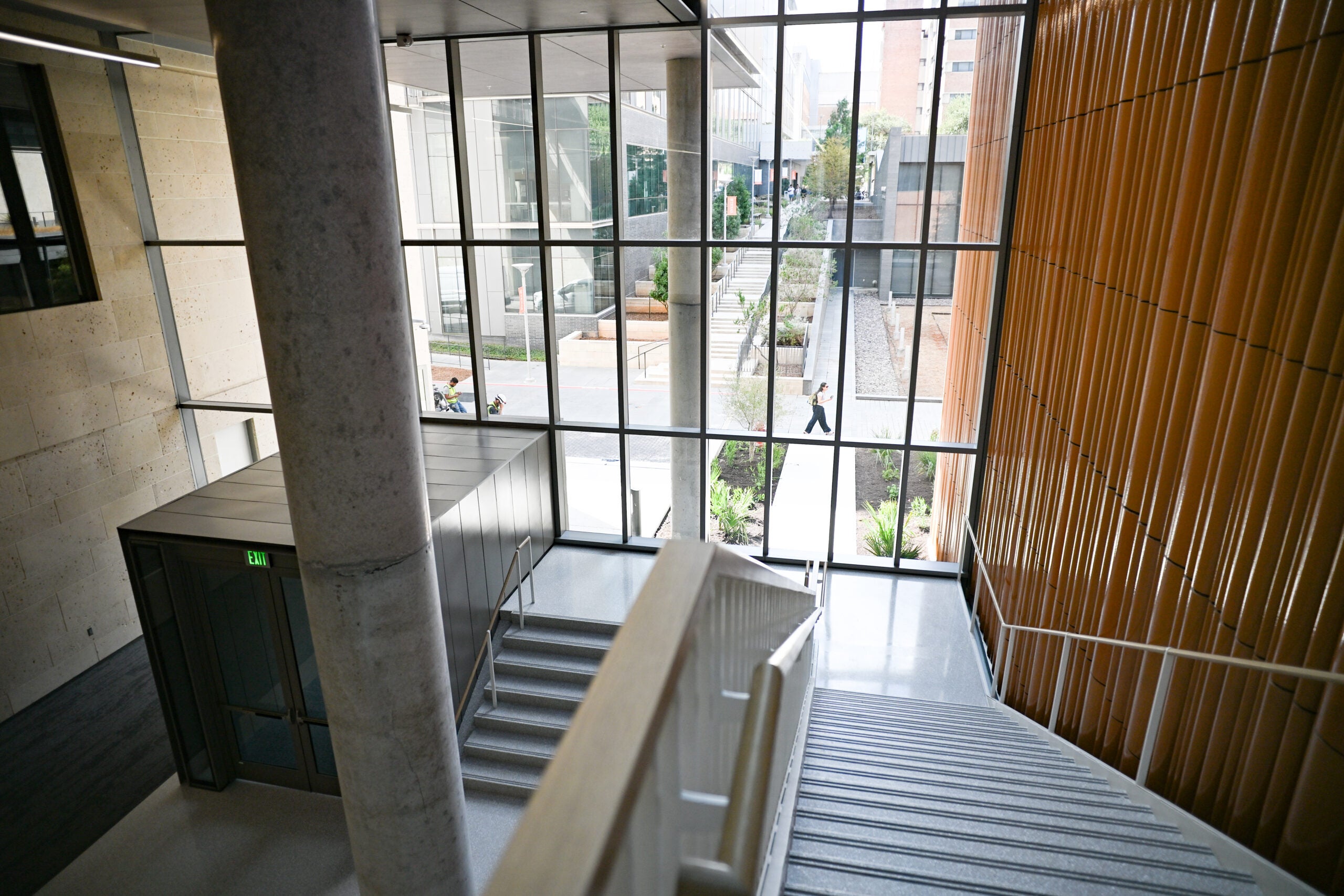
Stephens Greth Foundation Gift Expands Opportunities for West Texas Students and Engineering Innovation at UT Austin
-
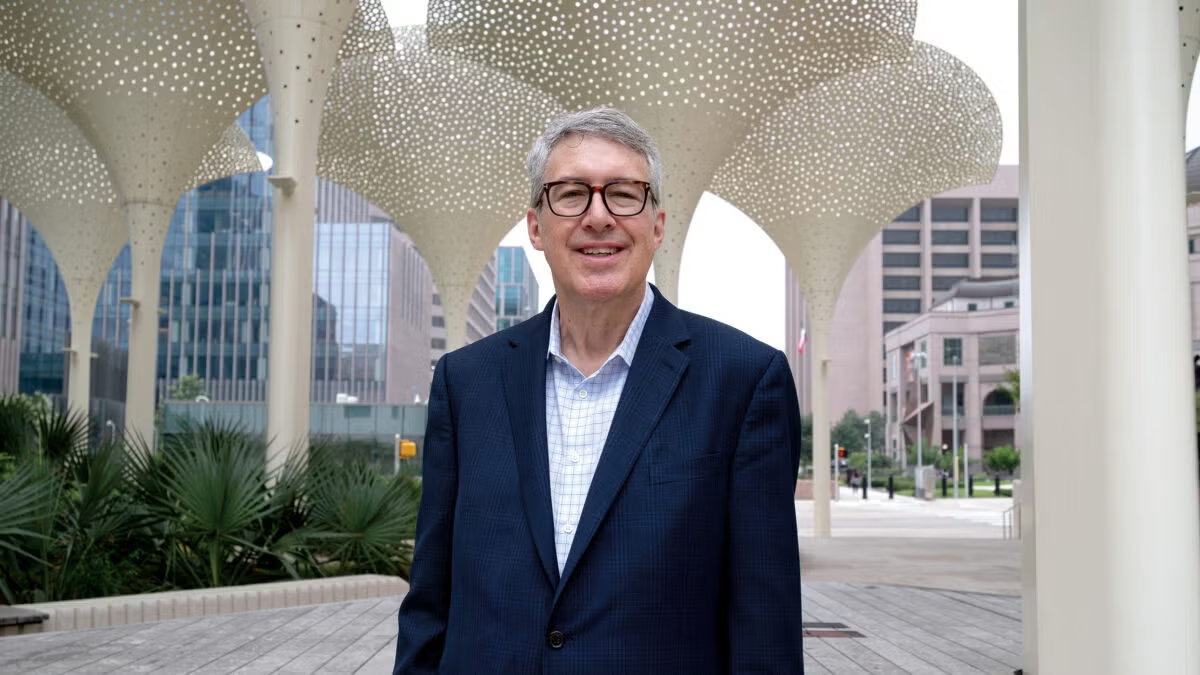 Texas Connect
Development Leaders’ Work With Donors Helps Build the Future of UT
-

Helping Others Linked to Slower Cognitive Decline Among People at Higher Genetic Risk for Alzheimer’s