Four-Year Graduation Rate Rises from 51 to 66 Percent in Five Years
Graduation rates continue to climb at UT Austin, with the four-year rate reaching 65.7 percent in 2017, up almost 5 percentage points from last year and setting a university record.
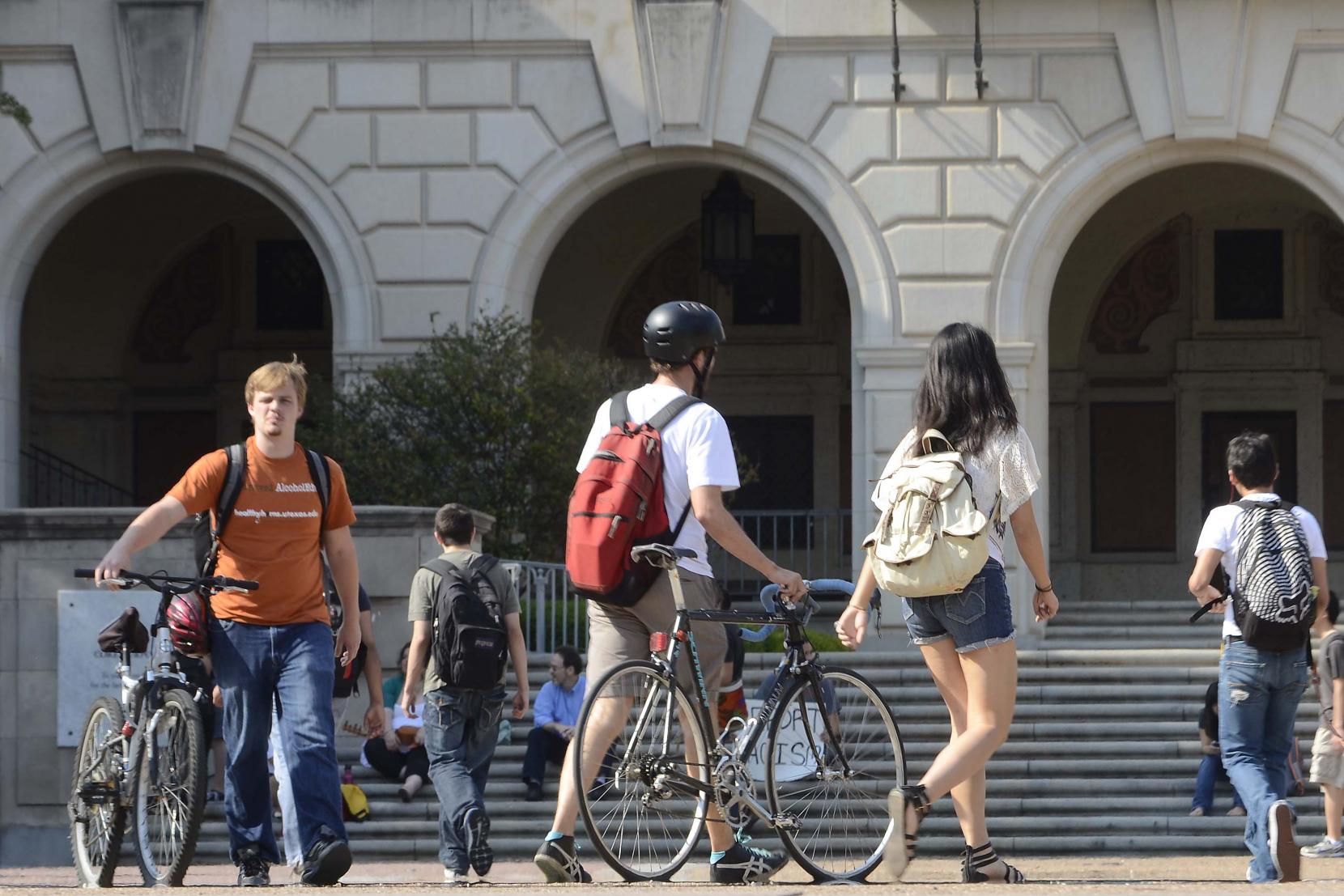
AUSTIN, Texas — Graduation rates continue to climb at The University of Texas at Austin, with the four-year rate reaching 65.7 percent in 2017, up almost 5 percentage points from last year and setting a university record.
In 2011, the university made increasing graduation rates a priority and, in 2012, set a goal to increase the four-year graduation rate from 51 percent to 70 percent in five years. Helping more students graduate on time minimizes student debt, introduces them into the workforce sooner and opens more spots for incoming students.
Through innovative approaches to analyzing student data and new student success programs, the university focused resources to support at-risk students. Since then, the increased graduation rates have enabled the university to graduate about 1,000 more students in 2017 compared with 2011 and enroll more than 1,000 new first-time freshmen.
“By raising our four-year graduation rate, UT has reduced the cost of higher education for students and families and has been able to enroll 1,000 more freshmen per year, without increasing overall enrollment,” said President Gregory L. Fenves. “I thank all of those at UT who have committed themselves to fostering student success.”
The new data on graduation rates comes from the preliminary enrollment report that the university conducts after the 12th day of class each fall.
Other findings from the report include:
- Total university enrollment is 51,527, a slight increase of 0.4 percentage points from last fall.
- Hispanic undergraduate enrollment increased to 23 percent of the student body, with a total of 235 more Hispanic students enrolled than last fall.
- Undergraduate enrollment for black students (those who identify themselves as “Black only” or “Black – two or more, excluding Hispanic”) remained stable at 4.8 percent and was down five students from last fall.
- The incoming freshman Class of 2021 has 8,381 students, a decrease of 338 from last year’s record high. Hispanic representation in the class is 2,064, an increase of 0.8 percentage points. The number of students identifying as black is 451, a slight increase of 0.3 percentage points.
- The six-year graduation rate increased to 82.9 percent, up 1.7 percentage points from last fall.
- Average SAT scores increased to 2,017, an increase of 148 points from last fall. Average ACT scores remained stable at 29.
“This is incredible progress,” Executive Vice President and Provost Maurie McInnis said of the higher four-year graduation rates. “We will continue to work hard to meet our goal of 70 percent and exceed it. I am proud of our students, first and foremost. They have worked hard, and this success is theirs.
“Over the past five years, UT has changed the culture around graduation rates on campus, and that has clearly paid off. There is more work to be done, but we are making progress.”