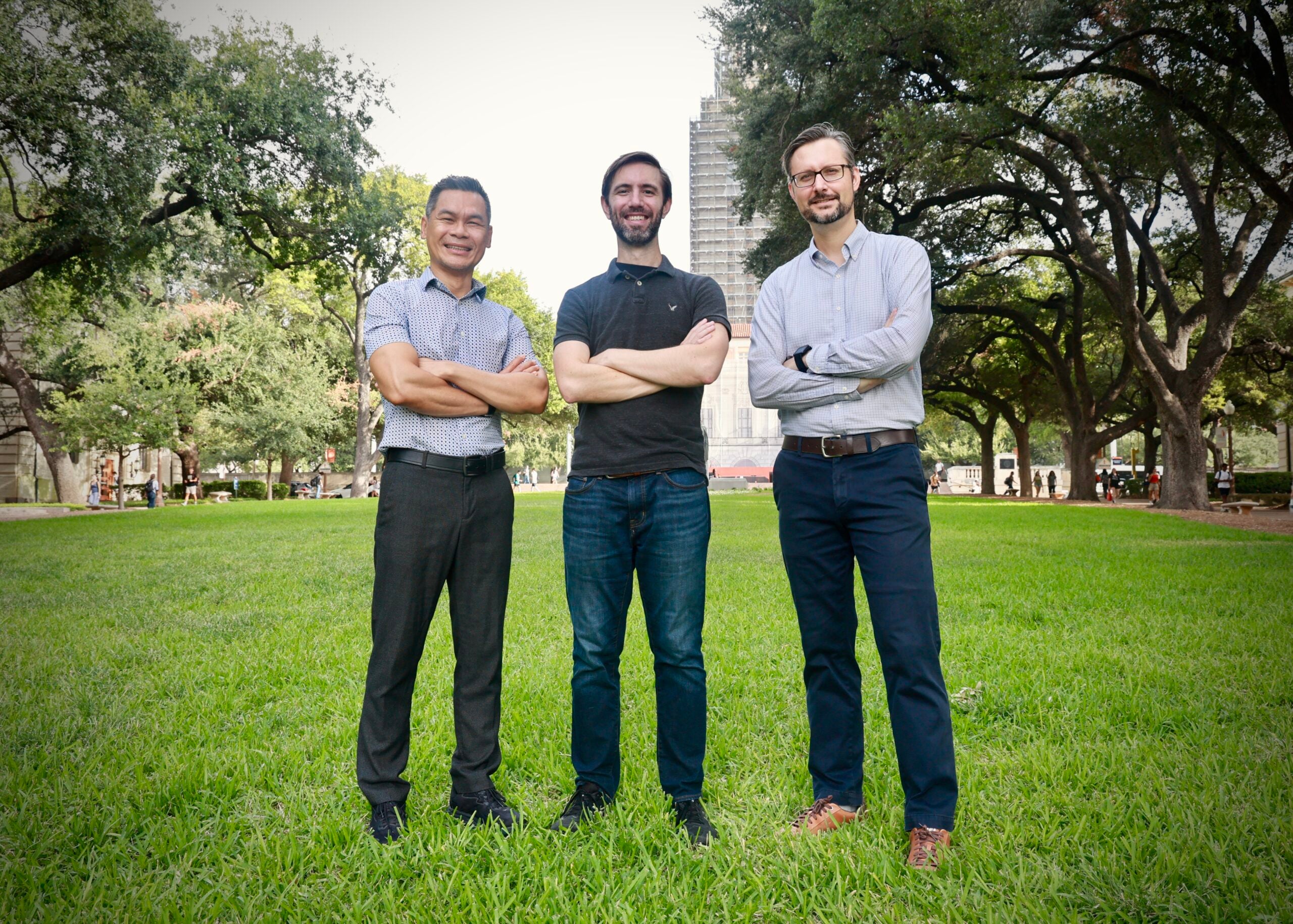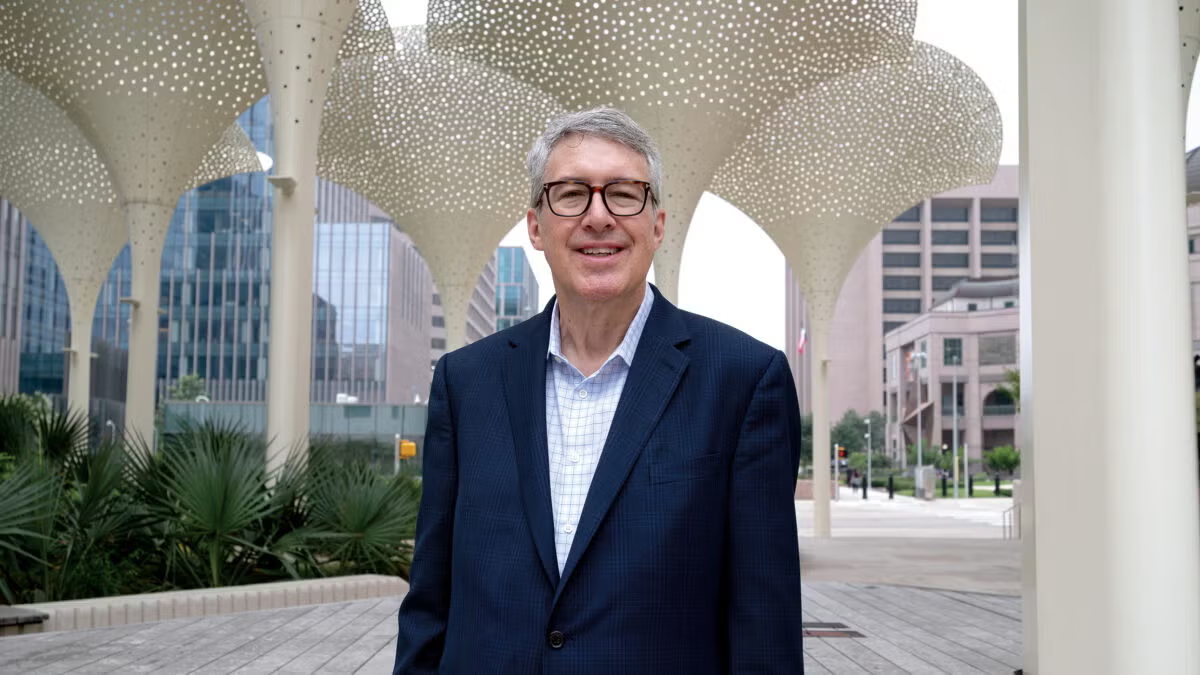
Ellen Rathje (center) has contributed to seismic hazard assessments for nuclear projects in countries including South Africa.
Nuclear safety is often framed by moments of catastrophe, and headlines about a handful of major accidents have largely shaped public perception of nuclear energy during the past few decades. In reality, nuclear facilities operate safely every day thanks to layers of continuous monitoring, rigorous assessment, and predictive systems that identify problems before they occur.
As Texas expands its role in the nuclear energy sector, engineering researchers at The University of Texas at Austin are developing methods that can help support safer nuclear infrastructure — including improved seismic hazard assessment for nuclear sites and advanced sensing technologies for long-term monitoring of spent fuel storage systems. These efforts help ensure that a growing energy infrastructure is protected on multiple fronts.
Geotechnical engineering professor Ellen Rathje predicts how external hazards affect facilities from the ground up, and structural engineering professor Salvatore Salamone applies advanced technologies to improve the safety and reliability of long-term nuclear waste storage systems. Together, this work demonstrates how researchers from the Cockrell School of Engineering serve as technical guardians, addressing nuclear safety from different ends of the risk spectrum.
In response to rising energy demand, grid reliability needs, and a push for energy independence and security, the state of Texas recently appropriated $340 million for the Texas Advanced Nuclear Development Fund, the largest state investment of its kind in the nation. Rathje and Salamone say that UT’s complementary safety approaches — understanding risk before it occurs and detecting it as it develops — will be essential to safeguarding public health and the environment at every stage and helping the state establish itself as a global leader in nuclear energy.
Earthquakes and Nuclear Waste
Q: Your research focuses on very different aspects of nuclear safety. How do you each approach risk?
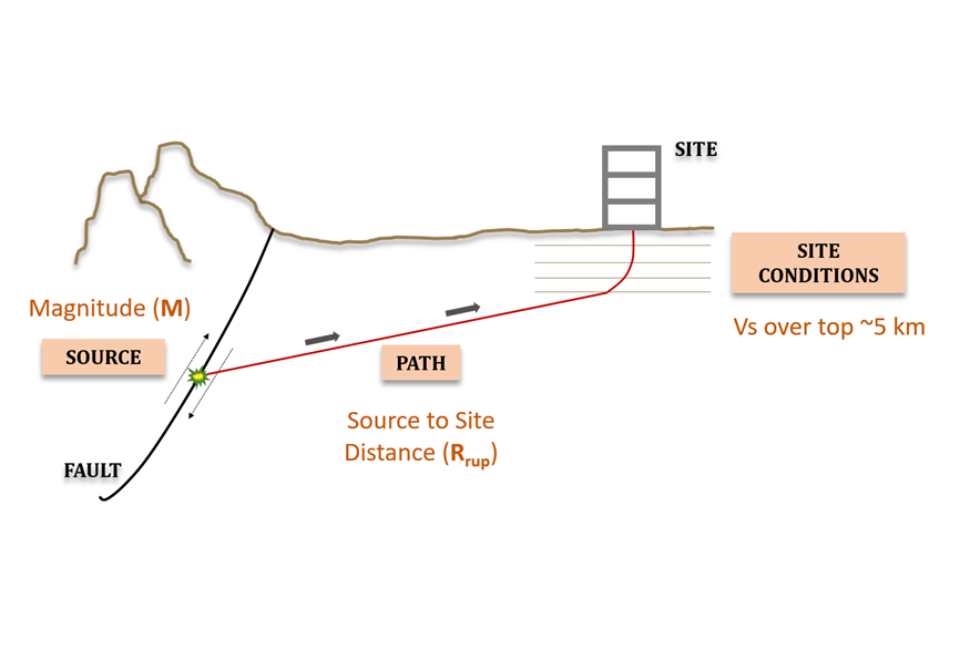
Rathje: My work focuses on predicting earthquake ground shaking at nuclear sites and, just as importantly, quantifying the uncertainty in those estimates. A clear example of why this matters is the 2011 Fukushima disaster in Japan after the Tohoku earthquake. While that nuclear facility withstood the earthquake shaking, the tsunami ultimately caused the failure, overwhelming the seawall and flooding the basement where the power systems were located, ultimately leading to a meltdown. That event reinforced how critical it is to fully evaluate natural hazards.
I study how near-surface soil conditions influence ground motion, and I have developed improved modeling techniques and uncertainty frameworks so seismic hazard assessments better reflect site‑specific conditions and ensure that they reflect reality as closely as possible.
Salamone: I focus on the back end of the nuclear fuel cycle: how spent nuclear fuel is safely stored after use, and how we ensure the long-term integrity of the dry storage canisters, or DSCs, that contain it. Today, over 90% of spent nuclear fuel in the U.S. is stored in welded DSCs designed to operate safely for decades. However, these canisters can be susceptible to degradation mechanisms such as chloride-induced stress corrosion cracking, which develops gradually and may not be visible until damage has reached an advanced stage.
The condition of the canisters is typically assessed through periodic visual inspections, often using robotic systems that scan small areas at a time. This approach is slow, limited in coverage, and provides only occasional “snapshots” of the canister’s condition.
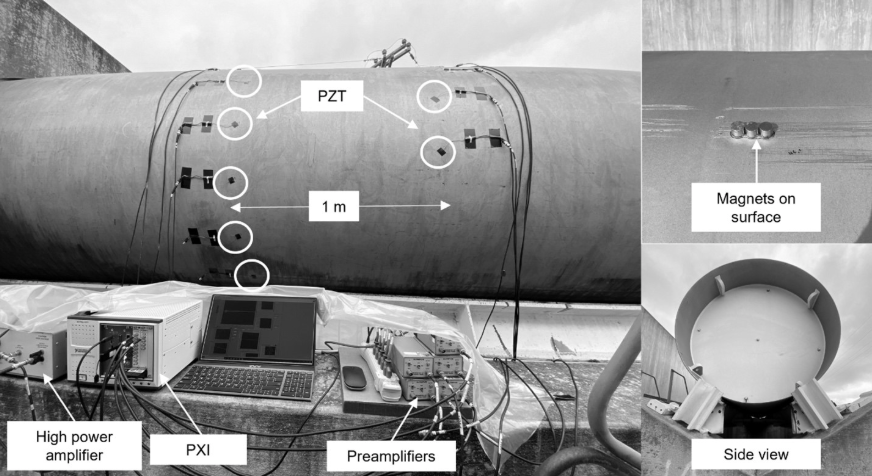
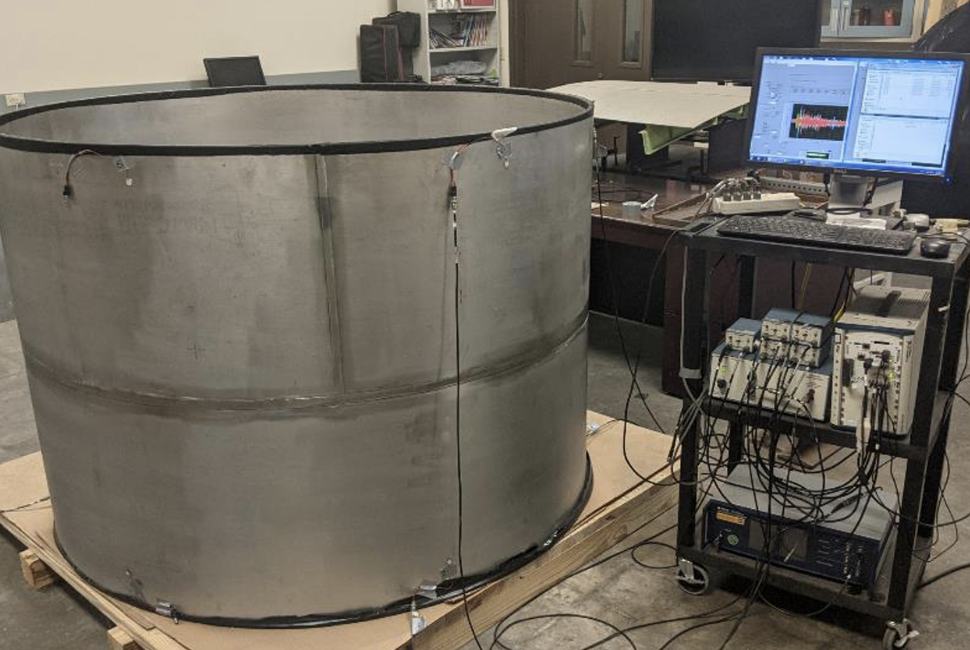
We’re changing that paradigm by an autonomous condition monitoring system that embeds low-cost sensors directly into the canisters. These sensors continuously send ultrasonic waves through the structure, detecting early signs of damage like corrosion or cracking. This is a gamechanger because instead of intermittent inspection, we get continuous, real-time insight. It reduces worker exposure to radiation, dramatically speeds up assessment, and enables early detection of degradation before it becomes a safety concern.
Technology for Continuous Monitoring
Q: How are your innovations changing the way safety is evaluated?
Salamone: In short, it shifts nuclear fuel storage from reactive inspection to proactive, data-driven safety. We are closing a critical gap where container degradation is continuous, but inspection is intermittent. Our innovation closes this gap by enabling continuous, condition-based monitoring — allowing operators to intervene early, prioritize maintenance, and make better-informed decisions about long-term storage.
UT researchers Mitch Pryor and Blake Anderson from the Nuclear and Applied Robotics Group are also co-contributors to this work. They provide the expertise in the development and deployment of the remote intelligent systems in hazardous, uncertain environments.
Rathje: In seismic hazard assessment, we work toward reducing uncertainty and improving accuracy. My group has developed open-source simulation tools like Strata and PyStrata, which are widely used by engineers and researchers around the world to model ground response and soil amplification. The number of downloads is in the tens of thousands, which speaks to their impact on practice.
Beyond software, peer‑reviewed publications and technical contributions feed directly into how seismic hazard assessments are conducted for critical facilities.
Applying UT Nuclear Safety Solutions Globally
Q: How does your research contribute to nuclear safety worldwide?
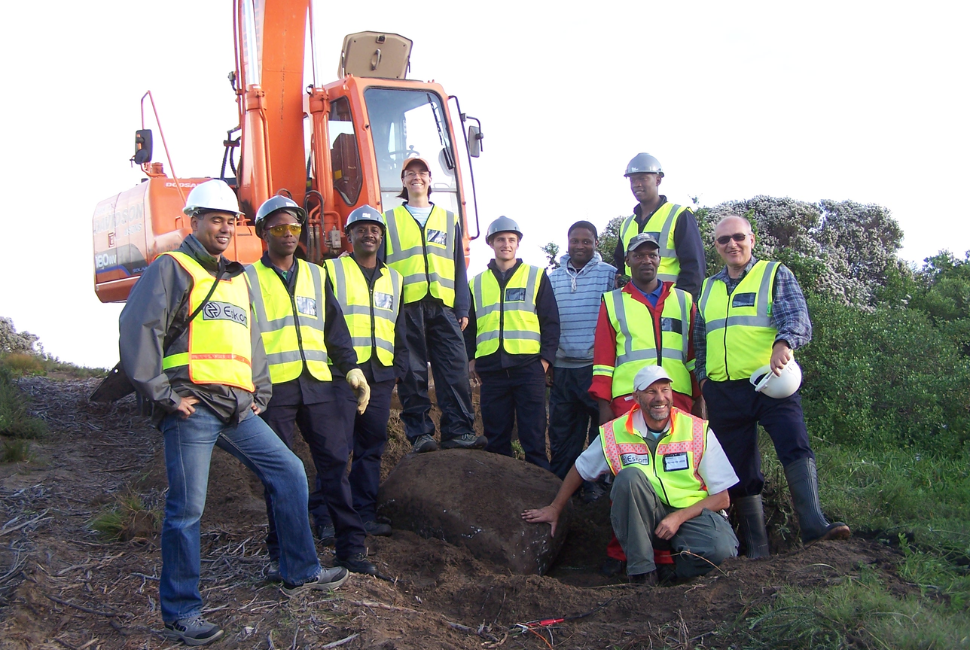
Rathje: I’ve worked on seismic hazard assessments for existing and planned nuclear facilities in Taiwan, South Africa and Poland. While seismic conditions vary across regions, the analytical frameworks and peer-review processes are consistent and often guided by U.S. regulatory standards.
Salamone: Spent nuclear fuel is stored worldwide, and the challenge of ensuring the integrity of aging storage systems with limited inspection data is global. As storage durations are extended and regulatory agencies increasingly require evidence-based aging management, scalable monitoring technologies are needed to support long-term safety. Because our approach is adaptable to different canister designs, storage configurations, and operating environments, it has the potential to support dry storage systems across countries and regulatory frameworks.
Supporting a Nuclear Future in Texas
Q: How does your work support Texas’ growing investment in nuclear energy?
Salamone: Texas is investing heavily in next-generation reactors, including small modular reactors and microreactors. As deployment grows, so will the number of storage systems. Our work ensures that fuel storage infrastructure evolves alongside reactor deployment, and that storage safety scales with that growth.
Autonomous condition monitoring provides the technology needed to safely manage spent fuel over longer periods, which is critical for a sustainable nuclear expansion.
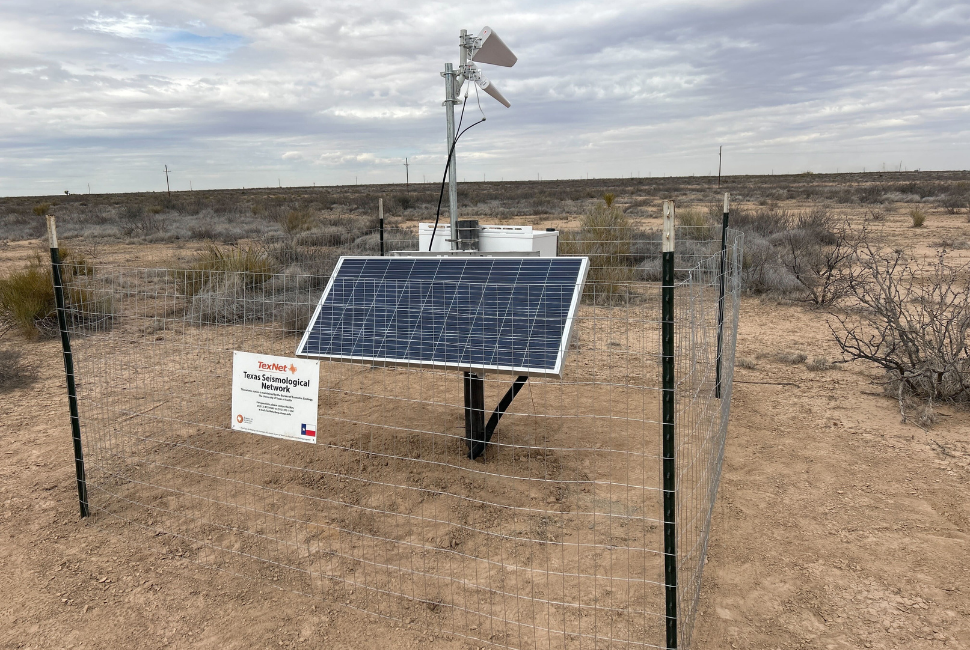
Rathje: Regardless of whether an area has high or low seismicity, any nuclear facility must undergo a seismic hazard assessment. In Texas, my work supports these assessments through research funded by the state via the Texas Seismological Network, or TexNet, and the Bureau of Economic Geology.
Much of this research focuses on understanding ground shaking in West Texas, where earthquakes are often associated with oil and gas activities such as wastewater injection. That data is essential when planning any future critical infrastructure, including nuclear facilities.
Building Public Trust, Diminishing Fear
Q: Nuclear energy is often associated with risk. What misconceptions would you like to address?
Rathje: Nuclear energy stands as one of the most heavily regulated energy sources, with frameworks specifically designed to prioritize public safety. Research in this field focuses fundamentally on minimizing risk, particularly regarding seismic activity, through rigorous and transparent analysis.
It’s important for the public to know that assessments aren’t static. That’s why periodic reassessment is so important — it ensures that facilities are evaluated and reevaluated using the best available science, not outdated assumptions. This also allows the incorporation of improved ground motion models that add new data. Because of this, sometimes entirely new risks are identified.
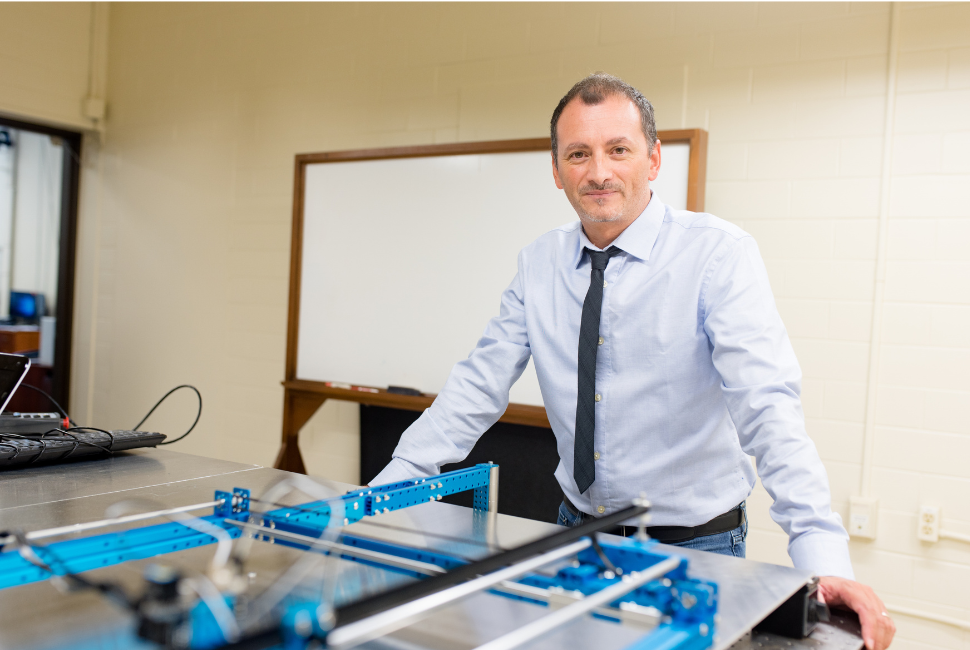
Salvatore Salamone’s expertise in artificial intelligence (AI)-enabled structural integrity assessment, integrating advanced sensing and data-driven diagnostics, positions him as a trusted expert in nuclear safety and long-term infrastructure performance.
Salamone: A common misconception is that nuclear is inherently unsafe. In reality, modern systems are designed with multiple layers of protection. Waste is also more contained and managed than many people realize.
This commitment to safety is not just a design philosophy; it is a mandate reinforced by the oversight and support of the nation’s leading energy authorities. Our work has been supported by major federal agencies, including the U.S. Department of Energy and U.S. Nuclear Regulatory Commission, and the Idaho National Laboratory, the nation’s lead center for nuclear energy research and development.
Q: How is UT guiding the safe expansion of nuclear energy in Texas?
Salamone: In addition to supporting the work Ellen and I discussed, the University provides critical research infrastructure, including one of the few university-operated nuclear reactors in the U.S., housed at the Nuclear Engineering Teaching and Research Lab. This facility supports advanced testing, materials analysis, and validation of nuclear technologies essential for safe deployment. UT is also a key partner on the first university-based molten salt reactor.
Second, researchers are advancing next-generation nuclear technologies, from digital twins for advanced reactors to robotics and sensing systems for hazardous environments, helping bridge the gap between innovation and real-world operation. And finally, UT is addressing a major bottleneck for Texas — workforce development. With thousands of nuclear-related jobs expected in the coming years, the University is training engineers, operators and technical experts needed to support this growth.