Every Nook and Cranny
Alan Bloebaum started exploring the Tower in the 1950s as a young, free-range teenager, when he and his little brother visited its observation deck more than 50 times. Now 84, he still has questions.
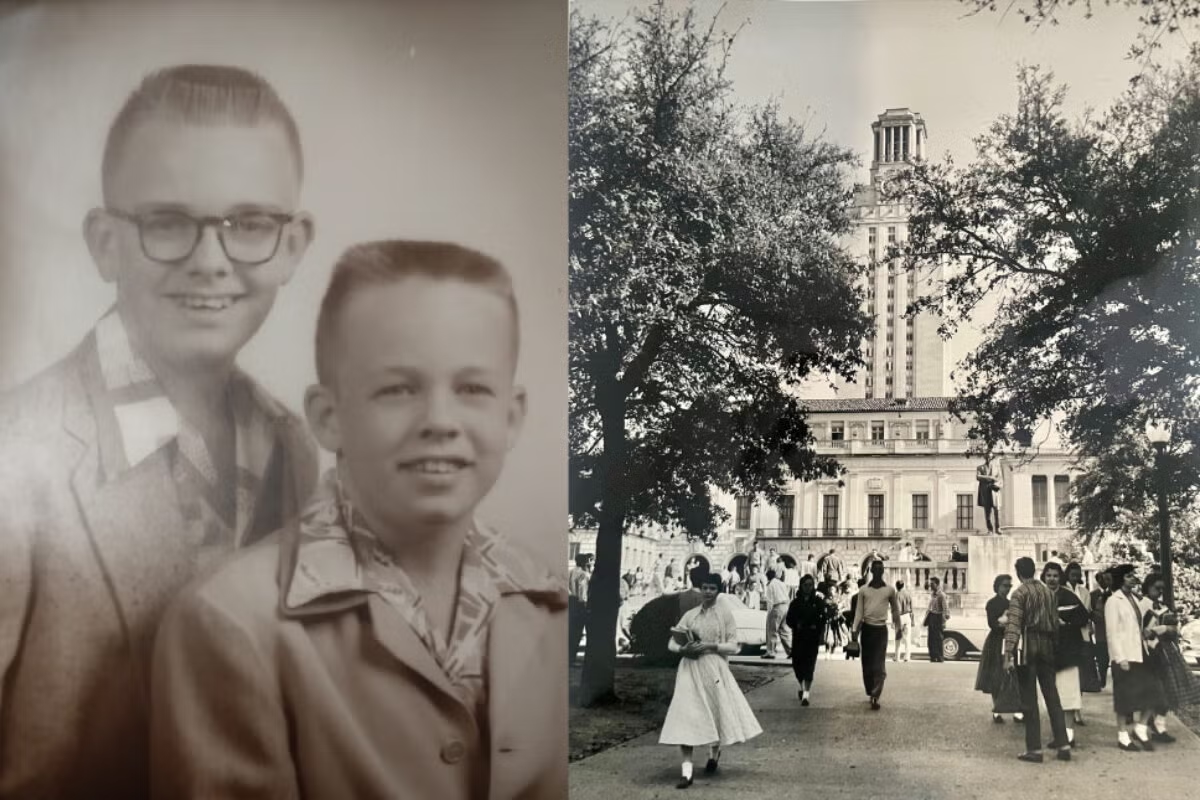
Alan (left) and David Bloebaum and the UT Tower in the 1950s
The Explorers
During the Austin summers of the mid-1950s, Alan Bloebaum (BLAY-bom) was a young teenager with a little brother. He remembers that his mother “had a firm belief that she didn’t want us to be at loose ends.” She enrolled Alan and David, four years younger, in swimming lessons at West Enfield Pool, but that could fill only so many hours.
So, Mrs. Bloebaum, the pastor’s secretary at University Baptist Church, often took them with her to work. They explored every nook and cranny of University Baptist, then their eyes turned to the east, and, there across the Drag, waiting to be explored, sat the entire UT campus, and, rising over it all, the Main Building and Tower.
“We kids — that’s just what we did, roamed around and looked at places and found things. We went over to campus and went through every building, up and down the halls, and looked in rooms and in the Tower,” explains Bloebaum, now 84, from his San Angelo home. “Things were a lot more accessible then,” he says. “Going to the top of tall buildings has always interested me — and scared me a bit when I could do it in person. As a kid — and still now as an old man — I am fascinated by the Tower.”
As a kid — and still now as an old man — I am fascinated by the Tower.
Alan Bloebaum
The first time Bloebaum visited the Tower was probably at age 8, in 1950. Brought by his father, he was barely tall enough to see over the observation deck’s wall.
When he was 14 and David was 10, they started taking their unsupervised tours of the Main Building. They would make their way up to the third floor, where they would pass through what then was the Spanish Reading Room out into a nondescript hallway. There, they discovered a door to a stairwell that ascended nearly the entire remainder of the Tower. “We said, ‘Gosh, who knew these were here! We never saw anybody in that stairwell. It wasn’t closed or anything, but there was never anybody in it. We wondered, well, is it just something that everybody knows about?” Equally intriguing were the windows all the way up the stairs, folded open for ventilation during those pre-air-conditioned days.
Sometimes they would climb the stairs to the top; other times they would ride the elevator. Once they reached the 27th floor, he says, “I can picture it in my mind exactly: That’s where the lady sat, and that’s where you registered that you wanted to go up to the observation deck. We always signed our names, and we went up.”
Since the 27th floor is a double-height floor, the observation deck level is known as the 29th floor, and during the 1950s it could only be reached by climbing two more flights of stairs in a separate stairwell.
From the observation deck, Alan and David could look out to the northwest and see clear to their house on Glenview Street in Brykerwoods (near MoPac and 35th Street). “We loved going up there because it was fun to say, ‘There’s so and so. There’s such and such a place. There’s the Capitol. There’s this street. It’s the kind of thing that kids do, and we were just big enough, we could see over the wall.” He estimates the two visited the observation deck more than 50 times.
Bloebaum remembers that as they traced the square walkway, he noted the scupper holes or rain spouts at the wall’s bottom edge, and said to David, “It sure would be easy to get down here [below the wall] and shoot through those.”
I asked him if that was a normal thought for a boy at that time. “We played Cowboys and Indians a lot in those days. In fact, I’m sitting here looking at my vest and chaps, and gun and cowboy hat and handcuffs that I had when I was a little kid. I don’t think it occurred to us that that would ever happen. But you know, Cowboys and Indians — shooting behind rocks and trees, you are down below the level of that wall, and there’s no way anybody from down below could get to you. You see these movies of old forts that have these slots in the walls, and you stick a rifle through there. We thought that would be a perfect place to do that sort of thing.”
Study Time
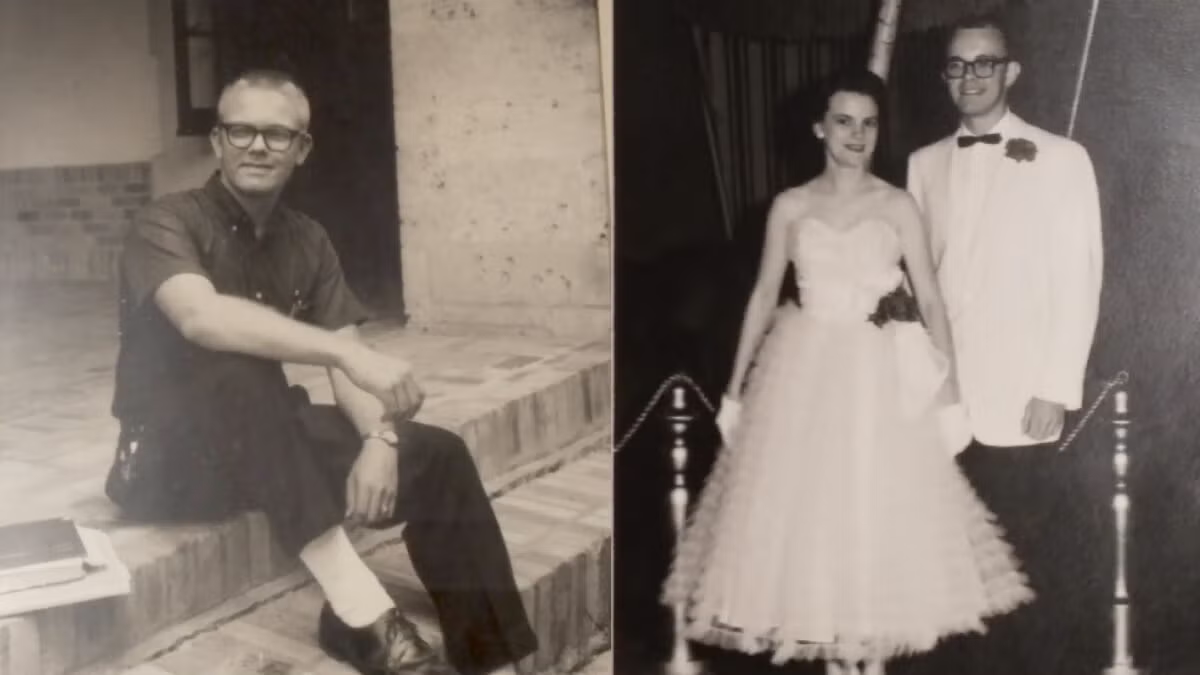
Bloebaum had known Laura Lee Cockrell since they were Lamar Junior High students, and they started dating in 12th grade. They both enrolled at UT in 1960 and went together their entire time as Longhorn students.
Alan enrolled at UT with 60 hours under his belt from advanced-placement testing classes at McCallum High. He was able to earn a B.A. degree in biology in three years.
“The Main Building was a central location for us,” he remembers. “Obviously, we went to the Registrar’s Office a lot,” after initially registering in Gregory Gym. Directly north across the hall from that office, at the east end of the ground floor, was the Reserve Reading Room. “We thought, wow, this is a great place. It was quiet. There weren’t any students in there.” That became their spot to meet up between classes and study.
“It was a big room, a lot longer than wide. On the right were windows.” Down a short flight of stairs were long tables where they could spread out their things.
“I remember the built-in water fountains there where we always used to stop and get a drink.” They are still there and still work.
When lunchtime rolled around, “Maybe we’d go get a bite at Burger Chef, where for a dollar, we could get two hamburgers, or fries, and a couple of drinks, and we could find enough change in the car and behind the seats and on the floor. A lot of Sundays after church, we would meet over there and study for a while, and maybe take a break and get something to drink. About supper time, we’d head over to G/M Steakhouse on the Drag.”
He could look out the windows of the Biology Laboratories building, where he took “Animal Form and Function,” as all premed students did, and he could see the Main Building.
Just north of the Biological Labs building, in today’s Gordon-White Building, Bloebaum and other outstanding students were gathered for an Honors Day reception, where he got to meet Vice President Lyndon Johnson. Bloebaum played tuba in the Longhorn Band every year, including two trips to the Cotton Bowl, “quite an experience.”
He and Laura married in 1964 and have been married for 62 years.
It was G/M on the sign in front of the place. A photo is online.
A Close Call
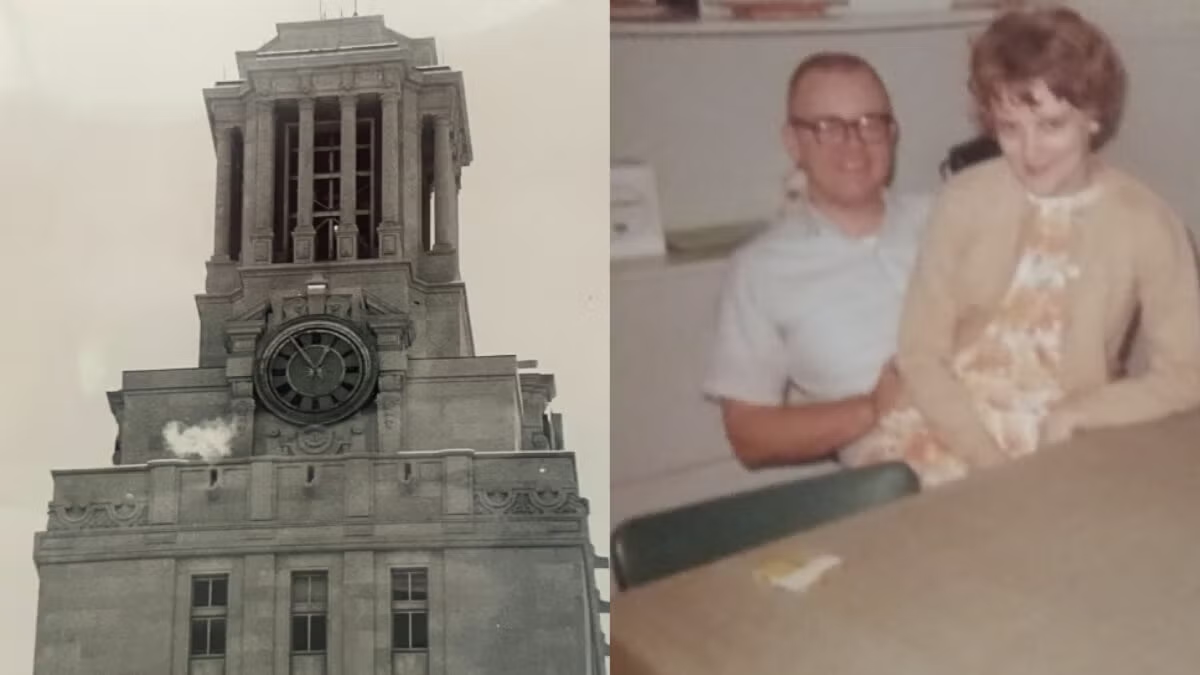
After graduation in 1963, Bloebaum entered medical school in Galveston. He was an inveterate football fan, but not every game was on TV then. Radio coverage was not always the best, so the only way he could hear the games was to drive out near the seawall, where he could just pick up a signal from a Houston station on his car radio.
The next few years were a tangle of disillusionment, false starts and further exploration. “I knew right off the bat, this is not what I want to be doing,” he remembers of medical school. He dropped out to do research, then enrolled again, then dropped out again and commuted to the University of Houston. During one of these episodes, he and Laura had come home to Austin to visit their families. He needed a transcript from the Registrar’s Office in the Main Building. It was Aug. 1, 1966.
But that morning, he decided not to bother with going to campus that day. “We just drove on home.” They didn’t find out until they arrived back in Galveston that a sniper had done exactly as he had imagined one could do: crouch behind the observation deck wall and shoot through the scupper holes. His father had been at a gas station at the northwest corner of 19th and Guadalupe streets and was shot at but not hit. “It just wasn’t my time or his time,” he says. Fourteen were killed and 30 injured around the Tower that infamous day.
After dissatisfaction with medical school and with research, Bloebaum figured out what he was good at: explaining things to people. In 1971, after earning his Ph.D. at New Mexico State University, he joined the faculty of Angelo State University in San Angelo and during the next 37 years taught 17 different biology courses to thousands of students: labs to freshman biology majors; elementary microbiology to nurses; histology, and parasitology to premed and pre-dental students; advanced and graduate pathophysiology; and pharmacotherapeutics. He also advised premed and pre-dent students, helping them find their career paths. He retired in 2008.
The Return
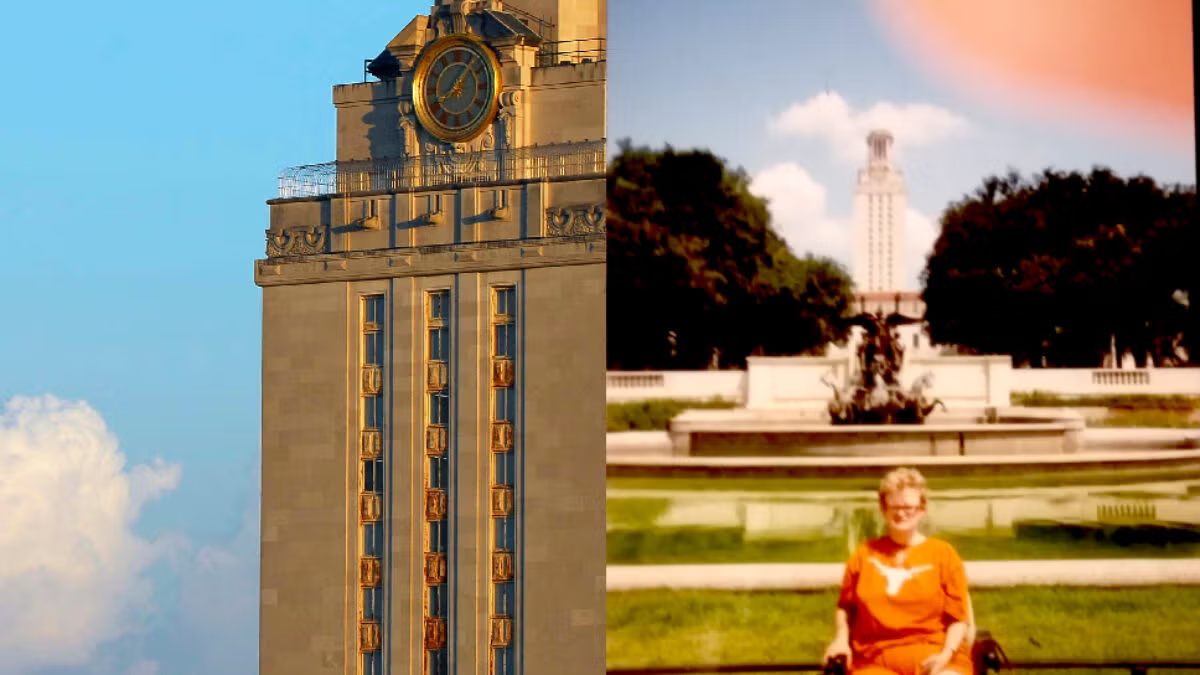
For a long period, the Tower was closed to the public. But on Sept. 15, 1999, after the design and installation of stylish steel bars for safety (some called it a “crown,” others a “cage”), the Tower reopened with great celebration including an orchestral concert on the Main Mall and fireworks.
When he heard the news, Bloebaum immediately wanted to go back and visit the observation deck. “I heard that the Tower was going to be reopened and remembered thinking, Wow, the Tower’s reopening! They had Tower tours, and you could sign up for them through the Texas Union.” But more importantly, it had been made handicap accessible. The younger of his two daughters, Heidi, then 25, has cerebral palsy affecting her legs and required a power chair. (Now 50, she can get around on just a walker or with canes.)
To make it handicapped accessible, UT had installed a false floor to raise the level of the walkway so a chair-bound visitor could get outside.
The excitement of that visit is still palpable more than a quarter century on. “Gosh, having not been there since the mid-’50s — I mean, wow, this is like a dream come true!” he recalls feeling.
Bloebaum says he is fascinated with buildings and their schematics, blueprints and maps. And that’s where things got more mysterious. “Anything that’s closed off or redone, I wonder, well, why is it like this, and what’s behind it? And why is it done that way? On the 29th floor, there was a wooden panel there. Where did it lead?”
Now, with that return trip 26 years past, even those memories have become blurry. He remembers a door with a frosted window he couldn’t see through. He remembers one door in particular on the 29th floor and wondering what it led to. “I would give just about anything to go back there,” Bloebaum says, but travel is now difficult for him.
Behind the Mystery Door
I want to answer Bloebaum’s questions, so I resolve to visit the 29th floor and make a video so he can see behind the doors that had fired such curiosity in him. I myself, in 32 years of reporting on The University of Texas, have never been behind those doors. Kim Barker, the University’s historic preservationist, agrees to be my guide.
We ride the Tower elevator to the 27th floor, then climb stairs to the 29th floor just as Alan and David had done so many times. Barker unlocks a north-facing door in the middle of the L-shaped room, revealing a long flight of metal stairs ascending north through a cavernous, attic-like space. It is a mechanical room with brick walls, enormous air handlers, pipes, cables. Slivers of daylight from around the clocks and fluorescent lights guide our steps.
At the top of the stairs, we reach a landing and follow a catwalk to the left. Three stairs up and three stairs down lead us safely over a long shaft that connects the north clock to a central drive that keeps all the clocks in sync. Then we turn to the south and climb another flight passing large air handlers, and then up a final flight back to the north.
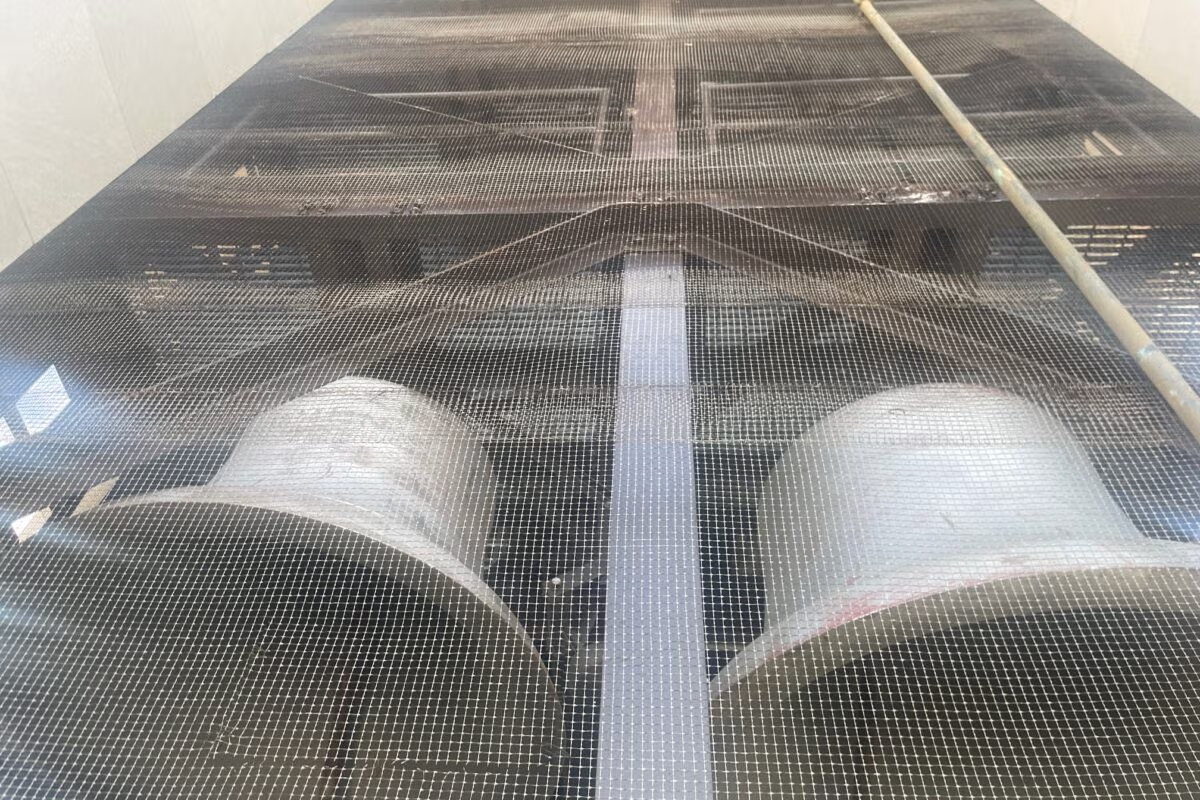
Here, we are greeted by three doors: left, right and center. The center doorway is both short and raised, requiring both ducking and a big step over a thick stone threshold. Now we are outside on a tiny balcony. Just overhead and behind us are gigantic bells.
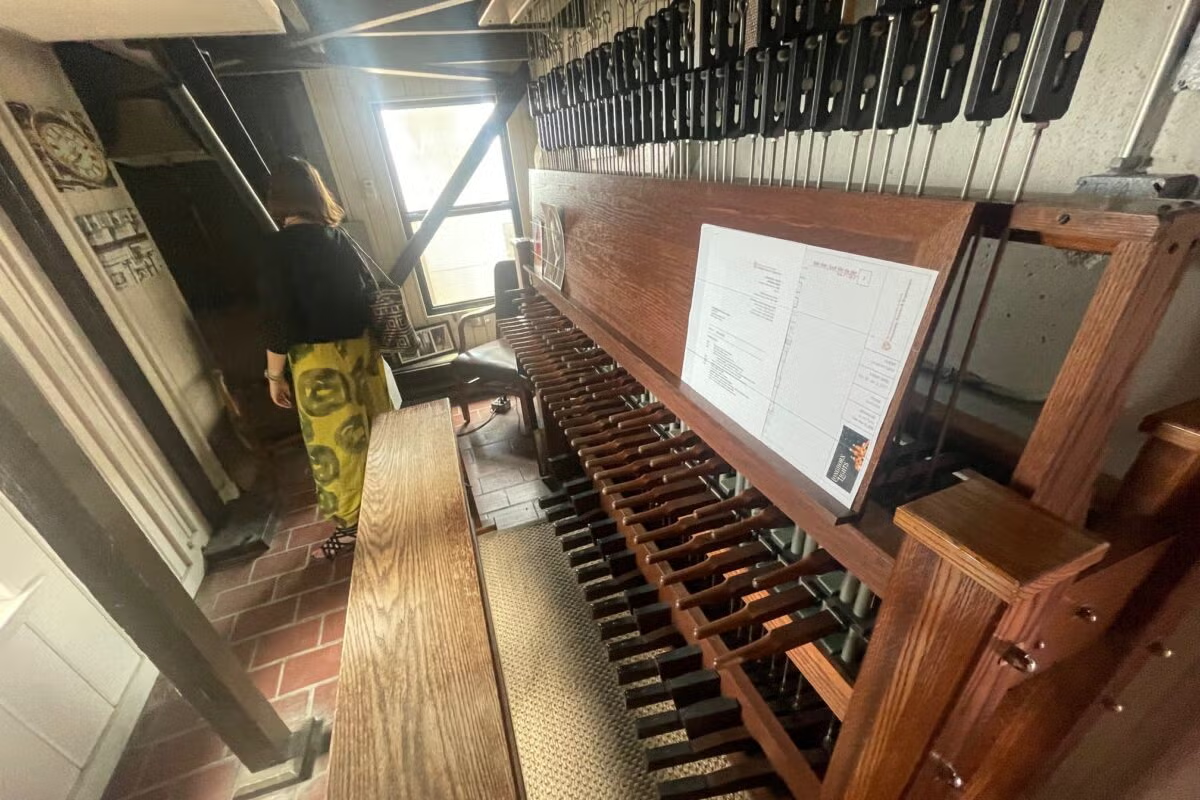
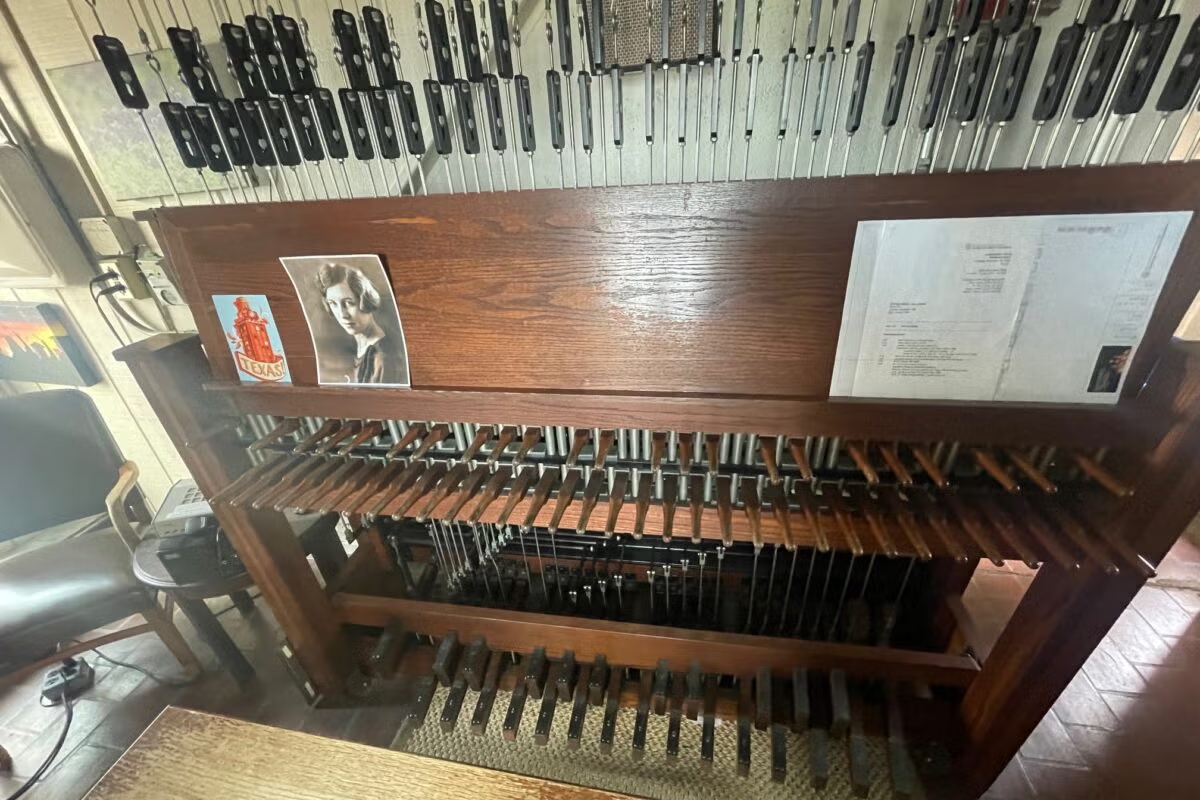
Back inside, Barker navigates her enormous key ring to unlock the east-facing door. This is the carillon room. After being in the cavernous mechanical room, it is oddly homey here, with paneled walls, two guest chairs, a small round coffee table, a lamp, and framed photos. A small window air conditioning unit is not necessary today.
The carillon player itself dominates the trailer-size room, with a high bench that could seat four and rows of levers for feet and hands to play the bells, each lever attached to ropes above. On the long front panel where sheet music would rest sits a portrait of a young Hedwig Thusnelda Kniker, the carillon’s namesake, in her 1920s bob, whose estate greatly expanded the number of bells during the 1980s.
On the east wall are the scribbled names of all the official carillonneurs since the position was established in 1950. Out a low window that opens to a balcony on the east — what’s this? A cracked egg twice the size of a chicken egg. Now something large and black down and to our left moves. A black vulture sitting on the balcony floor and accustomed to her solitude has detected our visit. And now we see that one of the framed portraits on the coffee table is of her.
Locking the carillon room door behind us, we proceed straight across to the west, and through that door, at the building’s northwest corner, we reach a vertical steel ladder of the kind you might see on a naval ship. At the top of that ladder, a square hatch opens to the outdoors, the bell level. Partially disabled from a stroke, I already have pushed my luck by coming this far; this view will not be mine to enjoy. But as it is precisely 3:45, I can see through the hatch above one of the electrically triggered clappers go off, and a startlingly loud Westminster chime — three-fourths of it (as it is three-quarters past the hour) — rings out just above me as we share a laugh.
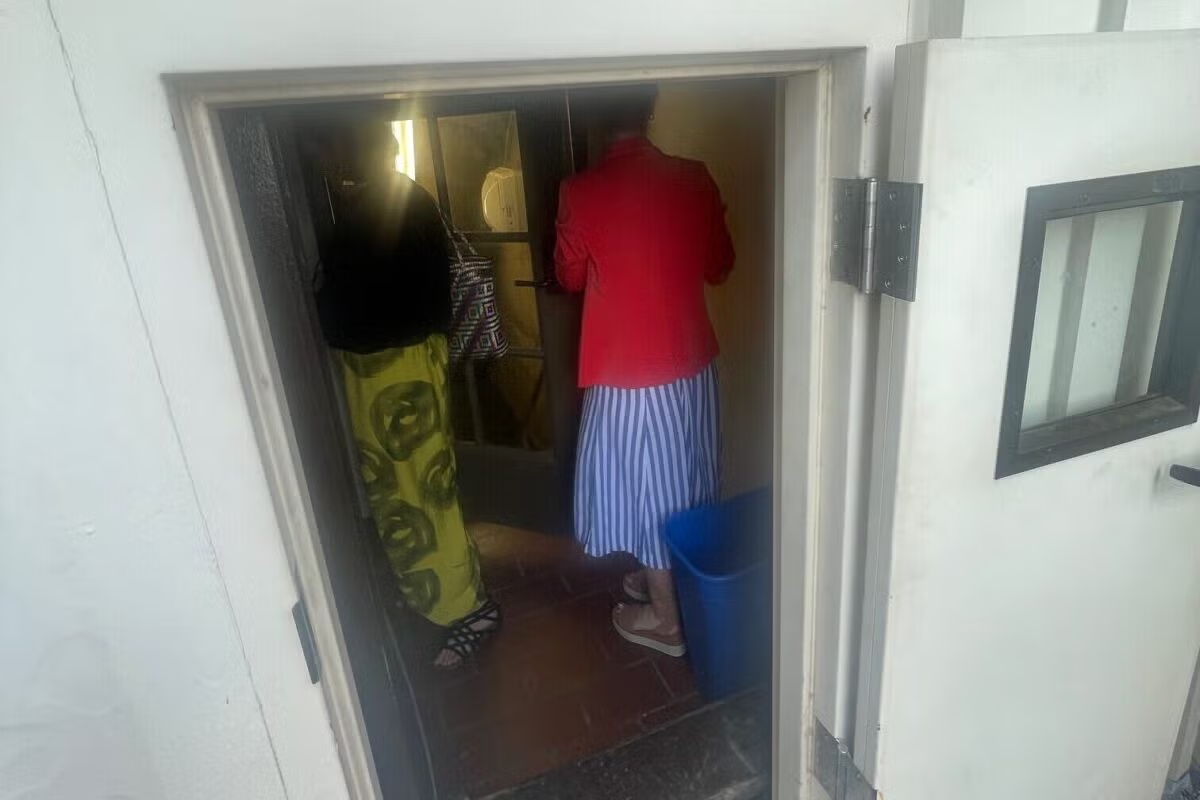
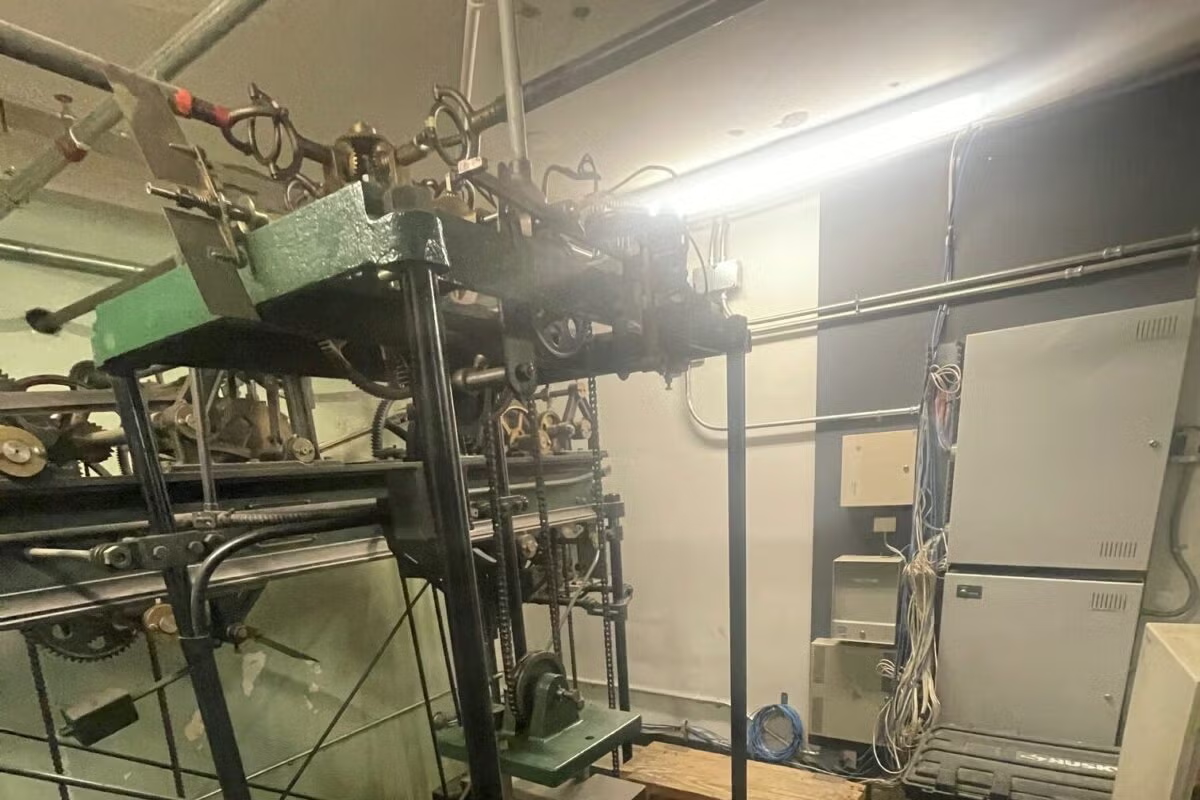
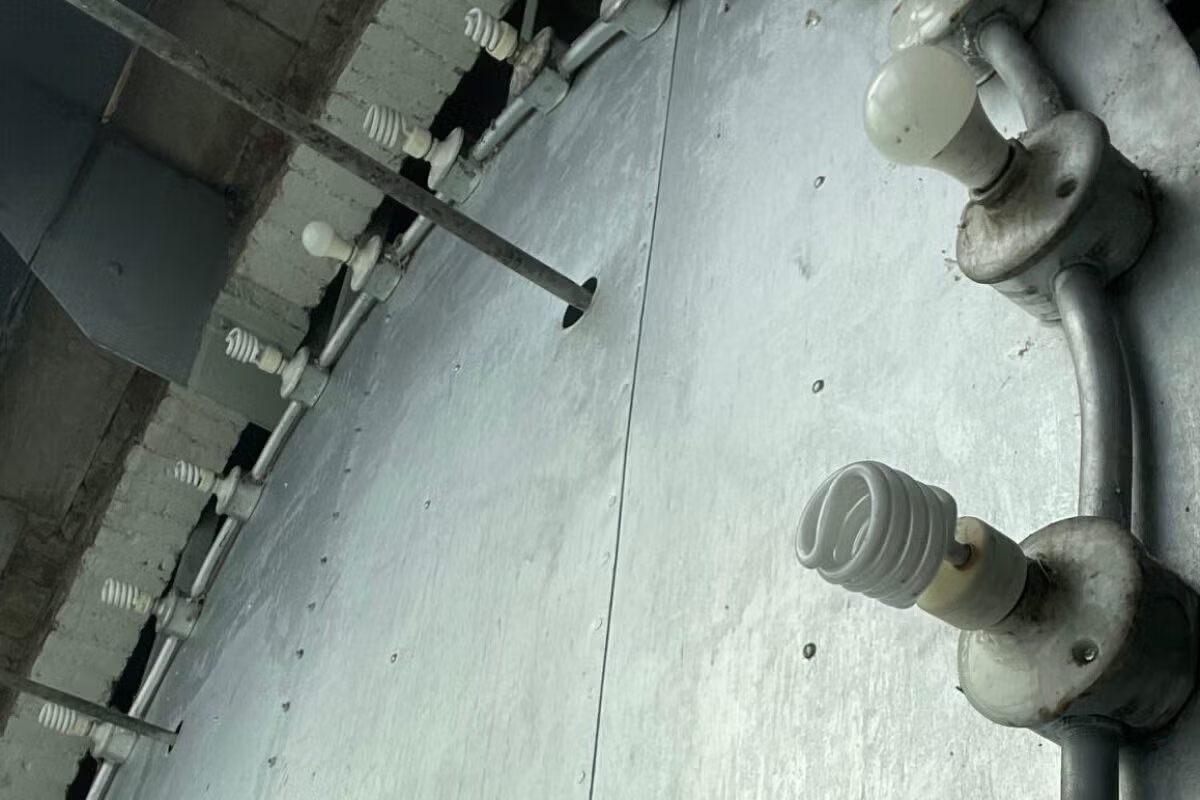
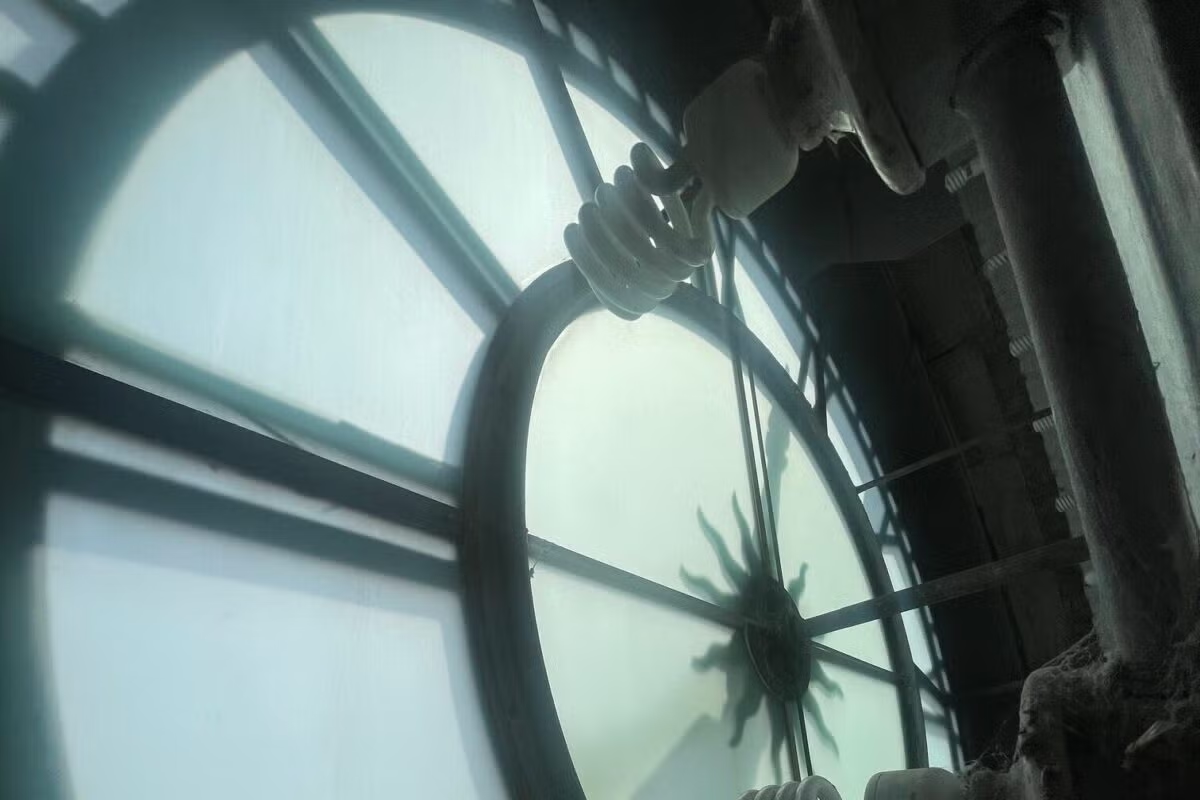
Retracing our steps back down a level, we enter the clock room, which holds the guts of all four clocks, the timekeeper, with its original sign reading International Business Machines. Every 15 seconds, a metal flap spins, chains resembling bicycle chains pull cogs on the machine barely newer than steam age, and long rods move the hands of all four clocks.
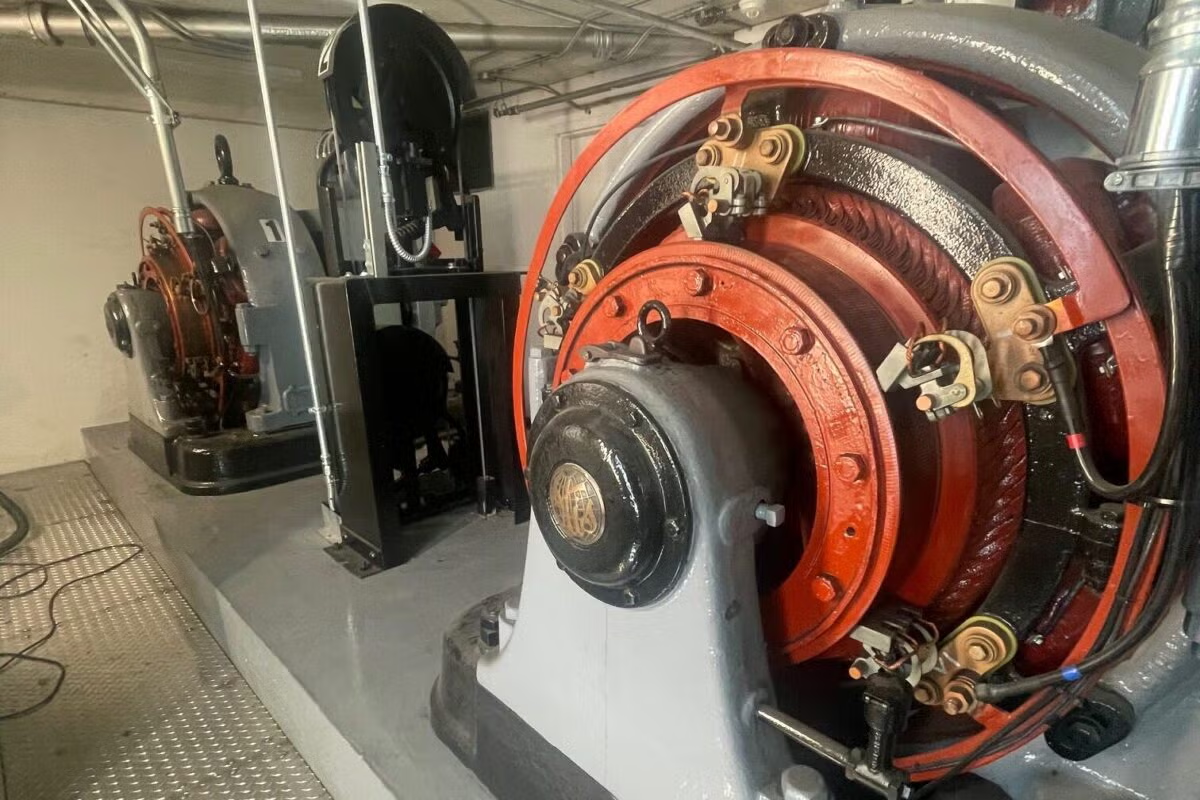
Reaching a final room on the south, we get not only our best view of the clocks’ scale, innerworkings, and the ring of ordinary light bulbs that illuminate them from behind, but also behold another technical marvel. Here, two side-by side machines the size of refrigerators raise and lower the Tower elevators. They look at once new — their paint fresh — and vintage, with a style one could imagine being of the 1930s. “Otis” reads a cursive script on both. We watch for a moment, then one begins to spin; someone has called an elevator. Then the other begins to spin, and the first stops, then reverses direction.
There is one last thing Bloebaum was curious about: the offices on the 27th floor, which he never saw during the 1950s because it was not public. It was a working academic space and one of the most vaunted, literally and figuratively. When we return to the 29th floor, we call the ADA elevator that runs only between the 29th and 27th floors. (The panel inside reads simply “1” and “2.”) He and Heidi rode this elevator in 2000, but memories of this space have left him. Our trip from 29 to 27 lasts as long as the ride from 1 to 27.
The doors open onto what appears to be the private library of an English mansion. In fact, Barker tells me, it’s still listed as the Classics Library. The 27th floor served as home to the Classics Department, and this room was the office of its chairman, William Battle. That is why unsupervised little boys were not allowed to explore it, or to survey its potential for Cowboys and Indians.
There must have been no other feasible options in 1999 for where to place the elevator that finally made the observation deck accessible to those with disabilities, but there is no question that the elevator shaft through the middle of the small, elegant library disfigures the space. Nevertheless, we can show him through video the elegant two-story office with its interior balcony and, according to Barker, original fixtures.
Now Bloebaum’s tour is complete. A lifetime of touchpoints with the Tower has brought us full circle. But I am sure he still has questions. In a building like this, the exploration is never done.
Our Tower. Our Time.
We are embarking on a venture to restore, revitalize and reimagine the most iconic, most beloved landmark on our campus: the UT Tower.
Visit tower.utexas.edu to learn more and to support this once-in-a-lifetime effort.