Catching Silent Threats to the Power Grid
Innovative power line sensor spots previously unseen risks to the power grid and monitors new demands from data centers.
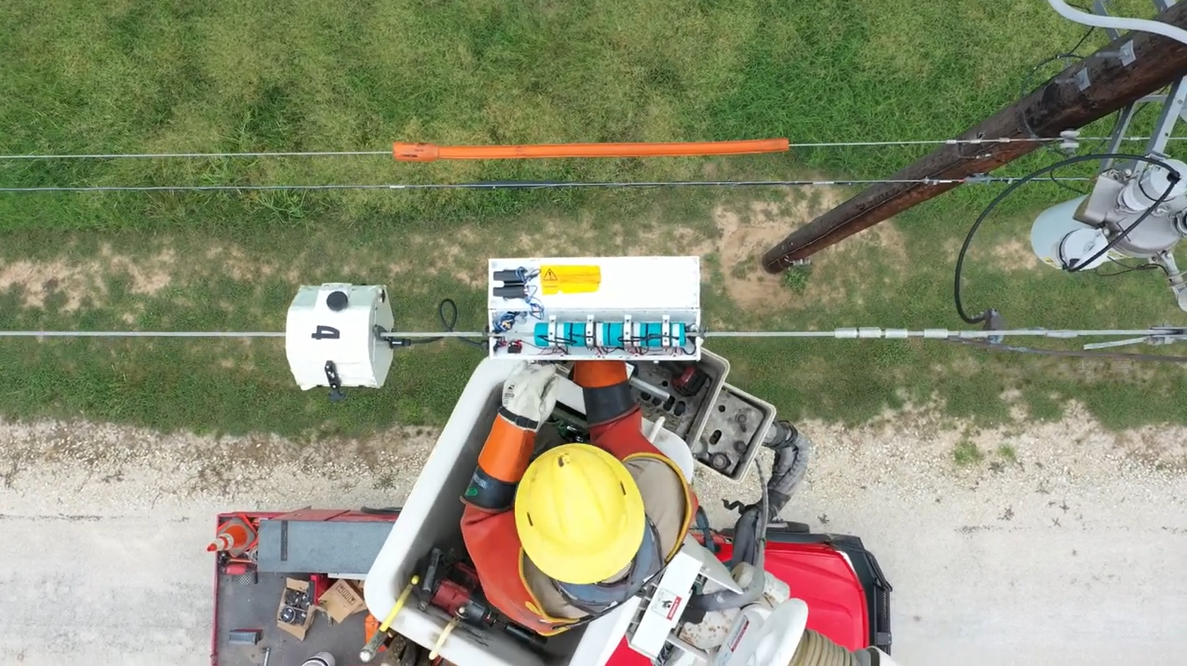
UT Austin researchers attached a sensor they developed to a power line, allowing them to measure activity along the line for miles.
Researchers at The University of Texas at Austin have developed a sensor that clips onto live power lines and catches hidden threats to the grid, such as tree limbs brushing wires, before they spark outages or wildfires.
The sensor alerts utility employees to a potential threat, enabling an immediate response. Without an intelligent power line sensor, the utility would be alerted to a tree-brushing event only if workers happened to discover it by luck or if someone reported visible smoke.
For more than five years, researchers at UT’s Center for Electromechanics (CEM) have been working on this project, combining edge computing, telecommunications, power harvesting and machine learning through field and laboratory tests to enhance electricity reliability and improve grid resilience.
“Power lines face many undetected threats, from tree limbs momentarily touching the power lines by the action of wind gusts, to aging grid components nearing permanent failure,” said Pablo Paz, CEM research associate and technical lead on the project. “It was rewarding to see the instrumentation perform exactly as designed and to witness the field results align with our laboratory tests.”
How it works
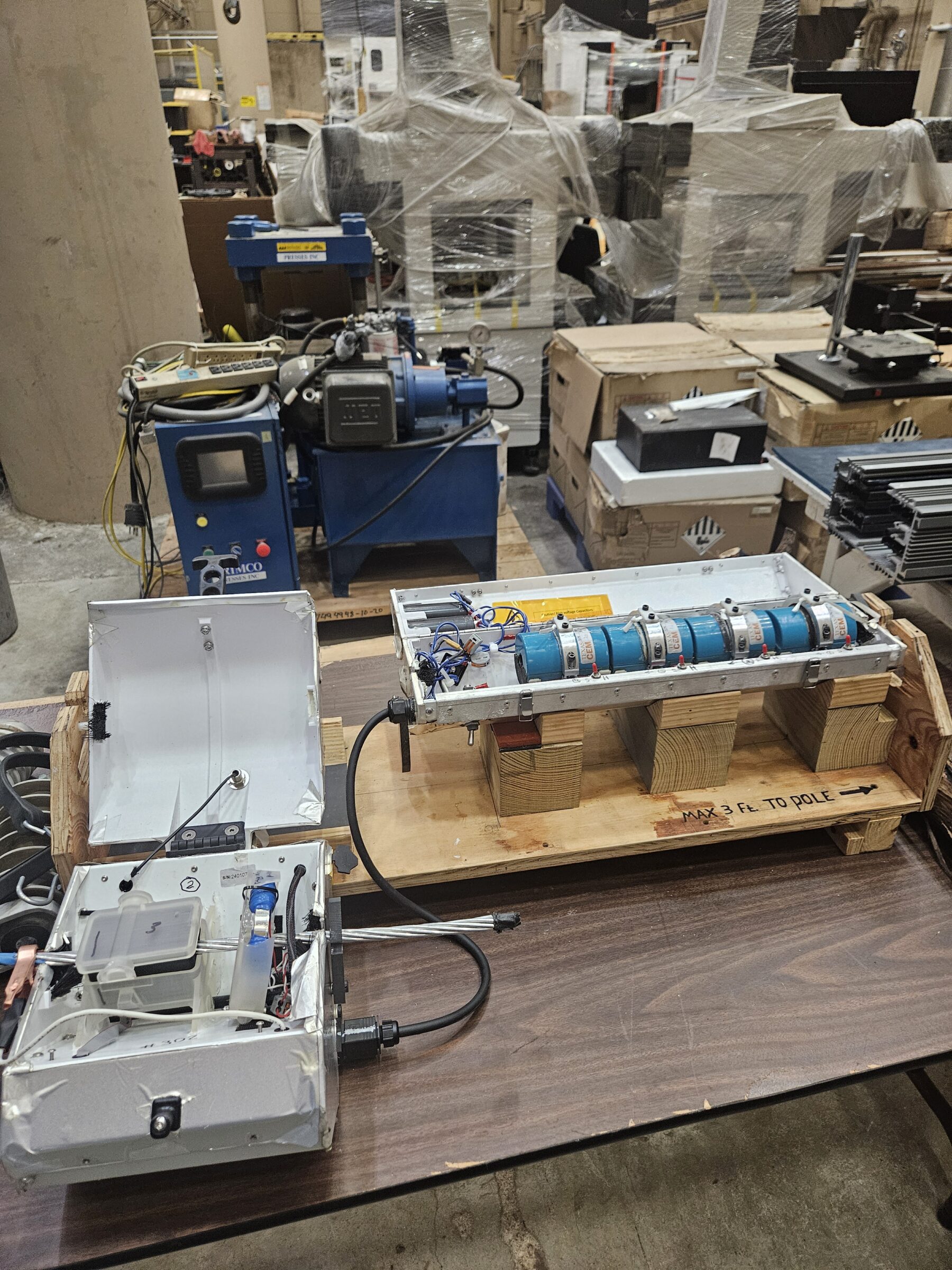
The sensor consists of two boxes that a lineman can easily wrap onto a live power line. They can measure activity along a line for miles.
The sensors power themselves by inductively drawing a tiny fraction of the current flowing through the power line. The intelligent sensor represents a significant advantage over conventional equipment, which needs auxiliary transformers and pole modifications, increasing installation complexity and cost.
Traditionally, after storms, utility inspectors drive through an assigned territory looking for problems, a time-consuming and unsafe activity that is ripe for improvement. The sensor doesn’t just spot faults such as a branch hitting a line; it can pinpoint where incidents occur, helping utilities speed recovery.
“In the event of a windstorm, utility employees might have to drive dozens or even hundreds of miles to inspect power lines, and this is something they have to do anyway. If we can give them specific locations to inspect, it will greatly speed up the process,” said Shannon Strank, CEM’s deputy director.
Finding Faults
During one month of field testing near Seguin last fall, the sensor recorded 34 events, compared with only three registered by legacy equipment. The grid can tell us much about its health, the researchers say, if we listen better.
When a tree contacts a power line, it is known as a high-impedance fault. In the past, the cost of outages was low enough that these faults didn’t need to be addressed until the impact became detectable by conventional sensors.
Today, the stakes are higher. Infrastructure issues, higher power demands from new technology, and increasingly volatile weather motivated the researchers to improve measurement and grid solutions.
The next frontier: data centers
As they continue to improve the sensor for detecting these faults, researchers are eyeing a new challenge to the power grid: large-scale electricity loads such as those that power data centers.
Data centers change the grid. The 20th-century grid was meant to power motors, keep the lights on and produce heat. Data centers present a new challenge to our legacy grid, with a heavy reliance on high-frequency power electronics, such as graphics processing units (GPUs), which creates a much different electrical environment that could stress the grid and cause new faults. In addition to detecting vegetation faults, the sensor can monitor large loads as they come online to help ensure today’s grid remains reliable and affordable.
“We’re trying to see indications that an event is coming via signals exposing early degradation and fatigue in advance of failure and outage,” Strank said. “With early mitigation, these components can be serviced before a catastrophic event occurs.”
In the lab
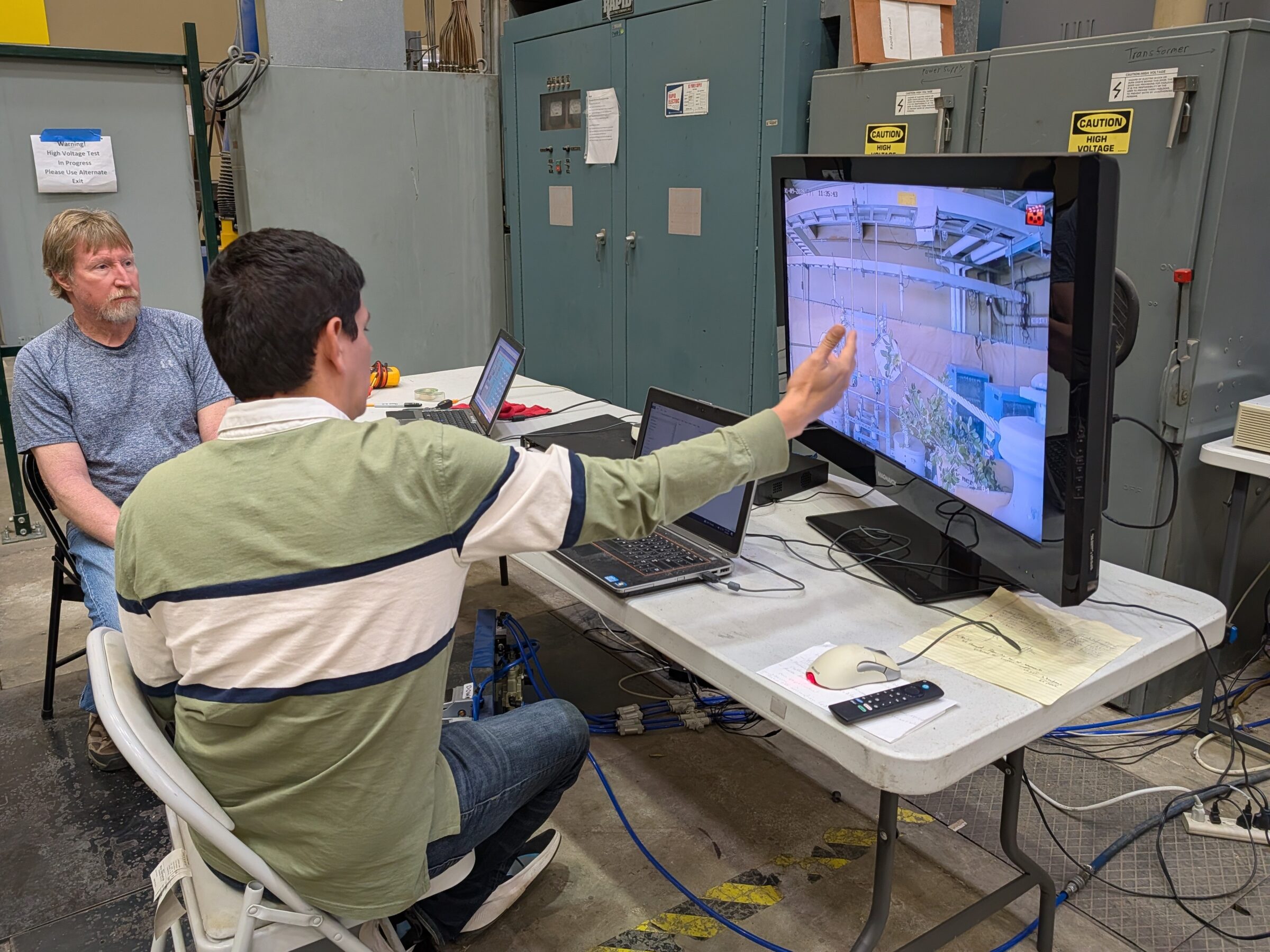
To develop and evaluate the technology, CEM researchers built a mini power station. The laboratory features multiple active power lines, outfitted with both UT sensors and conventional monitoring equipment and cameras, allowing researchers to monitor from a safe distance.
A tree branch can be raised and lowered to control its interaction with an energized power line. After it touches the line, smoke and sparks are visible.
A pair of side-by-side dashboards — one transmitting activity picked up by conventional sensors, the other showing the UT sensors — measure what we’re seeing on camera. The waveforms remain healthy for the conventional equipment, but the UT sensor shows a clear signal when the branch touches the power line.
Field events are rare but devastating. For example, the 2024 Smokehouse Creek fire in the Texas Panhandle killed two people, destroyed more than 100 houses, and burned more than 1 million acres. In the laboratory, tens to hundreds of events can be evaluated per day without risk.
“It helped to see the things I was learning in class being applied in the laboratory, which has given me invaluable hands-on experience,” said Joseph Spiro, a recent UT electrical and computer engineering graduate who worked on the project. “It is also exciting to learn that the lab results are predicting what is happening on the grid.”
A team effort
Working closely with national labs and utility companies was a key part of the project’s ongoing success. Verivolt LLC, NI, Capstan Technologies Inc., Eaton, Wood County Electric Cooperative, Guadalupe Valley Electric Cooperative, Argonne National Laboratory, Idaho National Laboratory, and Sandia National Laboratories have all been involved in this technology’s more than five-year journey.