As ‘2nd Quantum Revolution’ Arrives, University of Texas Researchers Stand Ready
From solving specialized problems in quantum computing and developing sensors to training the next generation of quantum researchers, UT experts are meeting the moment.
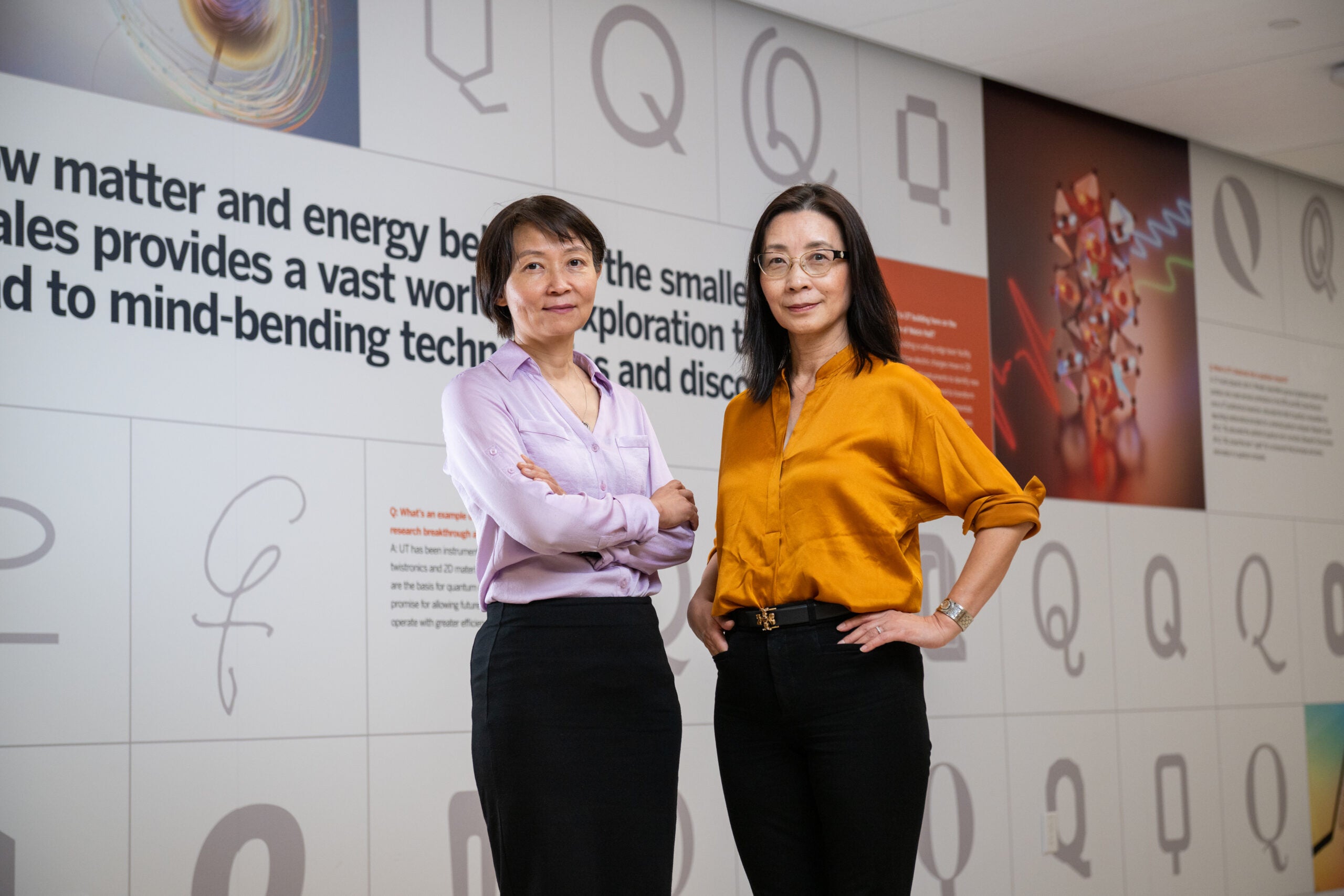
Photo by Eileen Chong.
In 1925, German physicist Werner Heisenberg published a paper that, according to the particle physics laboratory CERN, is considered the “birth certificate” of modern quantum theory. Seven years later, he received the Nobel Prize in physics for his groundbreaking work in quantum mechanics, which describes the often-surprising behavior of matter at the smallest scales, where objects such as electrons can display properties associated with both particles and waves.
During the century since, the strange behavior of electrons, atoms and nuclei has helped enable major technological breakthroughs in medicine, microelectronics and energy, enabling technologies such as MRIs, transistors and solar cells. The whole era can be thought of as the first quantum revolution — and now, scientists and engineers at The University of Texas at Austin say, rapid progress toward a second quantum revolution is underway. This new wave of innovation seeks to control quantum systems with unprecedented precision. That ability could transform communications, computing, imaging, navigation, sensing and information and energy systems, advancing much of what undergirds our modern world.
The Texas Quantum Institute, or TQI, launched at UT in 2024 under the leadership of co-directors Elaine Li and Xiuling Li (who are not related) to bring together quantum research capabilities from across campus. Physicists, chemists, computer scientists, engineers and other researchers in TQI began to work together to build on the institution’s “strong track record in designing algorithms for quantum computers, developing materials with unprecedented properties, inventing advanced measurement tools, and building quantum systems,” as Elaine Li put it at the time that the institute was established.
Momentum has been building in Texas since then. In 2025 alone, the Texas Legislature approved a Texas Quantum Initiative, the governor’s office announced a new quantum-enhanced semiconductor metrology facility on the UT campus, and researchers gathered for the first of two Texas Quantum Summits.
Behind many of the envisioned technological advances linked to emerging excitement around a second quantum revolution is “quantum entanglement,” a strange connection between microscopic electrons or particles of light called photons. Entangled particles become linked in ways that have no counterpart in everyday physics. Capitalizing on an emerging understanding about quantum entanglement, scientists are increasingly able to control individual quantum systems and the ways they interact, which could lead to everything from solving important problems with quantum computers to making far more precise measurements with quantum sensors.
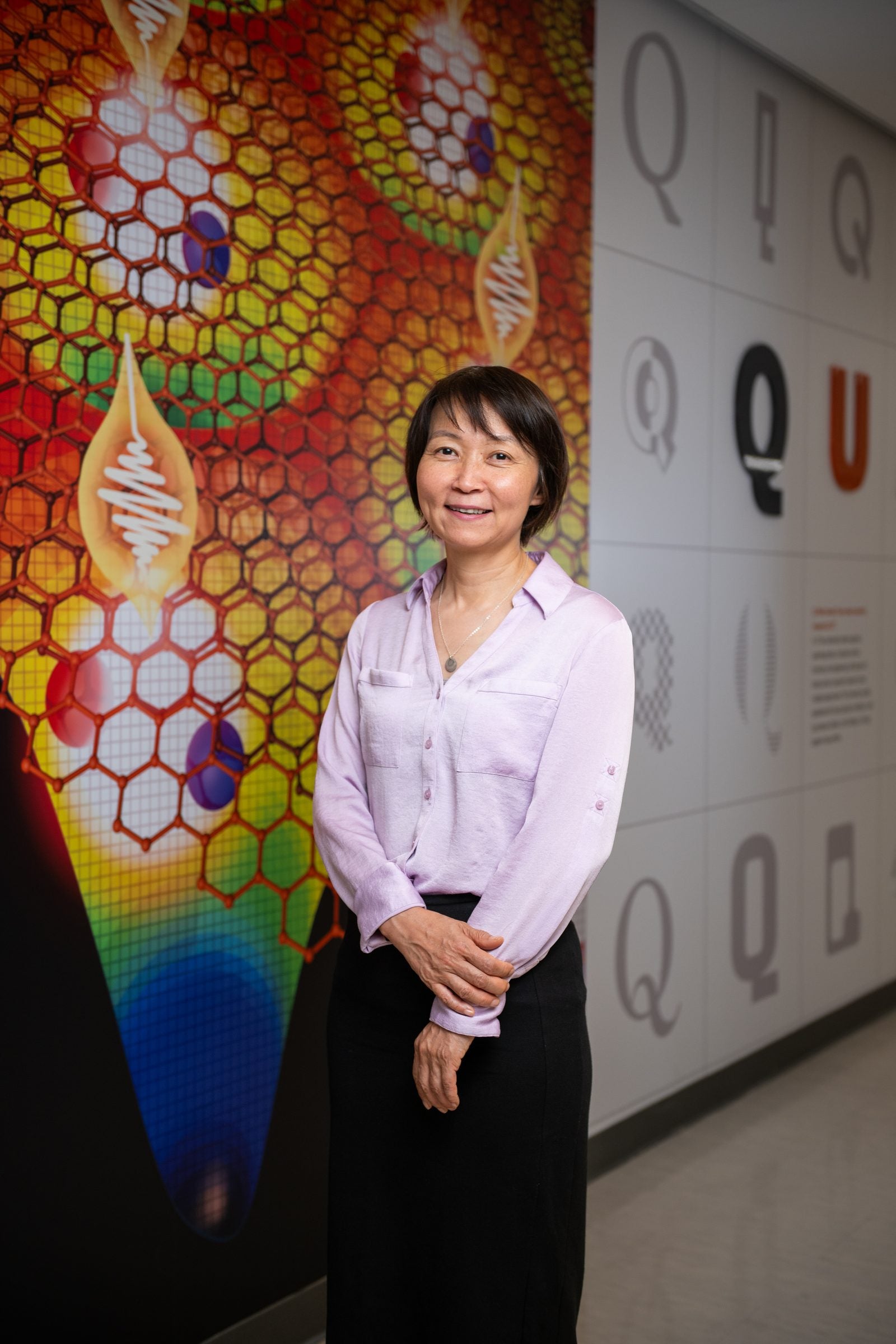
“It’s like building a new generation of MRI machines, but 1,000 times or a million times more sensitive,” observed Elaine Li, who studies the quantum dynamics of electrons.
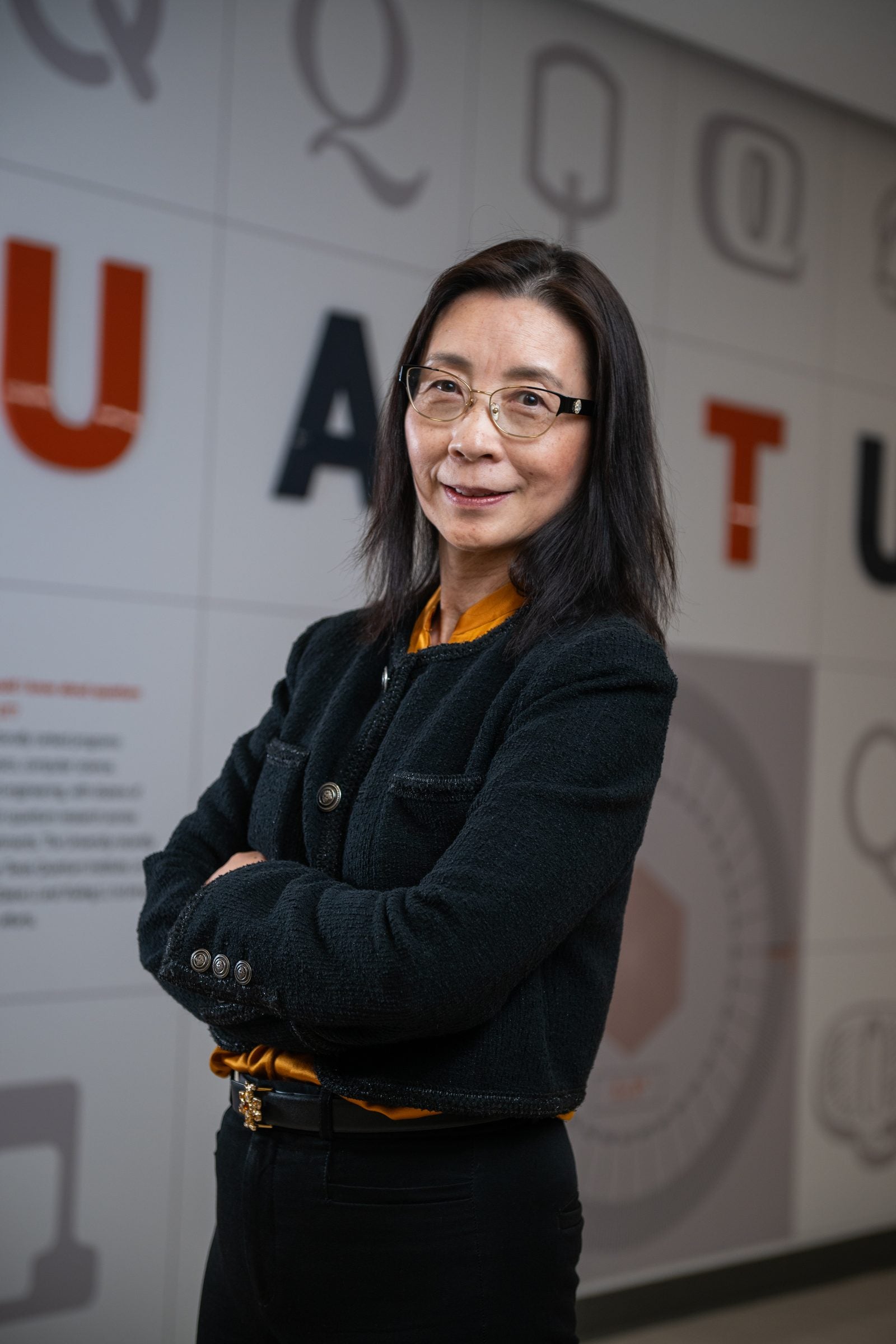
Xiuling Li’s research focuses on semiconductor and quantum materials and devices. A professor of electrical and computer engineering at the Cockrell School of Engineering, she holds more than 25 patents and is pursuing a patent related to more scalable single-photon quantum emitters. She creates these emitters using metal-organic chemical vapor deposition, or MOCVD, a manufacturing process also used to produce LEDs. She emphasizes there’s a strong connection between semiconductors and quantum technologies, noting that universities such as UT have an important role to play in advancing both.
TQI is also helping prepare the next generation of scientists and engineers for the emerging quantum economy. One example is the Quantum Cross-platform Advanced Training program, or Q-CAT. Funded by the National Science Foundation, the graduate training program gives students opportunities to learn across disciplines and gain experience at national laboratories and companies, including the Air Force Research Laboratory, HRL Laboratories, IBM, NVIDIA and Sandia National Laboratories. Hundreds of thousands of jobs will be created in quantum industries in the years to come.
“Quantum technologies are poised to change the world,” Xiuling Li has said, “and we need a workforce ready to lead that transformation.”