Take a Look at the UT Vertebrate Paleontology Collections’ Spookiest Specimens
The Jackson School of Geosciences is home to the seventh-largest collection of fossils in the country. From winged dinosaurs to saber-toothed cats, the repository has some spooky offerings.
Photos courtesy of Erika Tandy
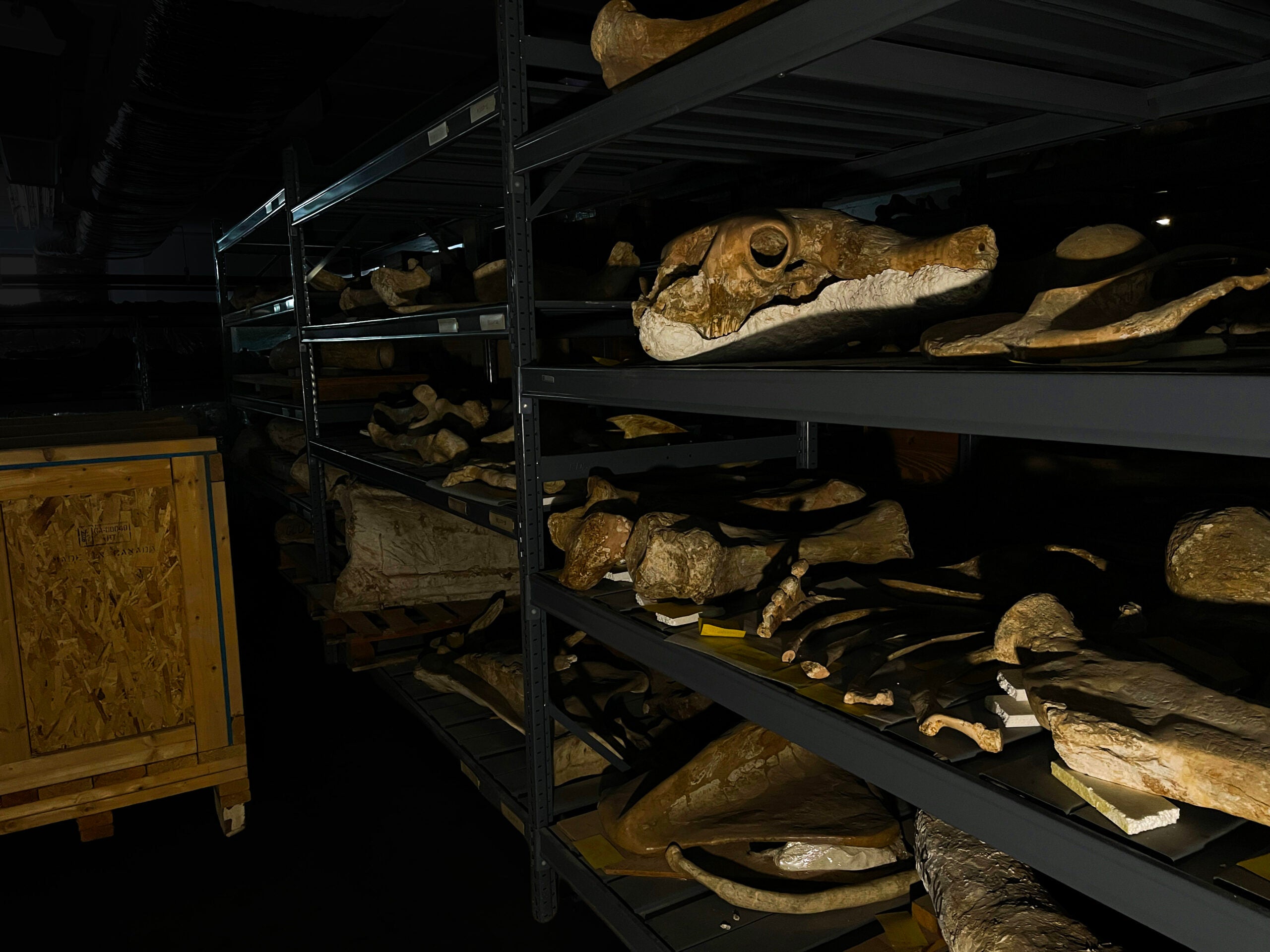
In the dim light of the basement beneath the Texas Vertebrate Paleontology Collections, shadows seep out from the deep sunken eye sockets and perpetually wide jaws of the hundreds of fossils lining the room. Sharp teeth and molars threaten to break free from their plaster, immortalizing the past in a slab of rock.
Further inside, time condenses into a single moment with the remnants of a prehistoric past meeting the stained off-white bone of the collection’s more modern specimens. Chicken and monkey skeletons loom above the highest shelves, complemented by the spiny displays of fish and lizards.
The collection, which is housed at the University of Texas Dell Campus for Advanced Research (formerly the J.J. Pickle Research Campus), comprises thousands of fossils from the Ordovician, Permian and Triassic periods, making it the seventh-largest fossil repository in the country — and many of those fossils were found in Texas.
“I always love to imagine what would happen if everything in the collection came alive right now,” Ben Kligman, the Curator-in-Charge of the Texas Vertebrate Paleontology Collections, said. “The building would explode, and Austin would be swamped by a stampede of mammoths and mastodons and other extinct elephants.”
A team of paleontologists and fossil enthusiasts is behind the day-to-day operations of the collection, where they clean, prepare and research the specimens they take in from all around the state and country. Read on to learn more about the spookiest fossils the collection has to offer from researchers and coordinators Chris Sagebiel, Ben Kligman, John Moretti and Erika Tandy, alongside a curated ghostly gallery of photos.
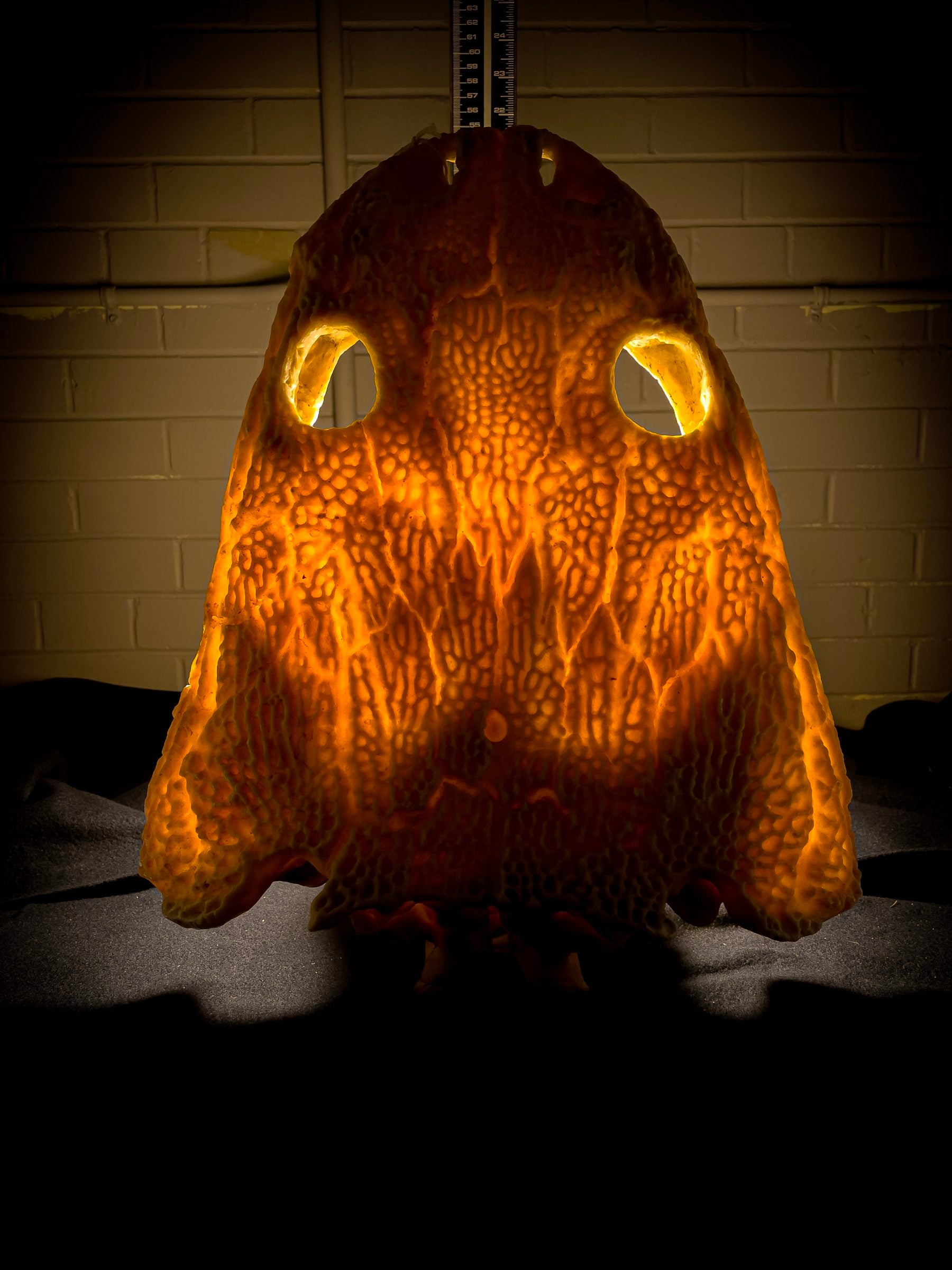
Q: One of the spooky specimens highlighted in the photographs is a metoposaurus. What are some interesting facts to share about this animal?
BEN KLIGMAN: They’re a ubiquitous species from the Triassic rocks. So, rocks around 210 to 220 million years old across North America. They’re one of our most common animals that we find. We call them the toilet seat heads because their head is very similar to a toilet seat, and the closest living analog to them is a giant salamander.
We find these interesting bone beds of these guys in West Texas, New Mexico and Arizona. There will be dozens or hundreds of metoposaurs, all arranged next to each other. What appears to have happened in the Triassic is the climate was highly variable, and we think that they were living in a body of water, and it dried up.
That year, there was a big drought, and they’re amphibians, so they need water, and eventually when there was no more water, the metoposaurs all died at once.
What was a bad year for metoposaurs is a good year for paleontologists!
ERIKA TANDY: I feel like we’re missing out on a small sconce industry of metoposaurus skulls. A toilet seat, though, is definitely a thing that has happened. I believe someone reprinted one and auctioned it off a couple years ago.
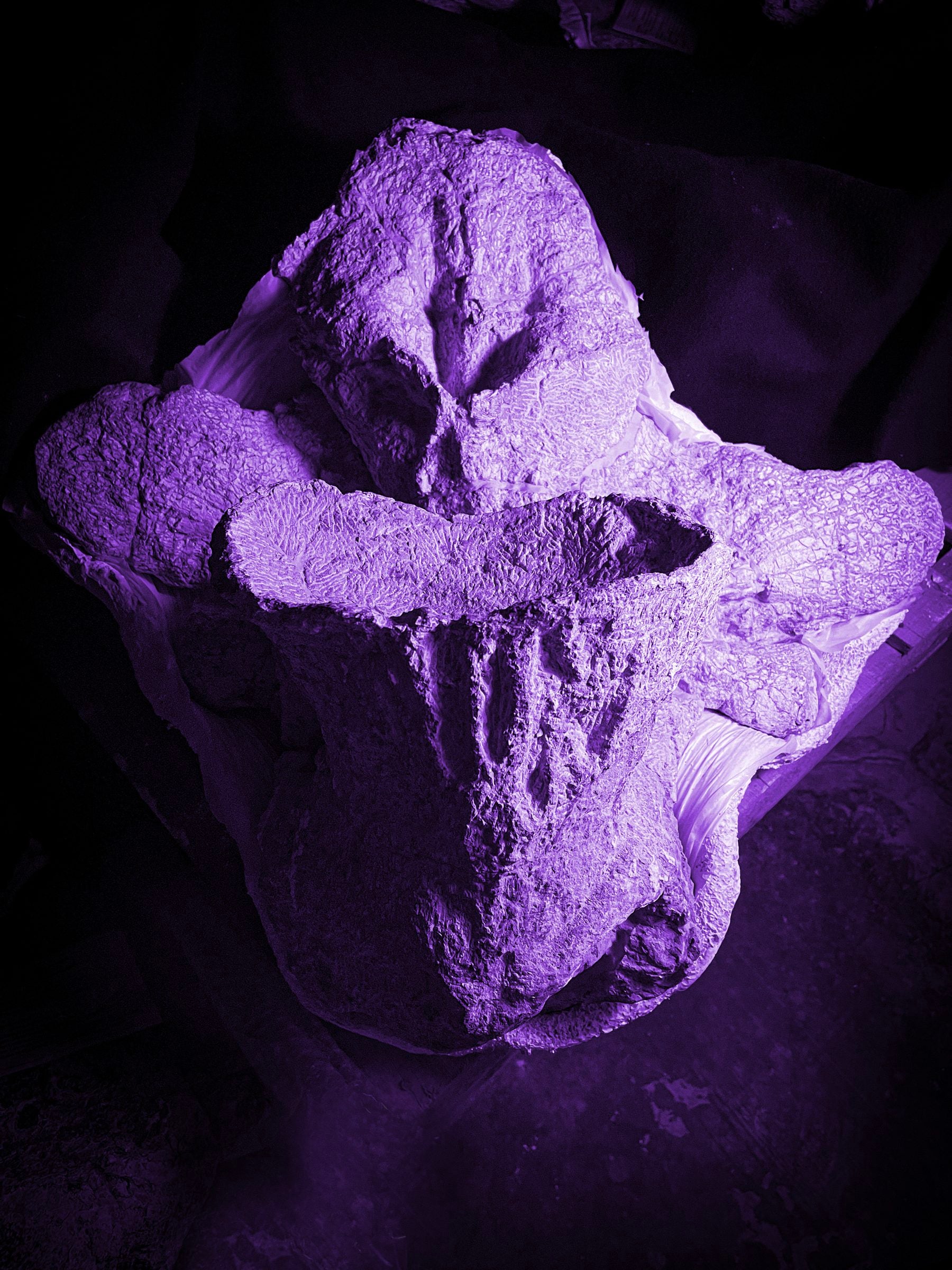
Q: Erika, you took these spooky images. Can you tell me what your thought process for finding the best photo opportunities was?
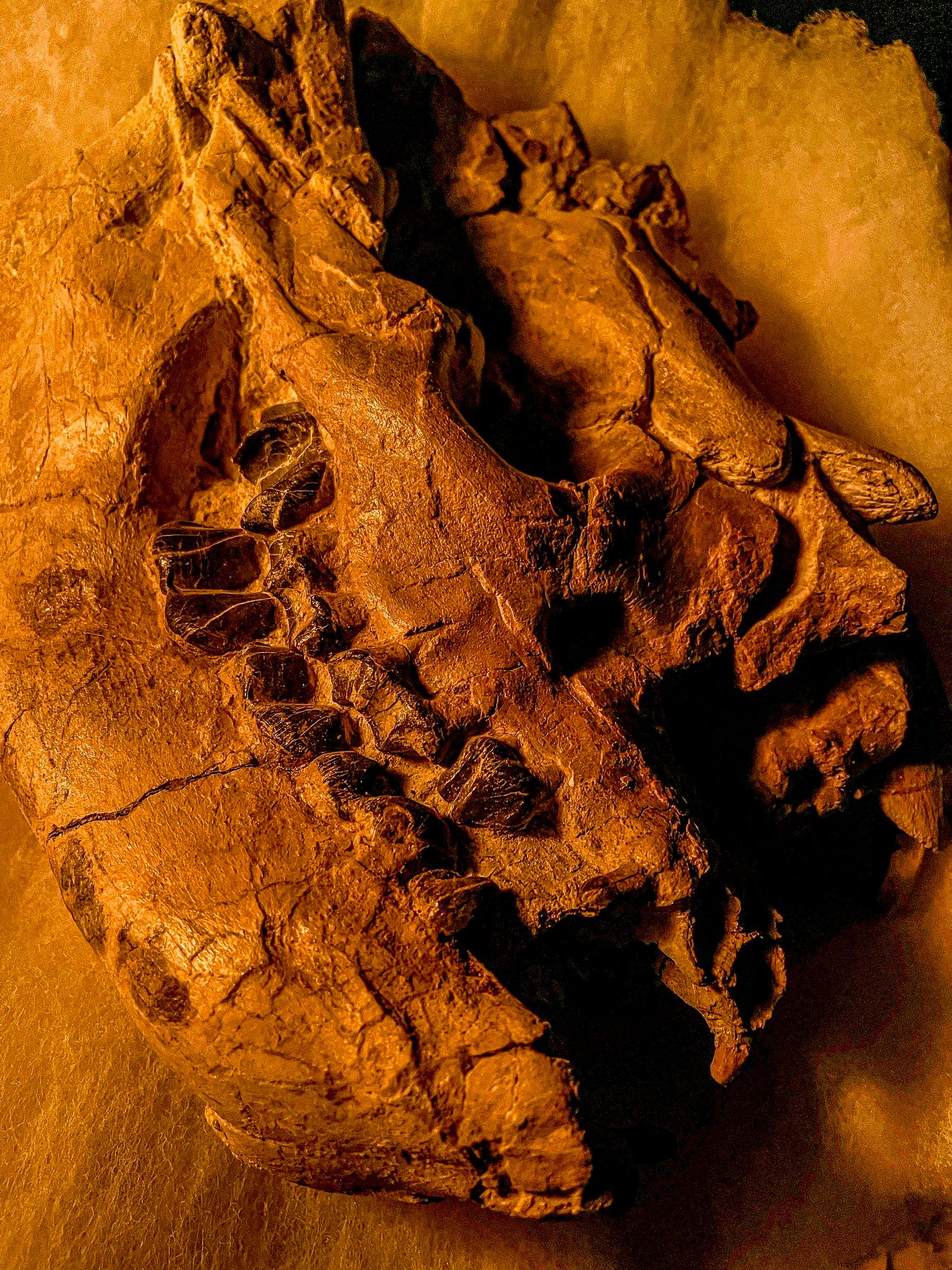
ERIKA TANDY: I find teeth really spooky, and in the Permian and the Triassic, animals were feeding in many cases primarily on each other, so the tooth game was really off the charts.
When you look at the underside of the metoposaur skull, you can see it’s got not one row but two rows of teeth, and then these large, almost tusk-like teeth. They were very powerful predators, and they likely lurked in the marshes, and once that mouth snapped down on you, you were not getting out. So, as I was going through the specimens, I was looking at what type of things made me feel like, ‘Ooo, spooky!’
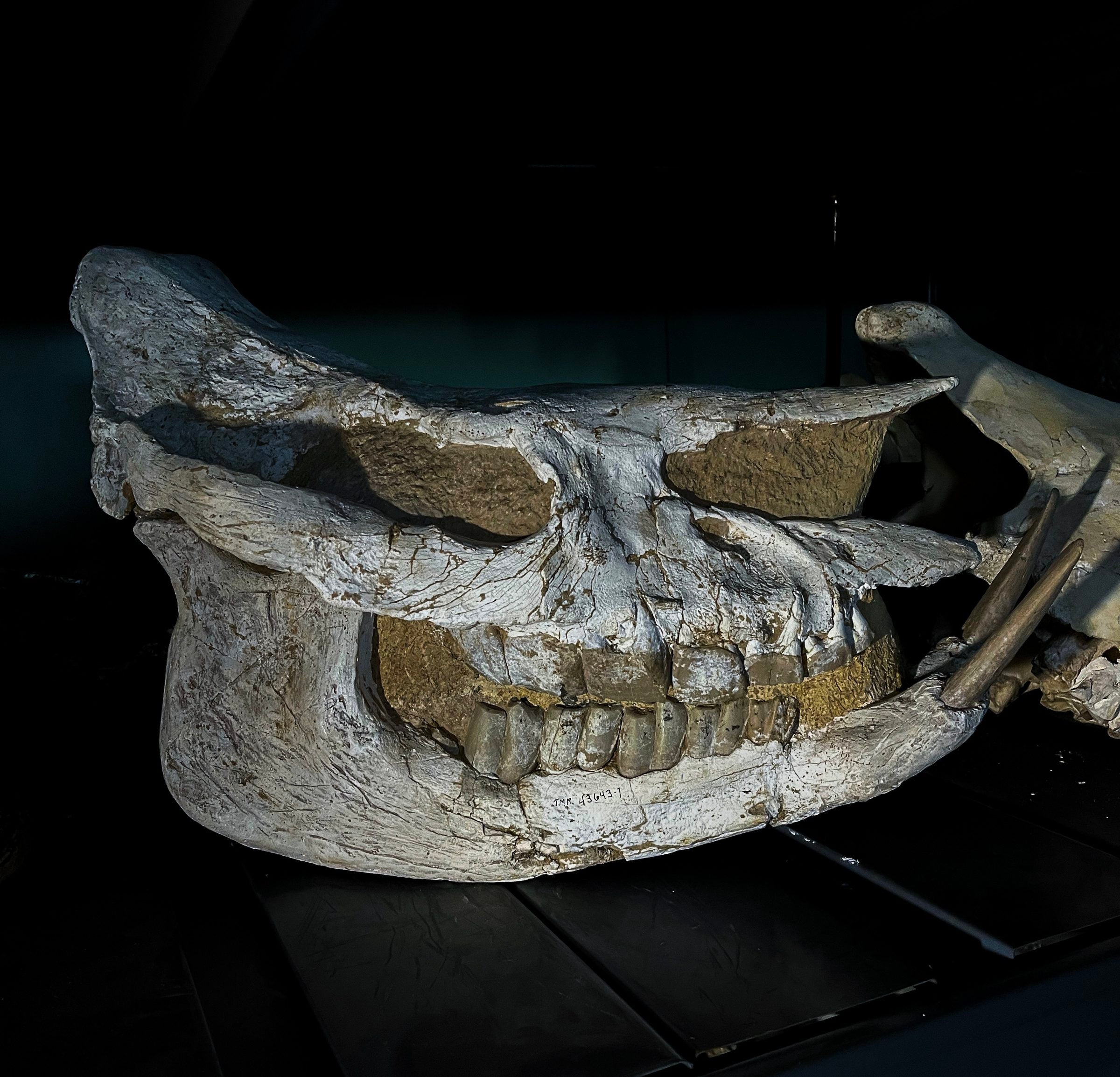
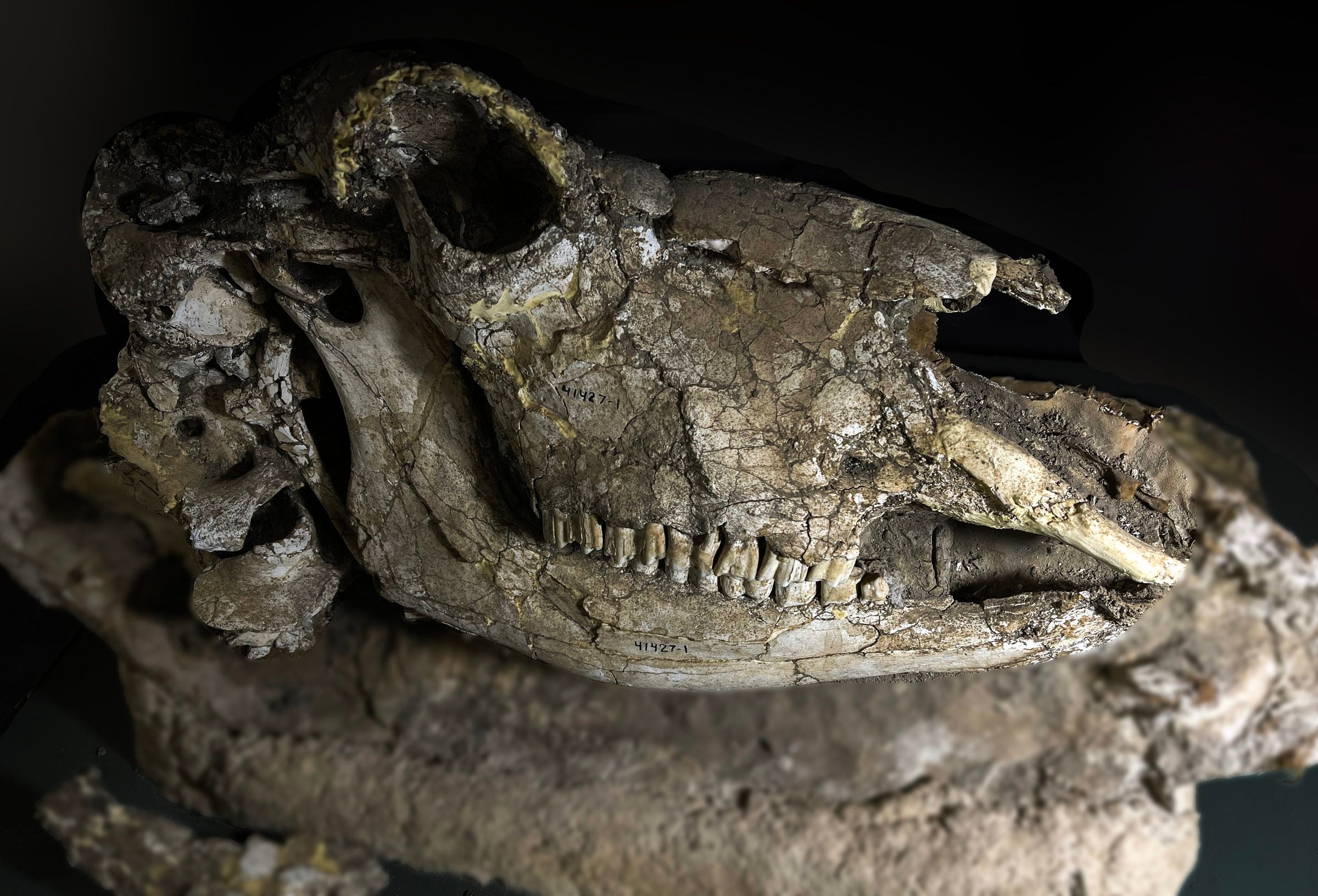
Q: What would you say is the spookiest part of the collection? Or alternatively, if you were bringing somebody in for the first time, what is the first thing that you’d think is a must-show?
BEN KLIGMAN: I’ve got an animal in my office that I’ve worked a little bit on, and I’m doing a study on it right now. It’s from the Triassic period, so about 225 million years old, and I’ve got fossils from Virginia and from Arizona.
It’s called Uatchitodon. It’s small, like the size of a small dog, and it has teeth like steak knives. They’re thin, they’re compressed, they’re curved, and they’ve got serrations. So, this is typically what we associate with being a carnivore. But what makes it really crazy is it has these tubes, like a hypodermic needle, that travel from the base of the tooth to the tip.
We think that these were for injecting venom into prey. So, unlike any animal today, like a rattlesnake, it just pierces and injects. But the Uatchitodon pierces, injects venom, and then slices and eats it. It’s a really crazy animal.
But the mystery of the Uatchitodon is that we’ve only found its teeth. We have lots of teeth, but we’ve never found the rest of the skeleton.
CHRIS SAGEBIEL: A creepy one that I like was a giant sloth that I wrote about. The entire back section of its skull had been crushed in. It looks like a Homotherium’s, a big saber- or dirk-toothed cat, teeth fit right in the two huge puncture wounds in the back of the skull.
The really cool thing about it is that it’s all healed up. So, this big sloth was such an ornery critter that it was attacked by the top carnivore of its day and had its skull crushed and shook the predator off and just went back to doing whatever sloths did back then.
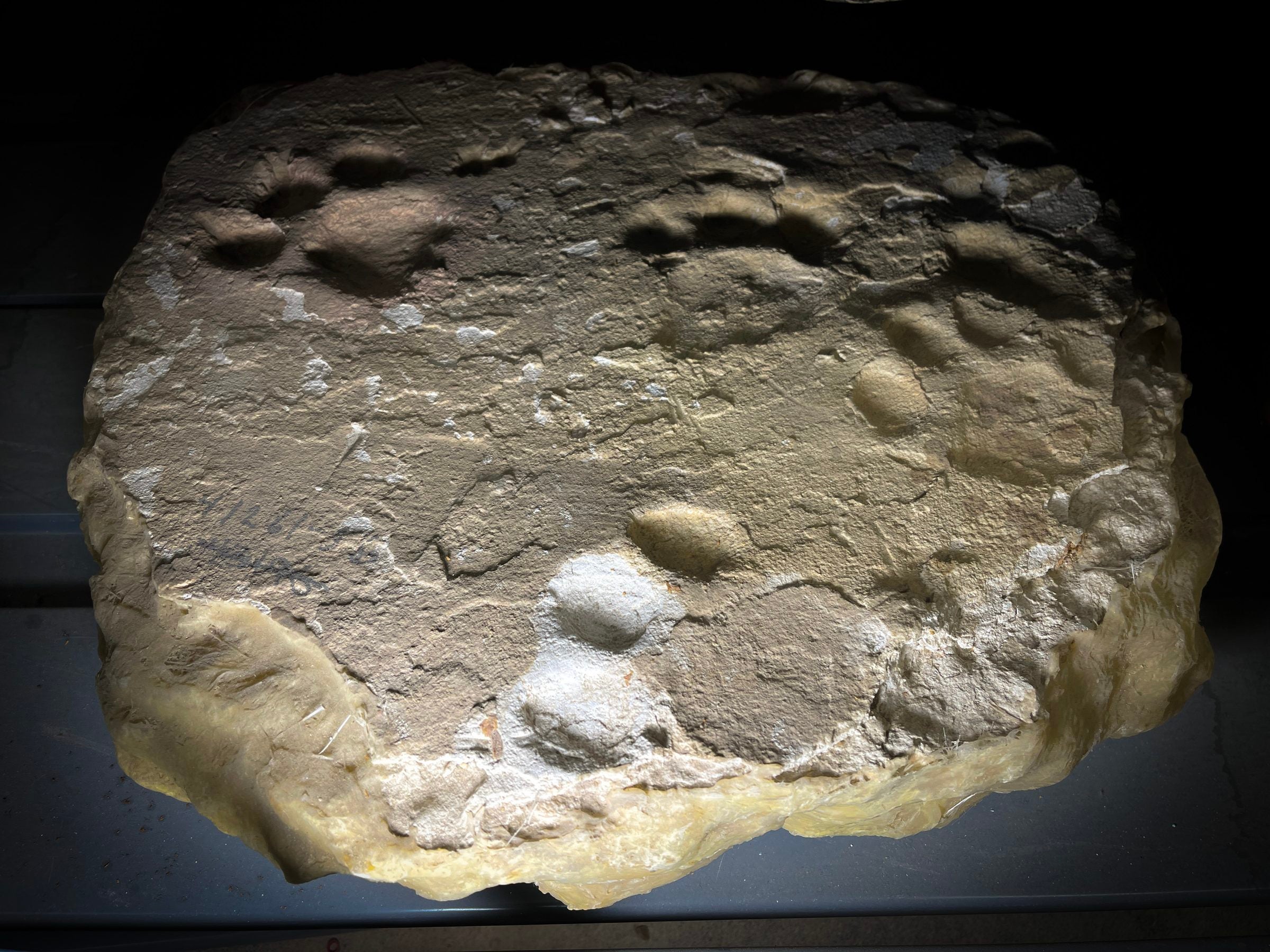
JOHN MORETTI: I like to show people the saber-toothed cats from near San Antonio, from Friesenhahn Cave.
It’s easy to tell the tale of these skeletons that accumulated in this cave out by San Antonio. They accumulated so many bones because this was a den for these saber-toothed cats. So, they’re living there over many generations, and a lot of these individuals happen to be dying at home.
Some of them are old and grown adults. Some of them are 2- to 3-month-old cubs, and it’s just everything in between. And then alongside all of their bones is another cabinet, just full of the teeth and bones of baby mammoths that were the prey of these cats.
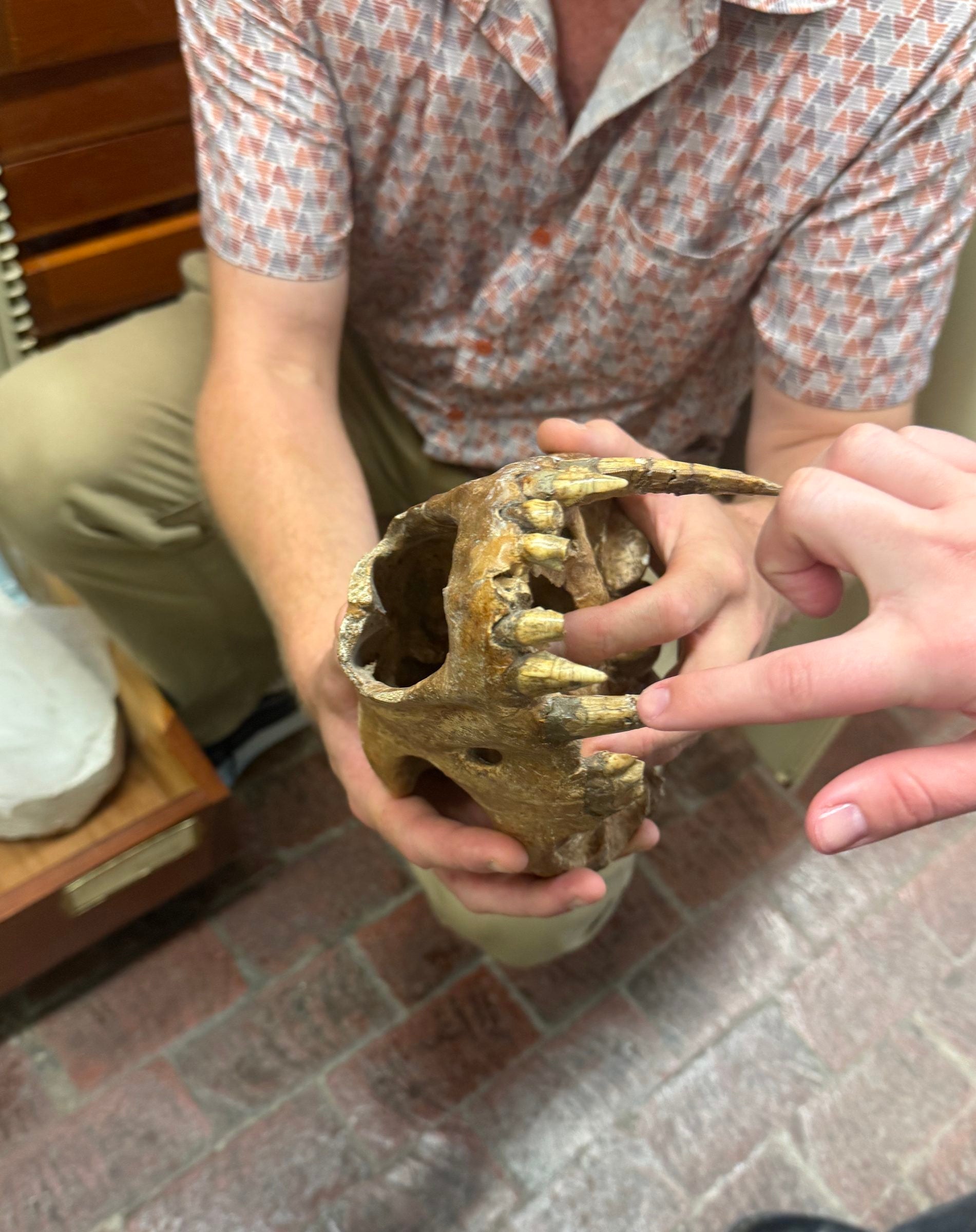
It does double service in conveying that we live in a really paleontologically rich and important part of the world. So then, people are leaving, not just with this fascination about fossils and nature through time, but they’re also leaving with a better appreciation and with a tale that they’re inevitably going to tell somebody at coffee or over dinner.
They’ll help carry and convey all of this knowledge that’s oftentimes stored in the minds of the people in this building, a lot like the fossils are.
Q: What do you think is something you didn’t expect about the fossil preparation process before you went into this job?
ERIKA TANDY: I had no idea how much adhesive consolidant is used to stabilize fossils, particularly ones that are more recent, like from the Pleistocene — which is about 2 million to 11,700 years ago.
Those are very porous and sometimes extremely fragile fossils. I tend to refer to them as a stale biscuit — hard on the outside, but they’re actually really crumbly on the inside. And we use so much of this plastic dissolved in solvent to stabilize the bone.
When you’re looking at a fossil in a museum that’s perhaps behind glass or it’s a little farther away from you, you have no idea what’s happened to it to get it out there on the floor, particularly if it’s an actual real specimen. And once I saw how much adhesive is used in preparation, it seems so mundane to say that, but it blew my mind.
BEN KLIGMAN: The biggest unsung heroes of paleontology are the fossil preparators. Preparation is the biggest step.
It’s relatively easy to go find a dinosaur in the field and collect it. What takes the time, and is the controlling factor in getting research done, is people spending the time in a lab, going tiny bit by tiny bit under a microscope and removing the rock from around that bone without damaging it.
The people that do that work don’t get enough acknowledgement for what they do, and it’s why we have all these fabulous specimens. And when I go into the vertebrate paleontology lab and open up the cabinets and see the millions of fossils in there, I wish I had a quantification of how much time fossil preparators spend doing that. It’s hundreds of thousands of hours, lifetimes of work, from hundreds of people that makes that all possible. Without that, we wouldn’t be doing a fraction of the science we’re doing right now.
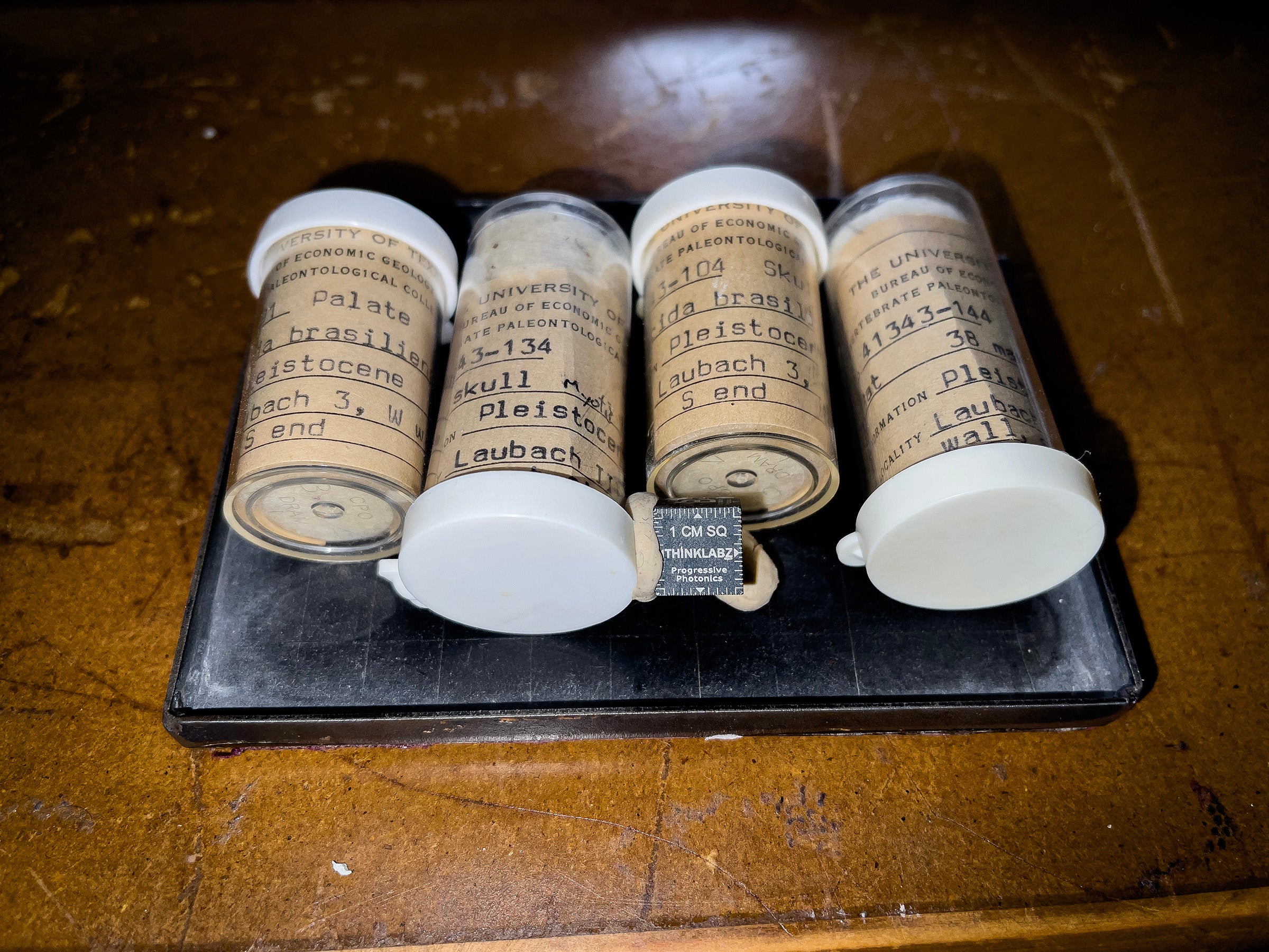
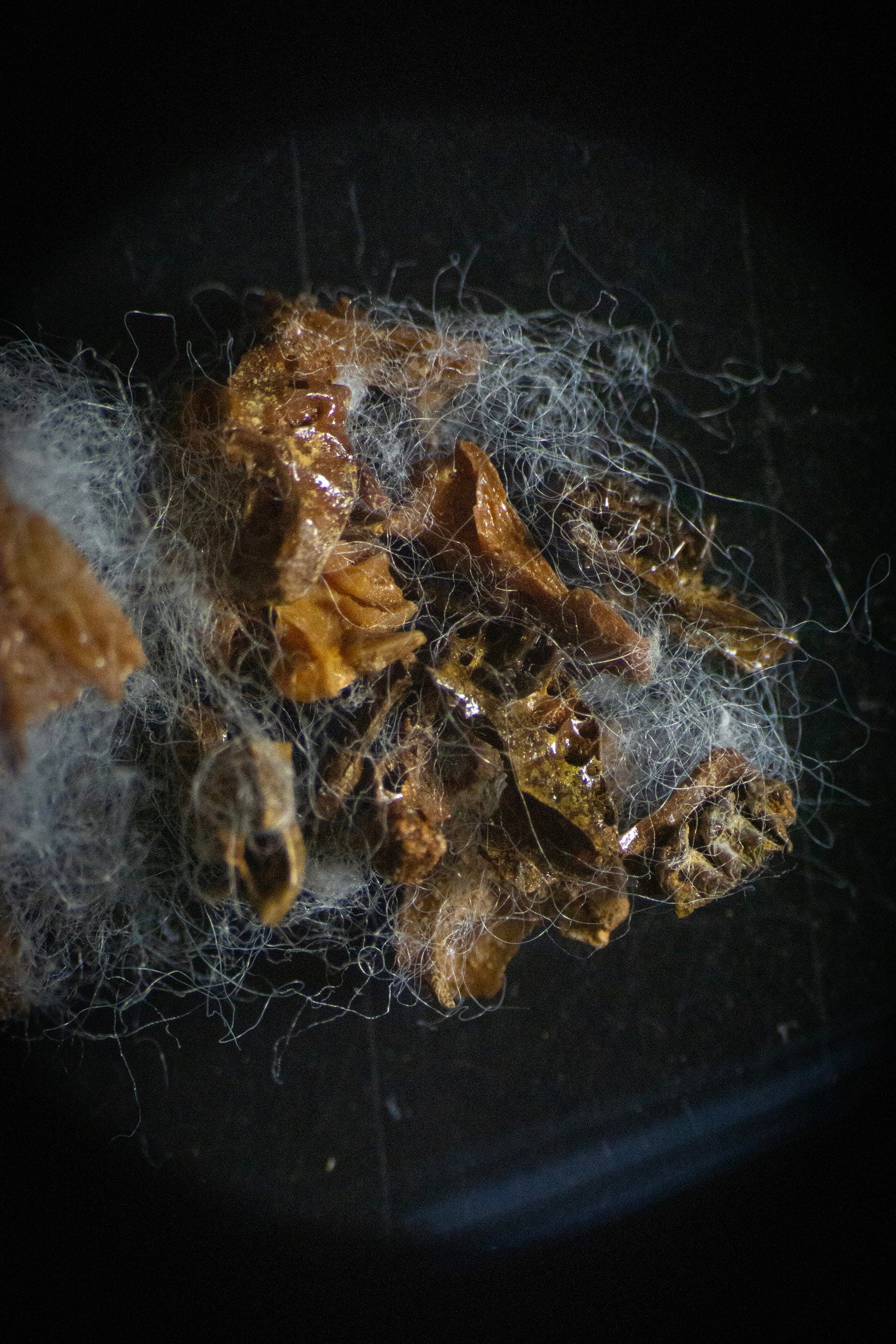
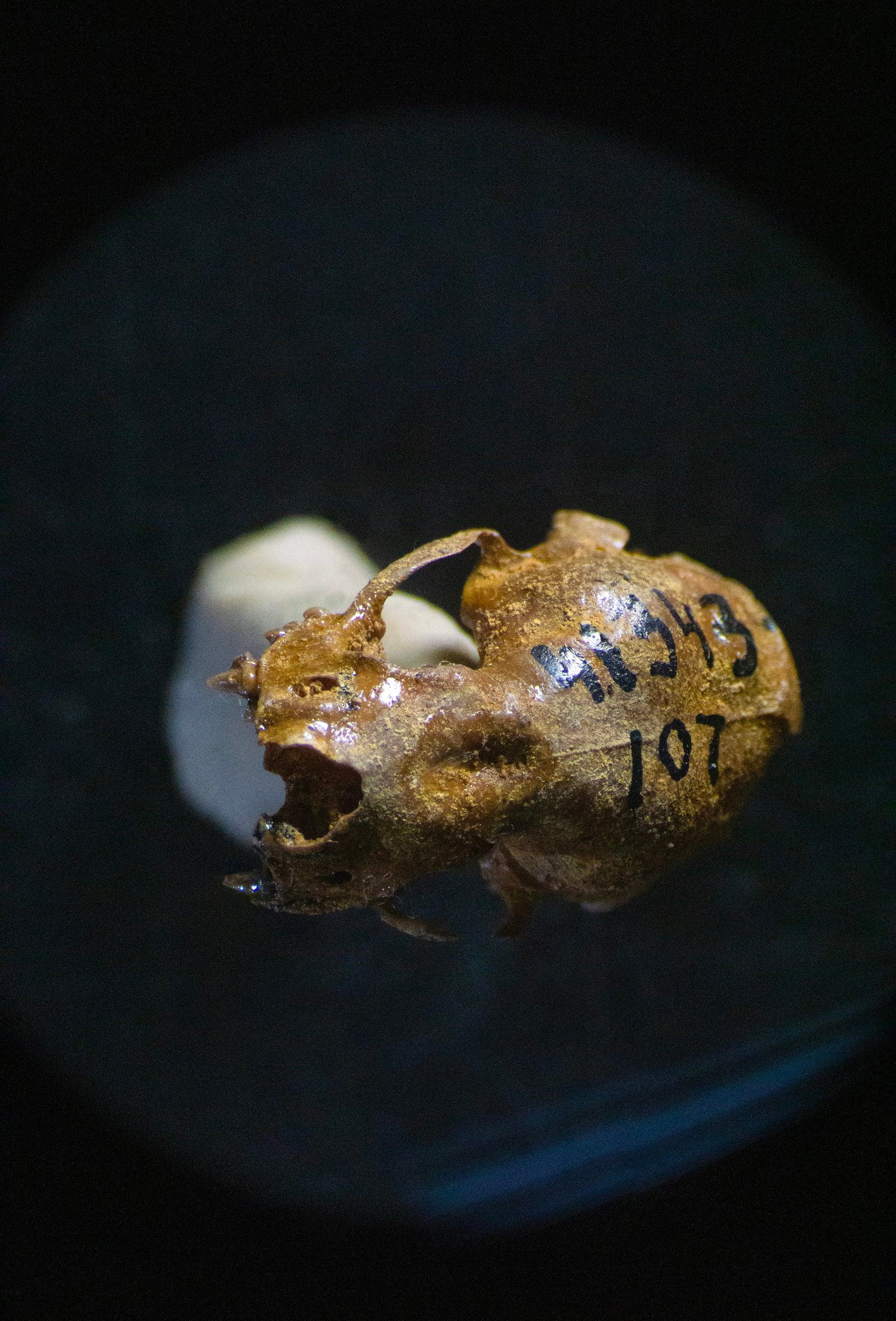
Q: Most people will probably never get the chance to touch or handle a fossil. How does it feel to be in your role where you can engage with the collections with your bare hands every day?
ERIKA TANDY: As a person who does a tremendous amount of field work, I am the first human to have ever laid eyes on this piece of this ancient animal that died millions and millions of years prior, and so it’s this little moment of communing where time suddenly becomes very compressed, and I have shed many a tear.
You’ve got your little tweezers and your microscope, and it’s just you and this tiny little tooth that tells you a bit about the story of the animal that lived where this was collected, and I find it extraordinarily profound and grounding because I am just a tiny little blip in time, and I get the privilege of spending time with these objects that tell us about the planet through millions upon millions of years prior to my little tiny existence, and it is an amazing moment for me.