
Student Researchers Gain Hands-On Experience in UT’s Turtle Pond
Since 2022, students have recorded information on the turtles on UT’s campus. This July, their research was published, revealing the unique microbial makeup of the turtles.
Under the lingering heat of the summer sun, light stretches across the surface of the turtle pond on the University of Texas campus, catching every ripple in the otherwise quiet stillness. From their makeshift lab just a few steps away, a group of 14 students huddles around the water’s edge, equipped with long silver fishing nets and an assortment of test tubes.
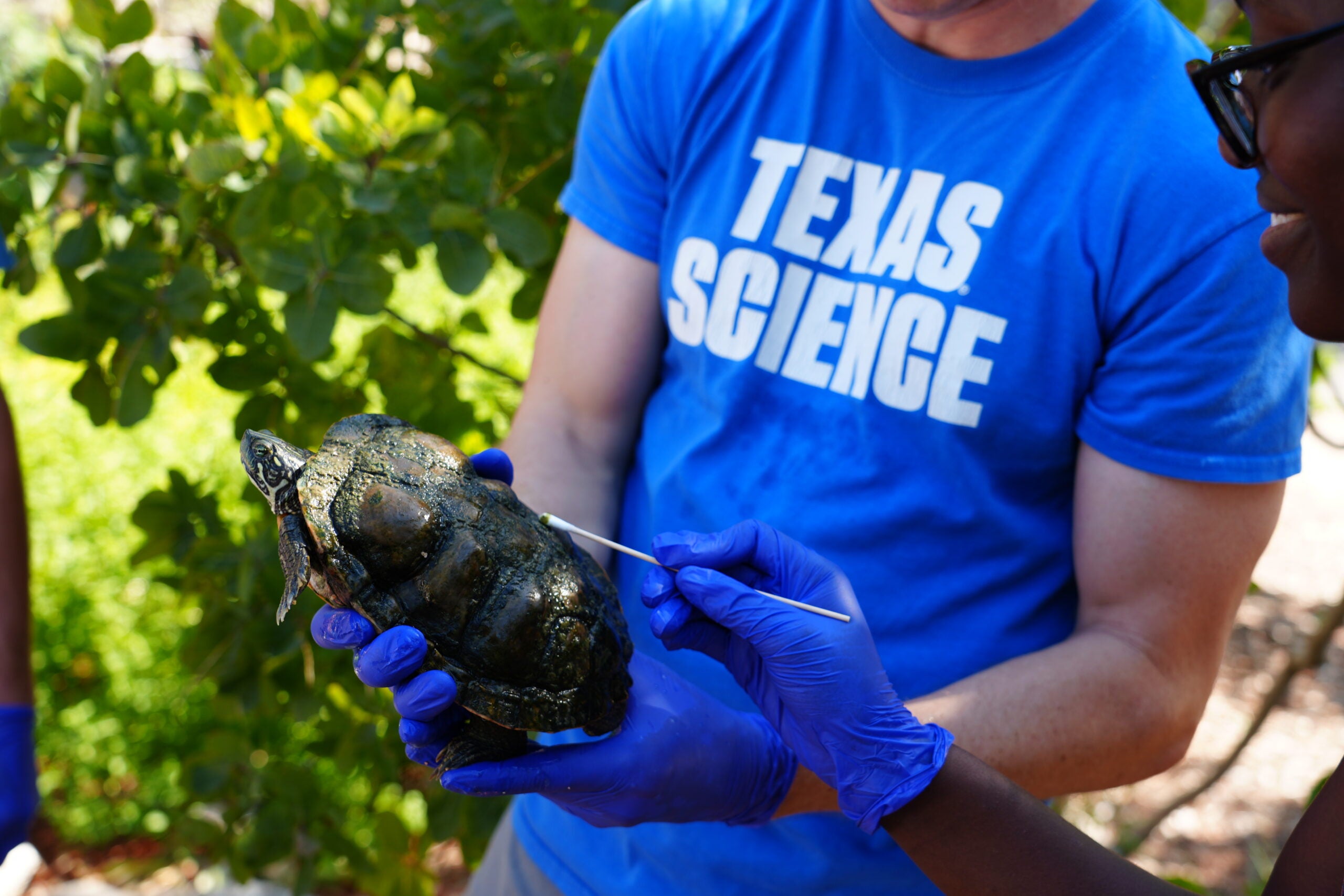
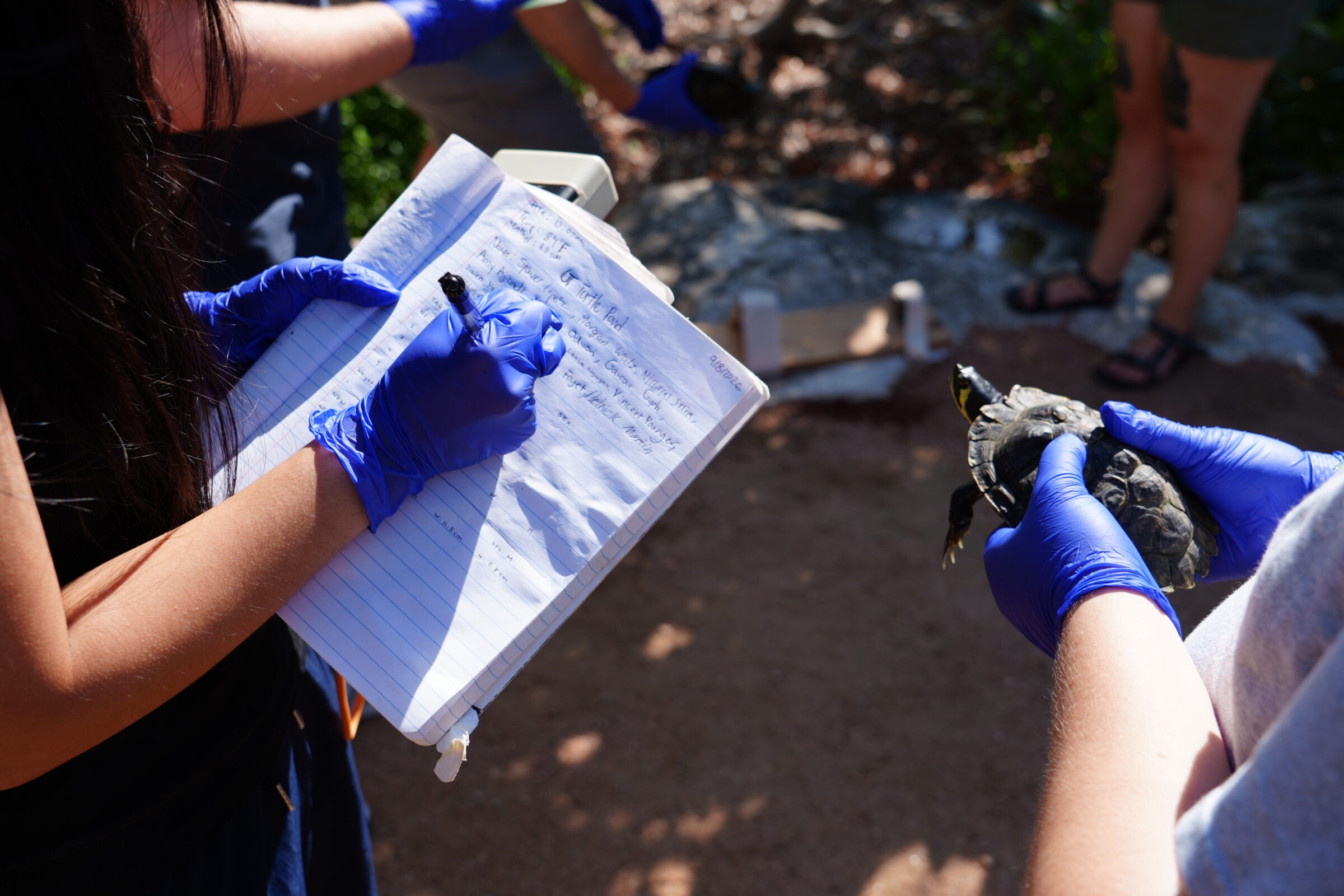
With careful eyes, the students watch as the turtles approach the surface. Many of the pond’s residents are red-eared sliders, who cast the water with a slight tint from their tanned, almost orange, marked shells and signature red-striped faces. After waiting for just the right moment, a student uses a net to scoop up a turtle before the rest of the team pull out measuring tape and a sensor device meant to detect the tags they’d placed during previous visits.
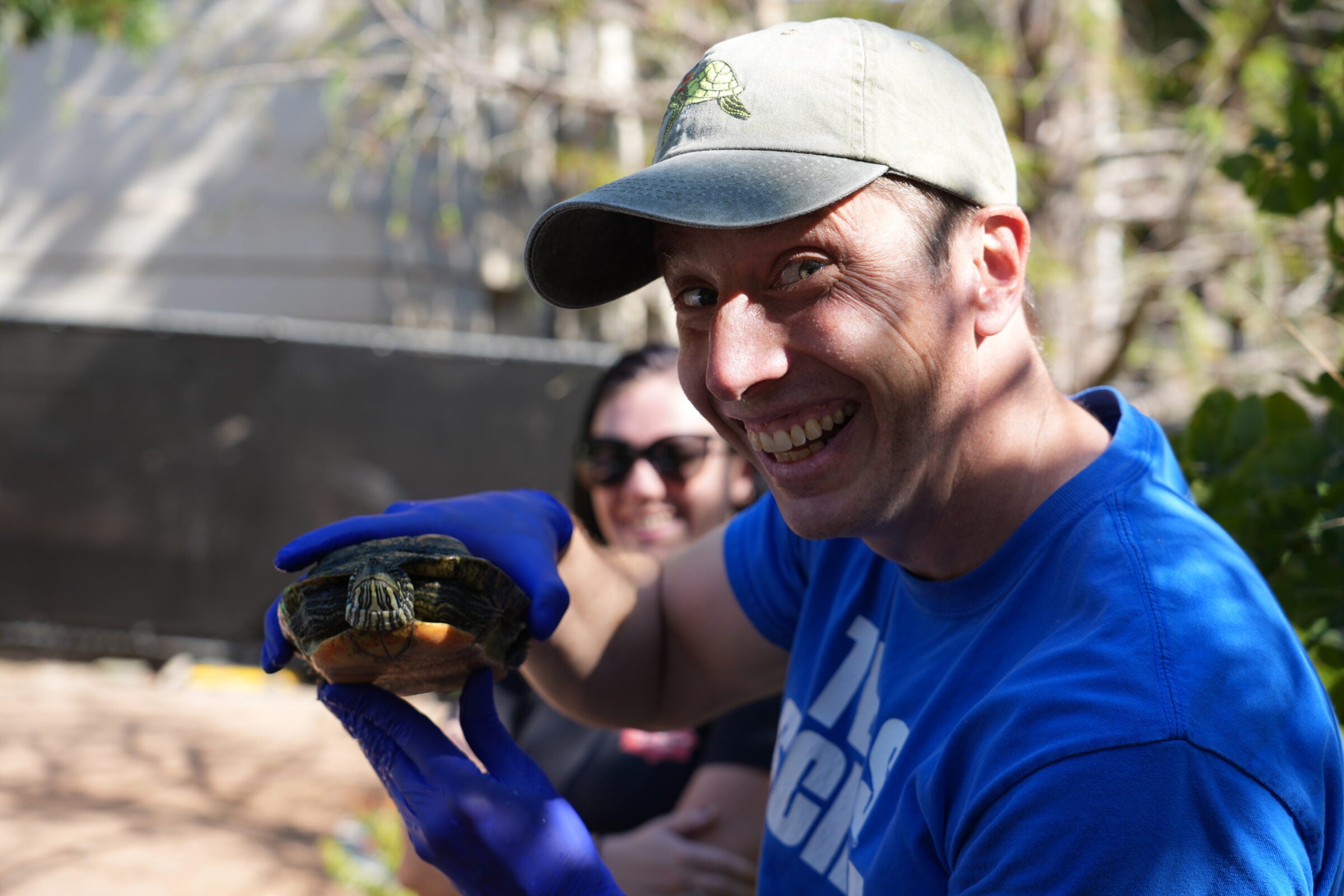
These student researchers are volunteers for integrative biology professor Justin Havird’s latest project at The University of Texas’ turtle pond. Since 2022, students have done work at the pond, including capturing and tagging the turtles and swabbing them to identify the microbes living on their skin, shells and mouths. As a culmination of the student-directed observation and analysis, the group published a paper this past summer, delving into the microbial comparisons of red-eared sliders across different urban habitats.
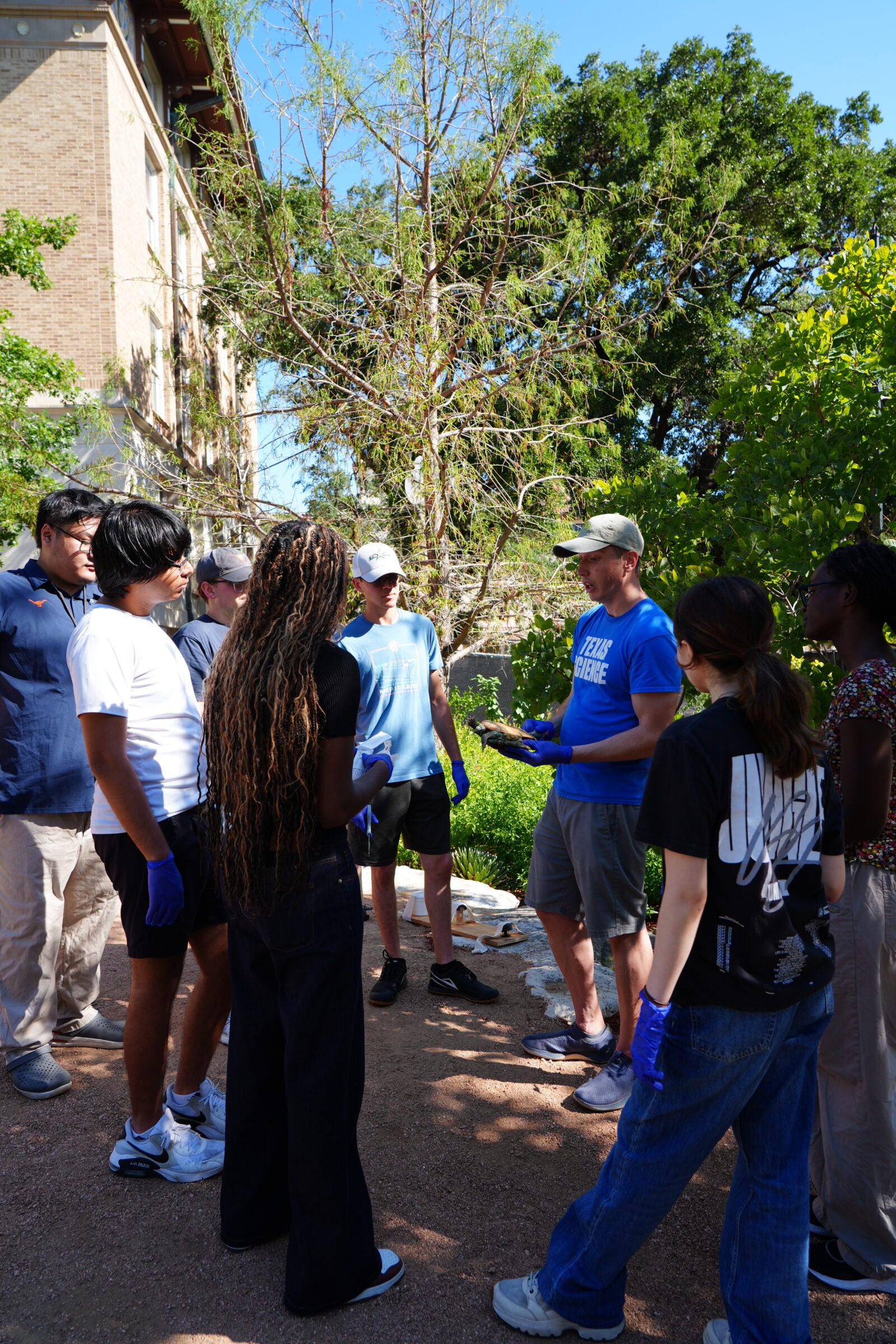
This year’s cohort is aiming to have the same opportunity — this time, dealing with secondary sexual characteristics and parasitism in the turtles. After they donned deep-blue latex gloves, Havird encouraged them to make the most of the hands-on microbiology experience. “This is real science,” Havird reminded the crowd.
Last month’s paper revealed that the UT turtles have distinct microbes from those tested at four other ponds in the Austin, Texas, area. Through various field trips to catch turtles from local ponds, students gained experience working with tools for data collection before returning to the lab and analyzing the results. The other locations are Mueller Lake Park, Butler Metro Park, County Line BBQ and Hyde Park Community Central Park.
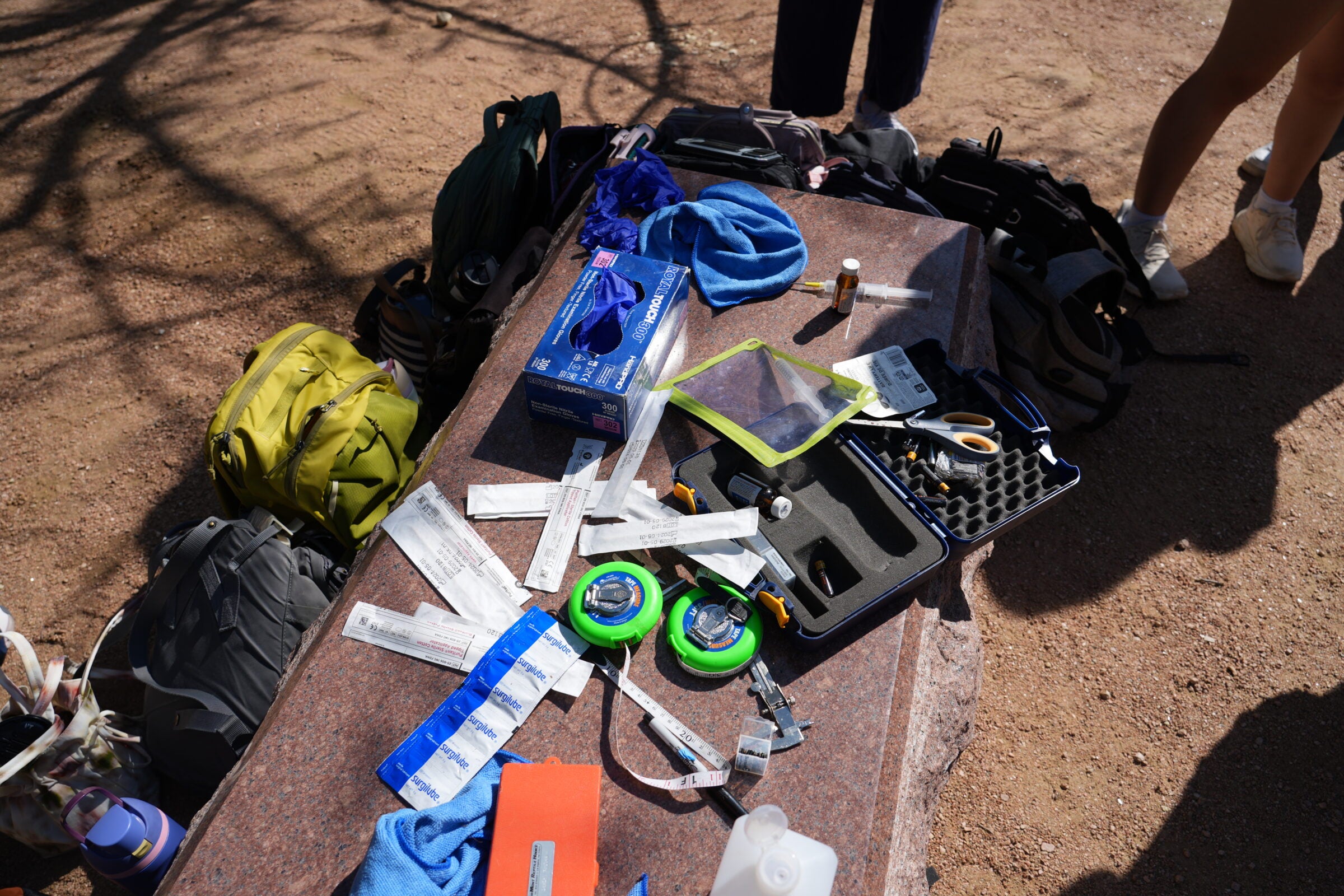
“[The research] gives folks an idea of what life as a researcher and scientist is like,” Havird said. “It’s a low barrier to entry. Folks are already on campus, and a lot of them are already at the turtle pond every day. So, they can also learn a little bit more about the turtles and feel more connected to the campus community in general.”
For interested students who attend many on-site data collections or contribute to the lab work in other ways, Havird allows for a chance to co-author related research papers produced from the project.
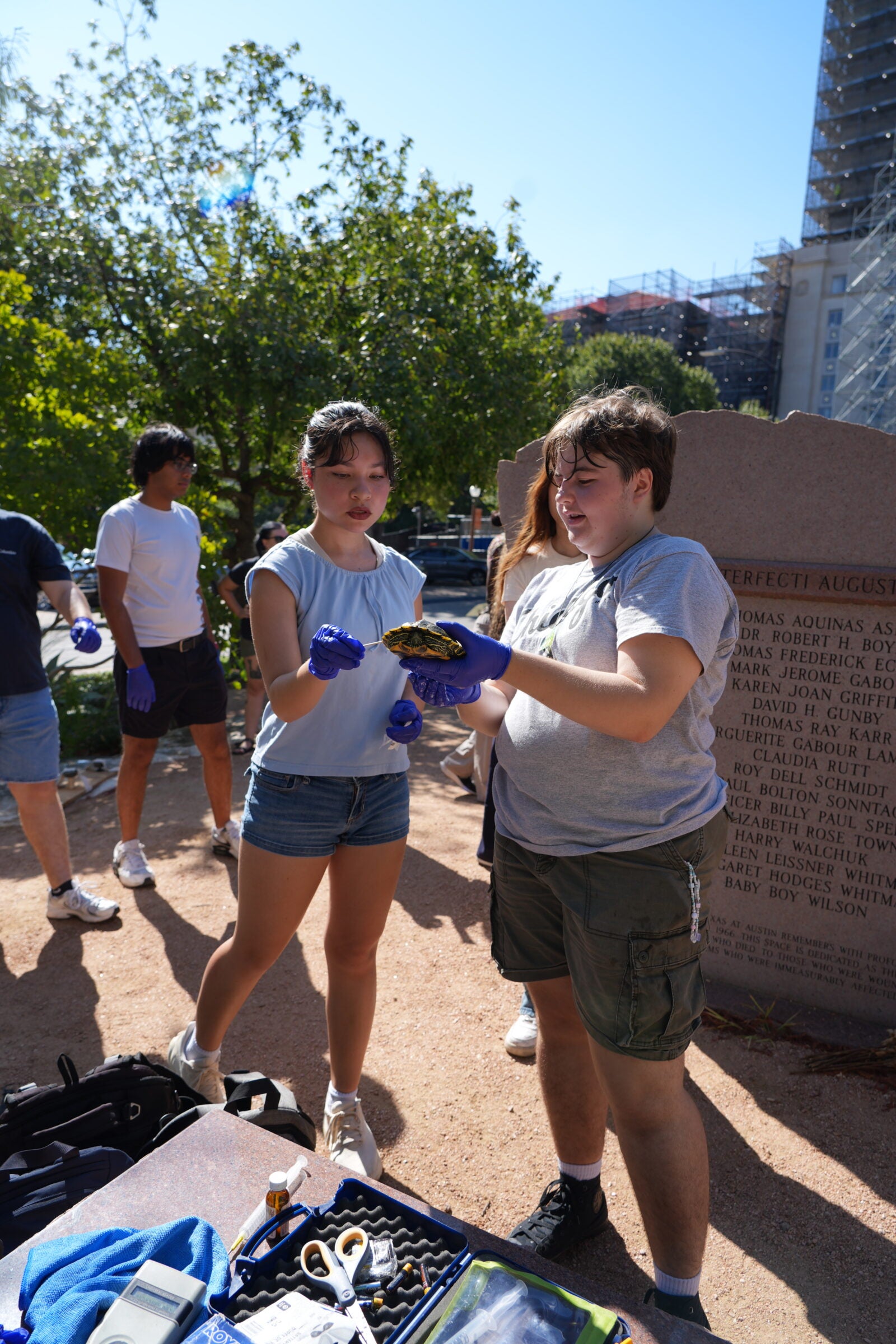
Heading into her junior year, environmental science student Reesa Martinez joined the turtle pond research to gain animal handling experience in preparation for her goal of attending veterinary school.
“Research is really exciting to all of us. To be in a paper, I feel like that’s a really big step for someone who’s an undergraduate,” Martinez said. “I was thrilled when I heard about that opportunity.”
While the group set out to identify variation between five different swabbing zones on the turtles’ bodies, they also hoped to map these differences across ponds. The question was whether microbial differences were influenced more by geographical or biological location.
Ultimately, the results showed that microbes varied more between locations on the body than by location of the pond. But research also yielded an unexpected finding, leading researchers to the discovery that UT turtles exhibited the most uniqueness in terms of the set of microbes they carry.
Whether UT turtles’ distinct clusters of microbes make them more burnt orange, it’s safe to say scientists are still exploring the question. The foundations of the research conducted by the students will allow future undergraduate researchers to continue exploring various areas pertaining to ecology and turtle behavior.
During the past four years, the research initiative has been funded through the Stengl-Wyer Endowment and the UT Green Fund through the Office of Sustainability. At the end of this year, the group will pursue other streams as they set their sights on other developing research questions, like this year’s focus, which investigates whether a correlation exists between sex and the overall immune function of red-eared sliders.
While microbes are invisible to the naked eye, they play a significant role in understanding the overall health of environments, particularly where they encounter humans. The red-eared slider, for example, is an invasive species in many parts of the world that can also carry high amounts of Salmonella throughout the population. The research at the University, in turn, provides a baseline for interpreting the ecological health of the UT pond in the future, while providing the data for classes of students to come.
Havird and the student researchers set out with this project to address a gap in freshwater turtle research and to create a replicable study for other university communities to fill in with their own findings. Over the years, the program has given undergraduates the opportunity for field and lab experience before they move onto their postgraduate academic careers.
For Mariangel Correa Orellana, a doctoral candidate in Havird’s lab studying ecology, evolution and behavior, her journey to microbiology and the UT turtle pond started during a summer research program. Visiting from Western Carolina University as an undergraduate, Correa Orellana met Havird for the first time and conducted microbiology research that opened her eyes to a new path she had never considered.
Now in her final year at UT, Correa Orellana is gearing up to finish her dissertation and holds the title as the University’s first HHMI Gilliam Fellow. The fellowship, which selected only 30 of more than 800 applicants, provides Correa Orellana with three years of funding to support her research in addition to resources and professional development for her mentor, Havird.
“Being exposed to an R1 institution like UT opened my eyes to really cool scientific research,” Correa Orellana said. “That was the moment that I was like, ‘I’m going to do a Ph.D., and I’m going to become a professor.’”
After arriving at UT and joining the turtle pond research as a mentor, Correa Orellana took the lead on authoring the microbial research paper and spent many days in the lab guiding undergraduate students through some of their firsts in microbiology, data entry and analysis.
Correa Orellana’s favorite part of her Ph.D. journey has been teaching and mentoring. Though she plans to step back from the lab to focus on her primary research this school year, she recalls days working with the students at the pond as they gathered — and sometimes waded — around the water and squabbled with the occasionally temperamental turtles. She said she feels a responsibility toward the younger researchers to showcase what it means to do scientific work.
“You’re training the next generation,” Correa Orellana said. “I want the students I mentor to become scientists, or do whatever they want to do, and be good at it.”
Since its construction in 1939, the turtle pond has long served as a spot for both research and relaxation for students. For many, including researchers such as Correa Orellana and previous undergraduate leader Ellen Lan, B.S. ’26, the turtle pond is one of the most iconic places on the UT campus. The pond even attracts visitors from around the city and hosts a tour stop for prospective UT students throughout the year.
Lan said she remembers visiting the pond after many difficult class days, and she often encountered others doing the same.
“The turtle pond is a place of solace, and there’s guaranteed dopamine whenever you see them,” Lan said. “It’s like a burst of energy.”
Acting as an ecological microcosm on campus, the pond is a place where students can come to study, relax and learn as they appreciate the turtles and become attuned to the change of the seasons alongside their day-to-day lives, Havird said.
“You’re in the middle of the most urban place you can imagine, but you do feel a little more connected to nature,” he said. “Nature is everywhere, including campus.”