2 UT Faculty Selected for Inaugural Cohort of Navy Research Fellows
Two researchers from UT were recently selected for a new initiative connecting top academic researchers with the Navy and Marine Corps’ most pressing science and technology challenges.
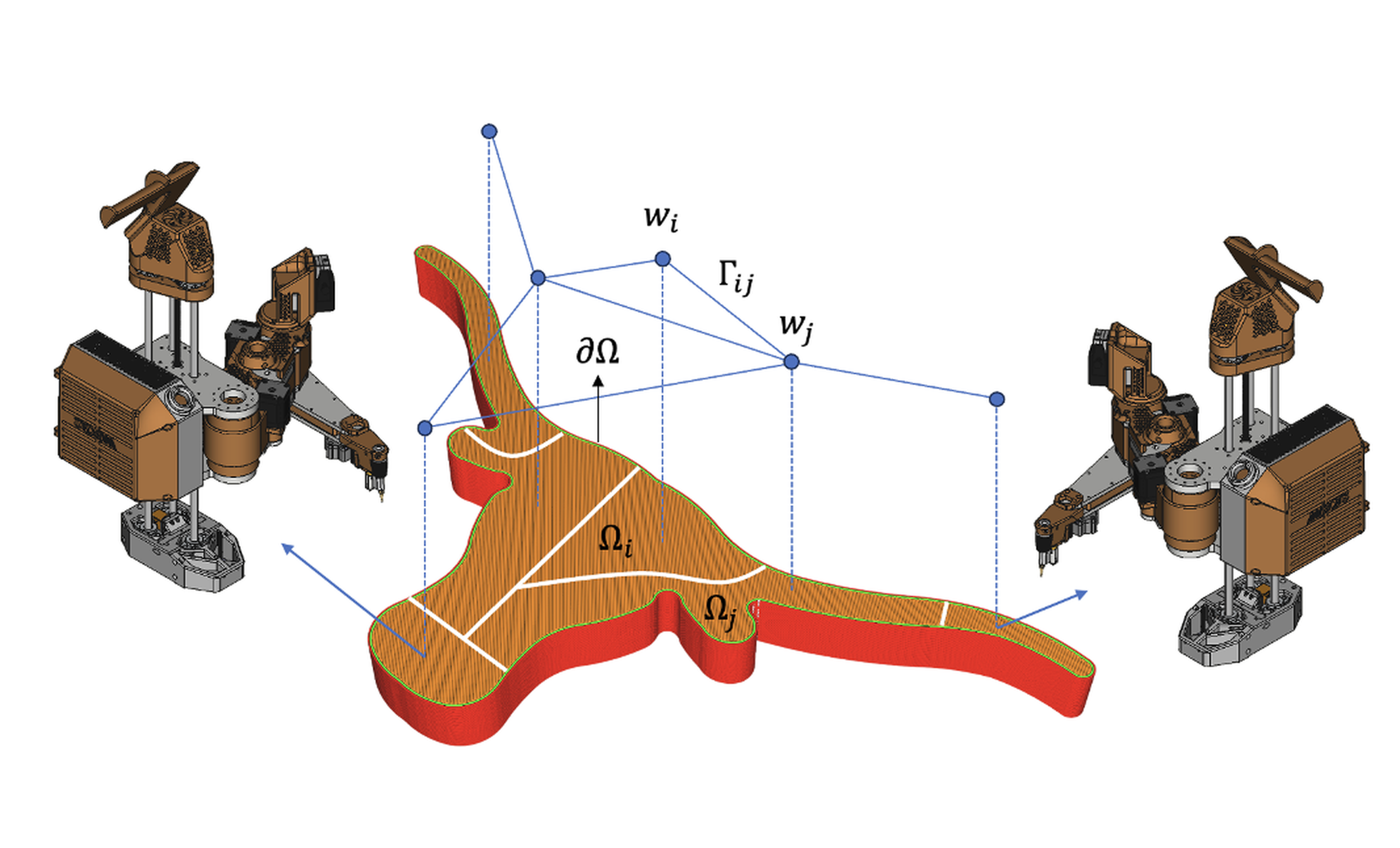
UT researchers are unlocking the size and speed limits of traditional 3D printing by developing dual-robot cooperation systems for large-format additive manufacturing — technologies that can accelerate the design and sustainment of next-generation naval platforms.
Two researchers from The University of Texas at Austin were recently selected for the inaugural class of Chief of Naval Research Fellows, a new initiative connecting top academic researchers with the Navy and Marine Corps’ most pressing science and technology challenges. UT is the only institution with two fellows among the 12 selected nationwide.
During the next year, Joydeep Biswas, an associate professor of computer science, and Zhenghui Sha, an associate professor of mechanical engineering, will join other academic researchers from across the U.S. in working with the Office of Naval Research to strengthen connections between academia and the U.S. Navy.
The fellowship supports a continual flow of state-of-the-art knowledge while cultivating a network of researchers who can turn the defense community’s toughest challenges into impactful science and technology research. While in the program, fellows will review research proposals, provide technical feedback and input on both proposed and ongoing Office of Naval Research efforts, and propose new research topics.
“This was an extremely rigorous, competitive selection process, and we are pleased to partner with some of the best and brightest minds our nation has to offer,” said Chief of Naval Research Rachel Riley. “We look forward to collaborating with these innovative thought leaders to strengthen the warfighting capabilities of the Navy and Marine Corps.”
Advancing Autonomy the Navy Can Trust

A faculty member in the College of Natural Sciences, Biswas also directs the Texas Robotics’ Autonomous Mobile Robotics Laboratory, where his research is centered on long-term autonomy, enabling robots to perceive, plan, navigate, and recover from failure in the unpredictable conditions of the real world.
As a Chief of Naval Research fellow, he will focus on how artificial intelligence and autonomous systems are adopted and deployed across different levels of naval operations, and on how those technologies are evaluated before adoption, including the operational constraints, evidence and validation that different stakeholders require to trust a system. Drawing on his experience as a full-stack roboticist, Biswas plans to help identify promising research directions, assess the feasibility of transition plans, and formulate research problems in ways that address the real needs of naval and Marine operators.
This work builds on his deep experience with the nation’s leading research agencies spanning end-to-end development of autonomous systems, from building hardware and writing systems software to developing new algorithms and fielding fully integrated robots, and working with multiple stakeholders to ensure that technology solutions respect and satisfy domain-specific user needs.
He directs the recently established Center for Human and Robot Co-Adaptation, a multi-institutional effort backed by a five-year, $30 million National Science Foundation award focused on human-robot co-adaptation.
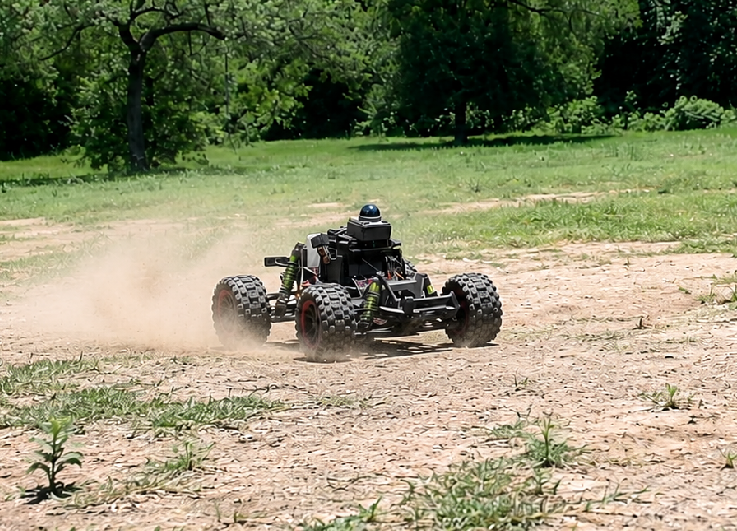
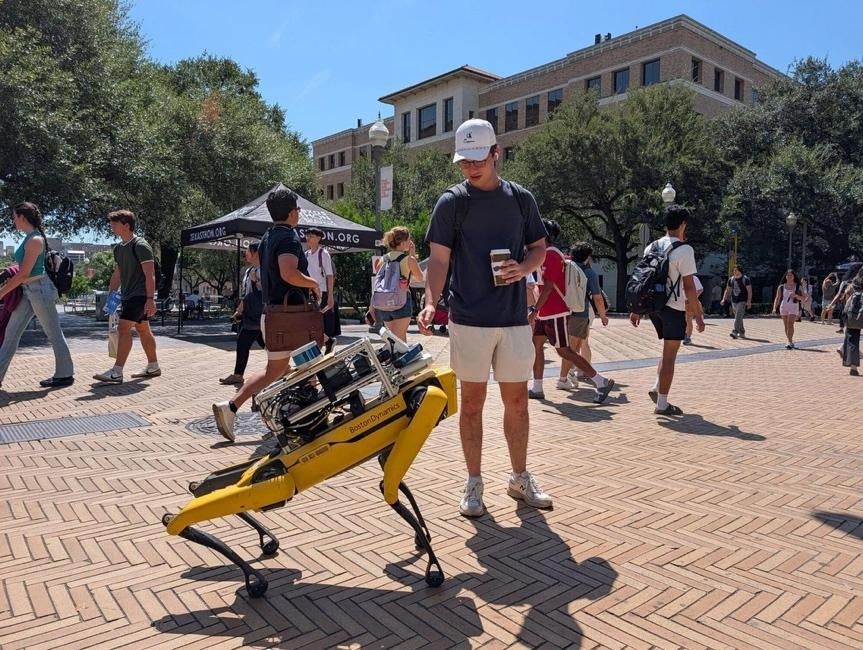
As principal investigator of UT’s team for the Army Research Laboratory’s SARA program, Biswas led research on long-range planning for autonomous off-road navigation systems — work that developed novel solutions to global visual localization by registration to satellite imagery, and operator-defined long-range mission planning constraints. His close collaboration with DEVCOM ARL has also enabled firsthand insight into the operational needs of ground autonomy, and he has carried similar lessons from industry work on the Amazon Astro robotics team.
Beyond robotics, Biswas has served on the Executive Council of the Association for the Advancement of Artificial Intelligence (AAAI), a leading international scientific society for AI. As an associate program chair for AAAI’s 2026 conference, he led an AI-assisted peer-review pilot, an effort that combined technical development with attention to confidentiality, transparency and human oversight.
Reimagining Naval Systems With AI-Assisted Design
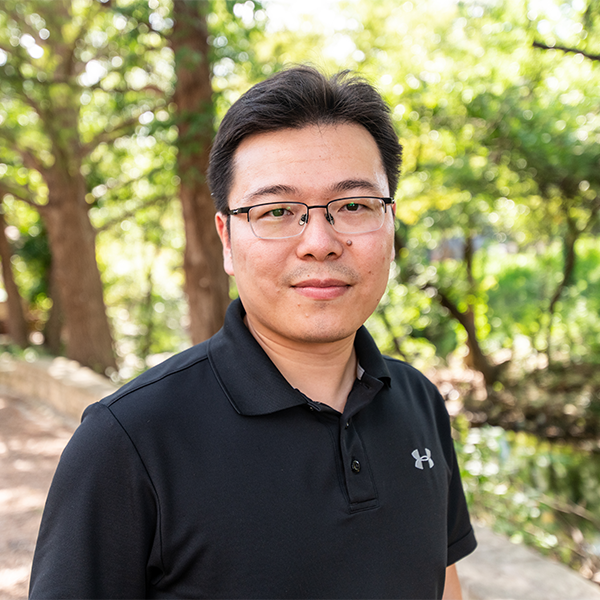
Sha builds the decision-centric foundations for complex systems engineering and design, and he is a faculty member in the Cockrell School of Engineering affiliated with the Center for Additive Manufacturing and Design Innovation and the Oden Institute for Computational Engineering and Sciences. His research spans AI-assisted design, swarm manufacturing, and complex sociotechnical systems that underpin transportation networks, power grids, and other large-scale infrastructure.
As a Chief of Naval Research fellow, Sha will work to bring state-of-the-art advances in AI-assisted design, multi-robot hybrid manufacturing, and complex systems engineering to bear on the design, manufacturing and sustainment of next-generation naval platforms. One challenge he plans to take on is enabling factories that can produce many different products on demand without costly retooling — an approach that could bring rapid, flexible and reconfigurable manufacturing directly to on-site part building and ship repair.
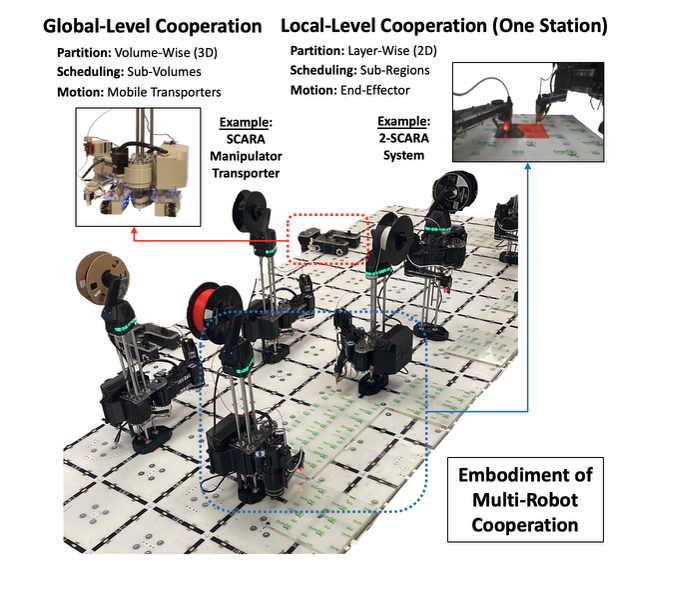
This work draws on two decades of research at the intersection of design science and systems science, supported by a range of federal and industry partners including the National Science Foundation, the Air Force Office of Scientific Research, and Army DEVCOM. Sha’s lab developed one of the world’s first operational cooperative 3D printing systems, which combines dexterous robotics with additive manufacturing to enable rapid, on-site fabrication and repairs that traditional manufacturing cannot accommodate. His work on AI-assisted design, including LLM4CAD and multi-agent optimization frameworks that accelerate the engineering design cycle from concept to validation, aligns closely with the Navy’s interest in using AI to compress complex search problems and speed the path from ideation to deployment.
All 12 winners were chosen from more than 180 nominations from approximately 70 academic institutions across the United States. A formal welcoming ceremony will take place in October at ONR headquarters in Arlington, Virginia.