How Long Have Texas and Oklahoma Been Playing Football?
Team names, Oklahoma statehood, control of malaria, mandatory helmets, the forward pass, four downs — all these came AFTER the first Texas-OU game.
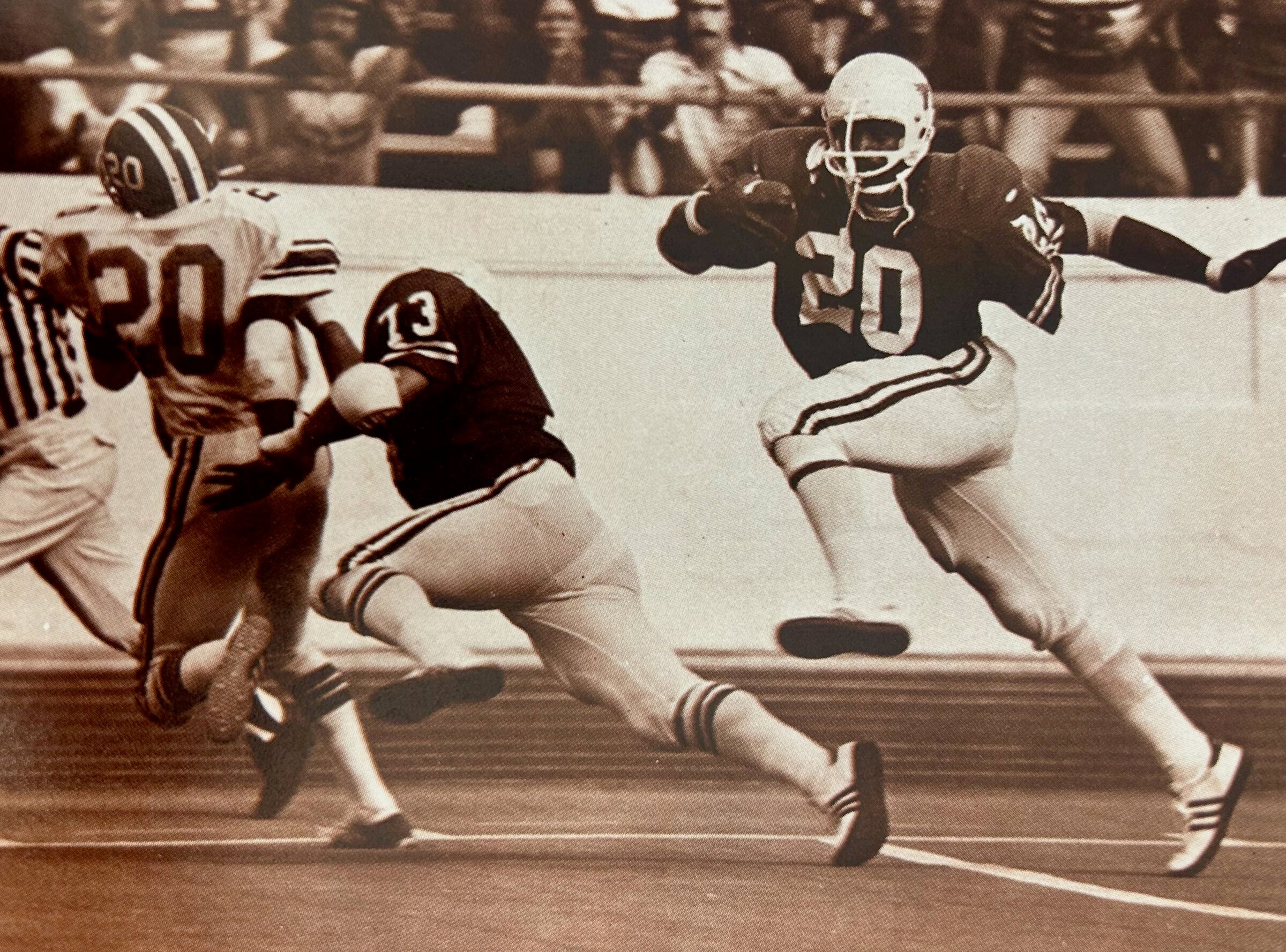
You know a college rivalry game is historic and beloved when the Wikipedia article about it starts its “History” section with the notice: “This article contains an excessive amount of intricate detail.” Intricate, sure. Excessive? We think not.
Here’s a look at a few lesser-known facts and mostly forgotten nuggets regarding the greatest rivalry in college sports.
The First Texas-OU
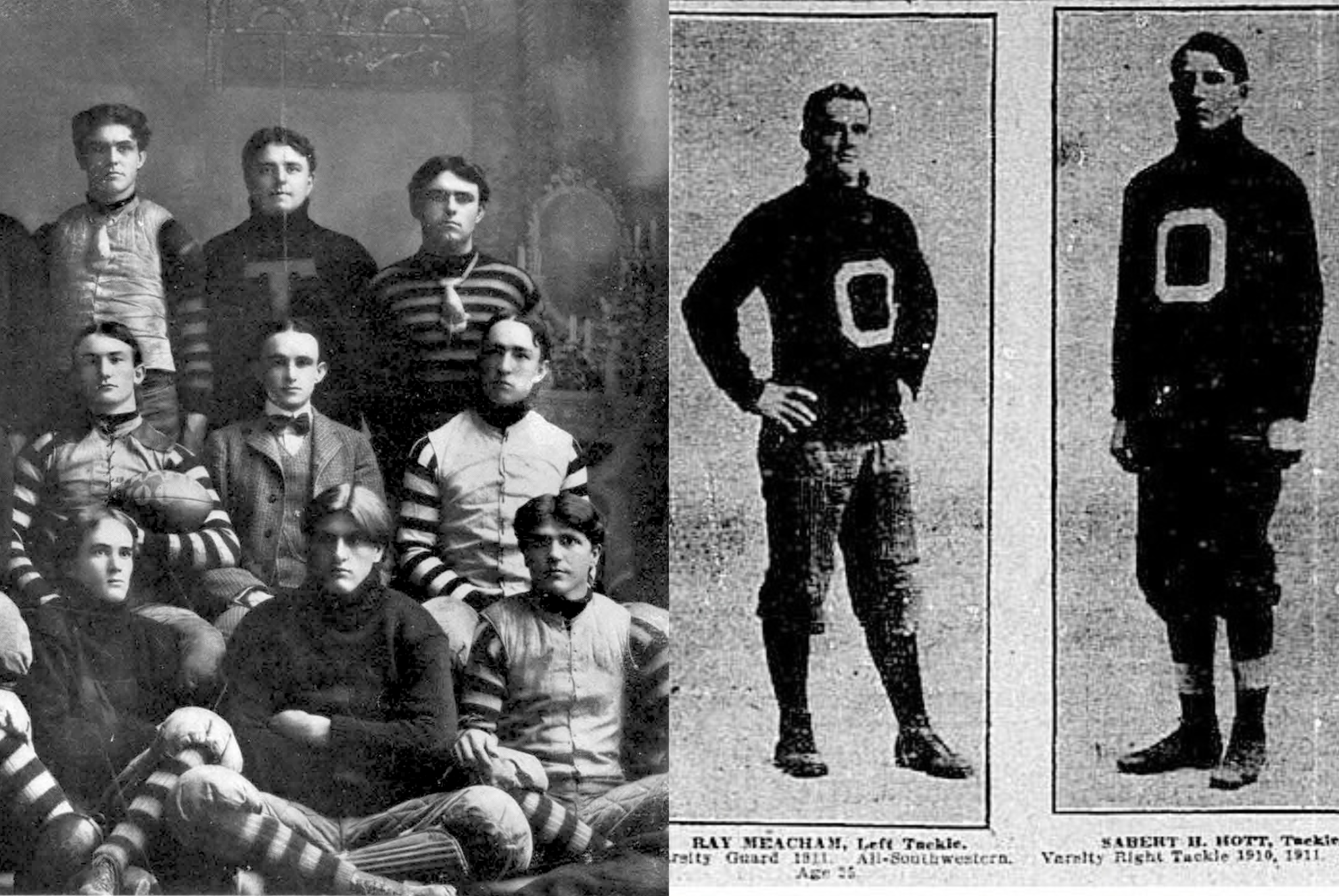
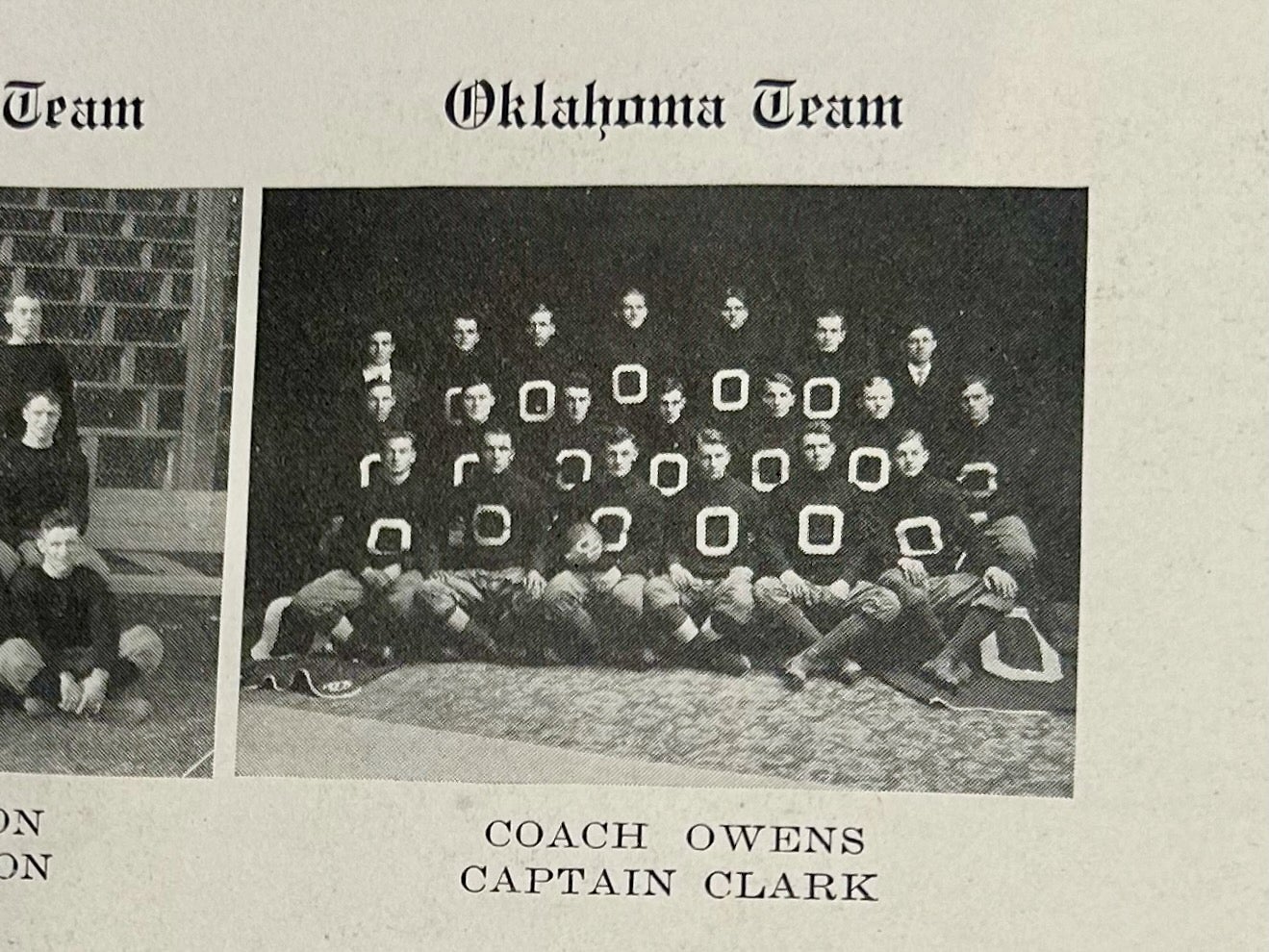
The first football game between The University of Texas and The University of Oklahoma was played in 1900. The Texas team was not yet the Longhorns and was simply referred to as the ’Varsity (slang for university). And OU’s players were not yet Sooners but were called the “Red Football Warriors” in one headline and the “Oklahoma Territory Boys” in another. Yes, it would be seven years before Oklahoma was even a state. Texas became the Longhorns in late 1903, and the Oklahoma team became the Sooners in 1908.
On Wednesday, Oct. 10, 1900, the OU team arrived in Austin, having ridden the train for 15 hours from Norman. They checked into the Driskill Hotel, no doubt exhausted, and were playing football on campus at 3:30 that afternoon.
The Texas team had 13 men (as compared with 113 today), and they were playing without their fullback, James Hart, who had been bedridden with malaria two days earlier. The Austin Daily Statesman wrote on the day of the game: “It has been impossible to obtain the line up of the [Oklahoma] team, as the game was only arranged this week.” Today, major matchups are often scheduled 10 years out.
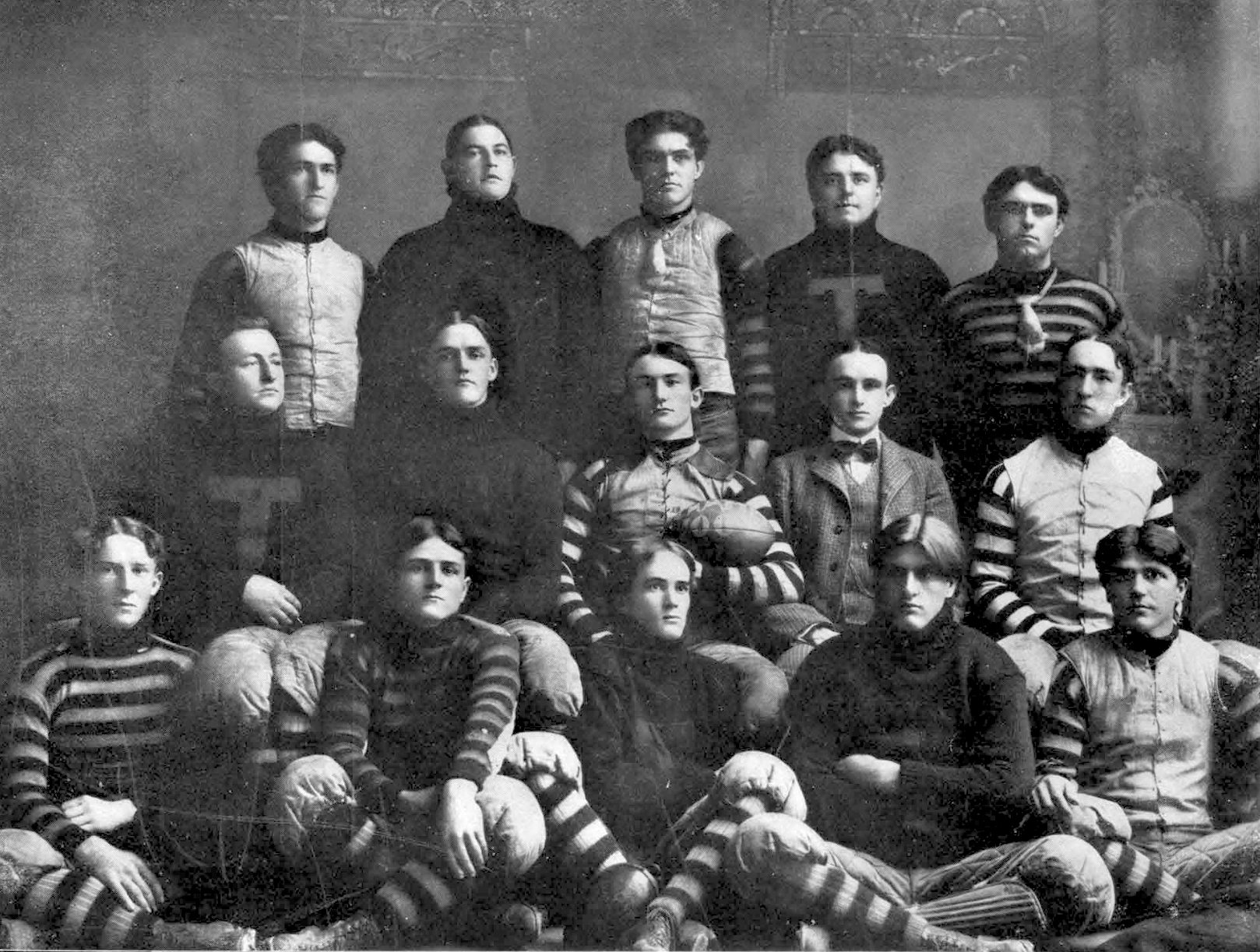
It was considered a practice game, a warmup for that week’s real game Saturday in Dallas against Vanderbilt.
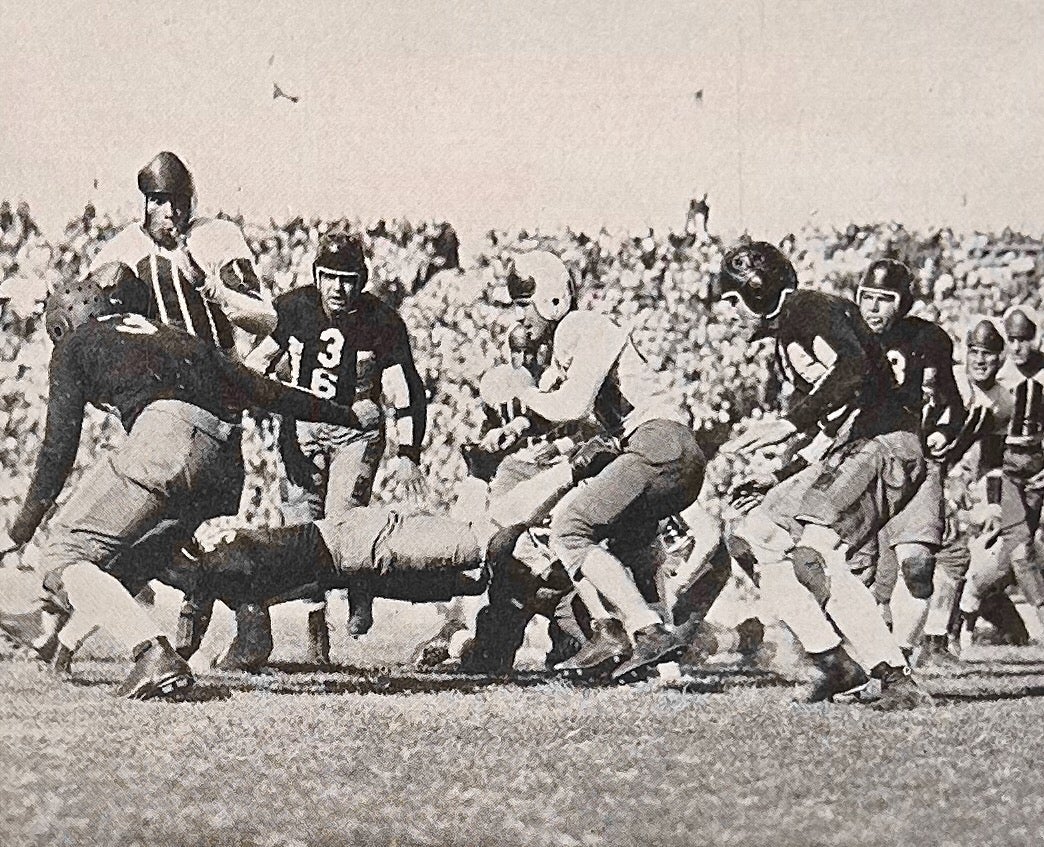
A modern fan transported into the wooden bleachers to watch the game would be bewildered. The field was 110 yards long. A possession was three downs, but 5 yards was enough for a first down. Touchdowns and field goals were both worth five points. After adjusting to the rules, that transported fan might be a bit bored; much more akin to rugby then, the sport was nothing but running, laterals, punting and field goals; the first legal forward pass would not be thrown until 1906, an attempt to open up the game for safety’s sake and disperse the players on the field.
The adjective most used when describing turn-of-the-century football is “brutal.” “Medieval” is another apt description. It was a ground game won by masses of bodies and “flying wedge” formations that aped an ancient military tactic. Helmets, then only leather caps or “head harnesses” to protect the ears, were optional. Players grew long, bushy hair in the belief, then widespread, that it would protect their heads. In 1904 and 1905, some 44 young men died playing football in America, creating a national outrage that led President Theodore Roosevelt to threaten to ban the game if changes were not made. This led to establishment the NCAA in 1906. Yet helmets were not mandatory until 1939.
Texas won the game 28-2. OU’s student paper, the University Umpire, analyzed the defeat this way:
“Every possible discouragement faced our boys when they stepped onto the gridiron at 3:30. They were not only tired from their trip but were surrounded by a crowd of 500 people (compared with 92,000 today), none of whom they could depend on for support, four of the men were new in the game and above all they were meeting a team with 15 pounds to the man advantage of them in weight; but they faced their task like men knowing that great honor awaited them at home for every manly effort even though they did not win its point.”
The Umpire concluded with a gentility seldom found on either side of the Red River today. “Our boys have nothing but praise for the treatment given them by their college friends of Texas, and hope to return the favors when they visit us about the 10th of November and materially change the score of the game.” Alas, Game 2 went to Texas as well.
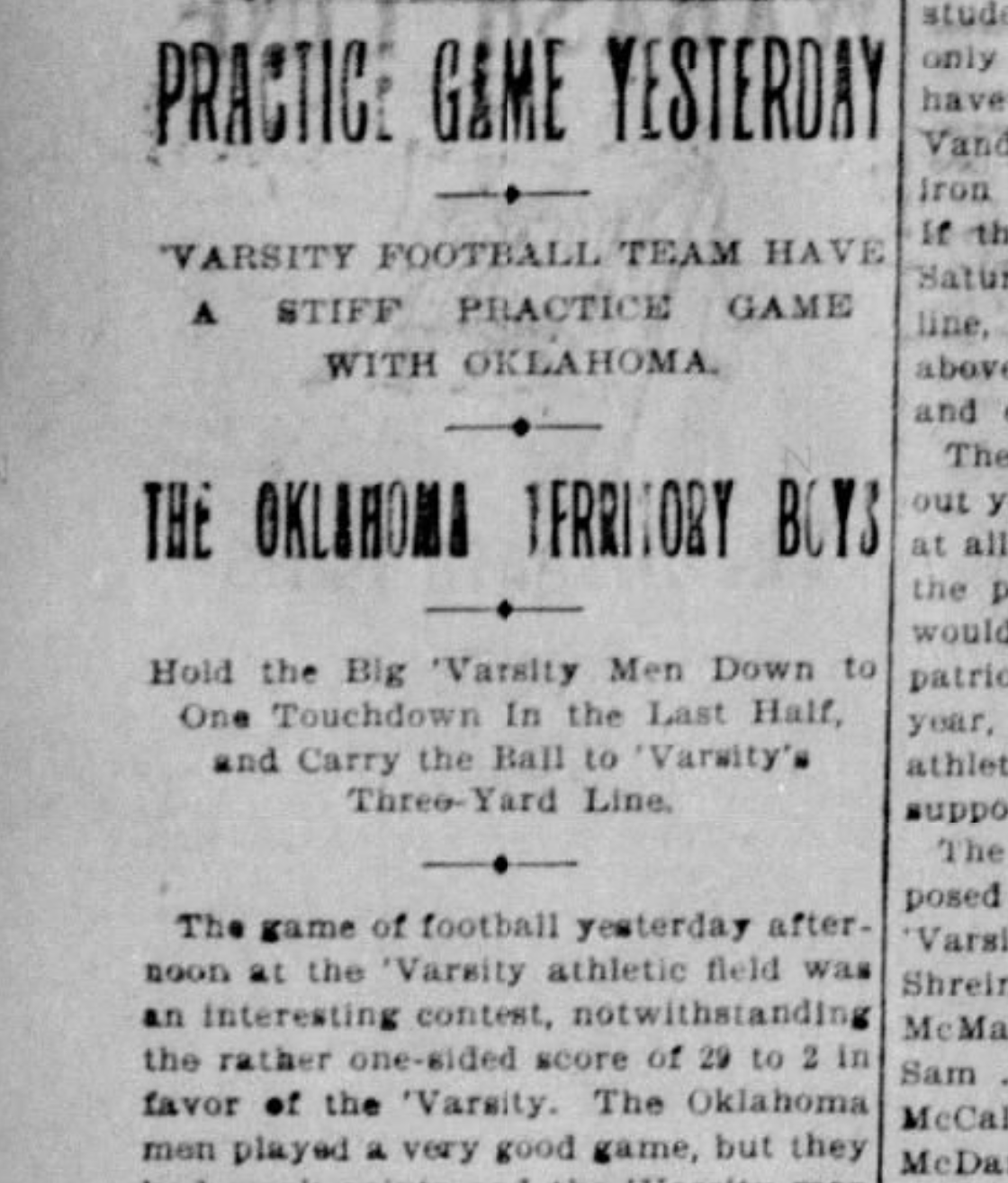
Despite the lopsided win, the Austin Daily Statesman had plenty of notes for the home team: “While speaking of backs, it is well to say that the [UT] quarterback work was also too slow. They called the signals with too much deliberation, and their voices did not have a loud, snappy ring.”
Texas beat Vanderbilt in Dallas three days later. In total they played six games that season and went undefeated. Four of the games were shutouts.
The next year, the teams met twice, first again in Austin, and the following month in Norman; Texas won both games. In 1903, their fifth meeting, the teams tied for the first time, with the odd-looking score of 2-2. It wasn’t until their eighth meeting, in 1905, that Oklahoma won, 2-0. And something went badly wrong in 1908, when OU won for a second time, 50-0, in Norman.
The last time the game was a matchup between Top 5 teams was 2008, when No. 5 Texas beat No. 1 Oklahoma 45-35.
Who leads the series? Texas does, 65 to 51, with five games ending in a tie, the last in 1995, the last season college ties were possible.
The Venue
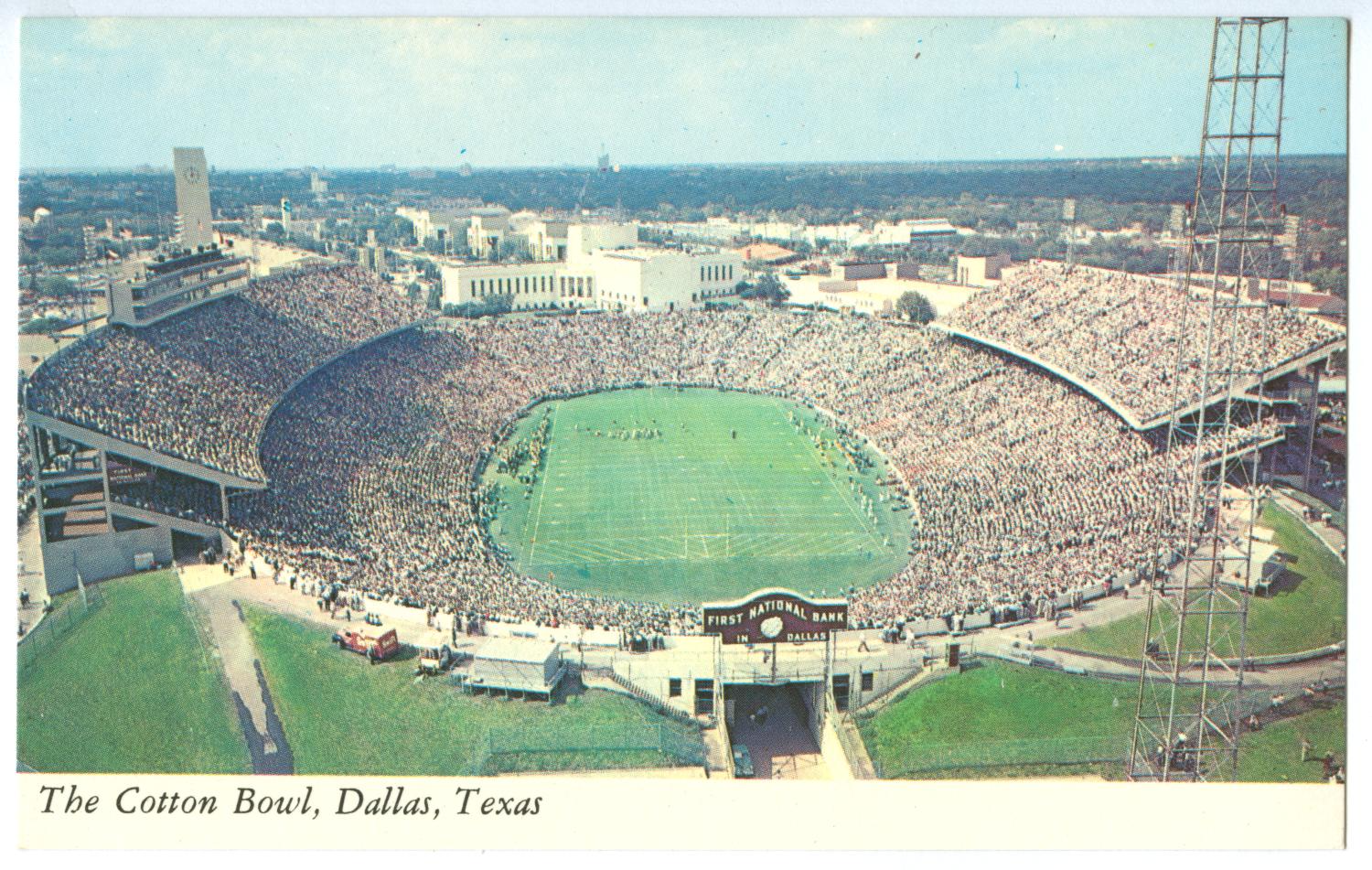
The game is synonymous with the Cotton Bowl, but in its early years was played in Austin 10 times, Norman and Oklahoma City thrice each, Houston in 1913 and, more recently, Arlington in 2018.
In 1912, they played in Dallas for the first time, but it was not in the Cotton Bowl, which was not built until 1930. Rather they played at Gaston Park, a baseball field sometimes used for football, where the Music Hall at Fair Park now sits. The train with the team and coaches left Austin at midnight and arrived in Dallas at breakfast time. Between 500 and 1,000 students took similar trips to Gaston Park’s grandstands, unknowingly establishing a migratory route still being traced 114 years later.
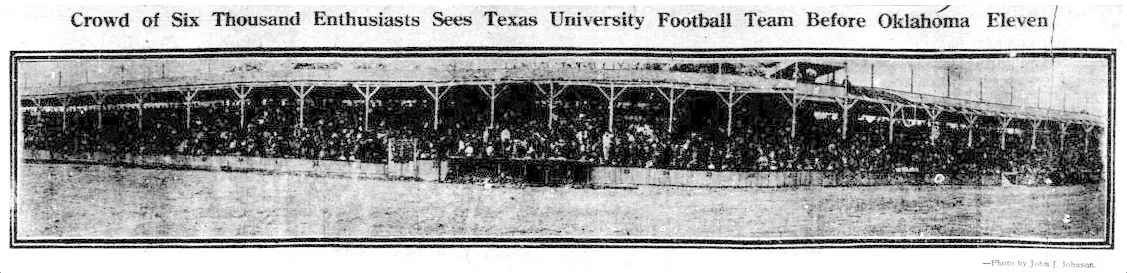
In 1929, the universities signed a 10-year contract to play in Dallas during the Texas State Fair, an arrangement now entering its 97th year.
In 1932, the game moved to the 2-year-old Cotton Bowl, and each year is scheduled to coincide with the State Fair, usually the second Saturday in October. By agreement with the city of Dallas, which pays each school $1 million annually, the game will be in the storied stadium through at least 2036.
What’s it called again? Plus, the Golden Hat and the Running of the Game Ball
For the first 100 games, the contest was known as the Red River Shootout, and during the past 21 years it has changed names four times. In 2005, it became the tongue-twisting SBC Red River Rivalry, then the AT&T Red River Rivalry, then the AT&T Red River Showdown, and it is currently the Allstate Red River Rivalry.
The game’s winner gets three trophies, but the most famous is the Golden Hat Trophy. The trophy was created in 1941 as the “Bronze Hat,” sometimes misnamed as “Brass Hat.” In 1959, Austin American sports editor Lou Maysel wrote, “The series has been given a rotating trophy, too, the Bronze Hat, but this has never caught on with the public, although it has been given token recognition by the two schools.”
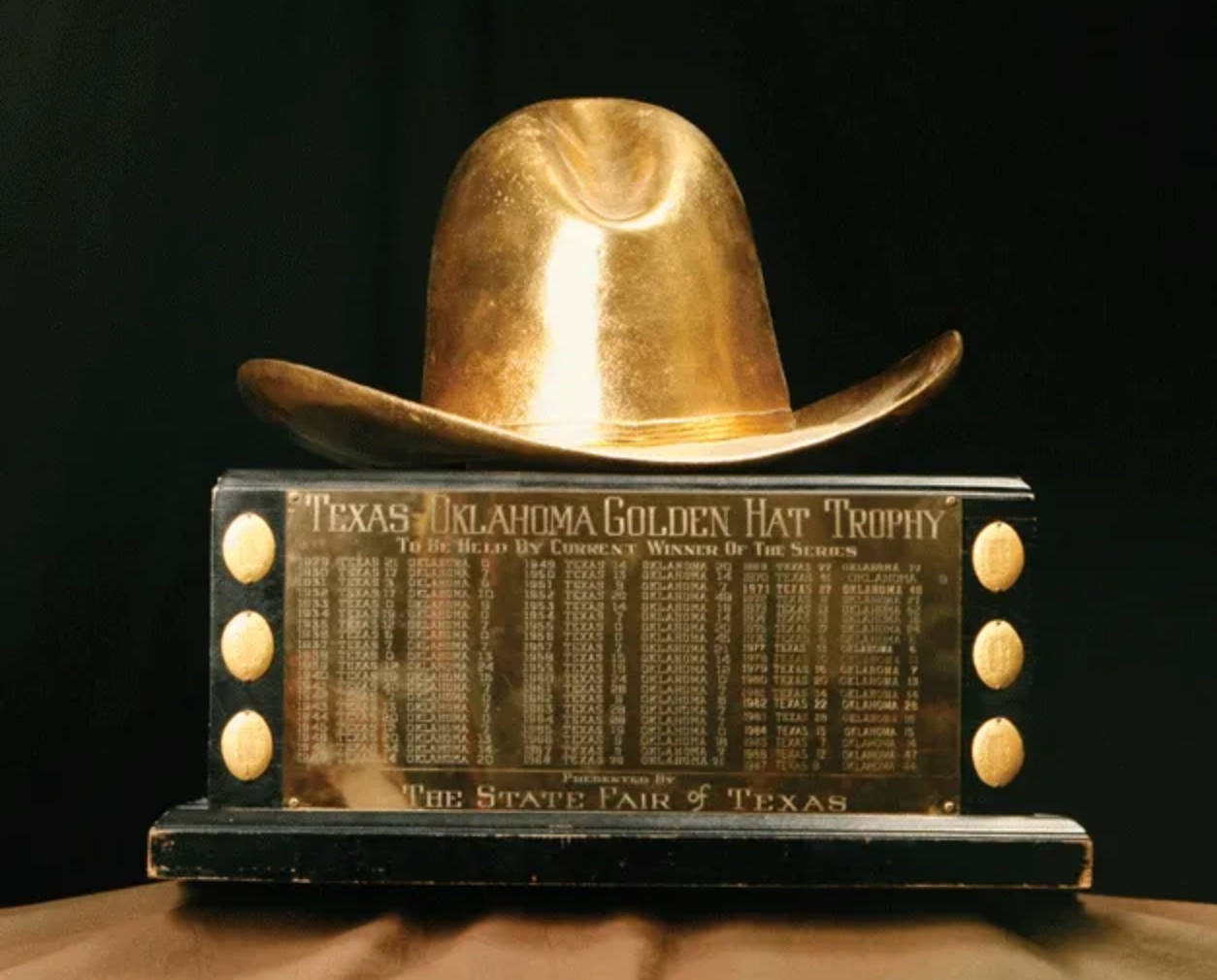
Perhaps it simply was not the right metal. When the hat was redone in about 1968 because it had gotten ugly with age, it was gold-plated and is now known as the Golden Hat. And based on how many players try it on after a win, they are certainly not indifferent to it now.
A much newer tradition, albeit 28 years old, is the running of the game ball. Since 1998, UT’s and OU’s Navy ROTC students have run a game ball from each campus to the Cotton Bowl. UT’s relay team takes off from the Tower during the Wednesday night pep rally and doesn’t stop except for a few photo ops until they reach the Cotton Bowl on Saturday morning.
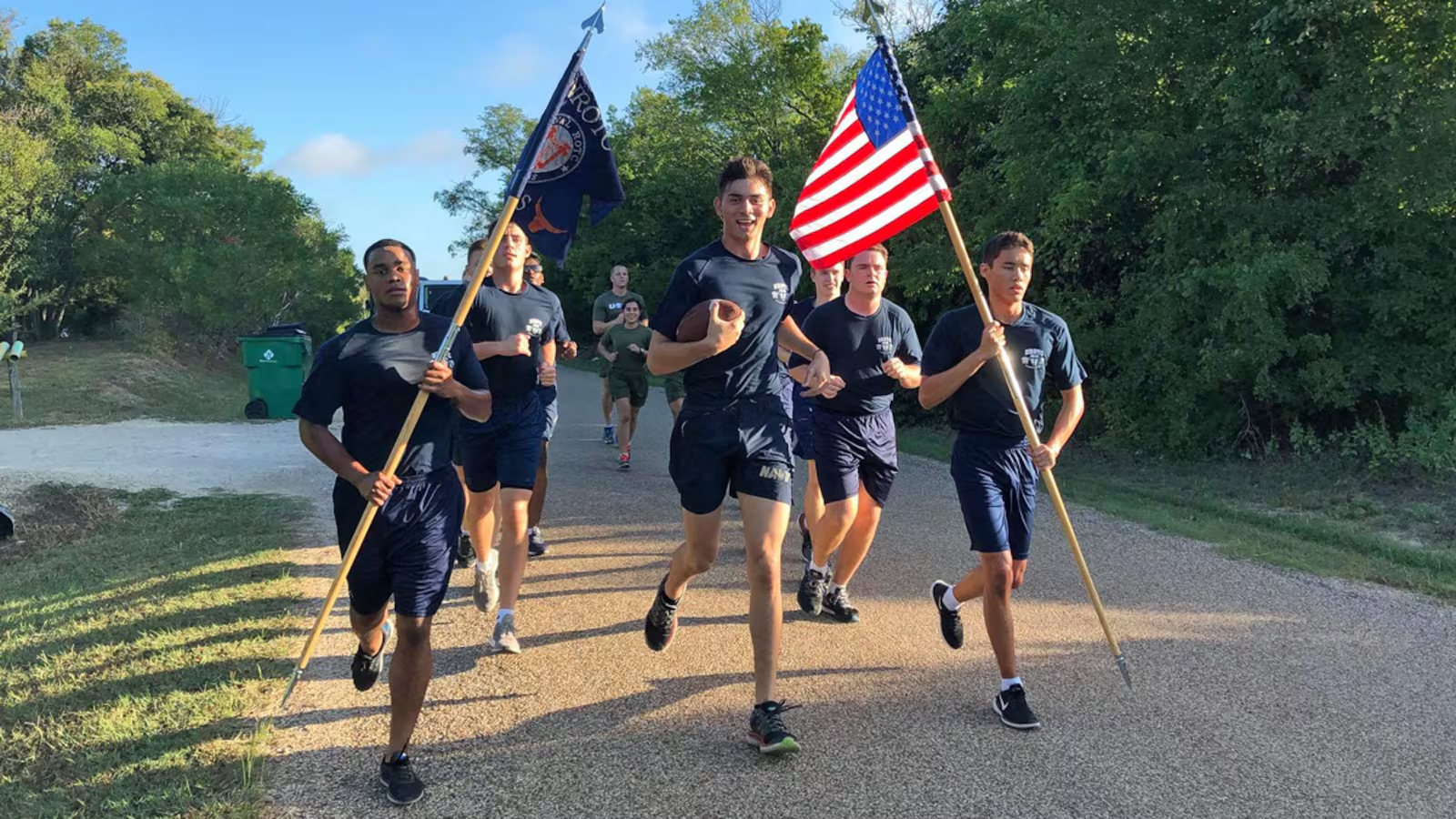
Running in teams about 10 miles at a time around the clock, they run 180-200 miles, depending on the route. Treading on smaller roads parallel to Interstate 35, the Longhorns pass through Salado, Moody, McGregor and Waco. When it’s time to switch, fresh students, who are following in support vans, rotate in. During daylight hours, at least two students per team are running at all times.
They deliver the game balls to the officials at the Cotton Bowl before kickoff. Then they play flag football for a trophy that has nothing to do with the varsity game. It has been noticed that the school that wins the main game also — but not always — wins the flag football game.
From the Southwest Conference to the Big 12 to the Southeastern Conference, UT and OU have traveled a long road together. And along with Army-Navy and Michigan-Ohio State, Texas-OU, with 126 years of history, will continue to be among the greatest rivalry games in America.