In 1941, Longhorn students were desperate for a win in College Station. For 18 years, they had won all their home games against the Aggies but had not stolen one on the road during the entire lifetimes of the freshmen. Something had to give.
It is a testament to their desperation that students at an institution of higher learning, with the teaching of critical thinking skills and the scientific method at the heart of its mission, would resort to the occult.
***
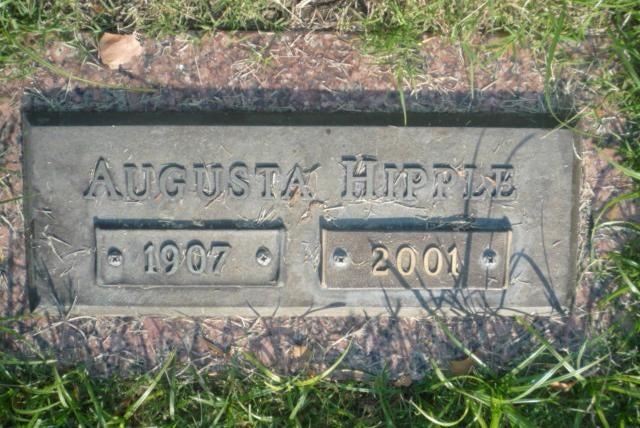
Mozelle Augusta Hipple was born in 1907 in New Jersey and grew up in a convent. In 1933, at 26, she moved to Austin with a husband who was disabled from childhood polio and a 2-year-old son, Donald. To make ends meet, she cleaned floors in a nine-story office building at Sixth Street and Congress Avenue, the Littlefield Building, for 25 cents an hour.
In November 1941, as Hipple was returning home one night after work to her apartment near campus, she encountered some UT students on the stairs who asked her where the fortune teller lived. She was not yet known as a fortune teller, so it’s not clear whom the students were seeking.
“A fortune teller? I am one,” Hipple replied. She asked what a fortune teller made, and the students answered 25 cents per reading, the exact hourly wage she made cleaning. And just like that, a second career was born. It was opportunistic, but it was not a con; at age 14, she had been taught card reading by, of all people, a nun in the convent.
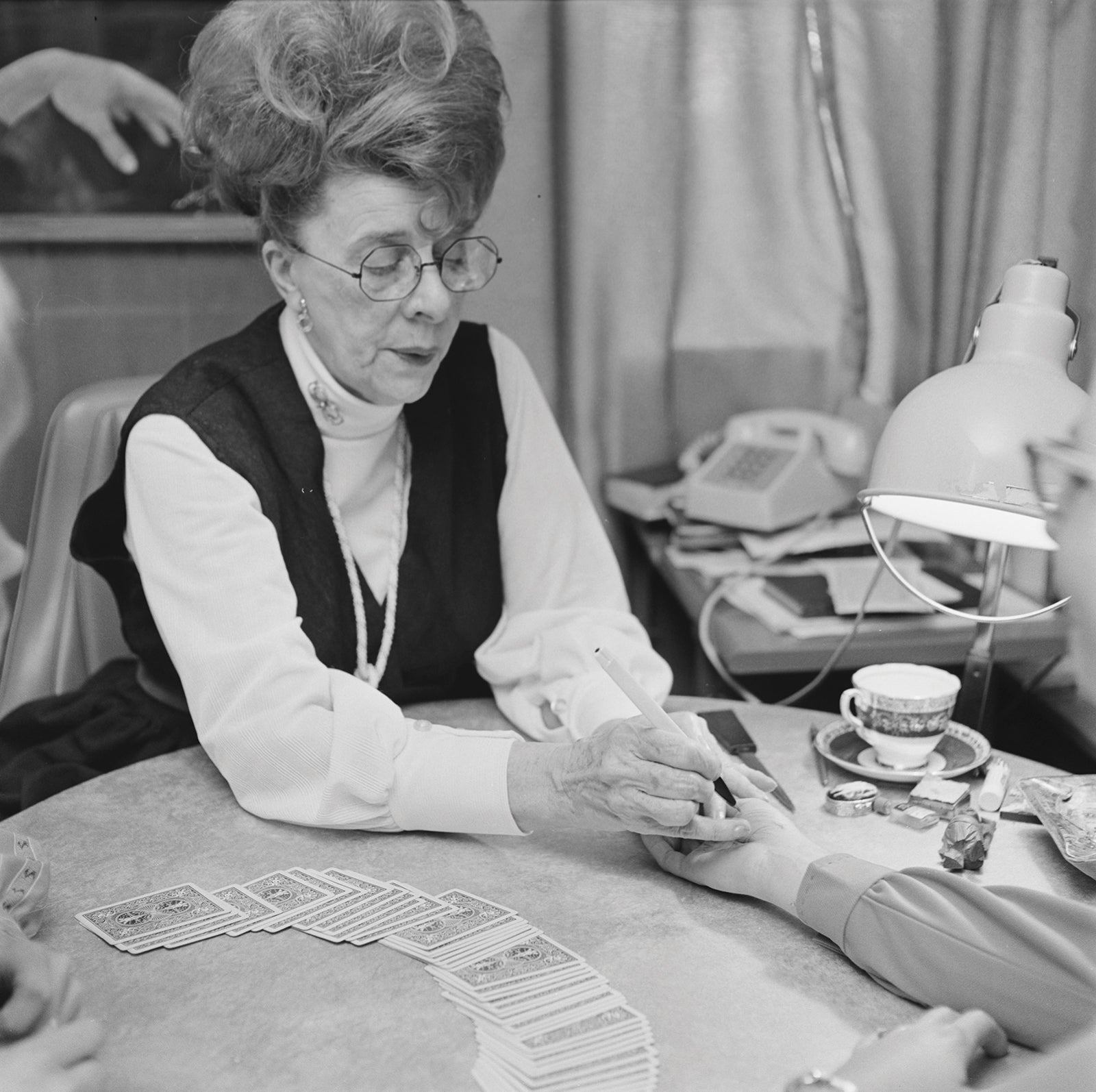
The students asked what could be done to bring about a Longhorn victory at Kyle Field. Hipple told them to burn red candles in their windows, a pretty standard prescription as hexes go. The red symbolized challenge and opposition, she explained.
It was worth a shot, and it was a windfall for candle sellers. For a week, dormitory lounges and fraternity and sorority houses glowed with the light of red candles, and area store owners and other Longhorn fans burned red candles.
That Thursday, Thanksgiving Day, the No. 10 Longhorns proceeded to Kyle Field and shut out the No. 2 Aggies 23-0. “That week, she traded her work apron for kaftans and tied her cherry-red hair up in scarves,” wrote Rosie Ninesling in a 2022 Austin Monthly article.
In 1966, speaking of the A&M Hex, Hipple told Austin Statesman reporter Don Adams, “It was a matter of mass auto suggestion.”
If so, then it was powerful, because the Longhorns did not lose again to the Aggies anywhere until 1951 (though they tied in 1948). Hipple, who preferred “Mrs.” to “Madame,” which is how the public had come to refer to her, and who thought of herself as a “parapsychologist,” repeated the hex on other opponents, including No. 1 SMU in 1950 and against Baylor in 1953, both successfully.
“Using the money she began to make from her college-aged clients, she was able to leave her rundown apartment for a home in West Campus,” wrote Ninesling. “With hearts, spades, diamonds and clubs cut into the picket fence, she aptly named it ‘The House of Cards.’” A closet-sized room at the front of her home on 29th Street was her workplace for decades thereafter, where she read cards and palms.

By 1972, Hipple’s rate had risen from 25 cents to $10 per reading, and she only needed to work four days a week and by appointment only.
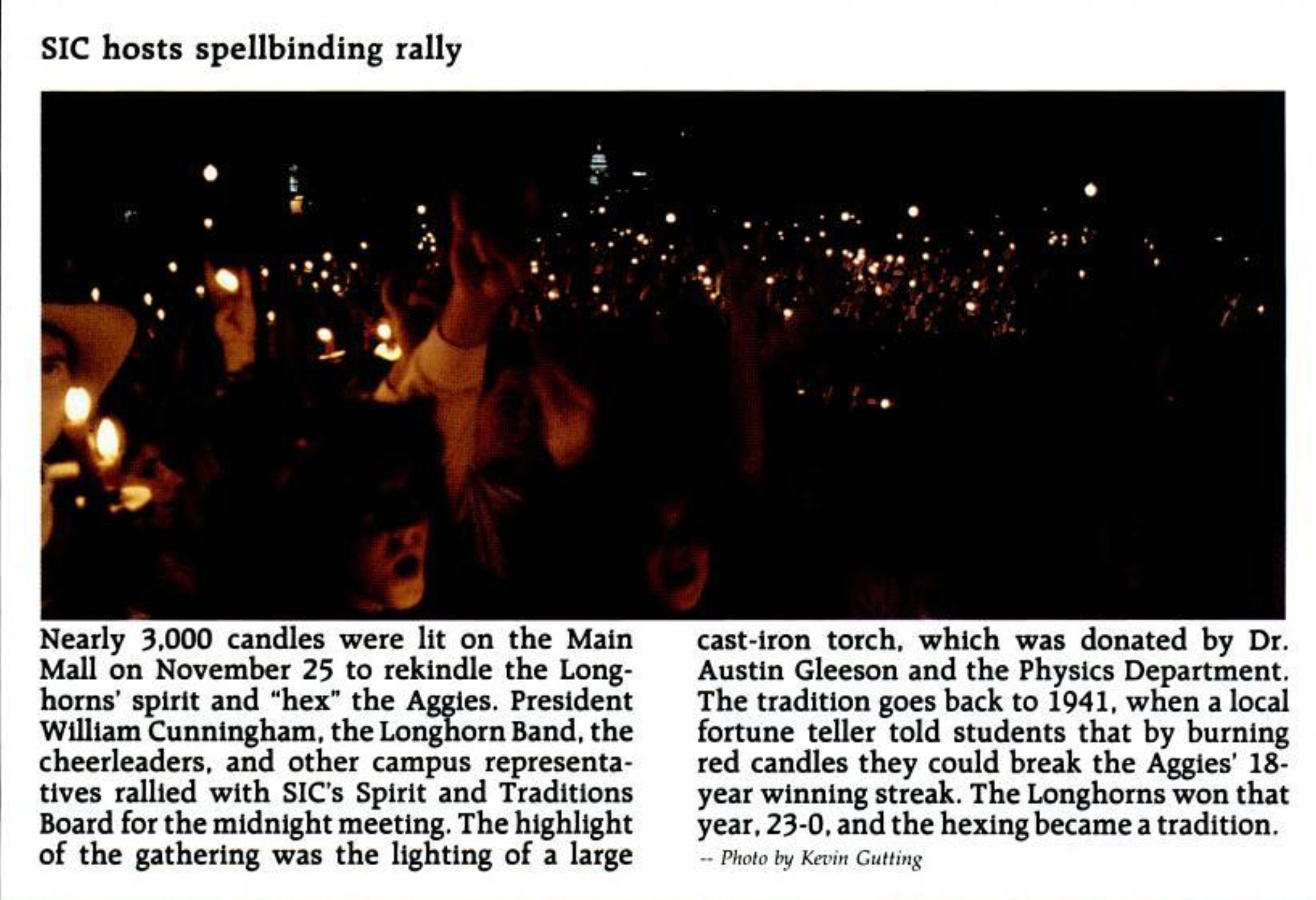
But like many traditions, the hex, which was not yet an organized event, fell by the wayside during the 1960s and 1970s. During the mid-1980s, it was resurrected by UT’s alumni association, which prompted its Student Involvement Committee, now known as the Texas Exes Student Chapter, to reboot the tradition with a rally.
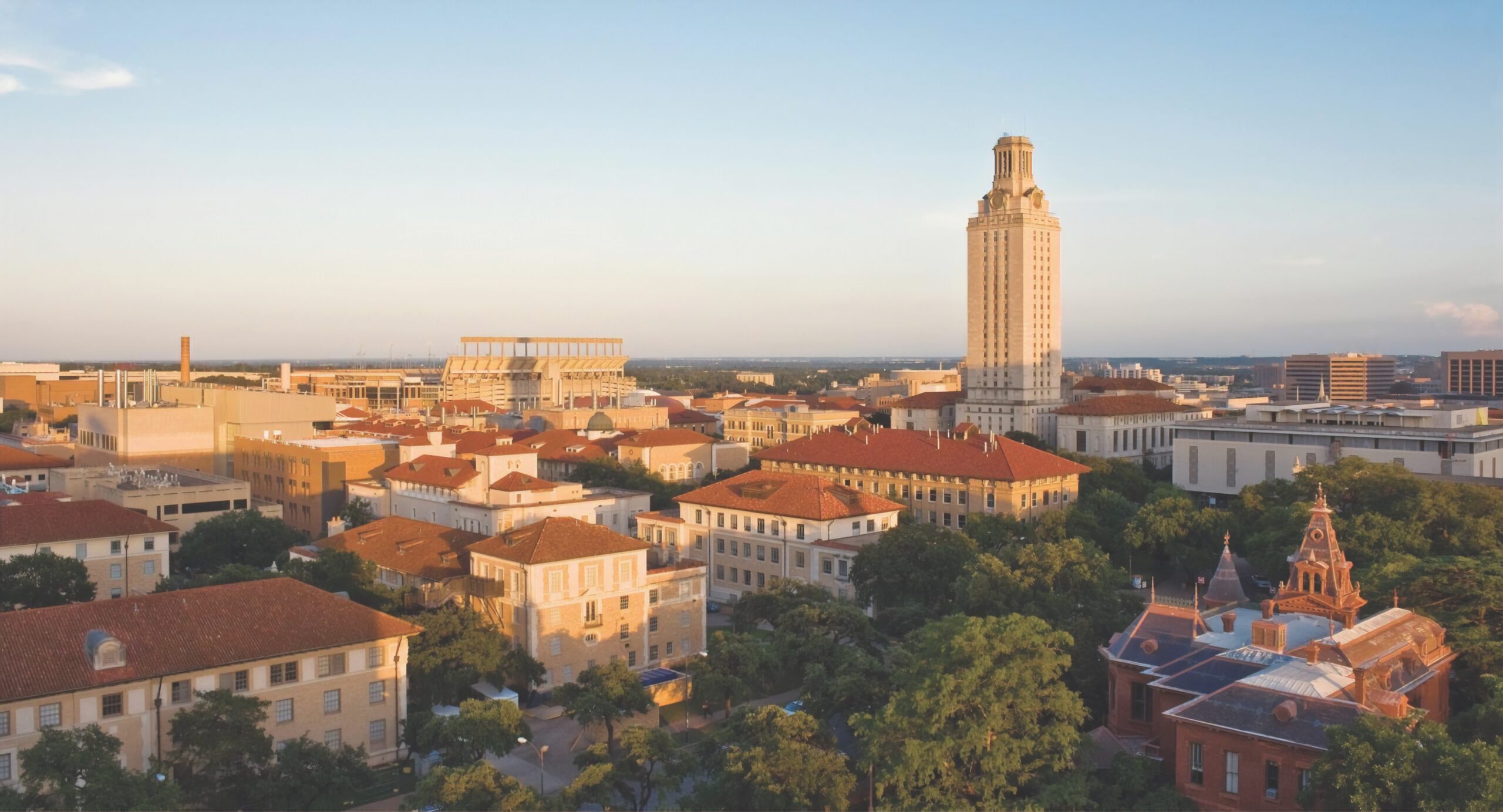
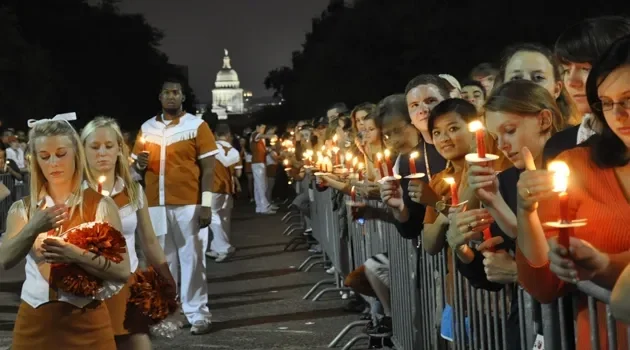
The first official Hex Rally began at 11:15 p.m. on Tuesday night before the Thanksgiving Day game in 1986. The Longhorn Band marched from the stadium west up 21st Street past Jester Center to the Main Mall, bringing students out of the many dorms they passed.
“The Physics Department, with the help of professor Austin Gleeson, constructed a large, metal, gas-lit red candle….” wrote UT News’ Cory Leahy. “Then-President William Cunningham, who wanted to speak at the rally but had to attend a formal dinner out-of-town, flew back to Austin immediately after his event and had a police escort from the airport to make it to the Main Mall on time, still dressed in his tuxedo.”
The Aggies were hexed at midnight as thousands of students raised red candles and sang “The Eyes of Texas.”
Texas A&M won that year, and prevailed in eight of the next nine years. A statistician could make a pretty good case that UT was hexing itself.
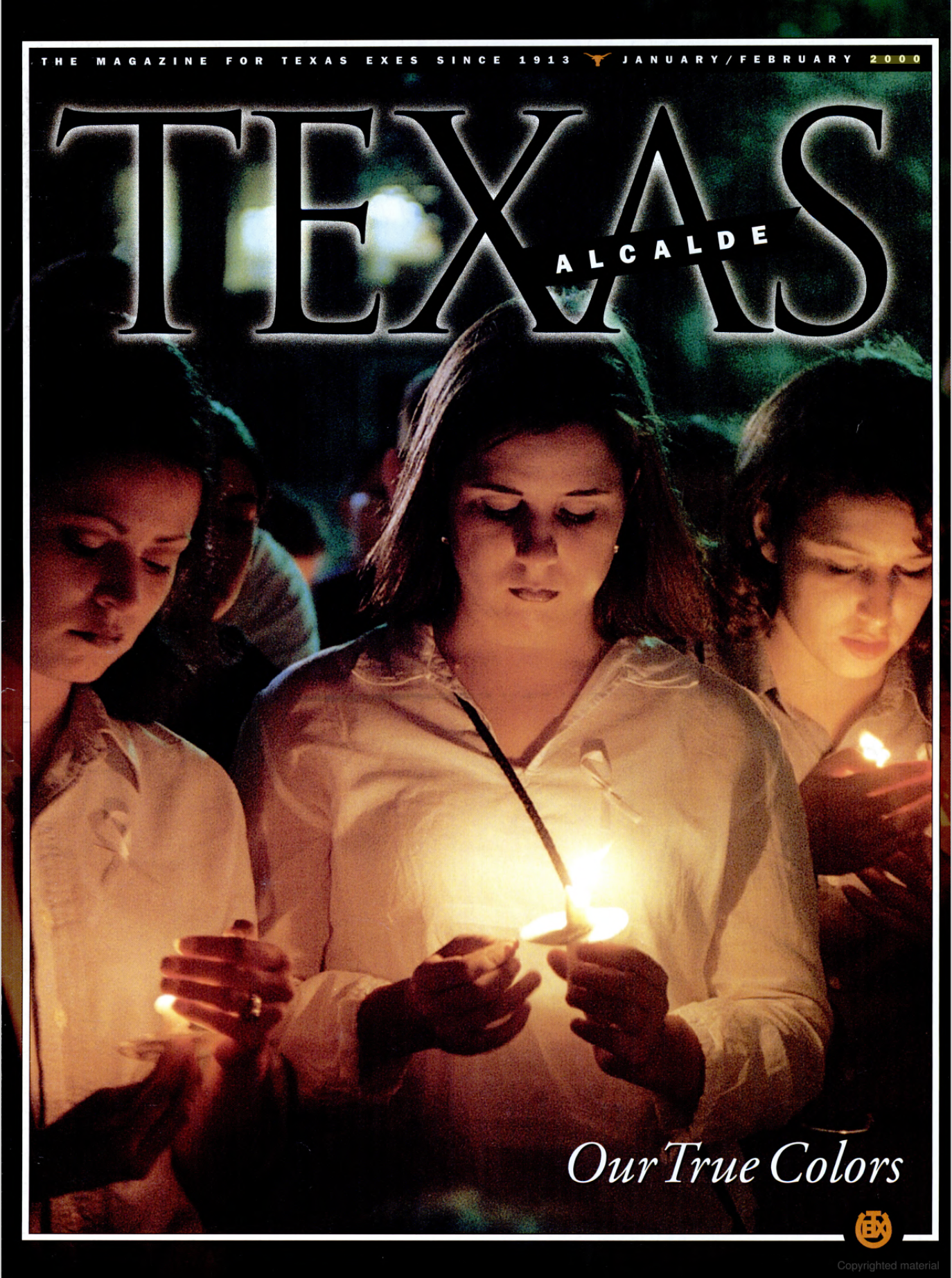
No matter — the event was held annually until 1999, when the Aggies’ massive bonfire collapse killed 12 people. Rally organizers quickly pivoted and extended an invitation to all Aggies and their friends to the event, dubbed a “Unity Gathering.” Instead of burning red candles, attendees burned white candles in memory of the fallen Aggies, and the color the two schools have in common. (The Aggies won that year.)
Then, in 2012, the Aggies left the Big XII Conference, and the two teams didn’t play each other for 12 long years.
When the rivalry game resumed in 2024, Longhorns took no chances, and the Hex Rally returned to the Tower’s Main Plaza. Texas has won both games since then and has a commanding lead in the series: 78–37–5.
In 1966, Hipple, being something of a local celebrity, wrote a guest review for the Austin Statesman of Federico Fellini’s film “Juliet of the Spirits.” In it, she said, “We do not realize that the great value in our life is illusion. … Only illusions make life bearable between the cradle and the casket.”
Hipple reached that casket in 2001, aged 94. Her hex lives on.