The Tower – A Labor Day Special
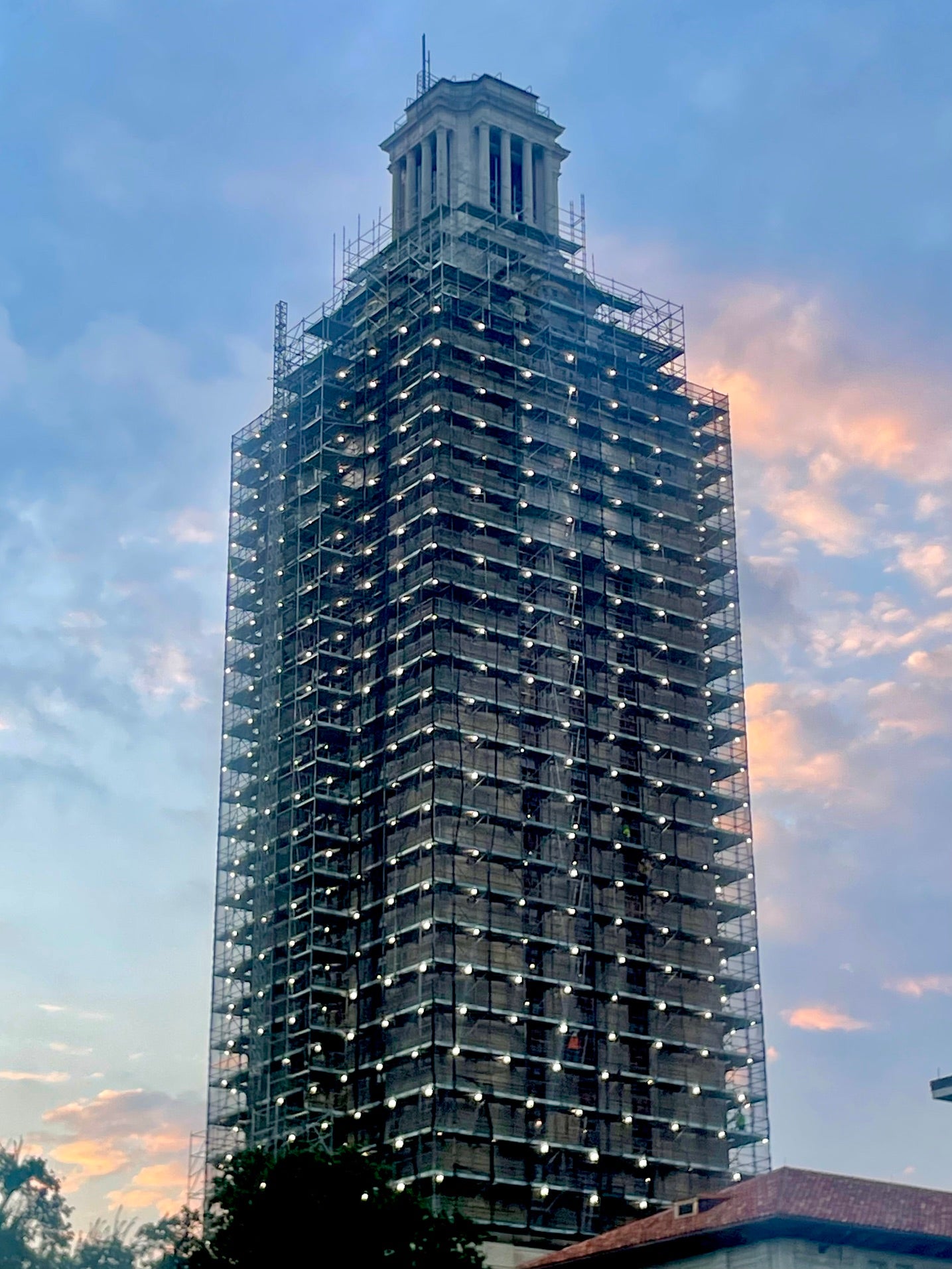
This Labor Day, we celebrate the people who toiled low and high — very high — to build the University’s iconic landmark.
Historic images from the Alexander Architecture Archive, UT Austin
While Labor Day is the celebration of the labor movement, allow us to expand the meaning this year to show appreciation for both the skilled workmanship and the back-breaking labor required to build one of the state’s most impressive and iconic buildings.
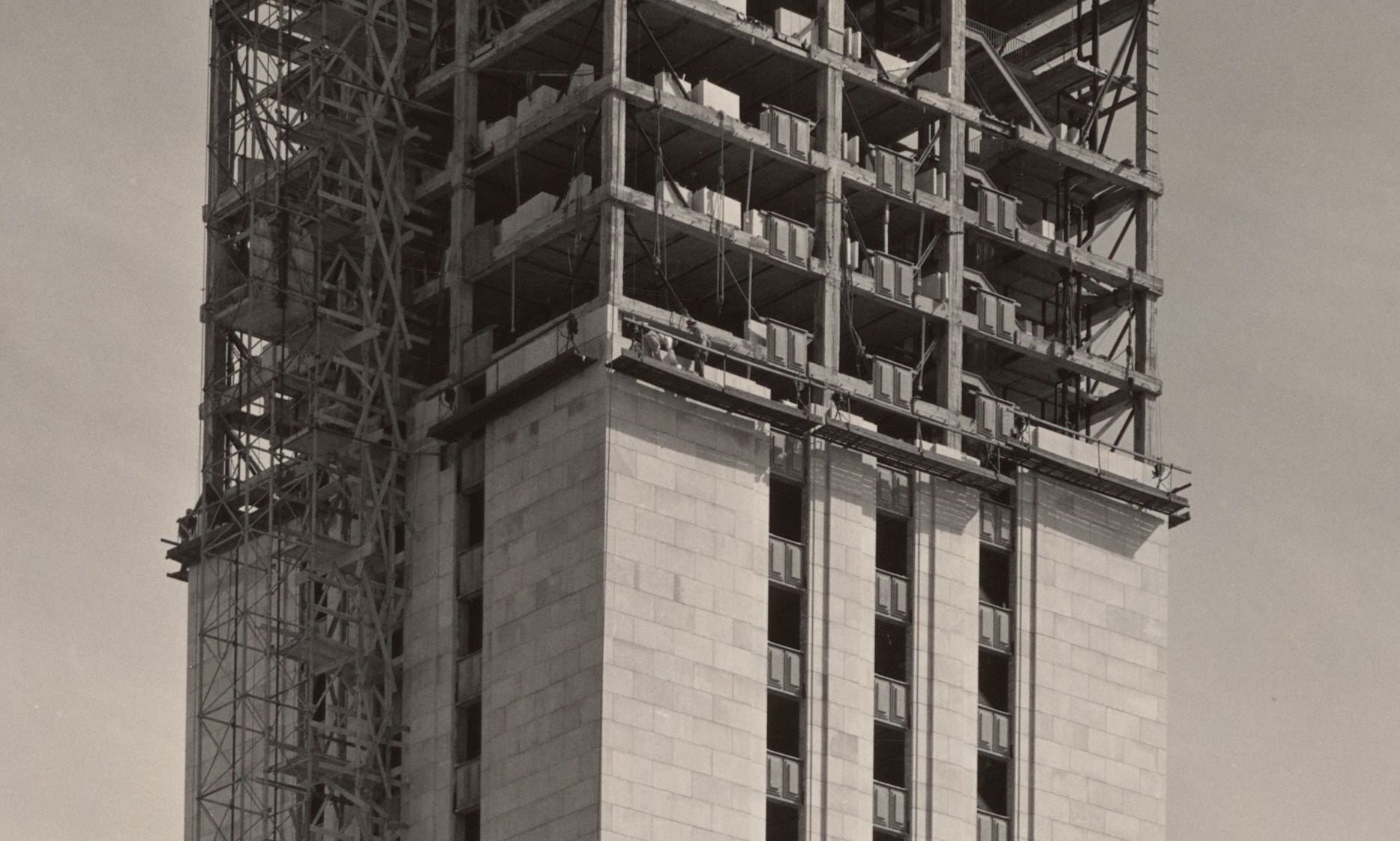
UT’s Main Building and Tower were built during the Great Depression, and alumnus Jim Nicar writes on his blog, “The UT History Corner,” “… as the Great Depression worsened, UT sought ways to minimize the number of unemployed in Austin. The University’s ever-growing building program brought with it construction jobs that helped soften the economic blow.”
The Tower was a beneficiary of the New Deal. Specifically, it was known as Public Works Administration project No. 2257. Because it was PWA and not WPA (Works Progress Administration), the workers who labored on the project were not paid by Uncle Sam, but by private contractors.
In its more than 10 years of existence (1933-1944), the PWA awarded $7 billion through private contractors to build more than 34,000 roads, dams, airports and even homes. The National Industrial Recovery Act of 1933 created the agency “To encourage national industrial recovery, to foster fair competition, and to provide for the construction of certain useful public works…” In the Austin area, besides UT’s Main Building and Tower, Tom Miller Dam and Mansfield Dam also were PWA projects.
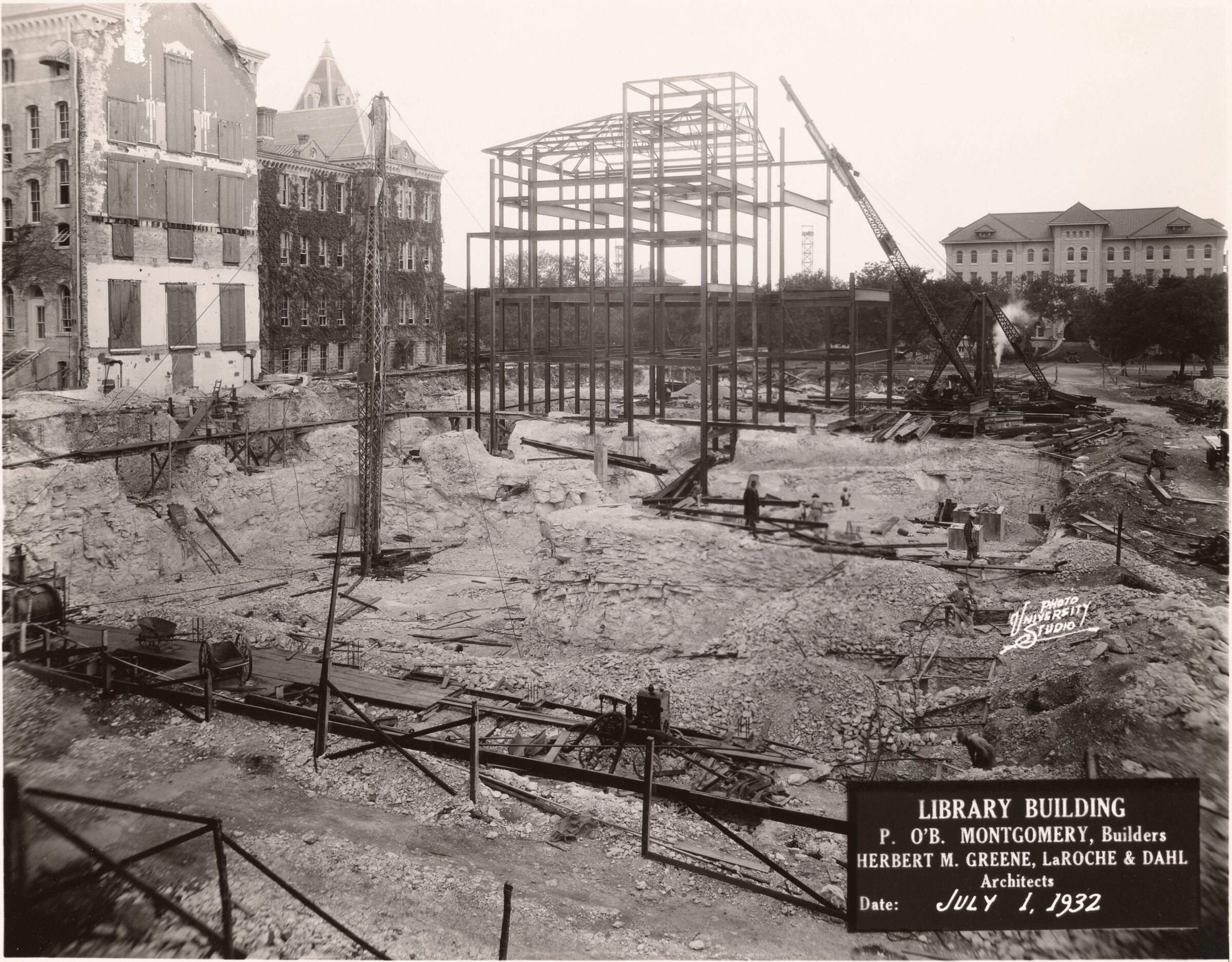
The first phase of the Main Building, begun in 1932, predates the PWA and was built by Phillip O’Brian Montgomery & Co. of Dallas, which constructed the north side, then known as the Library Extension (the main library being what is now Battle Hall).
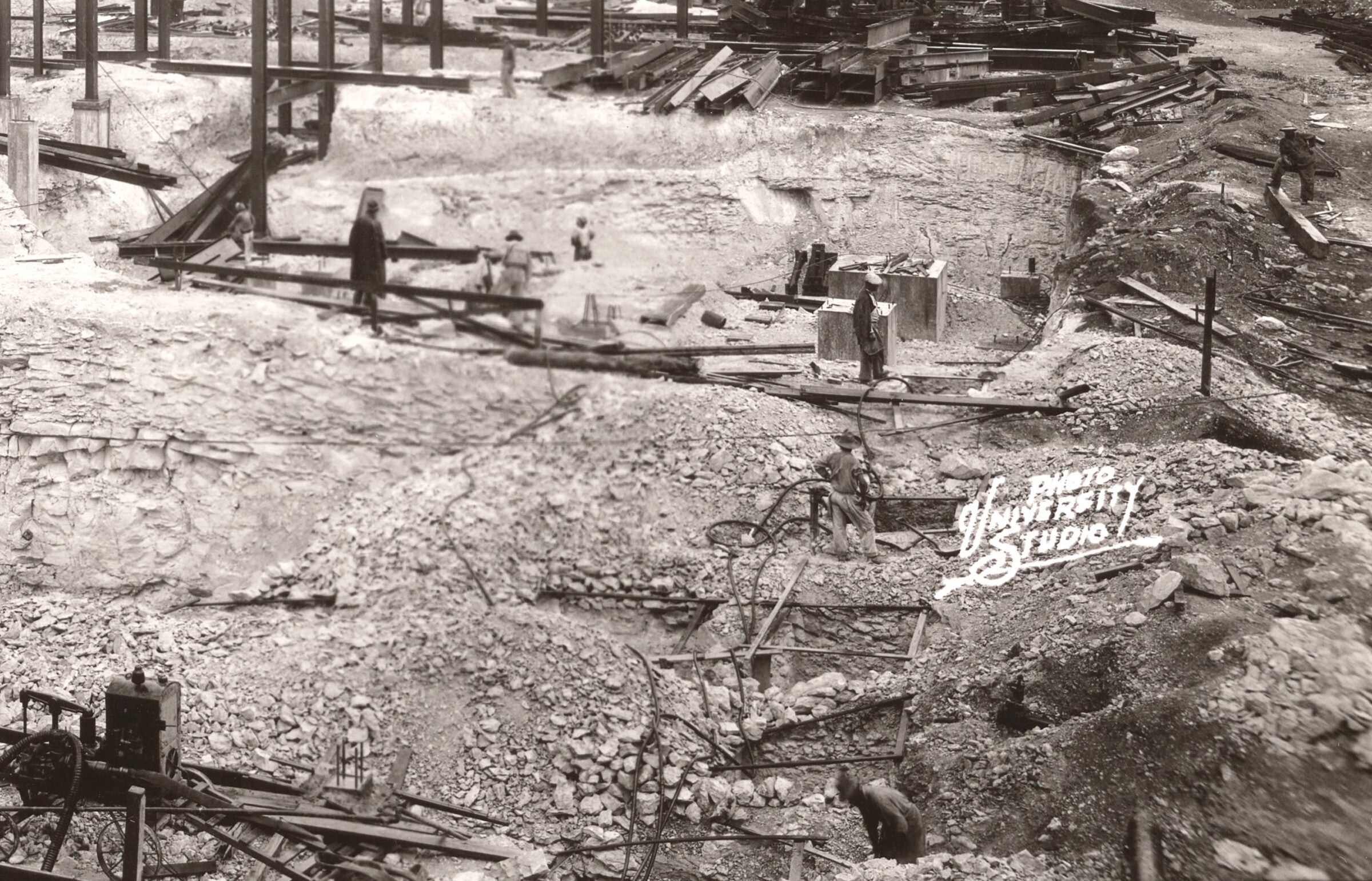
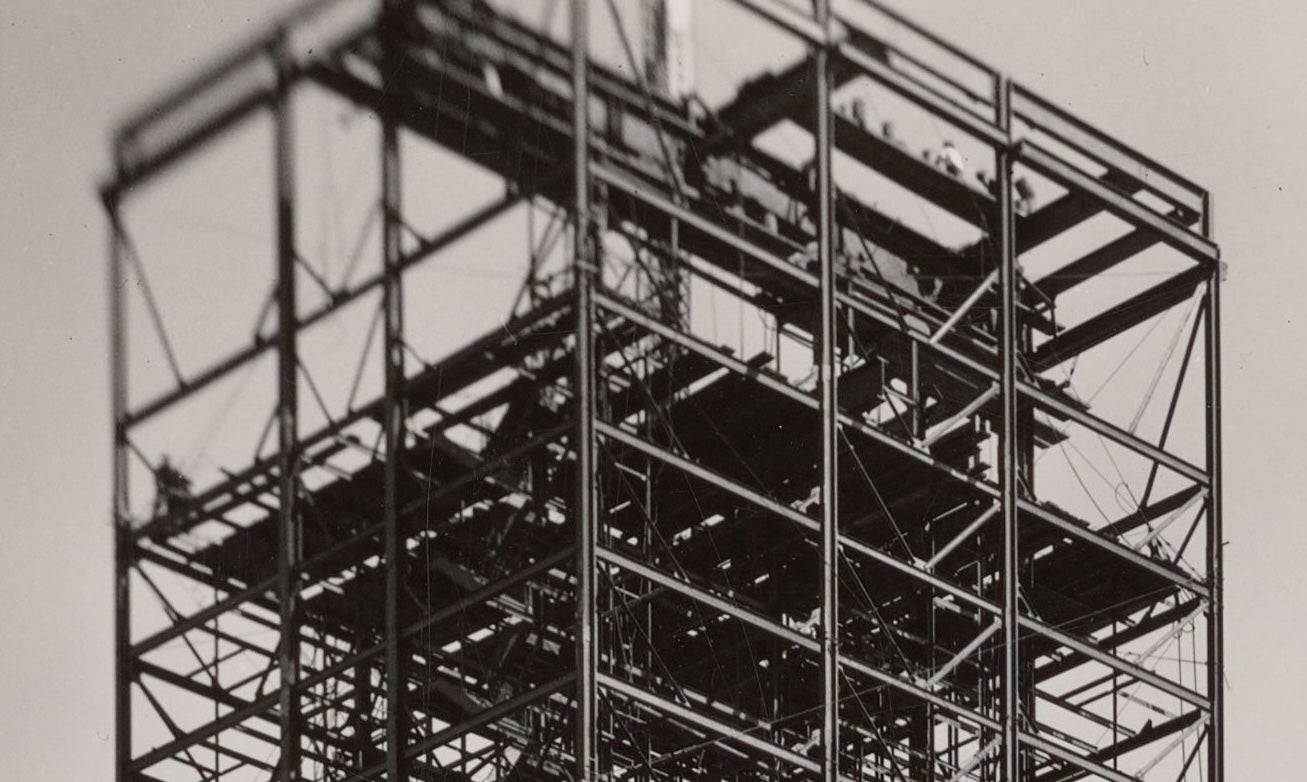
In the second phase, which included the south half and the Tower proper, most who did the lifting, climbing, welding and bolting were employees of the general contractor W.S. Bellows Construction Co. Founded in Houston by Warren Bellows in 1921, the company also was responsible for major projects on the campuses of Texas A&M University, Southern Methodist University and the University of Houston. The Tower was good practice for one of Bellows’ next projects, the San Jacinto Monument. At about 570 feet (as compared with the Tower’s 307), it was the tallest monument in the world when it was completed in 1939.
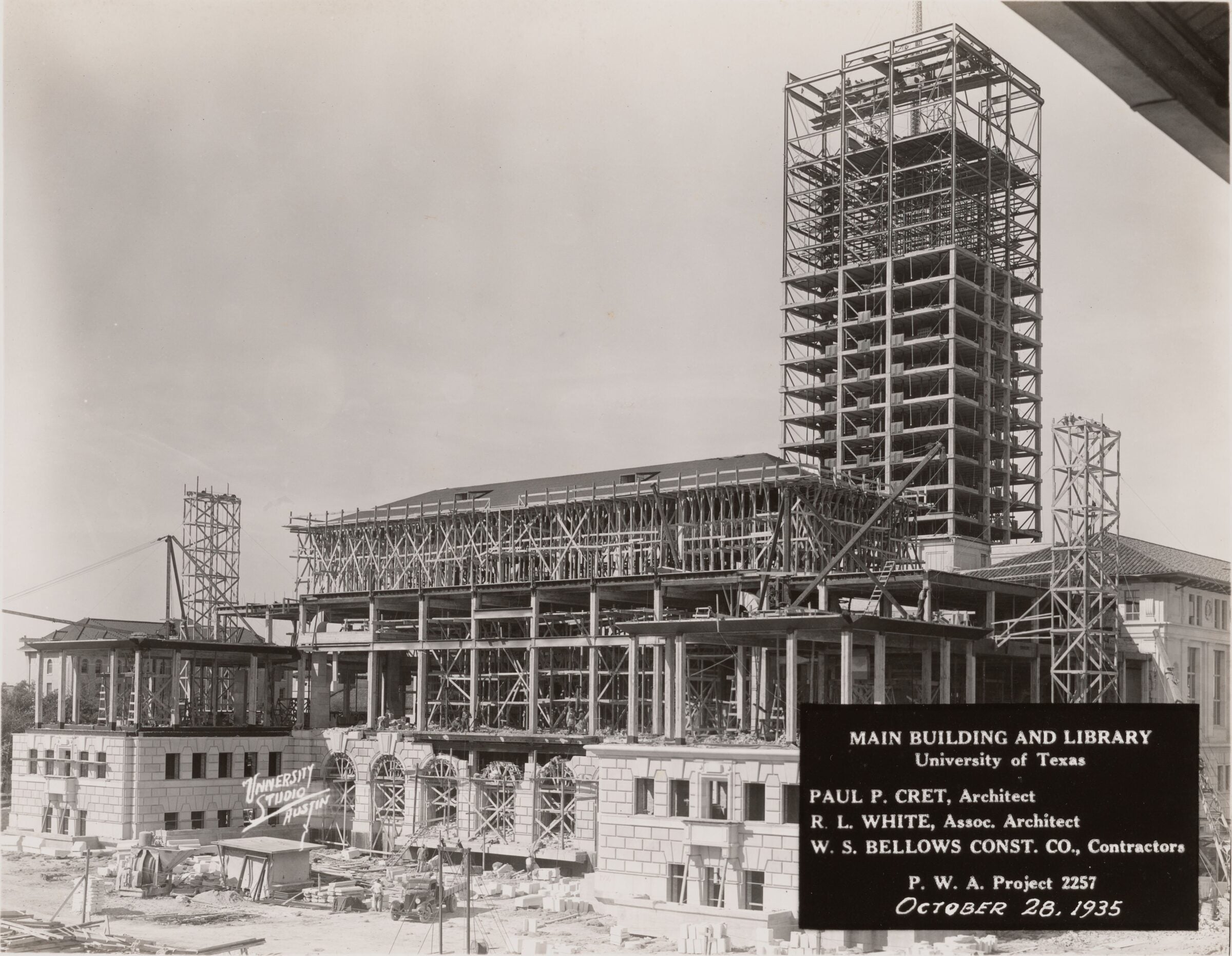
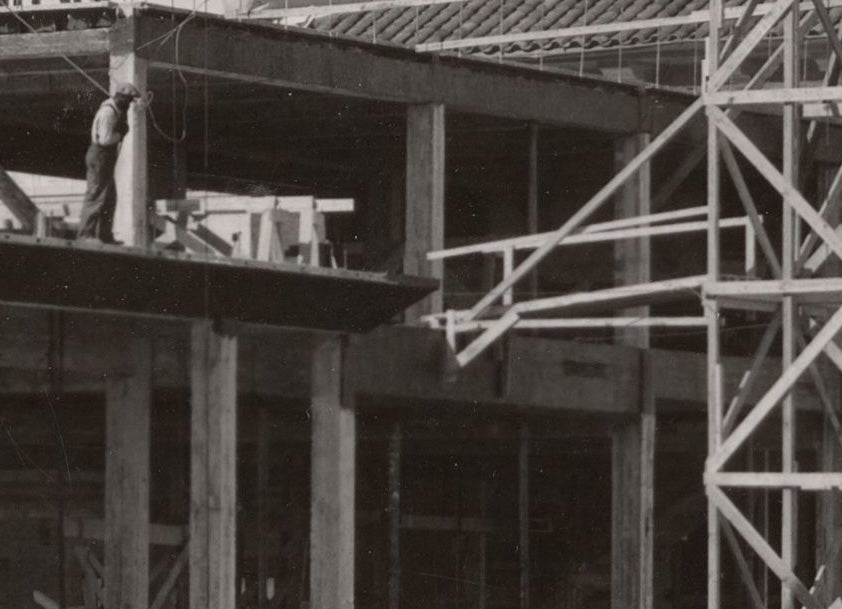
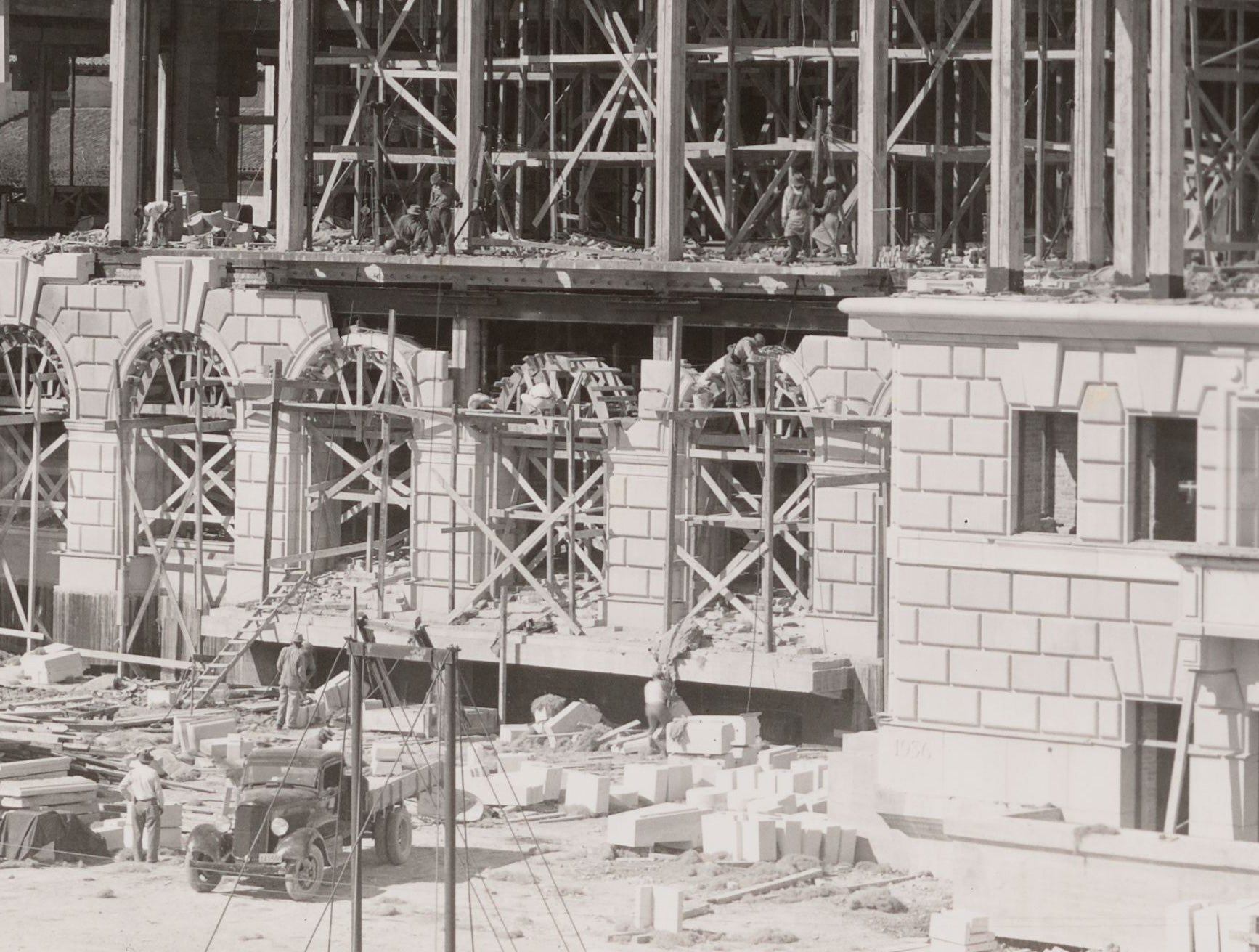
The company hired hundreds of local stonemasons, steelworkers and carpenters under the supervision of University construction superintendent Hugh Yantis and physical plant engineer Carl J. Eckhardt Jr. In a progress report to the Rotary Club, associate architect Robert Leon White said that 17,000 tons of steel had been used.
The infrastructure specific to the library was built by Snead & Company of New Jersey, which also provided steel stack technology for the New York City Public Library and an expansion of the Library of Congress. Teams of clock and instrument technicians from the International Business Machines, not yet known as IBM, traveled to Austin to assemble the Tower’s clock system that rang the carillon bells.
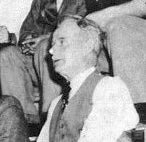
Swiss-born Peter Mansbendel, a master artisan then living in Austin, was responsible for most of the elaborate wood carving in oak and walnut in the Main Building as well as the portrait medallions of UT presidents in the Texas Union.
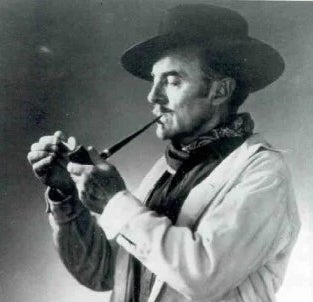
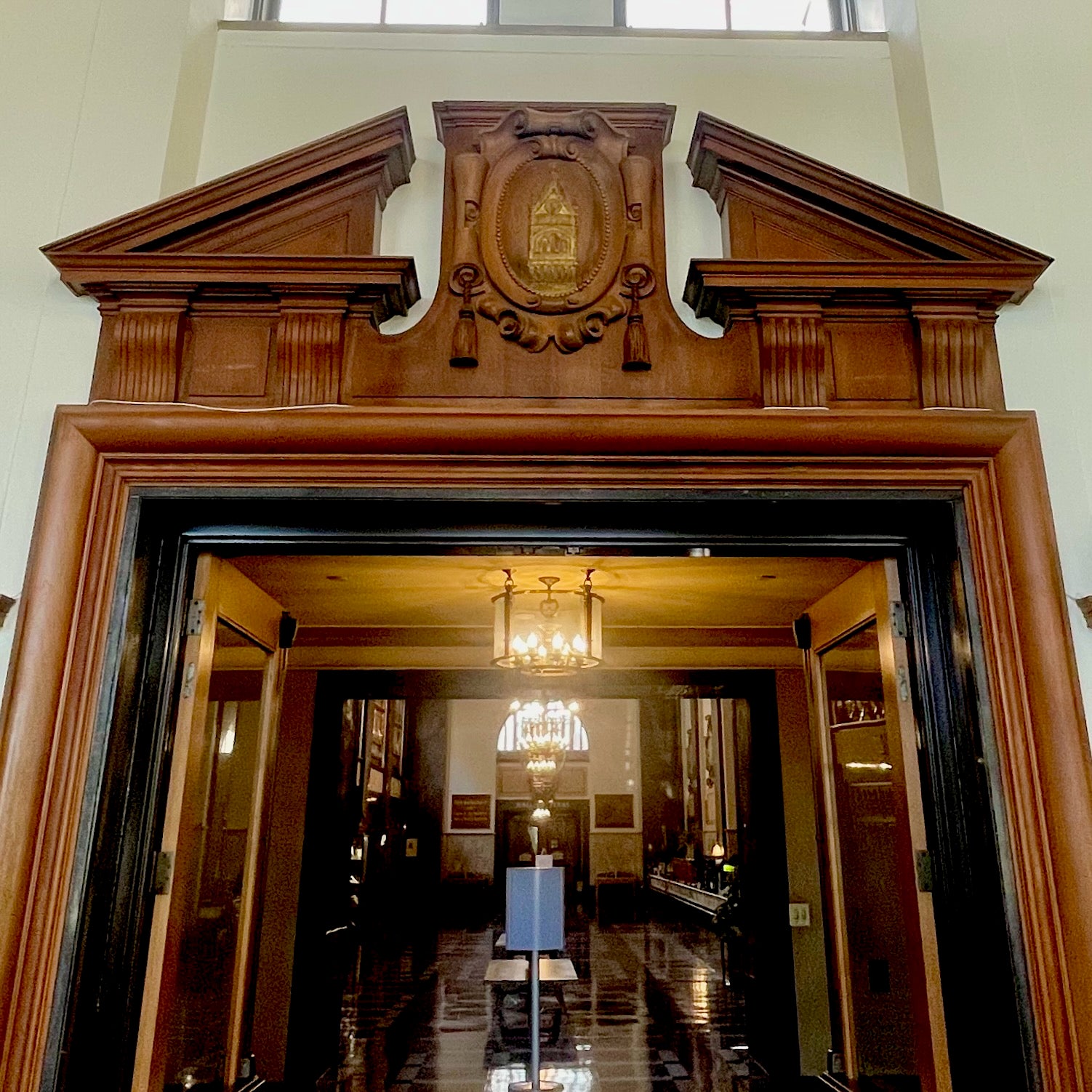
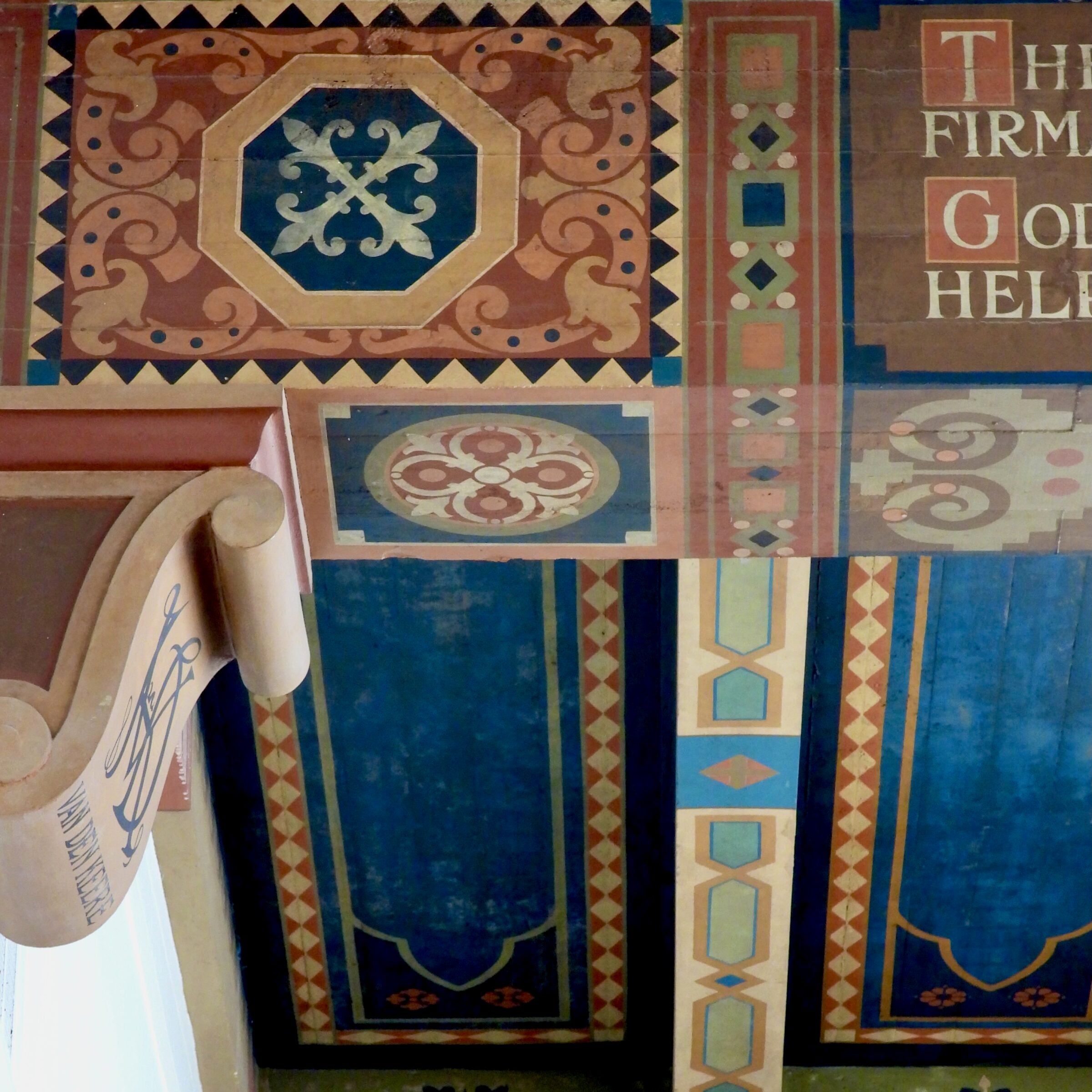
Eugene Gilboe, a Norwegian-born Dallas painter and interior designer known for theater murals throughout Texas, was hired to paint the ornate ceilings of what is now the Life Science Library. Gilboe used stencils for the letters and freehanded the surrounding designs. Gilboe also painted the beams in the Texas Union Presidential Lobby and the ceiling of Hogg Memorial Auditorium.
Italian stone masons carved the inscription on the building’s south face — “Ye shall know the truth, and the truth shall make you free” — as well as the Classical symbols such as the lamp of learning, the face of Athena, and the rows of scallop shells. Passersby often would stop and listen to them singing opera as their hammers clinked against the chisels and limestone.
So, raise a glass, and your horns, this Labor Day to all those who sweated from 1932 to 1937 to build our monument to learning. And keep them up for the ones laboring to return it to its original grandeur.