The Library’s Heyday: 1933-1977
The second of a three-part series on the Main Building’s Life Science Library
[This is the second in a three-part series on the Main Building’s Life Science Library. Read Part 1 here.]
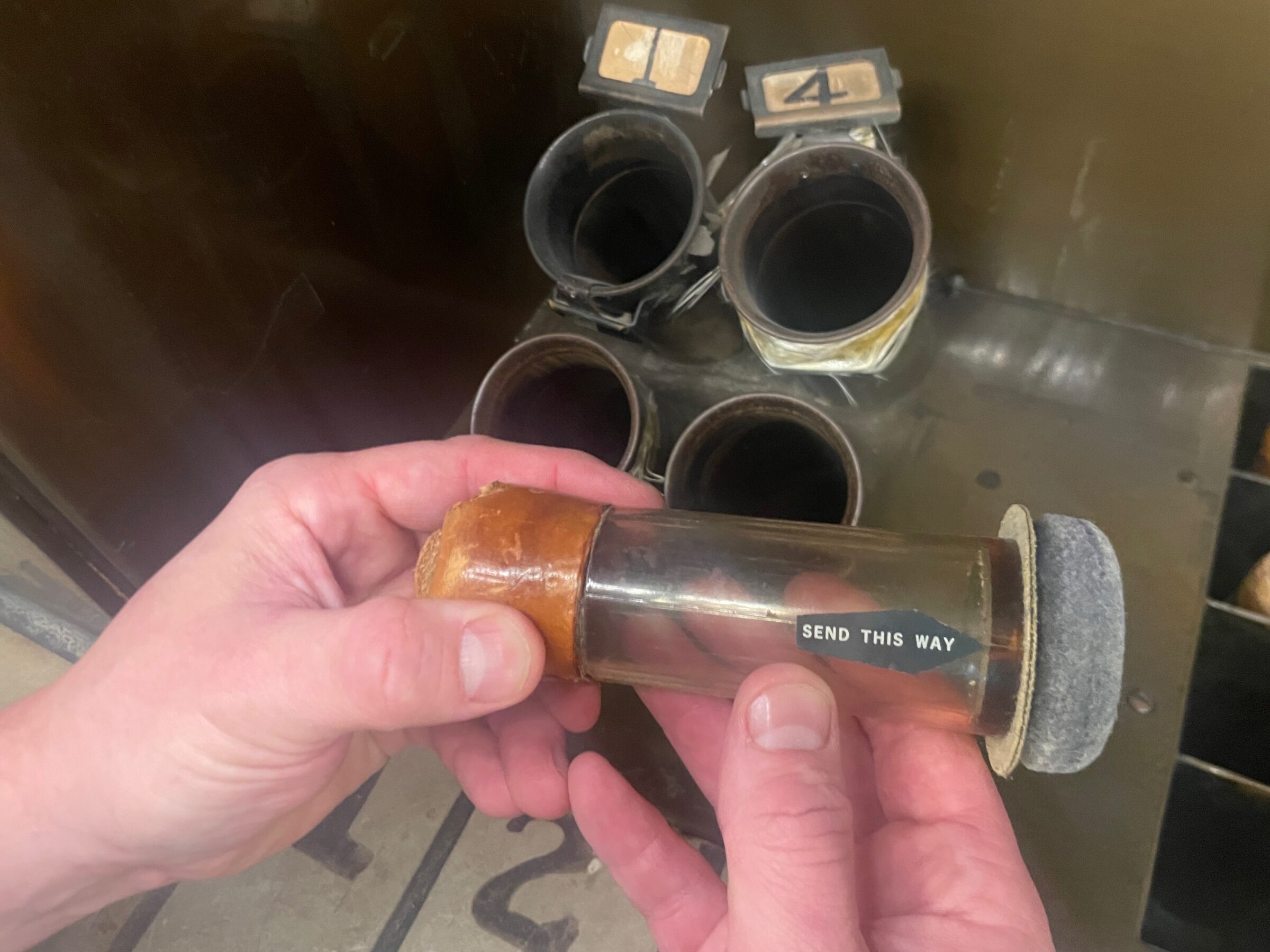
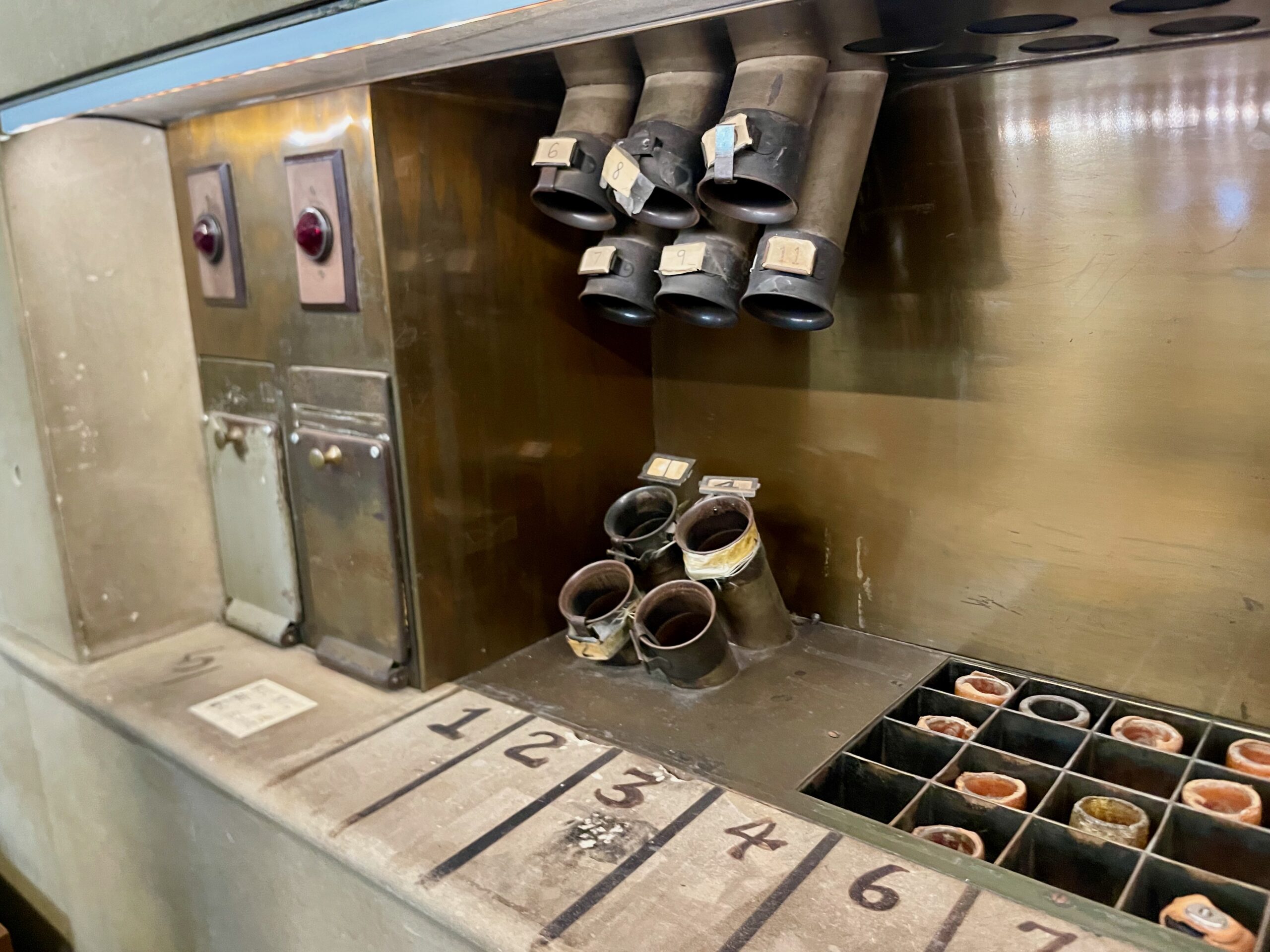
A few years ago, a marble wall in the northeast corner of the Loan Room was in need of cleaning. The facilities department was called and proceeded to remove a bulletin board that was against the wall. When workers removed the board, they found a large, recessed area with angled metal tubes 2 inches wide. On each tube was taped a tiny card with a hand-written number on it. Like archaeologists hitting the motherlode, they had uncovered the heart and soul of the library, or, more accurately, the spinal column.
This was the console where, for 40 years, hundreds of thousands of slips of paper had been inserted into cardboard cylinders then sent up or down in pneumatic copper tubes in the stacks, 17 floors at its peak. “We didn’t even know that this still existed,” says Jennifer Lee, director of research, discovery and collections for University of Texas Libraries.
Building a New Library
The first library at UT was inside of the campus’s first building, Old Main. In fact, because it was in the north wing of the T-shaped Old Main, it was on the very ground the Life Science Library now sits. The first purpose-built library was what is now known as Battle Hall, designed by Cass Gilbert and finished in 1911.
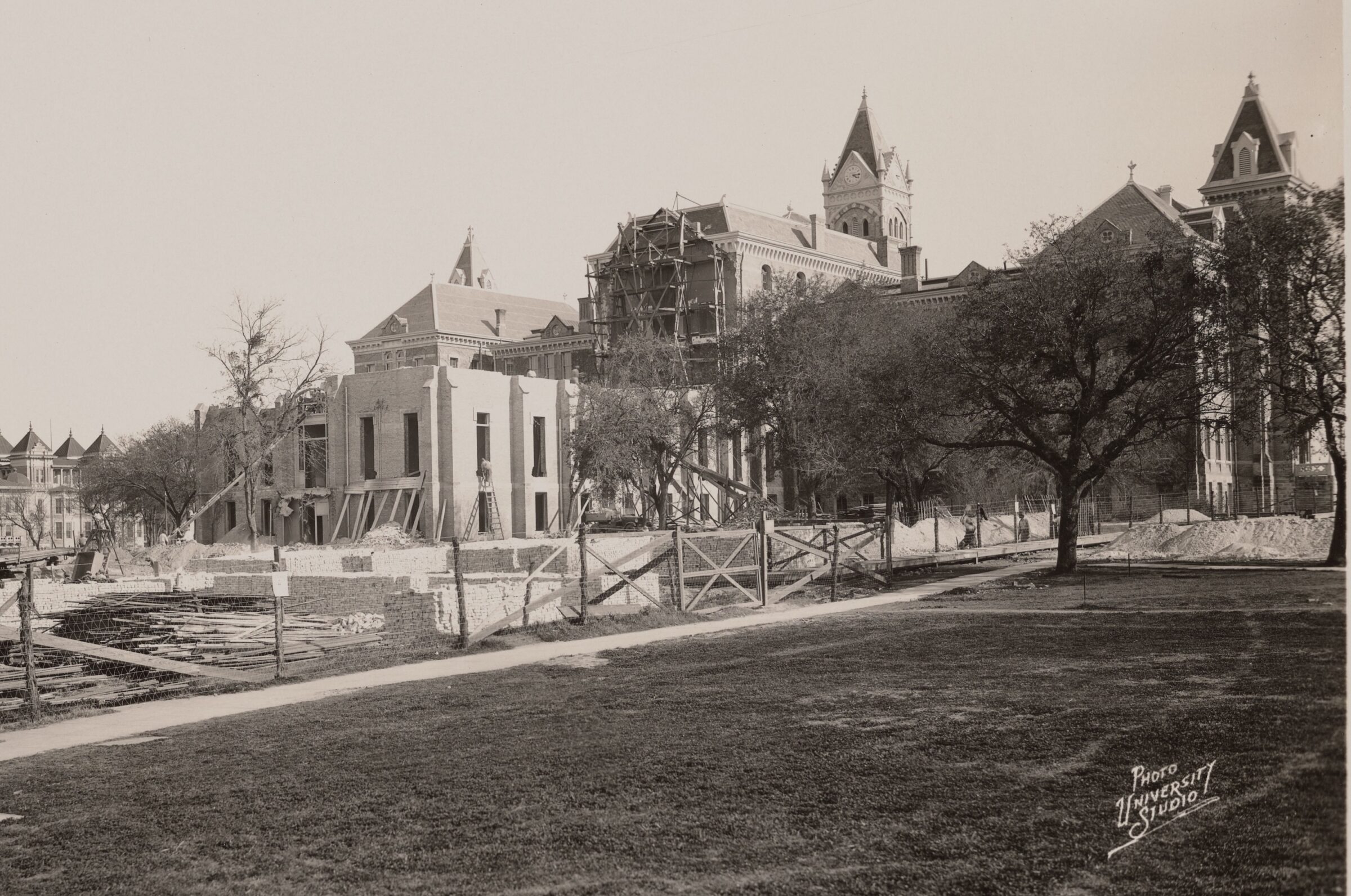
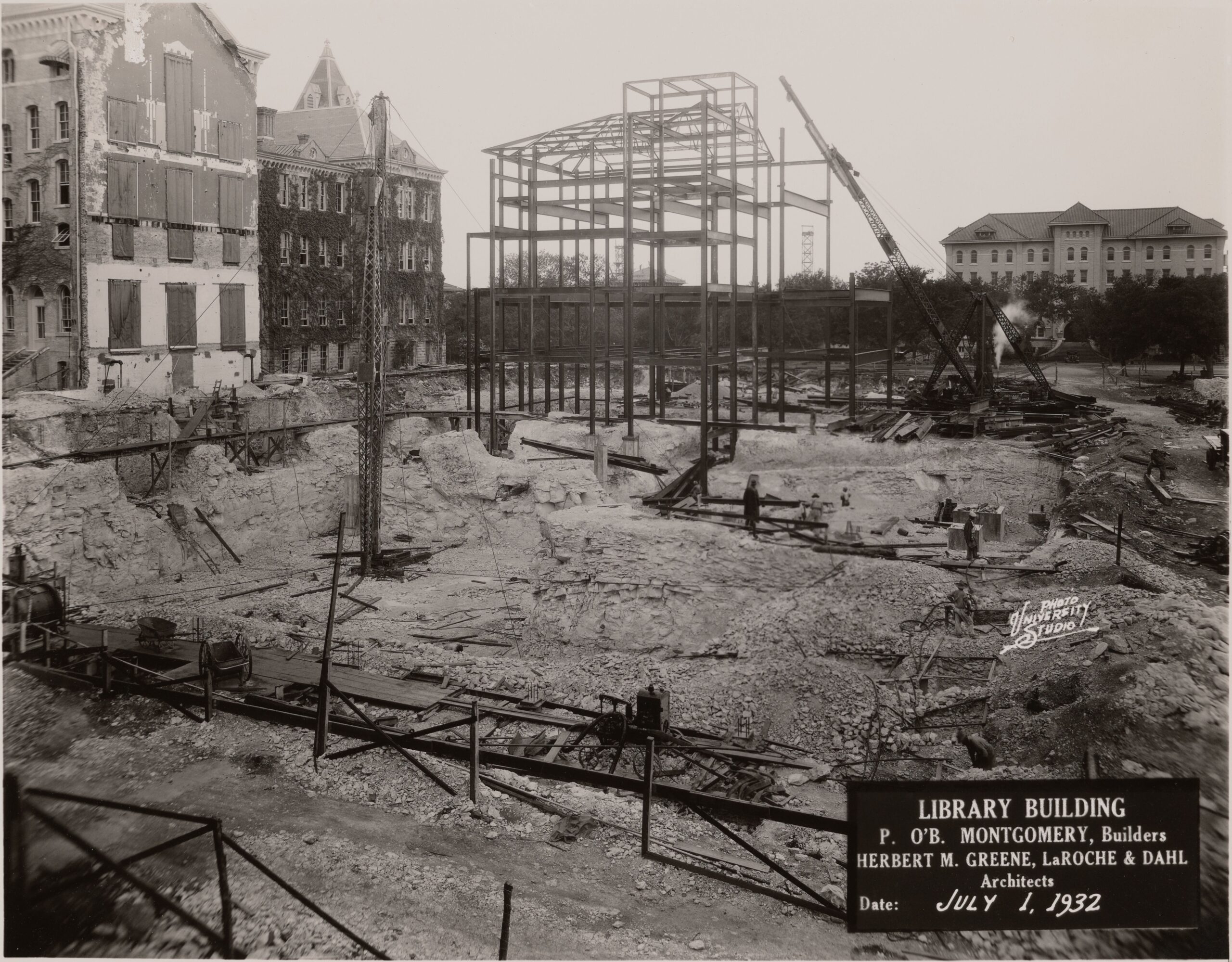
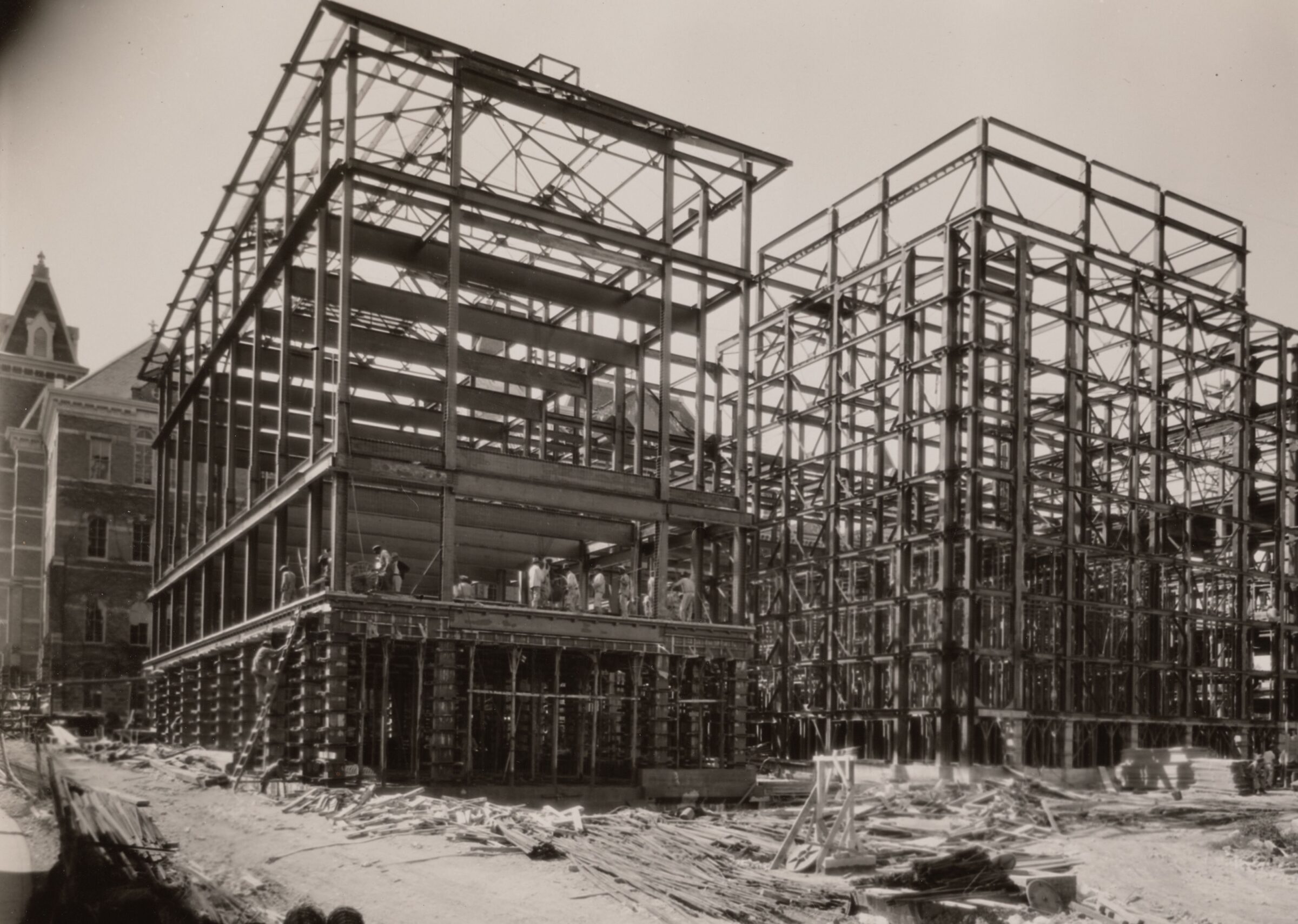
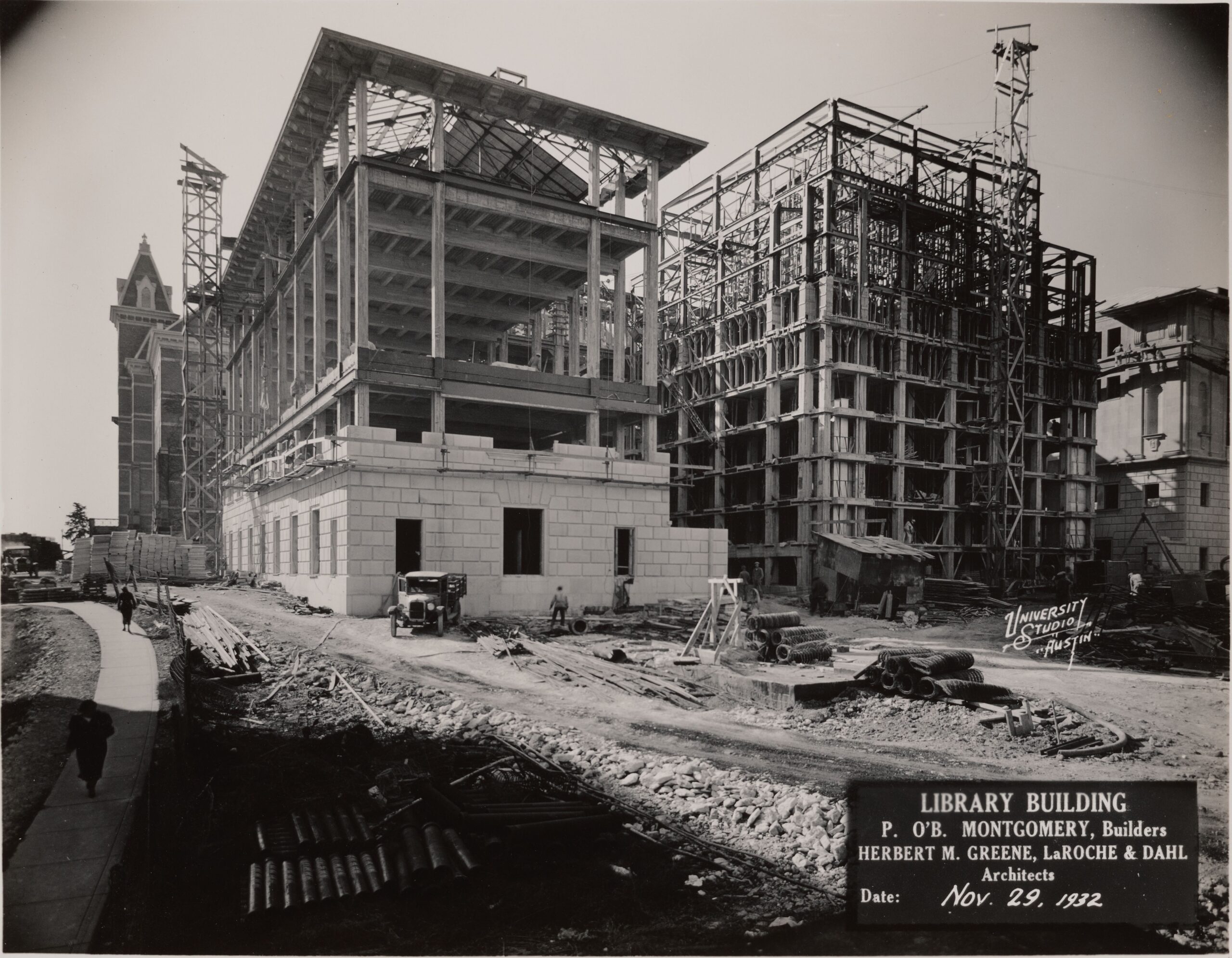
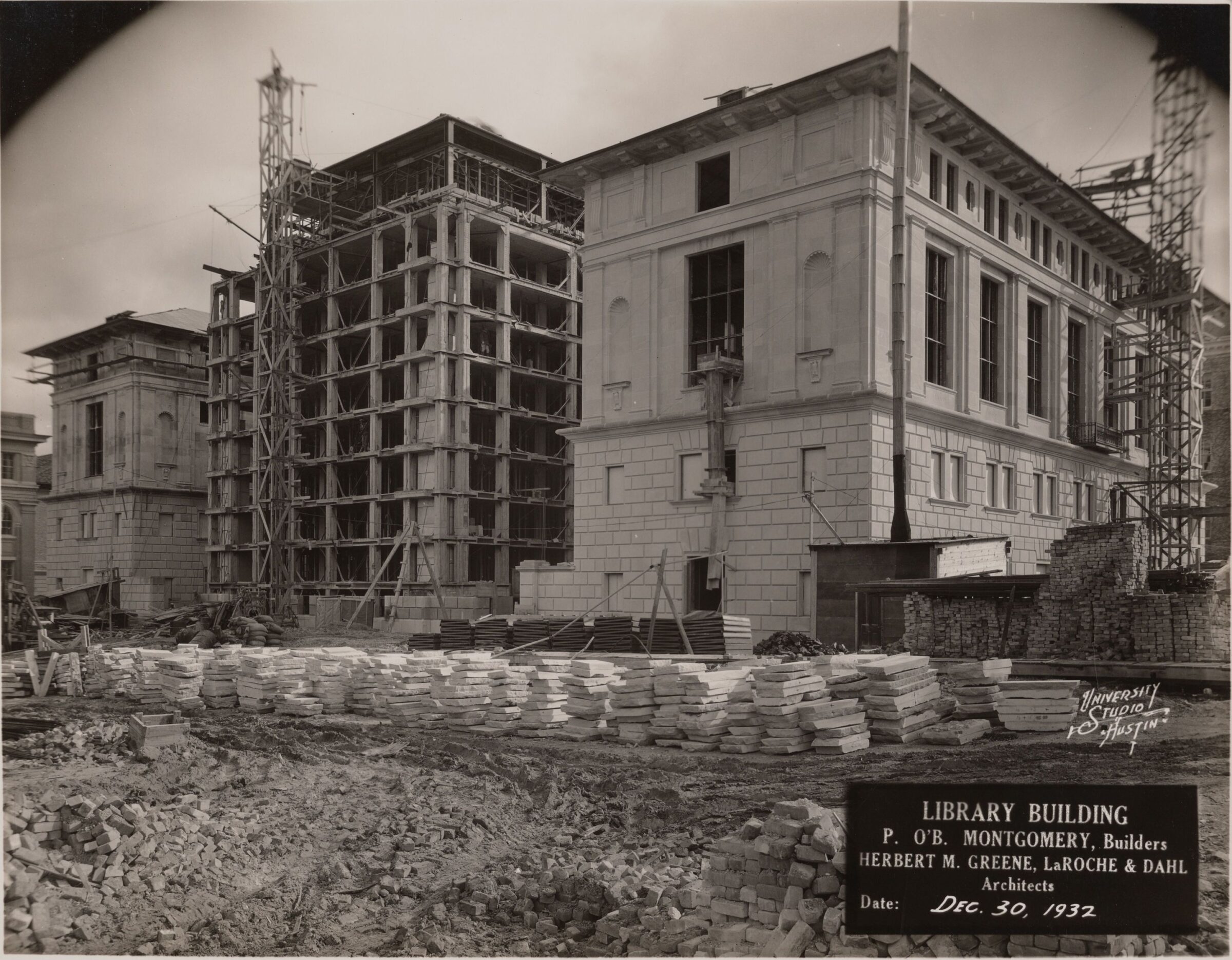
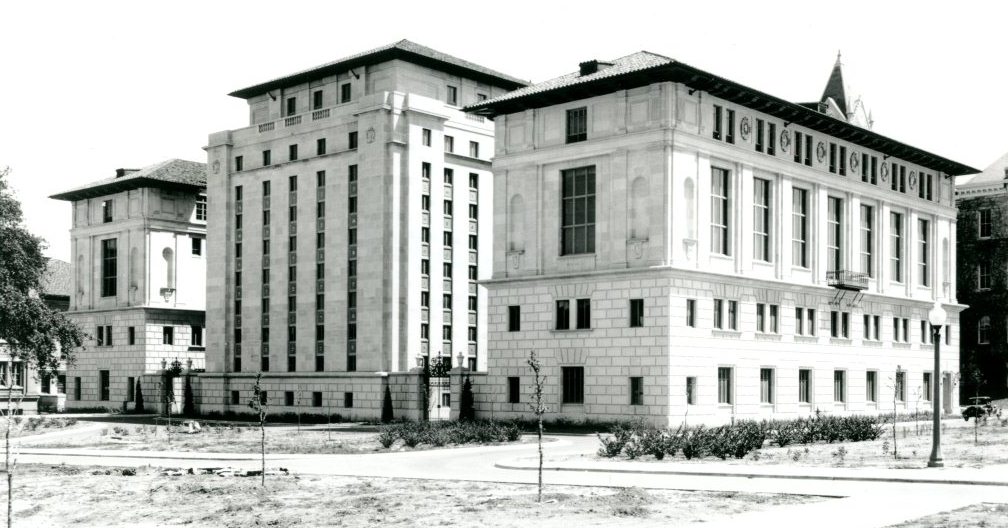
Above from top left, April 1932, the north wing of Old Main is demolished. July 1, 1932, the first known picture of any part of what today is UT’s Tower and Main Building. October 1932, note the beams of the Hall of Noble Words already visible., while workers labor on the first floor. November 1932. December 1932, getting close. 1933, the Library Extension is complete. Note the pitched tile roof where the Tower now rises.
In 1932, the north portion of the Old Main Building, an auditorium above a library, was razed, and on its footprint, work began on the first section of what would become the current Main Building and Tower. This new E-shaped structure abutting Old Main on the south went by a variety of names, such as the New Library Building 2, but mostly was called the Library Extension.
The Library Extension included the entire north half of what is now the Main Building, including the grand reading rooms and delivery room now known as the Life Science Library, as well as the first 10 floors of the Tower, which housed the library’s books, known as the stacks. These 10 floors reached from the ground to only the top of the Main Building and therefore did not yet form a tower.
Filling a New Library
The opening of the building in 1933 prompted an ingathering of various collections that had been growing across campus. The Garcia Library, which would form the core of UT’s world-famous Latin American collection, would move from Battle Hall to the west reading room on the third floor, and just as it did, it got a memorable addition: the death mask of the collection’s namesake, writer and collector Genaro Garcia, who had just died. The collection’s director, Carlos Castañeda, whose name will be familiar to UT students and alumni who spent time at the Perry-Castañeda Library, announced the mask would be mounted and displayed in a special glass case in the reading room of the Garcia Library.
The groundwork was being laid for other collections to move to the new building. In 1934, the Seminole Sentinel reported, “When the front unit of the new library on the campus has been completed, it is proposed that the Wrenn, Aitkin and Stark collections be housed in that building, making it one of the most beautiful libraries in the world.” The Wrenn and Stark collections would help constitute the bulk of Rare Books Collection in what is now the President’s Office on the fourth floor. The exquisite east room of this suite is still known as the Stark Library.
In 1936, the University Newspaper Library, which had been in the attic of Sutton Hall since “the World War,” came in. “The 20,000 newspapers stacked to the rafters of Sutton Hall and scattered around campus in other buildings will occupy part of three floors of the new building,” wrote The Daily Texan. “E.R. Dabney, newspaper librarian, said that, instead of graduate students having to hunt out their files in the gloom of the attic and to carry their volumes to the tables under the light, they will have twenty-four individual tables with adjustable tops so that newspaper file can be adjusted to the eye.” The article went on to brag that an elevator would be used to carry volumes from one floor to another.
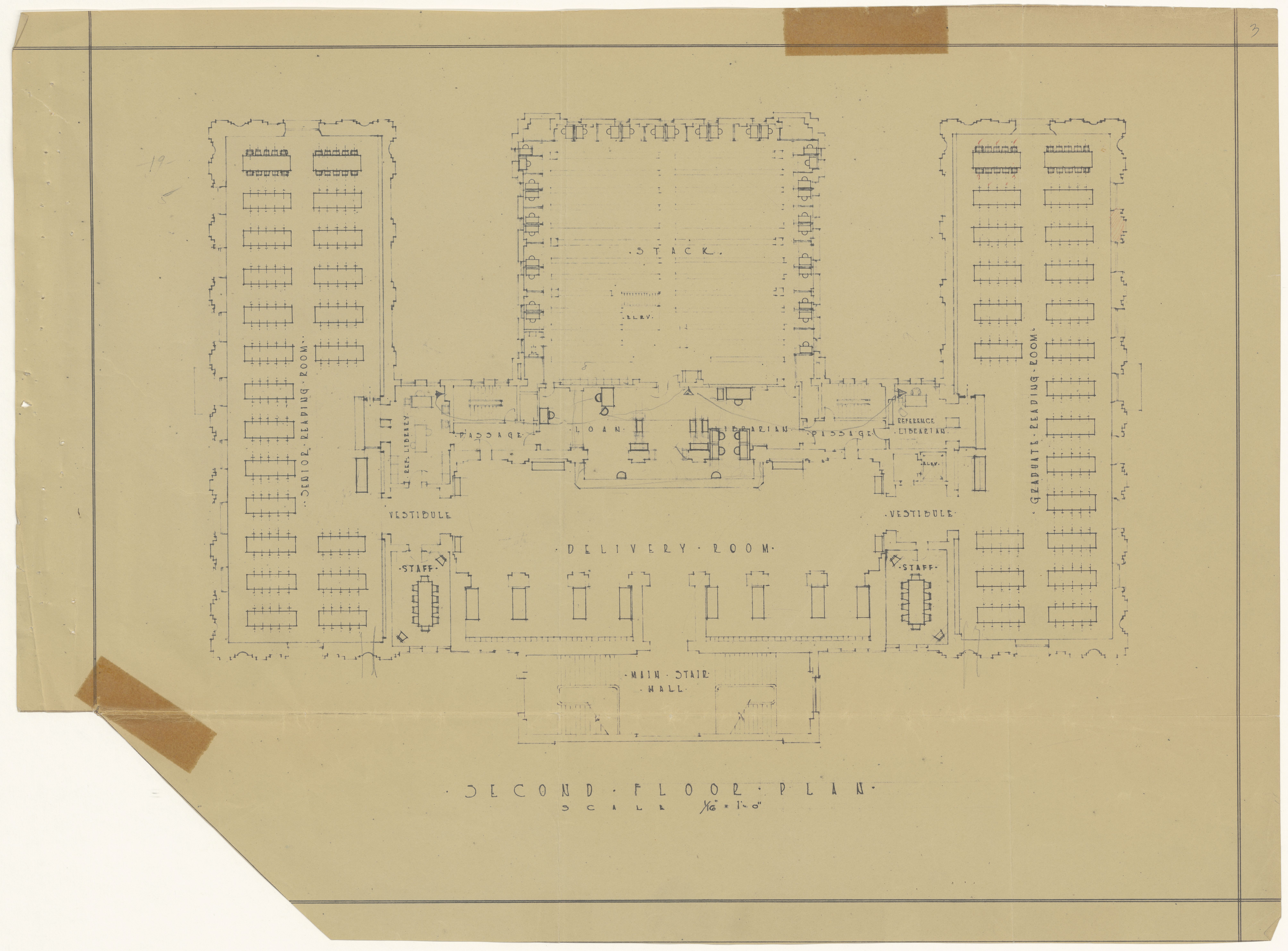
Blueprint of the second floor library, listing Delivery Room, Senior Reading Room (west), Graduate Reading Room (east), and the Stack (Tower).
The second floor was the heart of the new library, a grand Loan Room connecting two large reading rooms on its east and west.
Once the library opened, students would start their quest for knowledge by consulting card catalogs on the south side of the Loan Room, also known as the Hall of the Six Coats of Arms. Copying the call number onto a slip of paper, each student would then go to the loan desk and submit it to a librarian, who would send it via pneumatic tubes to the proper floor.
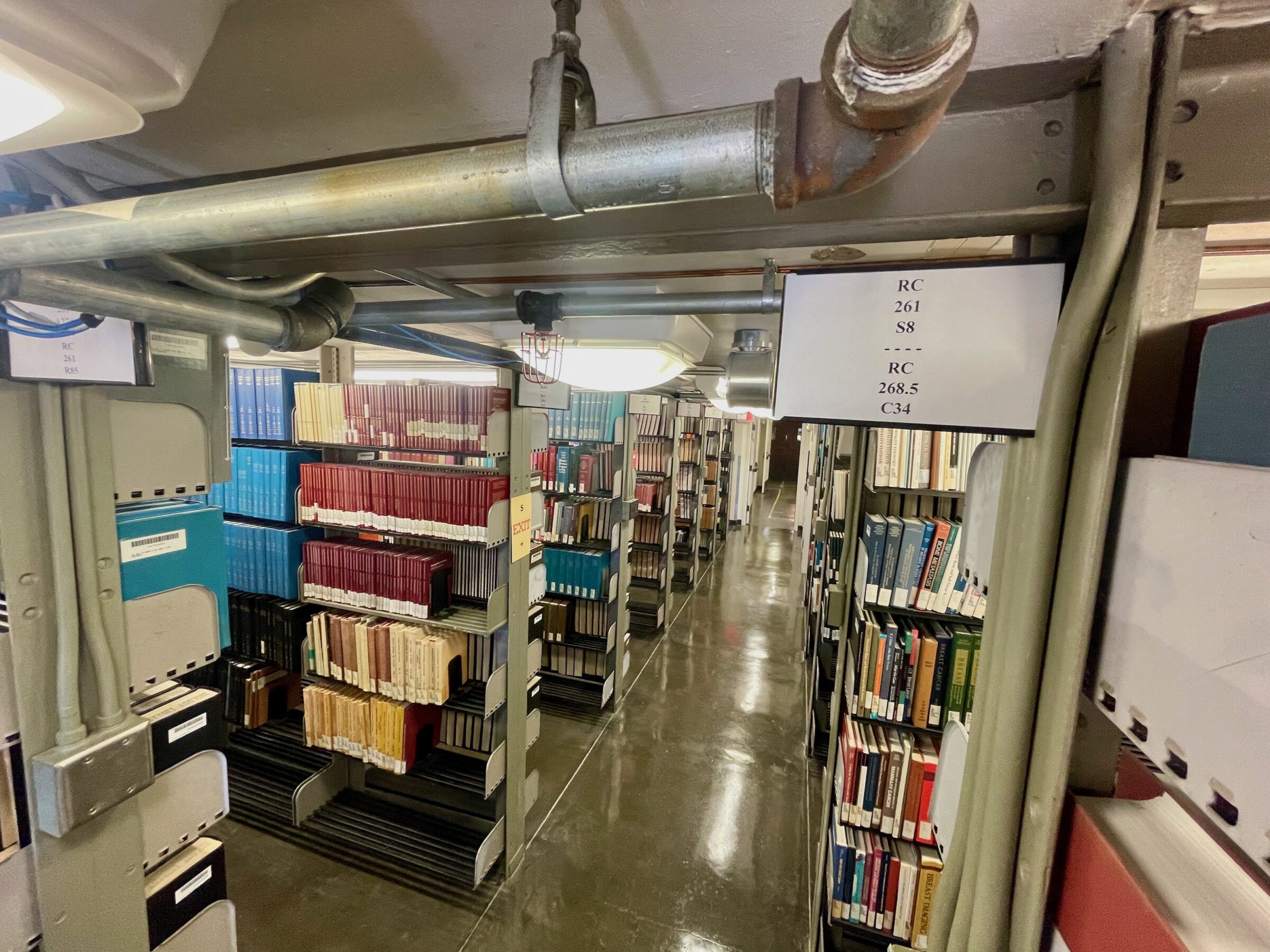
There, student workers, the sportier ones on roller skates, would take the number, find the book and send it down the book elevator, known as the dumbwaiter. When the elevator reached the fifth floor of stacks (level with the second floor of Main), another librarian would call the waiting student and help them check the book out. (We have searched in vain for a photographic record of this famous roller skating, but Geoff Bahre, head of in-person user experience for UT Libraries, vouches for its truth, having spoken to an ex-student whose girlfriend during the 1970s would tote her skates on outings because she had to go to work at the library afterwards.) The book elevator, still in operation, might not fit the typical Downton Abbey understanding of a dumbwaiter, as it is powered electrically — thank goodness — and can fit a rolling book cart and one person.
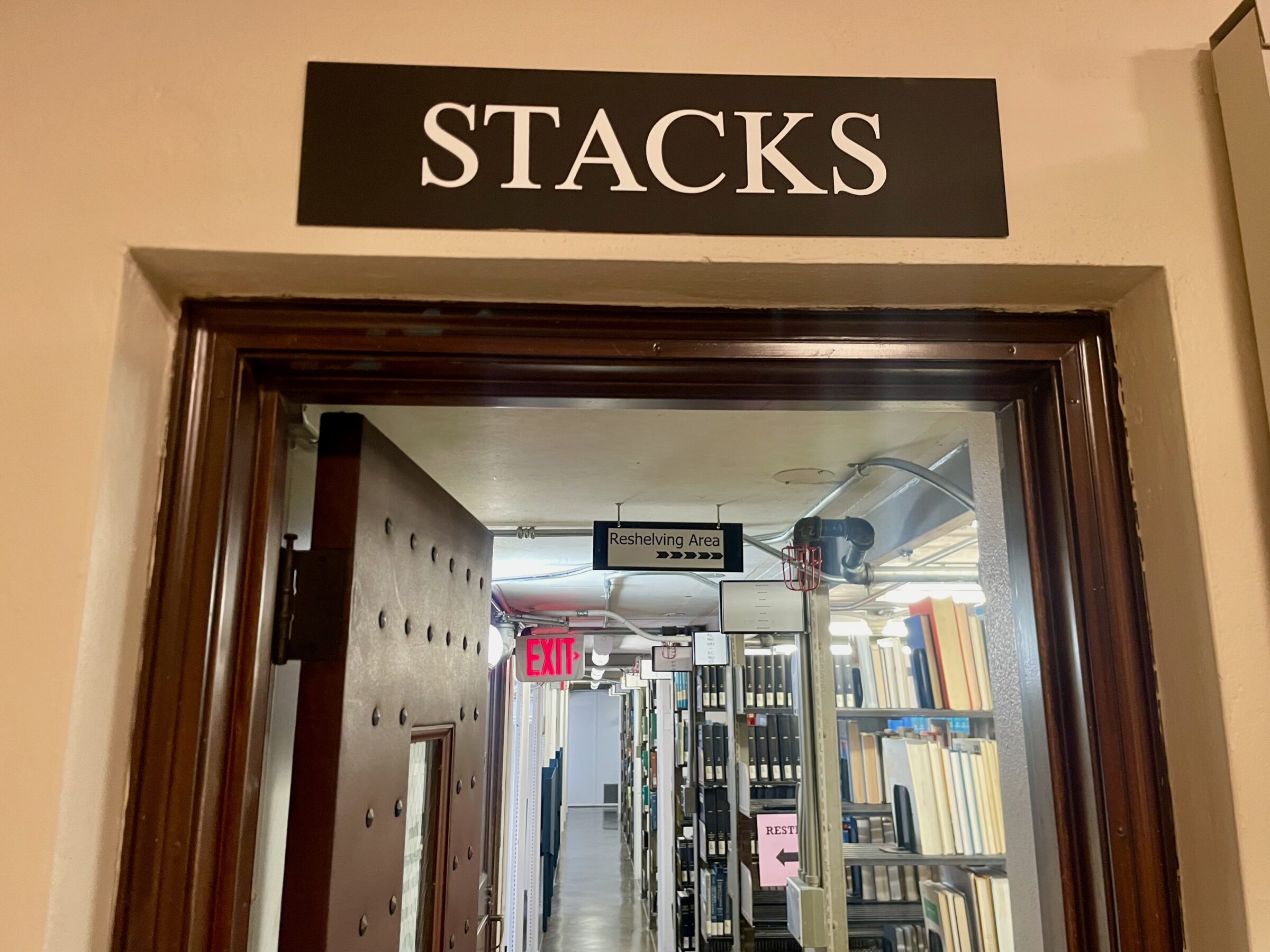
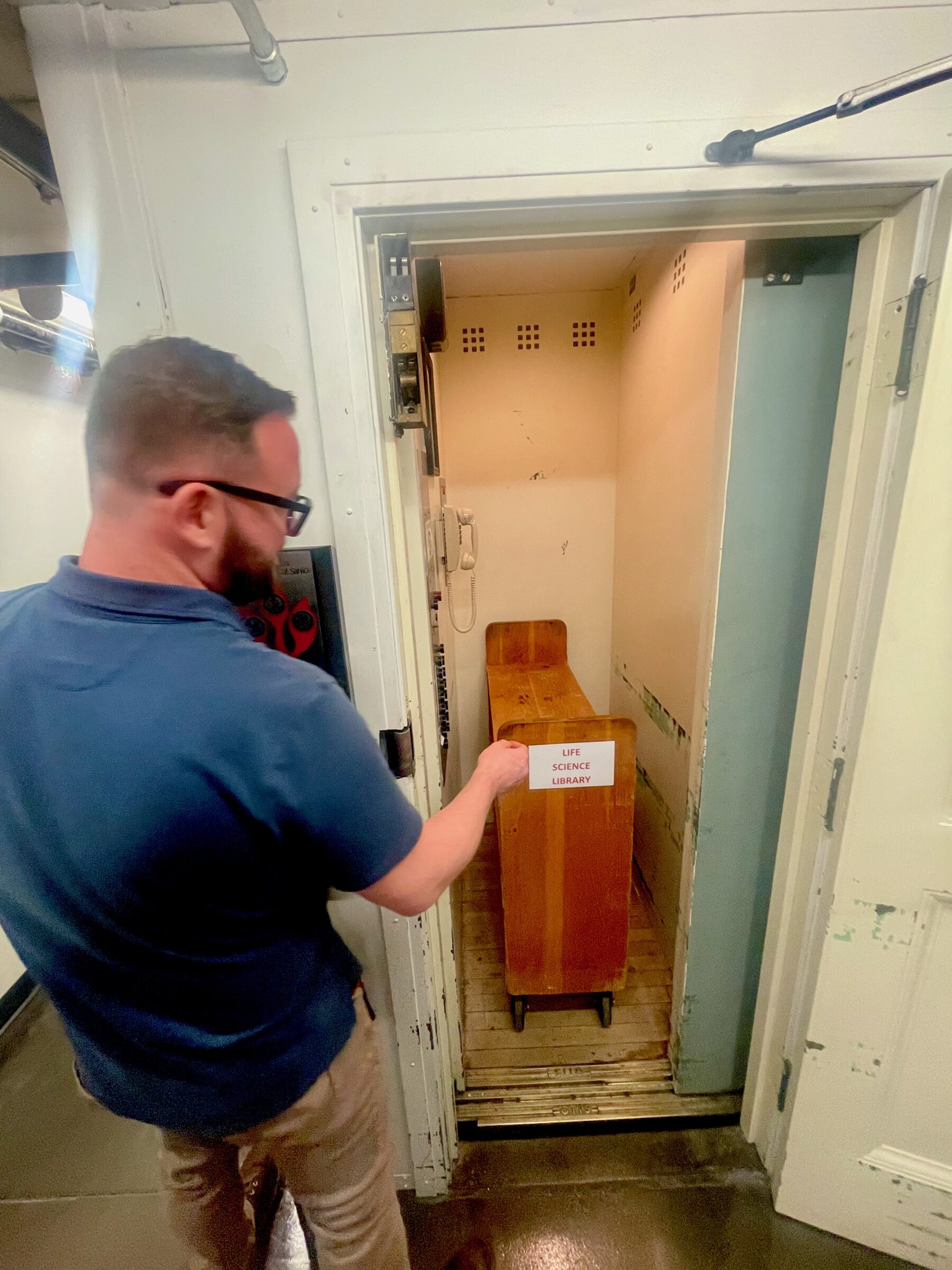
Geoff Bahre demonstrates the dumbwaiter book elevator, still operational.
The library was undoubtedly magnificent in many ways and audacious in its aspiration. But it did have critics among its users.
Dim lighting was a common complaint from the beginning, which eventually led to the installation of fluorescent lights.
Another worry was heat. In 1934, the Daily Texan editors opined, “There are cooling machines in the basement of the New Library Building for cooling the drinking water. They work beautifully, but ice water is small relief to anyone who must remain and try to concentrate on his work in a building where the average temperature is 92 degrees, as it was in the Library [Battle Hall] this summer … All of us know someone of influence. Let us see to it that a cooling system adequate for the present unit of the New Main Building Library, as well as that which is to be built, is placed in the budget — and placed into operation as soon as possible.”
In his 1950s description of the Main Building, William Battle, longtime chairman of the Faculty Building Committee, reported that the shelves in the Main Library’s east reading room, known as the Hall of Noble Words, held the latest issues of 1,110 periodicals.
The heat and the lighting had been addressed, but it was the third complaint that spelled the end of the Tower as the University’s main library: the waiting.
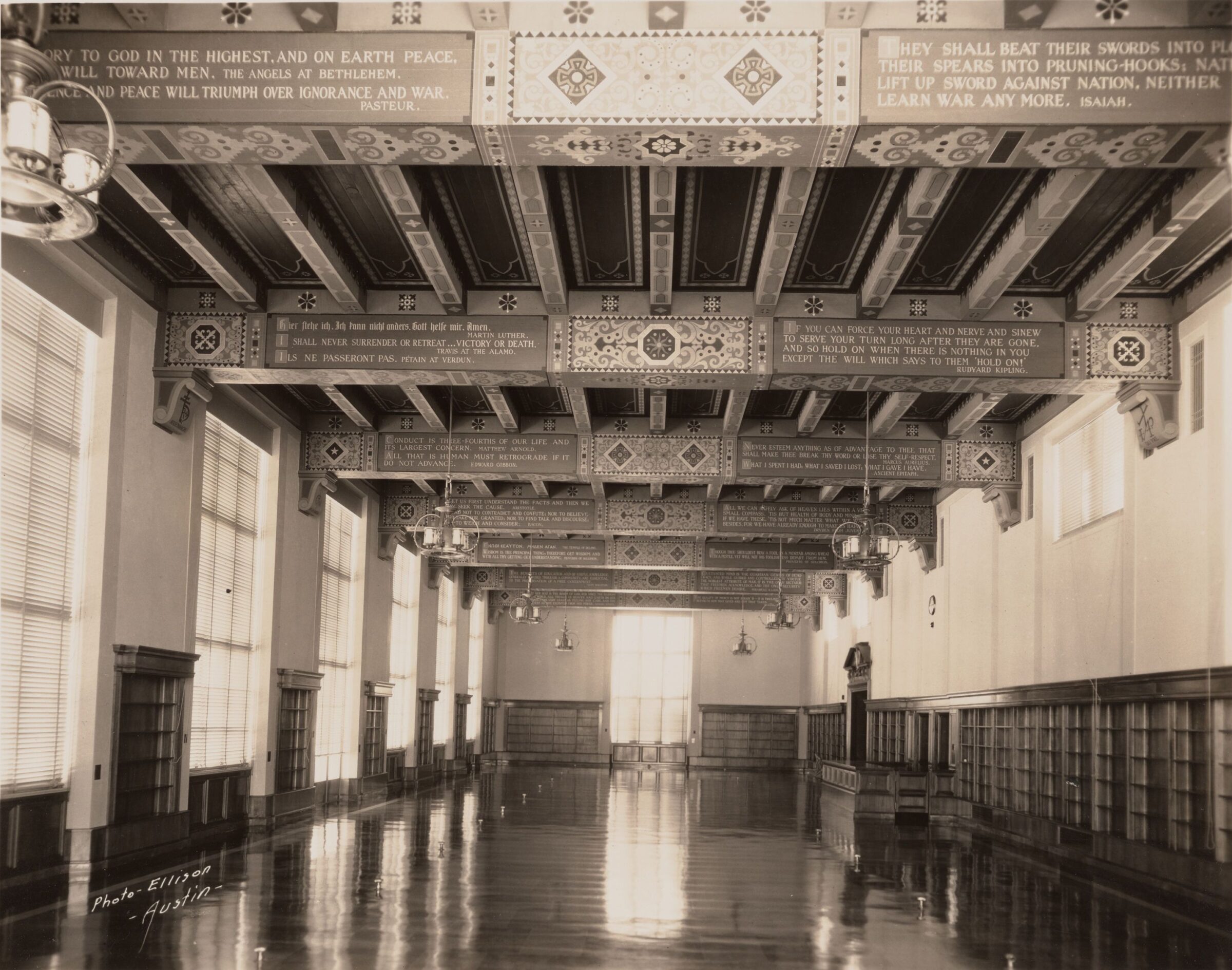
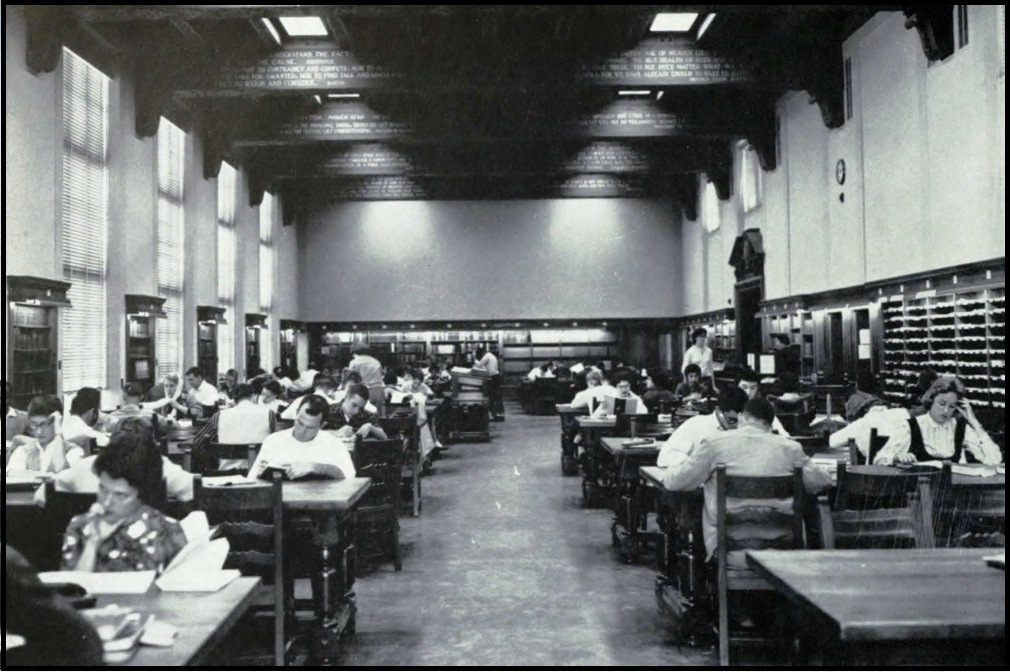
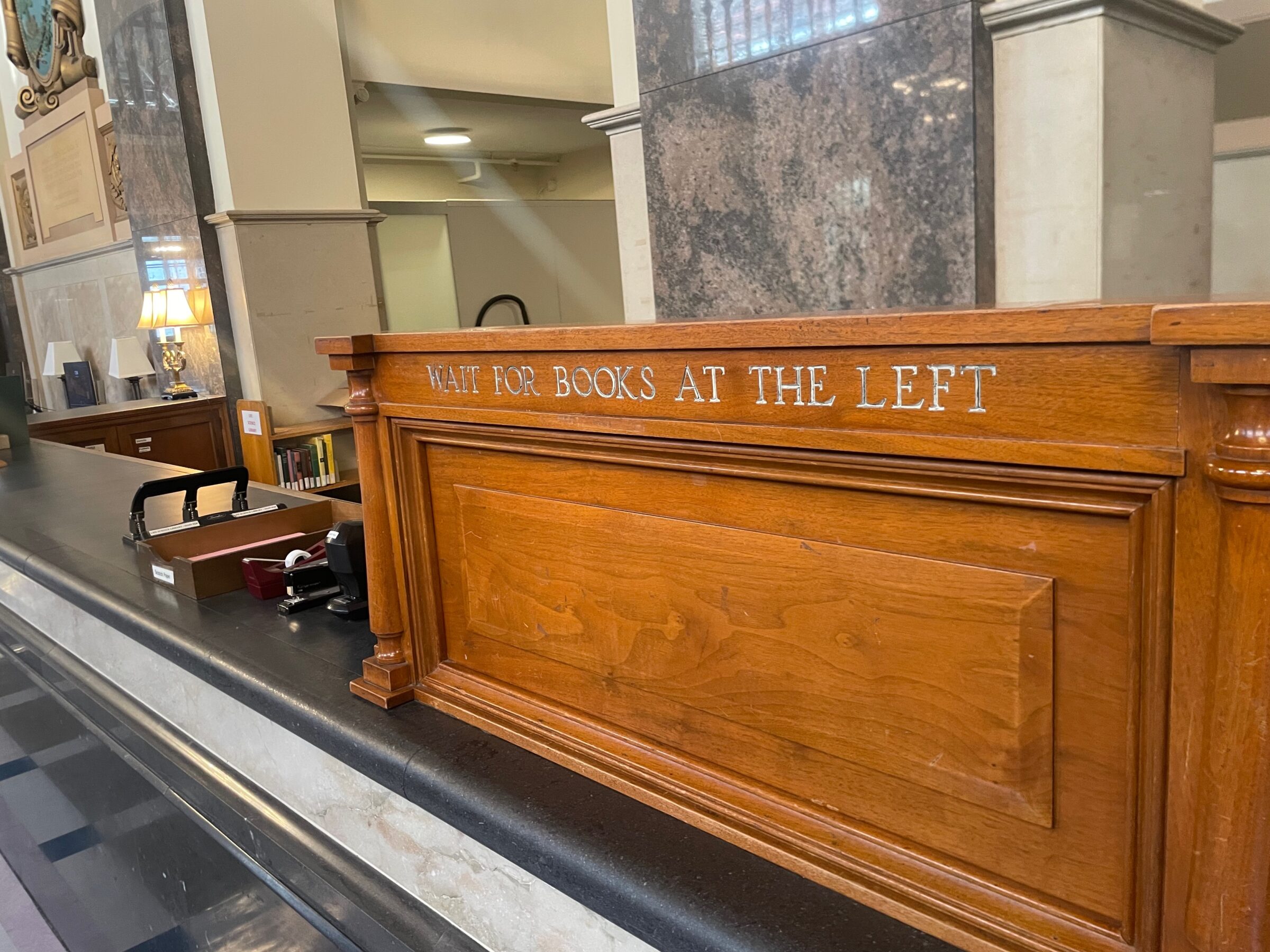
In 1960, UT had about 20,000 students. By 1970, it had grown to 35,000. The wait times for books had become untenable, routinely 30 minutes. The standing crowds of students had worn the linoleum floors down to nothing, with patches of bare concrete showing through. As a relief valve, in 1963, the University opened the Undergraduate Library, which had open stacks and was geared toward what leaders felt undergraduates should be reading at their level of scholarship.
But the Main Library remained in the Main Building, and by 1975, its library stacks occupied 17 floors. This was the peak of the Tower’s function as a library.
Says Lee, “They outgrew this space, I think, in part, because they never fully developed it as only a library in this building.” While very early references to the edifice called it the Library Building and envisioned large reading rooms and even outdoor “reading porches” on the southeast and southwest corners looking out toward the Capitol, by the time final blueprints were approved, the University’s leaders had claimed much of the south half of Main, and by the time it was open, it was called the Library and Administration Building and, in some reporting, the Administration and Library Building.
In the summer of 1977, the main collection was moved into the newly finished Perry-Castañeda Library with great effort, detailed here by UT historian Jim Nicar.
The next summer, UT combined the Biology Library and the Pharmacy Library to create the Science Library, detailed in Part 3, covering the Life Science Library from 1977 to today.
* * *
Once the marble was clean, the bulletin board that had hidden the pneumatic tube console did not go back up in the corner of the Hall of the Six Coats of Arms. Instead, the facilities crew inserted a little strand of lights so that people could better see the technology of yesteryear and remember the closed-stack system, the heart of the Tower’s purpose.