Stars, Stripes, and Symbols: America at 250
UT’s Briscoe Center for American History mines its own collections for expansive exhibit.
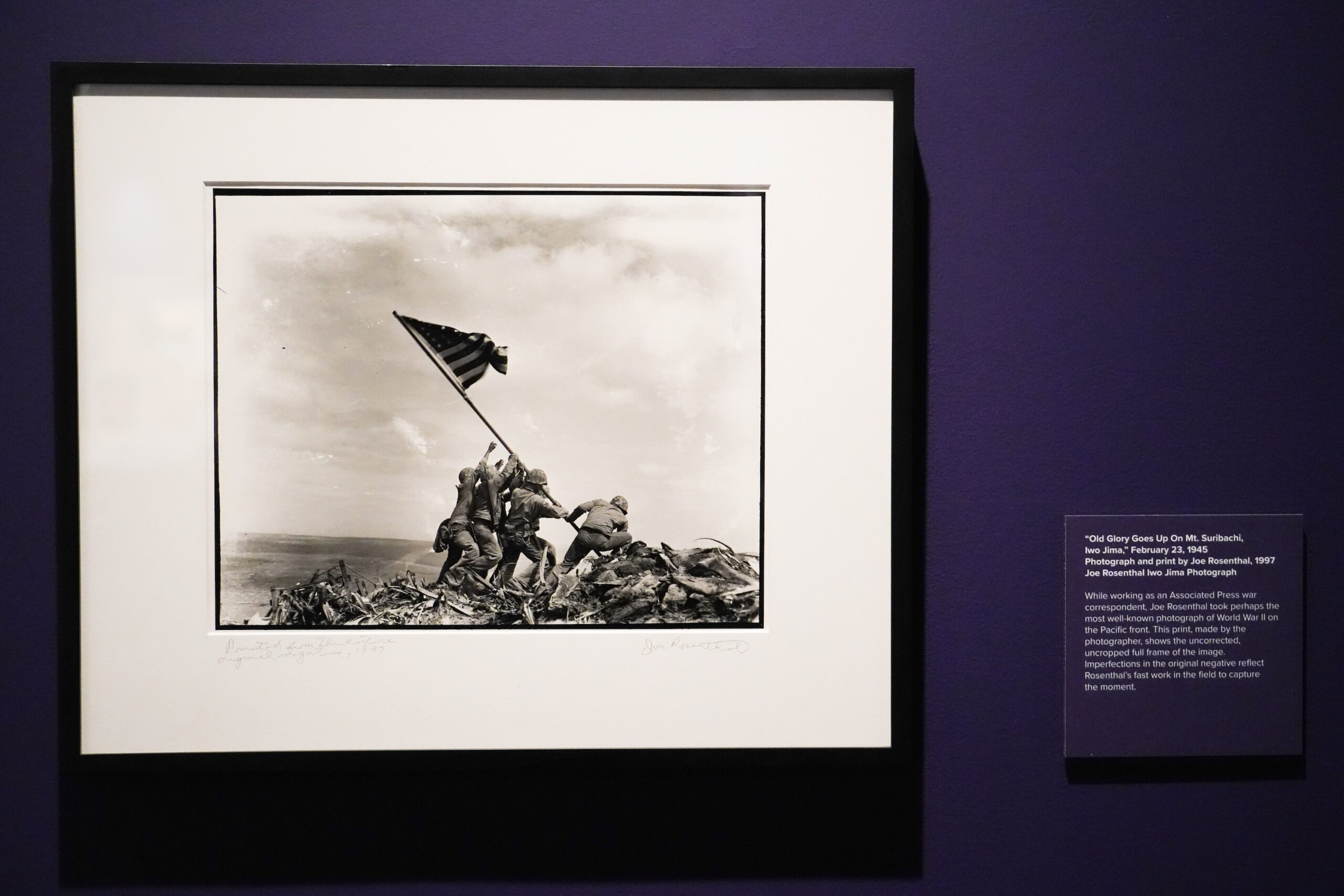
Joe Rosenthal photograph “Old Glory Goes Up on Mt. Suribachi, Iwo Jima”
On the Forty Acres, the epicenter of commemorating our nation’s 250th year naturally is the Briscoe Center for American History. And the center has met the moment with a colorful, eclectic and thoughtful exhibition drawn from its own extensive holding.This exhibit is part of “The American Experiment,” a partnership between the Briscoe Center for American History and the LBJ Presidential Library in honor of the nation’s semiquincentennial.
In this exhibit, up through Dec. 18, America is more than presidents and eagles — though there are plenty of them. America is also Willie Nelson and Betty Grable and … bacon.
In the Main Exhibition Gallery in Sid Richardson Hall (Unit 2), “Stars, Stripes, and Symbols: America at 250” displays cultural artifacts and vital documents “that uncover both the history of the United States and how we tell our story,” the center says. It surveyed its collections for examples of “symbols that illustrate many ways in which Americans — from government entities and corporations to activists and crafters — have chosen to celebrate, communicate and critique American ideas and ideals.” The imagery runs the gamut from weighty solemnity to fun kitsch.
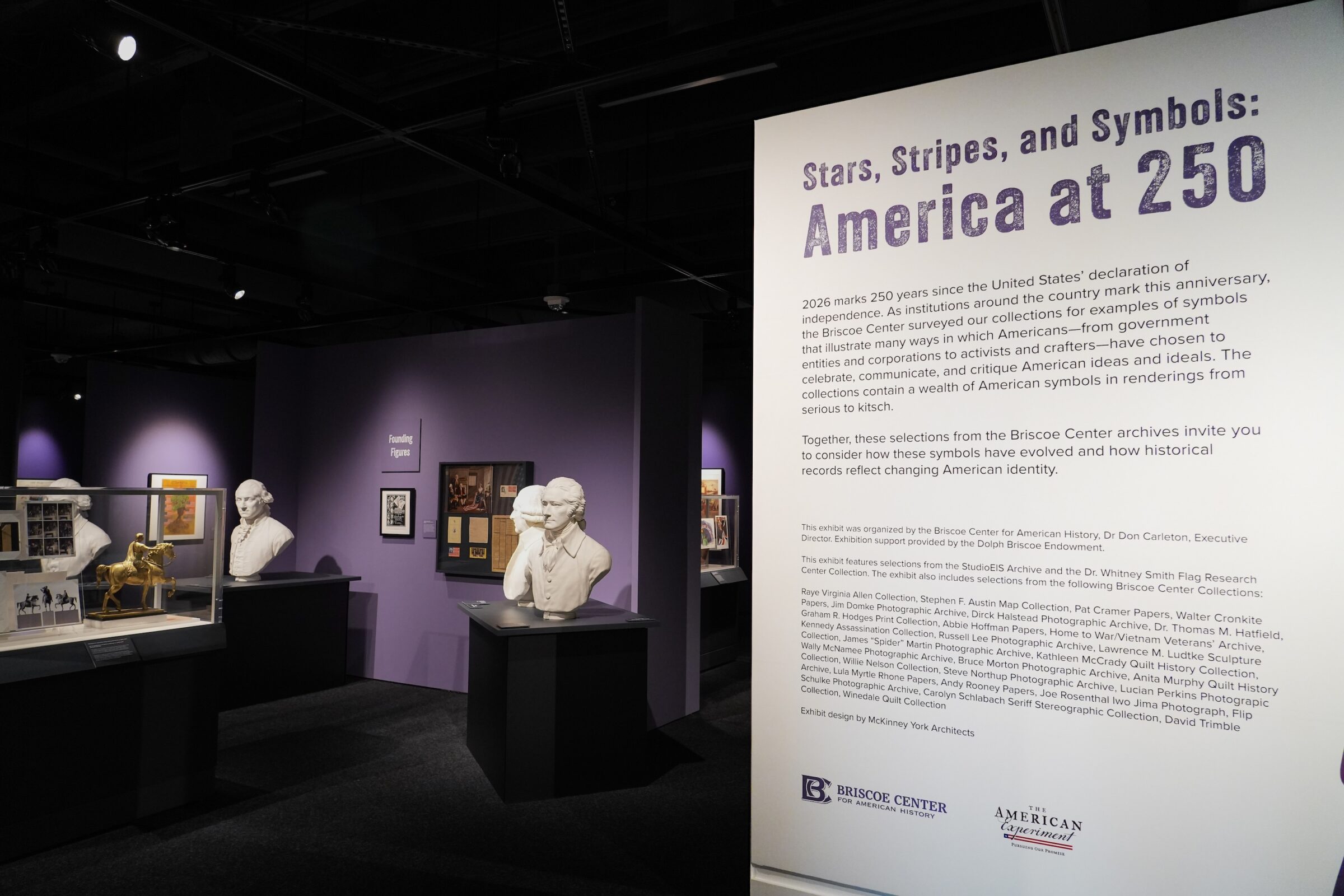
The exhibit is organized into six overlapping areas: American flags; founding figures; Uncle Sam, the eagle, and Columbia; American Martyrs; The Armed Forces; and the 1976 Bicentennial.
Much of the exhibit features the U.S. flag, of course, which is the focal point of one of the center’s most well-known holdings — Joe Rosenthal’s photograph of service members raising the U.S. flag on Iwo Jima. The photo on display of “Old Glory Goes Up on Mt. Suribachi, Iwo Jima” was printed in 1997 from the entire original negative, as a note in Rosenthal’s own hand says.
Another World War II-era treasure is an improvised U.S. flag from the American liberation of France in 1944, handmade to welcome the liberating army. The family of Pierre Colmant, who was in Paris when the city was liberated, gave it to UT faculty member Tom Hatfield, now 91, who was instrumental in establishing the Frank Denius Normandy Scholars Program at UT. Hatfield was a longtime dean of continuing education at UT and now is director of the Briscoe Center’s Military History Institute.
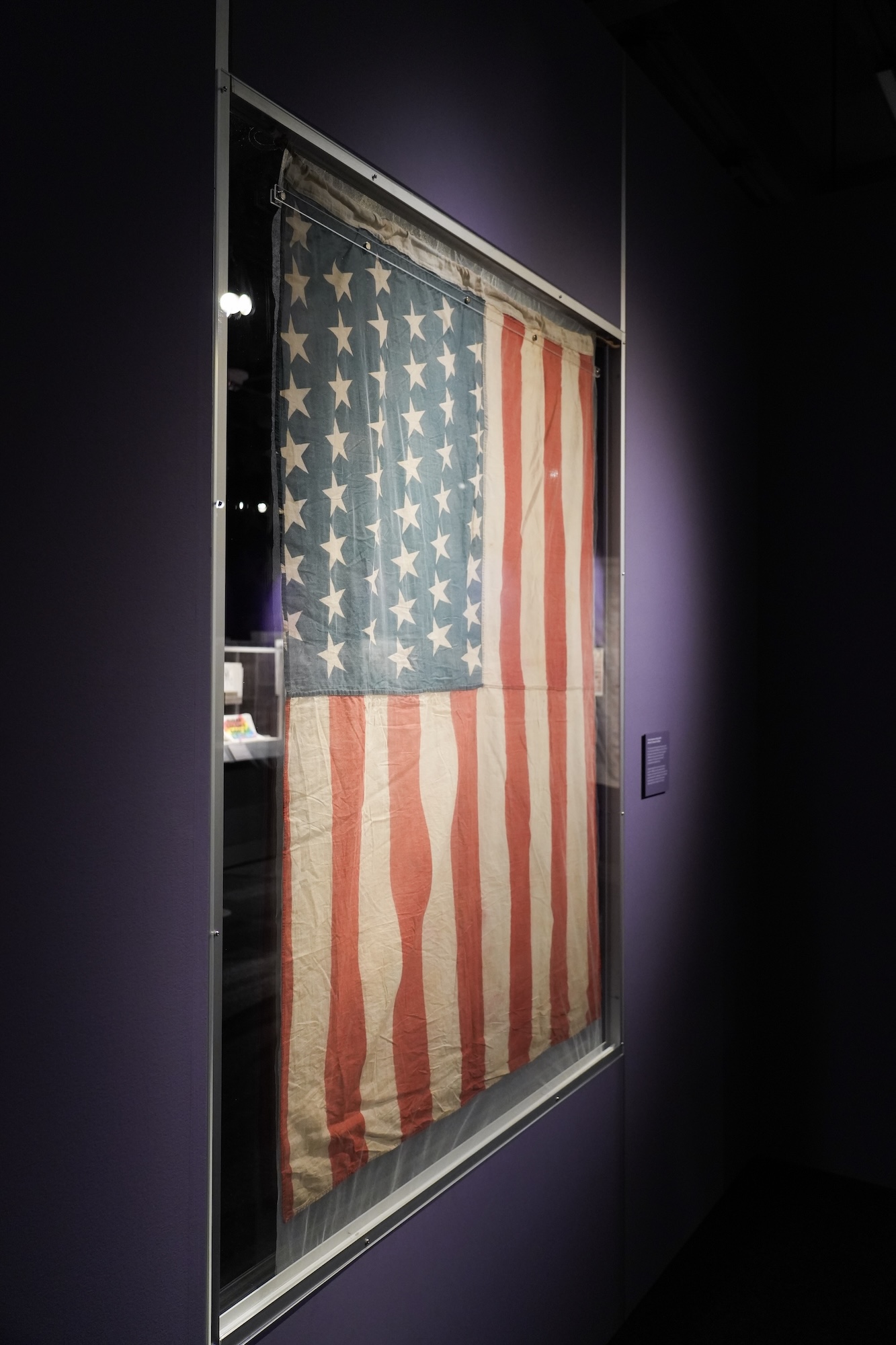
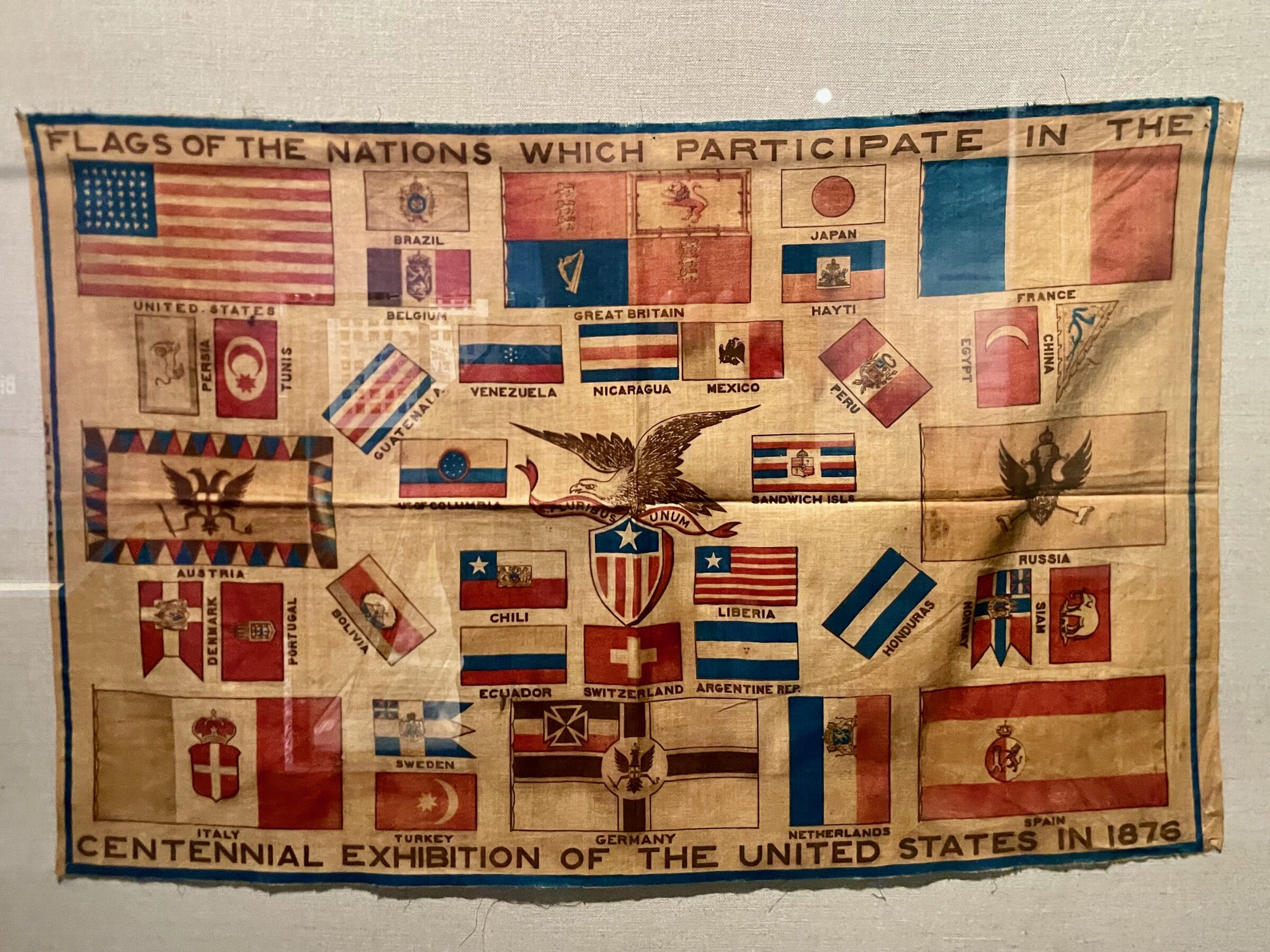
The center’s Dr. Whitney Smith Flag Research Center Collection proved to be a gold mine for this occasion. Smith is the late founder of the Flag Research Center, established 1960, and coined the word “vexillology” for the field of study. In this collection, visitors can see:
- A 1940s U.S. Army poster demonstrating how to respect and display the flag.
- A poster published by the Office of War Information showing the 48-star flag with the slogan “Give It Your Best!”
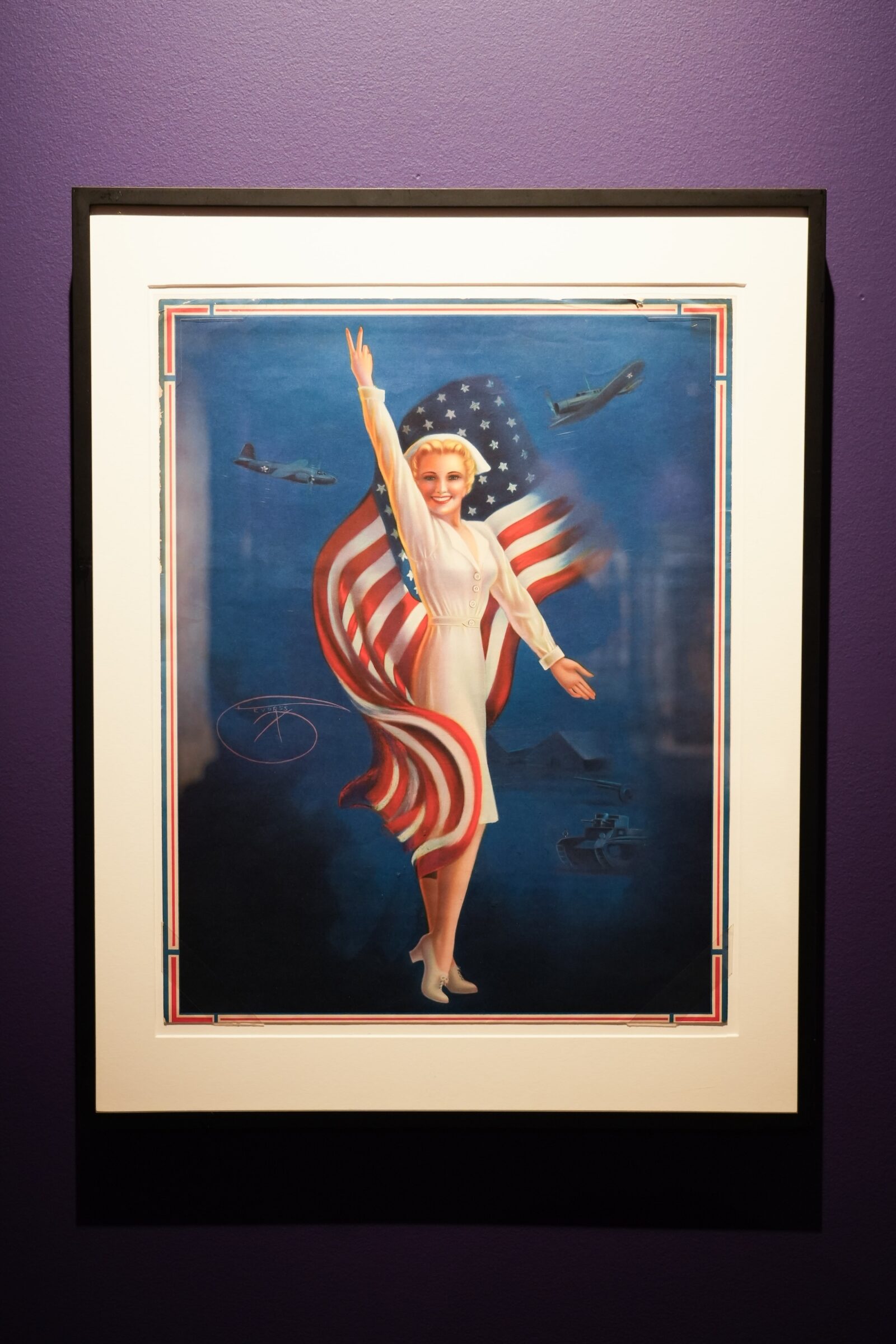
- And an illustration of actress and pinup Betty Grable dressed as a nurse in the “For Victory” calendar series.
An illustration from an 1869 copy of Harper’s Weekly, from the center’s Graham R. Hodges Print Collection, depicts the raising of the Gettysburg Monument, six years after President Abraham Lincoln delivered his most famous address on the spot.
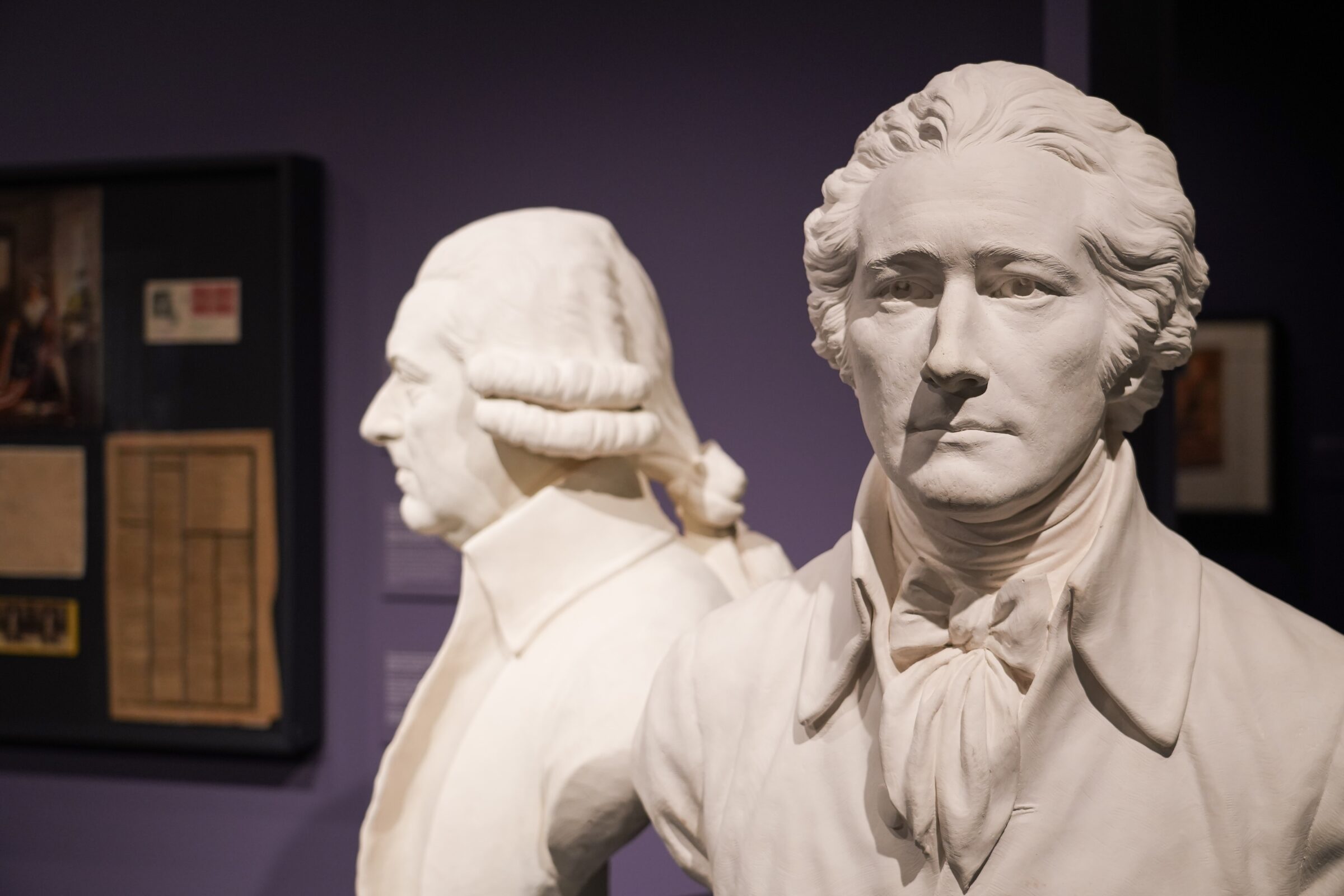
Though not old, five arresting busts of founders — Washington, Jefferson, Adams, Madison and Hamilton — from the New York-based StudioEIS give the exhibit gravitas. The busts were created circa 2012 for the Fred W. Smith National Library for the Study of George Washington at Mount Vernon, Virginia.
The American Martyrs section includes Flip Schulke’s 1965 photo of Martin Luther King Jr. marching between Selma and Montgomery as well as a quilt from the 1910s that includes assassinated presidents to that date, Lincoln, McKinley and Garfield.
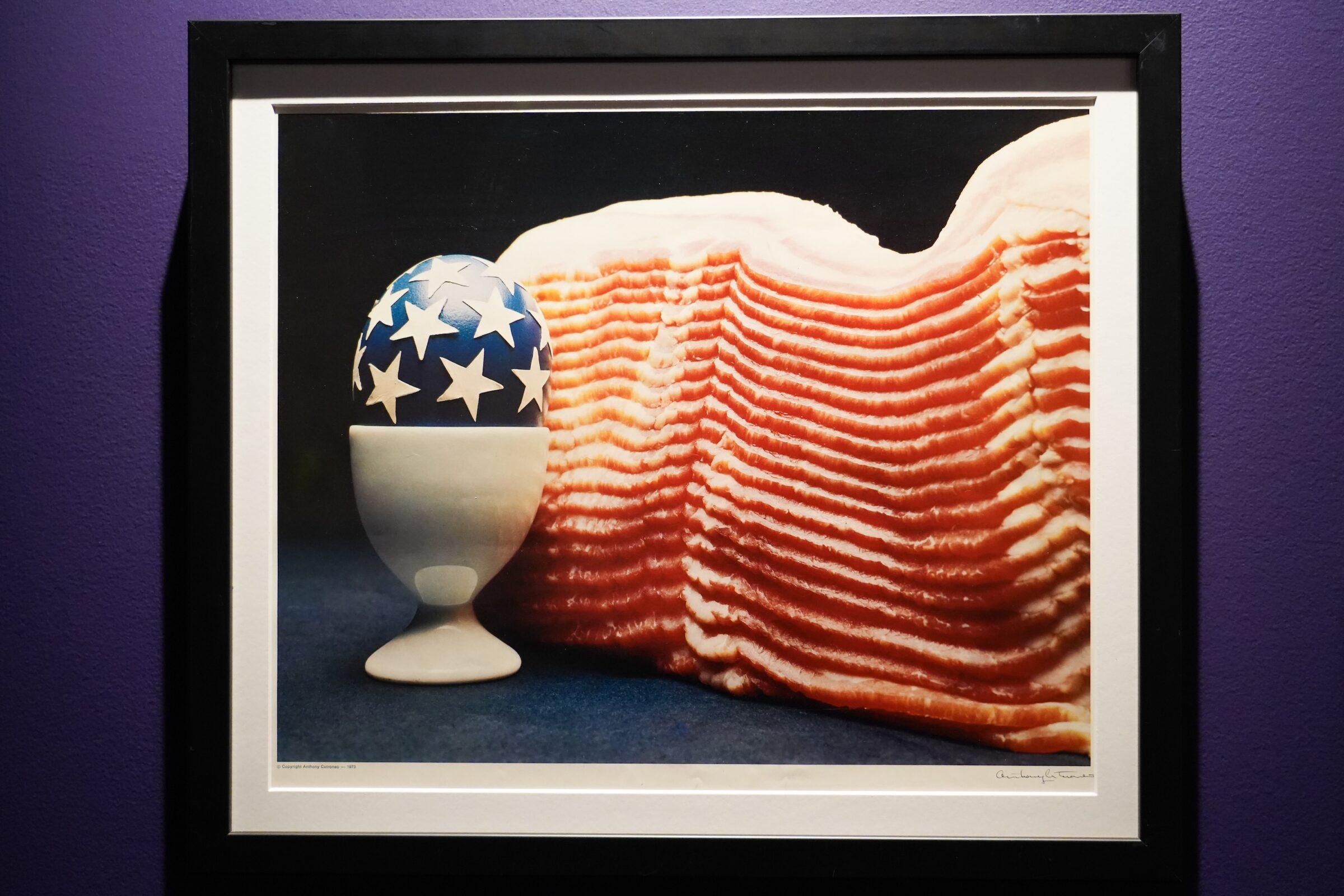
Lighter moments include a poster for Willie Nelson’s long-running Fourth of July Picnic, this one in the late 1980s near Hillsboro, Texas. One of the more clever treatments of the stars and stripes is a 1973 photo illustration by Anthony Cutroneo with a dark blue egg affixed with paper stars next to a stack of raw bacon, which create the stripes of Old Gory— erm, Glory. This piece also is from the Dr. Whitney Smith Flag Research Center Collection.
Set aside at least an hour for this free, educational exploration of our national symbols. Monday-Friday: 9 a.m.–5 p.m. Closed holidays.