Hidden Gem
“You couldn’t replicate this at another university.” Part 3 of a three-part series on the Main Building’s Life Science Library.
[This is the third in a three-part series on the Main Building’s Life Science Library. Read Part 1 here and Part 2 here.]
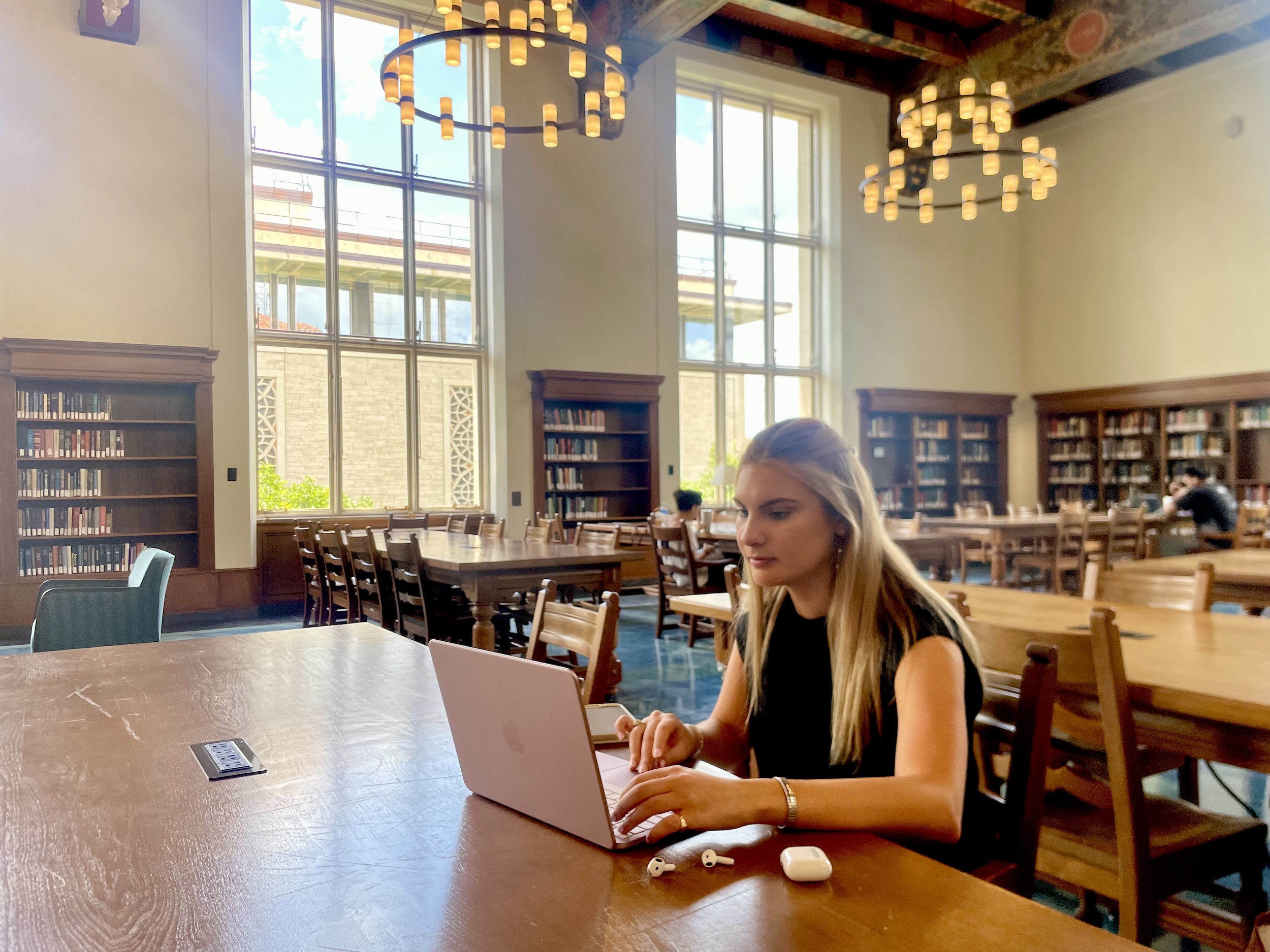
On a Tuesday afternoon in early June, a time of year when the campus is at its quietest, eight people sit silently in the Life Science Library’s Hall of Texas. Evenly distributed throughout the massive, ornate reading room, they sit at tables and carrels looking at their laptops, most with headphones on or earbuds in. A reporter quietly asks if he can have a word.
Two of them, when asked what they think of the library, independently call it the same thing. “This is a hidden gem, in my opinion,” says Alec Hari, a neuroscience senior from Memphis. A few minutes later, recent graduate Emma Grace Alvey, who is studying for the LSAT, says, “This is one of my hidden gems.”
The “gem” part is easy to see; just look around at the intricately painted ceiling beams, chandeliers and original walnut furniture. But why do they and so many others consider it “hidden”? For that, we must back up to 1977.
* * *
“UT was in a race to have one of the top libraries,” says Jennifer Lee, director of research, discovery and collections for University of Texas Libraries. “And at the time [the 1970s], that was largely based on: how much stuff do you have? To be one of the big libraries, you’ve got to have a lot of space, and so they determined in the early ’70s they needed a new, modern library. That’s when they started planning the Perry-Castañeda Library (PCL).”
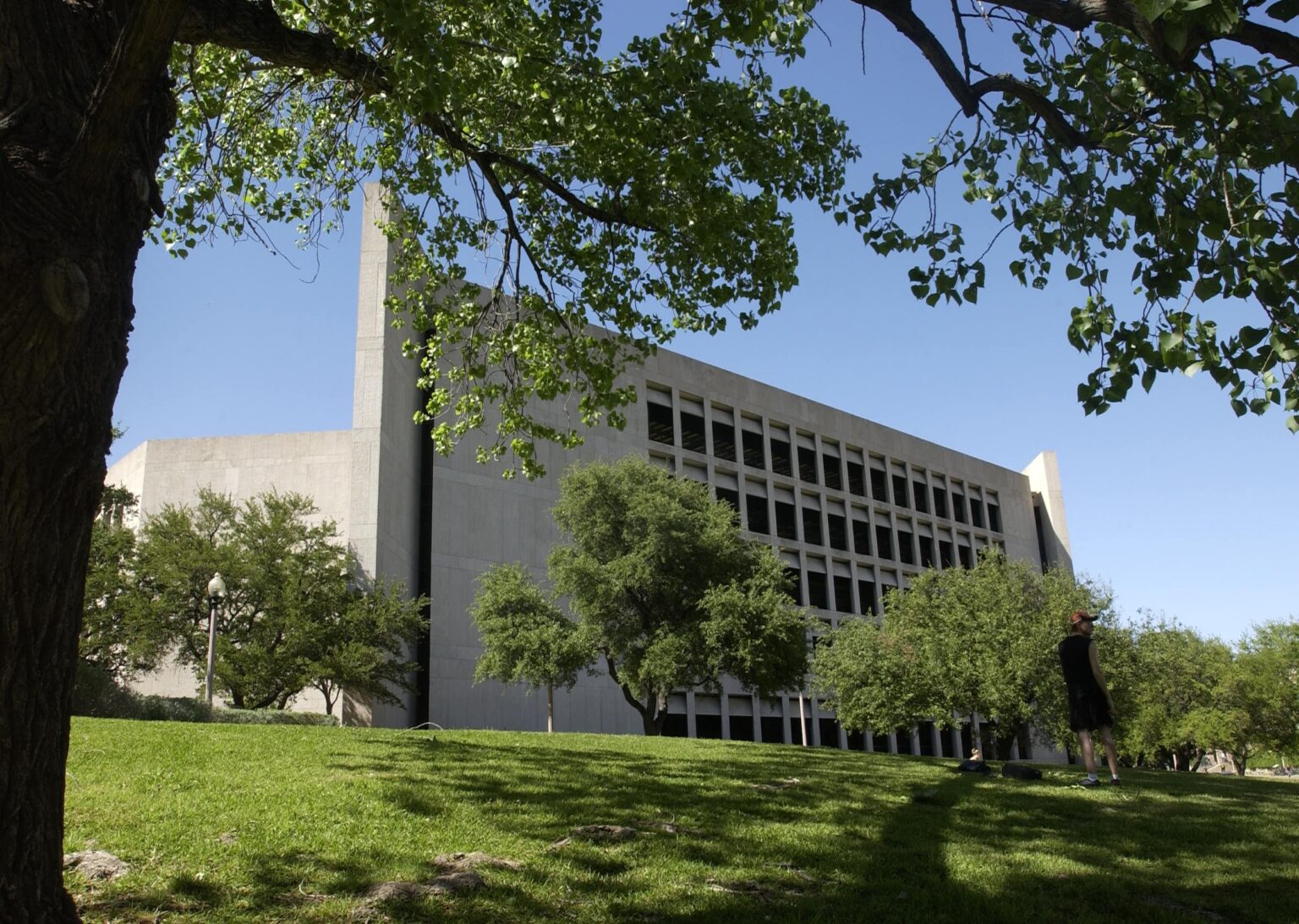
In August 1977, after two years of planning followed by three years of construction, the PCL — almost a half-million square feet — opened as UT’s main library. In 1963 the University had opened the Undergraduate Library, now substantially remodeled and known as the Flawn Academic Center. Both libraries were open-stack, meaning students found their own books, in contrast to the old closed-stack library that required students to wait and a larger staff.
By 1992, when Lee came to UT as a freshman, UT was so thoroughly an open-stack campus that it wasn’t until her junior year, when she studied abroad in Prague, Czech Republic, that she even learned what a closed-stack library was. “I didn’t even know such a thing existed. So, it was a shock to me to go to the university library, and it was, ‘You need to write down what you want, and then you go sit over there!’”
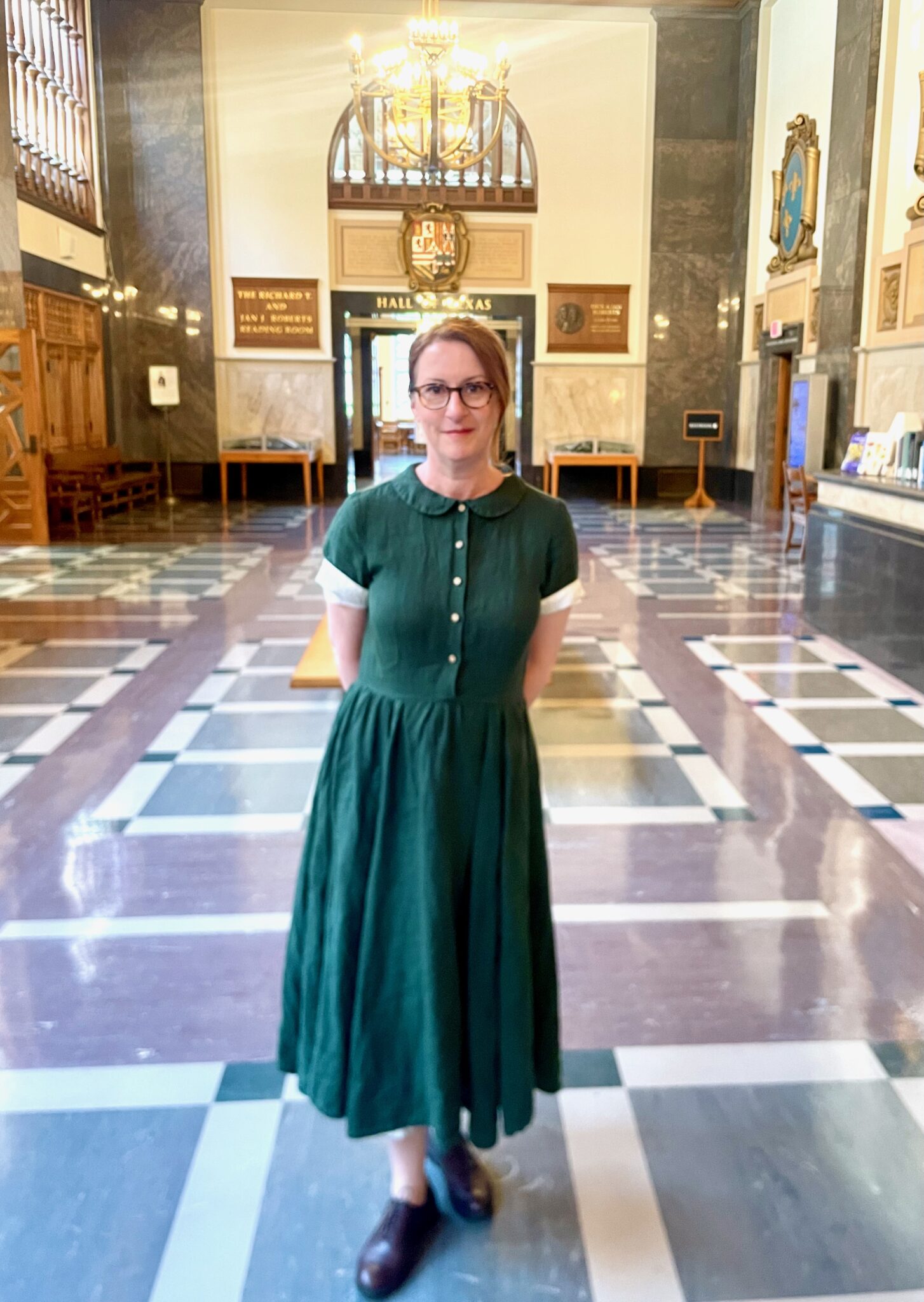
But there was no practical way to convert the library in the Main Building into open stacks. Rather, it would live on as a reminder of how all major libraries used to be. In 1978, the Biology and Pharmacy libraries were combined to create the Science Library, which included two floors of stacks. The collection, which served the College of Pharmacy and the departments of botany, microbiology and zoology, included more than 77,000 books.
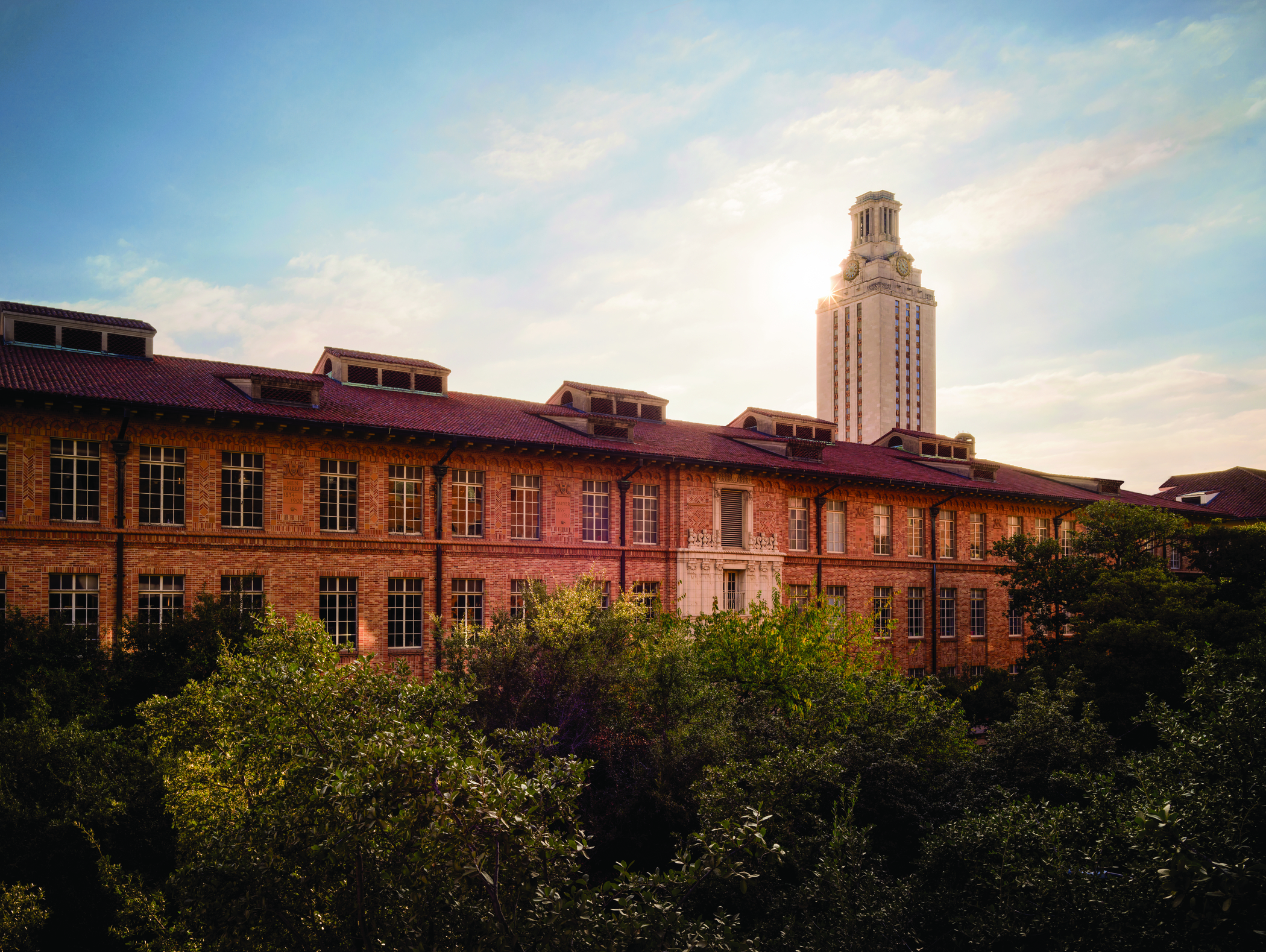
Today, the Life Science Library holds some 172,000 volumes on three stories within the Tower stacks. The second floor of the Main Building, where the grand public spaces are, is even with the fifth floor of the Tower, and the stacks reside on Tower floors 4, 5 and 6.
Books also reside in the reading rooms, which had not always been the case. Even in the 1950s, journals and other periodicals were kept on the shelves, but not books. When Lee was given charge of the library, “neither room had many books on the shelves, even the one that was open to the public, which I just thought was such a shame,” she says. Lee remembers wondering how many people had popped in, seen empty shelves, “and then just thought libraries are sad. I really wanted to put books on the shelves.”
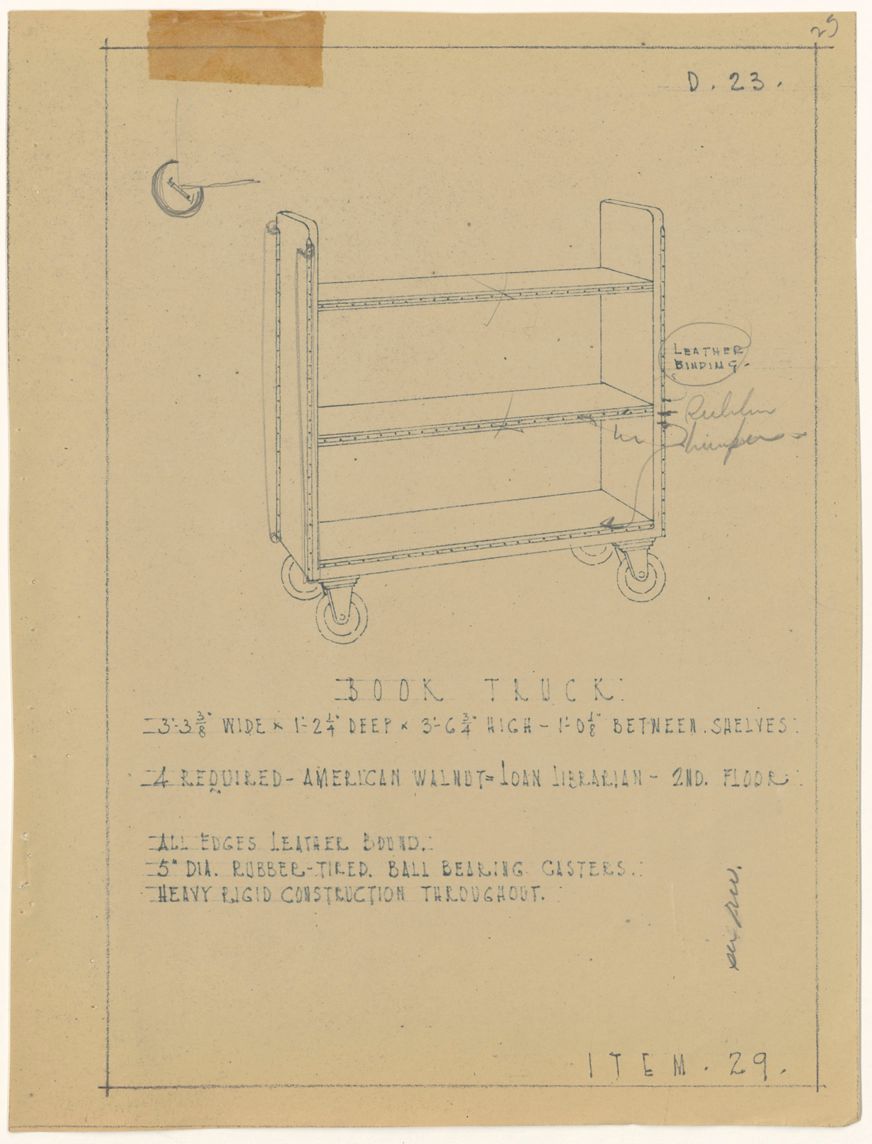
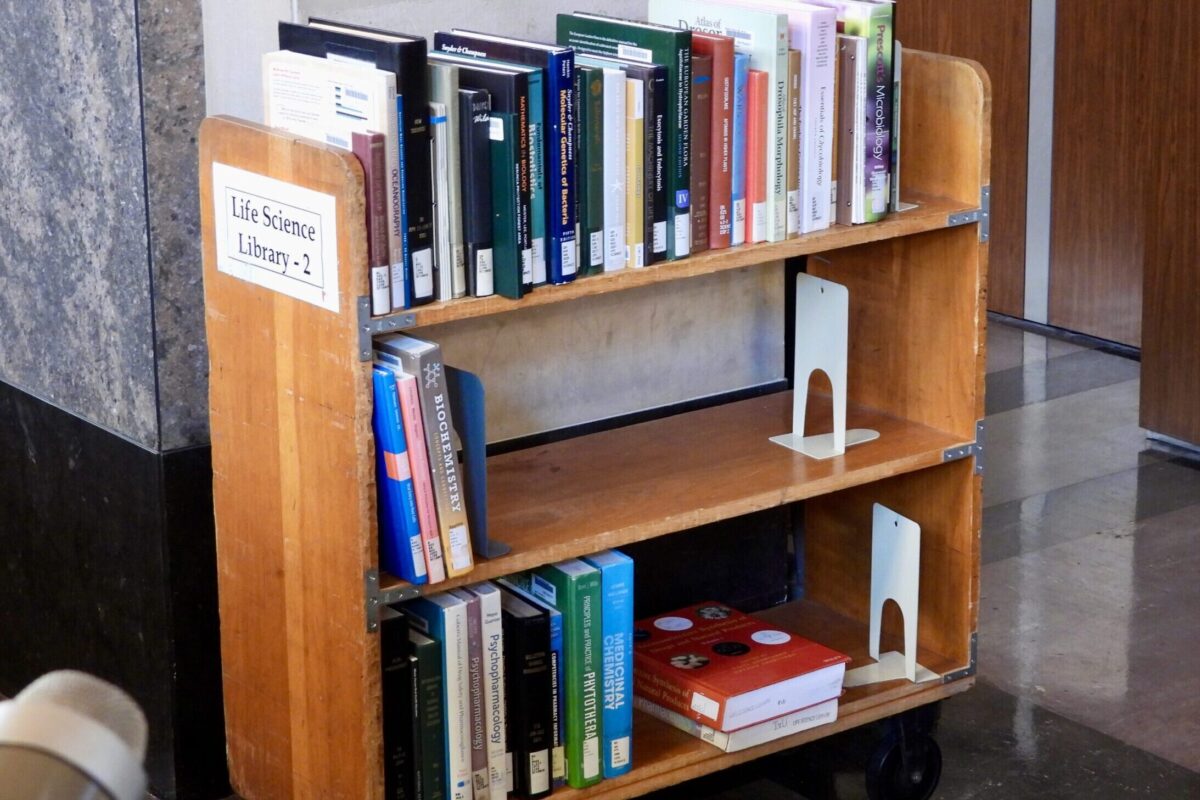
She decided to pull duplicates from across all of UT’s collections, not just life science. “On the shelves here, you’ll see philosophy and history as well as science. It is a little snapshot of what we have across all the areas that we collect in. I think it’s worked out nicely,” says Lee, who earned bachelor’s and master’s degrees at UT in 1996 and 1998 respectively. She began working part time for UT Libraries as a graduate student and has worked in a variety of roles there ever since.
Shifting books in UT’s numerous libraries is an art and a science. Lee recalls George Cogswell, a longtime librarian who had a knack for estimating space and shifting books. To this day, UT’s libraries use what they call the Cogswellian Formula to shift books, and the unit’s motto for a long time was “Let George do it.”
Renewing the Library
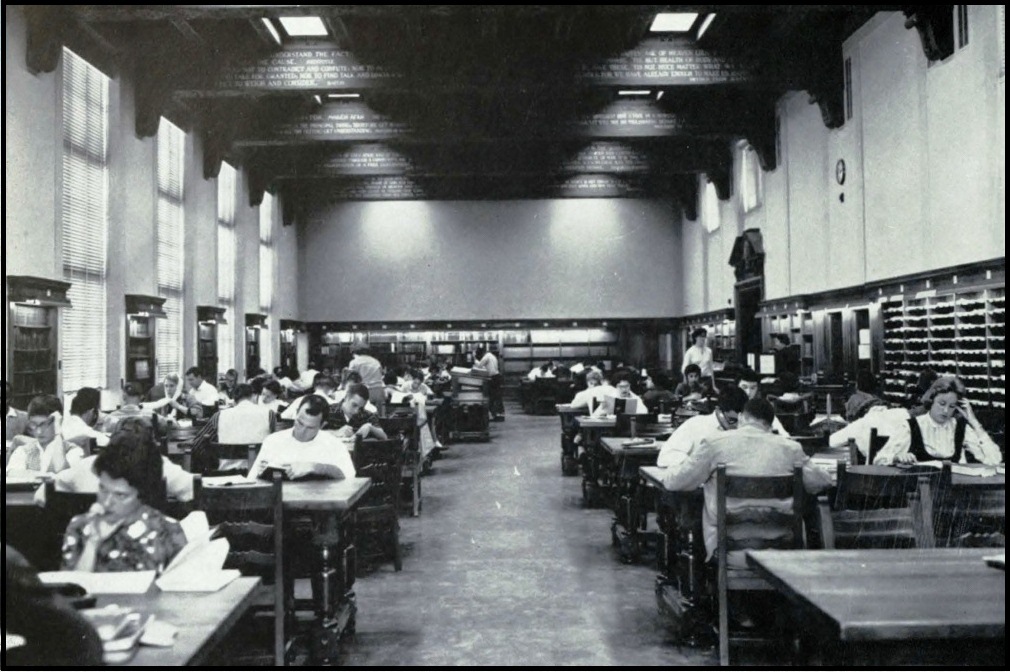
In 1984, large partitions went up in the Hall of Texas to house the Plant Resources Center. For more than three decades, it turned the hall into something other than a library, although it was still a collection and did relate to life science as well as to the Billie L. Turner Plant Resources Center, by then being housed in 10 floors of the Tower. But the room itself, though its historical ceiling still showed, was a strange version of its former self.
Probably as early as the 1930s, students complained about the library’s lighting level, and so the University took out the original lights and attached directly to the beautiful, painted ceilings what was then the state-of-the-art, fluorescent light fixtures.
In 2017, shortly after Lee took on her current role, the Provost’s Office proposed returning the hall to a reading room.
Lee walked over from library headquarters at the PCL and sat at a table in the sliver of the room that still belonged to the library and, with a project team, began to brainstorm. Fortunately, when the partitions went in, workers had been careful not to damage or alter the walls. “There was no damage to the bones of the room,” she says.
Two years later, the Hall of Texas began its resurrection. A loan desk, which no longer served a purpose, was removed from inside the Hall of Texas. They also installed outlets in the large wooden tables — original to the rooms — so that students could plug in their laptops.
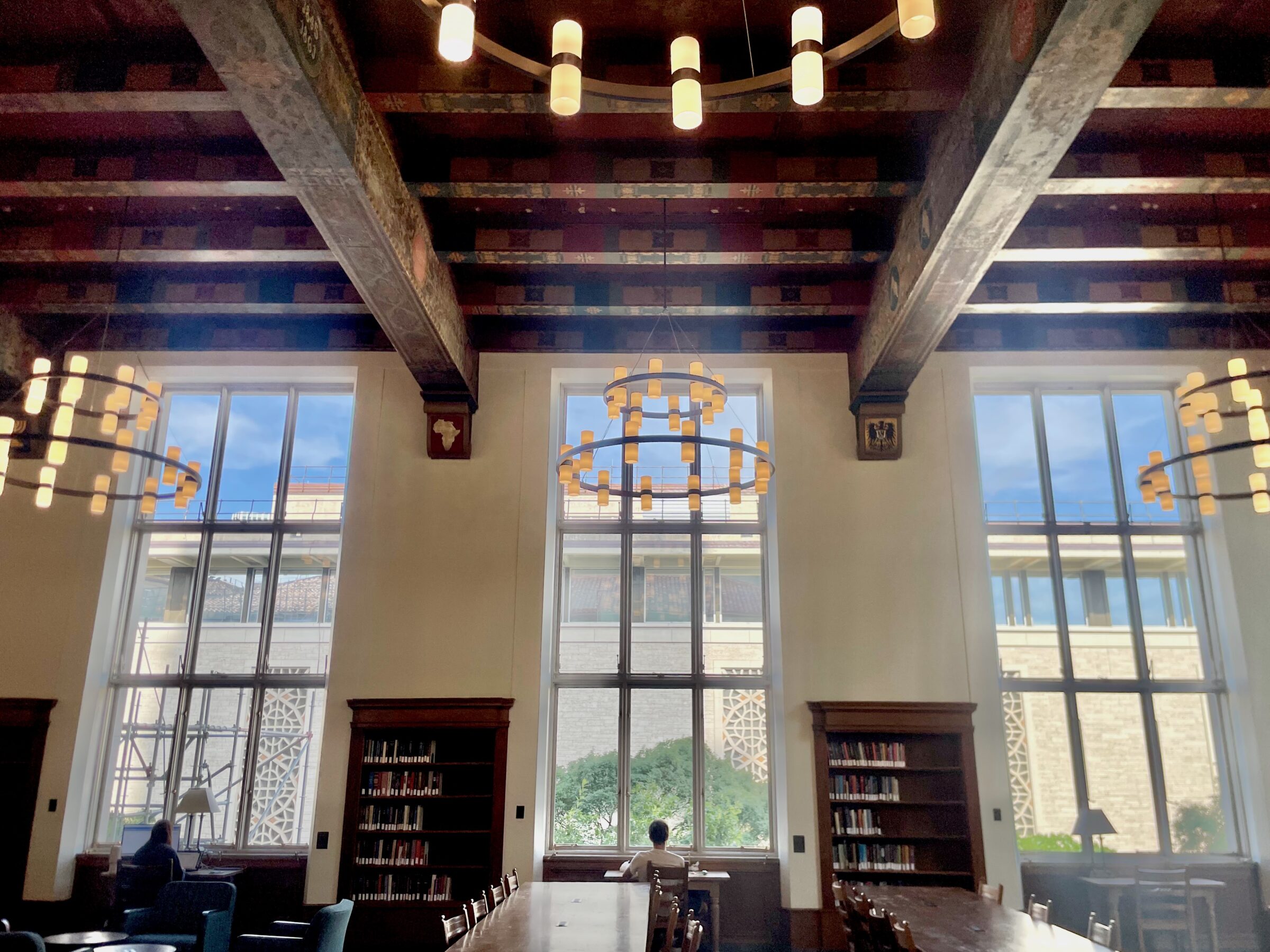
The windows have been replaced, and the venetian blinds are being repaired. The fluorescent lights were removed, but in many spots the paint left with the fixtures, and the ceiling still bears the scars. Perhaps in another round of restoration, that can be restored as well. When the fluorescent fixtures came down, the architectural firm charged with restoring the Hall of Texas had chandeliers custom made to return the hall to a library space. The style: “regal library reading rooms.”
The provost was so impressed that UT Libraries was given money to do a lighter-touch update to the Hall of Noble Words, matching the lighting and paint.
A Summer’s Day
During his sophomore year, Hari, the neuroscience senior, was telling a friend he needed a good study spot on campus, and without pausing the friend declared, “Life Sciences Library.”
“I’m someone who’s very much shaped by my environment,” Hari says. “I need a nice clean aesthetic environment, and the Life Science Library provides that. It really affects my motivation.” Asked what it reminds him of, he says with a chuckle, “Low-key, it’s kind of like Harry Potter.” Many students would agree that, in Gen Z parlance, “It’s giving Hogwarts.”
Jenny and Jay are high school students both hoping to attend UT. Jay calls the Life Science Library “surreal,” adding, “I’ve never been in a building like this before.”
I’m someone who’s very much shaped by my environment. I need a nice clean aesthetic environment, and the Life Science Library provides that.
—Alec Hari, Senior
According to a gate that automatically counts visitors, the Life Science Library was visited more than 87,000 times during the past school year. Alvey, the LSAT prepper, was responsible for about 52 of those, as she estimates she averaged one visit a week during her four years of undergraduate study.
As a freshman, she tried to go to the PCL, but it didn’t click. “The walls are very boring,” she says of the modern, six-story behemoth. “I was just exploring one day and thought, I wonder what’s in the Tower. I realized there was a library here, and it became one of my favorite spots on the entire campus. It gets me in the right mindset for sure. It feels like you’re in a college library rather than just some massive building,” she says. “No shade to the PCL; I have friends who love it. But this one is more for me.”
Alvey says, “If I ever had a break between classes — I think this room is so beautiful, I’d come here,” sitting in whichever of the two reading rooms was less crowded. “I love the whole thing. It’s got Spanish style, so it’s very Texas to me. When I come here, I feel like I am studying at The University of Texas. You couldn’t replicate this at another university.”
This space helped her earn a government degree, and she’s hoping more time here will help her get into UT Law. “That’s the dream.”
And so, the Life Science Library, once UT’s main library, lives on — a regal reminder of the value of grandeur, a 93-year-old monument to our aspiration to greatness, and a quiet, spacious sanctuary for students — past, present and future all here this afternoon. Inasmuch as this space inspires, calms and helps them focus, what starts in the Life Science Library quietly changes the world.